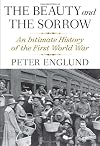
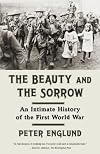
The Beauty and the Sorrow: An Intimate History of the First World War
by Peter Englund
Stridens skönhet och sorg (Original book)
On This Page
Description
Englund examines the history of World War I through the experiences of the average man and woman-- not only the tragedy and horror but also the absurdity and even, at times, the beauty. In a brilliant mosaic of perspectives that moves between the home front and the front lines, he reconstructs the feelings, impressions, experiences, and shifting spirits of twenty particular people, allowing them to speak not only for themselves but also for all those who were in some way shaped by the war, show more but whose voices have been forgotten, rejected, or simply remained unheard. show lessTags
Recommendations
















Member Reviews
This is not a book to be enjoyed in the sense of bringing pleasure or smiles to the reader, but it is a book to be savored and remembered and celebrated. In this work, the author gives us the Great War, not as a series of battles, blunders, and victories, not as the bloviations of politicians, kings, tsars, potentates and generals, not as compilations of maps, charts, statistics, and bureaucratic mumblings; rather he gives us the people who fought, lived and died this war. These are the people who had to carry out the ill-fated plans and decisions of the higher-ups. He gives us their hopes and dreams, their frustrations, their fears, their boredom and hunger, their cold and wet, or hot and arid (but always hungry) lives that resulted show more from the bureaucratic and autocratic decisions made miles and worlds away. We are given poverty - not of spirit or money, but of supplies, medicines, machines, ammunition, food, basic shelter, and even the simple tools needed to bury their dead. At the same time, we are given soaring and enriching insights into the resilience of the human spirit and the hopefulness that can exist in spite of such dire situations.
We mutter at the vast spread in treatment of POWs - from nightly card games and decent food served in the "officer's mess", to brutal marches and confinements with little or no food, water or sanitation. We gasp, we wipe away tears, we sit back to draw deep breaths because to read this is to feel, and to realize how little comprehension we have of what the real experience of the war was. We begin to see how little the individuals involved knew about "the big picture."
In trying to explain the breath-taking and stunning impact of this book, I found myself again and again returning to the list of Dramatis Personnae (and their delightful pictures)- there are twenty of them, male and female. The youngest and oldest were females--a 12 year old German school girl) and a 49 year old Scottish aid worker); in between, there are other women and men who represent almost every country participating in the war - Germany, Belgium, France, Great Britain, Australia, the US, New Zealand, Italy (including an Italian American who returned to Europe to fight for the fatherland), Russia, an American woman married to a Polish aristocrat living in Poland, a Dane serving in the German army, and a Venezuelan soldier of fortune in the Ottoman army. They were infantrymen, cavalrymen, ambulance drivers, civil servants, civilians trapped in a world of diminishing food and shelter, alpine climbers, fighter pilots, well-diggers, telecommunications linemen, artillerymen, field surgeons, nurses, officers, enlisted, POWs--all of them at the mercy of their superiors--all of them ignorant of what was happening anyplace but where they stood. Englund draws on diaries, letters, and other original source materials in many languages to bring us their first person observations.
In his introduction, Englund tells us better than I would even attempt to what this book is and isn't:
To the Reader: (pg. 9-11)
"As a historian, I have often longed to be present where and when events happen, but...I discovered ...to be right in the middle of events is no guarantee of being able to understand them. You are stuck in a confusing, chaotic and noisy reality and the chances are that the editorial office on the other side of the planet often has a better idea of what is going on than you do--just as a historian, paradoxically enough, often has a better understanding of an event than those who were actually involved in it.
...This is a book about the First World War. It is not, however, a book about what it was--that is, about its causes, course, conclusion and consequences--but a book about what it was like. In this volume the reader will meet not so much factors, as people, not so much events and processes as feelings, impressions, experiences and moods.
.....I wanted to depict the war as an individual experience, to go beyond the usual historical and sociological categories, and also beyond the usual narrative forms in which, at best, people such as these appear as no more than tiny specks of light, flickering by in the grand historical sweep....an attempt to deconstruct this utterly epoch-making event into its smallest, most basic component--the individual, and his or her experiences."
As a historian, and as a writer, he has succeeded beyond anything we have a right to expect. show less
We mutter at the vast spread in treatment of POWs - from nightly card games and decent food served in the "officer's mess", to brutal marches and confinements with little or no food, water or sanitation. We gasp, we wipe away tears, we sit back to draw deep breaths because to read this is to feel, and to realize how little comprehension we have of what the real experience of the war was. We begin to see how little the individuals involved knew about "the big picture."
In trying to explain the breath-taking and stunning impact of this book, I found myself again and again returning to the list of Dramatis Personnae (and their delightful pictures)- there are twenty of them, male and female. The youngest and oldest were females--a 12 year old German school girl) and a 49 year old Scottish aid worker); in between, there are other women and men who represent almost every country participating in the war - Germany, Belgium, France, Great Britain, Australia, the US, New Zealand, Italy (including an Italian American who returned to Europe to fight for the fatherland), Russia, an American woman married to a Polish aristocrat living in Poland, a Dane serving in the German army, and a Venezuelan soldier of fortune in the Ottoman army. They were infantrymen, cavalrymen, ambulance drivers, civil servants, civilians trapped in a world of diminishing food and shelter, alpine climbers, fighter pilots, well-diggers, telecommunications linemen, artillerymen, field surgeons, nurses, officers, enlisted, POWs--all of them at the mercy of their superiors--all of them ignorant of what was happening anyplace but where they stood. Englund draws on diaries, letters, and other original source materials in many languages to bring us their first person observations.
In his introduction, Englund tells us better than I would even attempt to what this book is and isn't:
To the Reader: (pg. 9-11)
"As a historian, I have often longed to be present where and when events happen, but...I discovered ...to be right in the middle of events is no guarantee of being able to understand them. You are stuck in a confusing, chaotic and noisy reality and the chances are that the editorial office on the other side of the planet often has a better idea of what is going on than you do--just as a historian, paradoxically enough, often has a better understanding of an event than those who were actually involved in it.
...This is a book about the First World War. It is not, however, a book about what it was--that is, about its causes, course, conclusion and consequences--but a book about what it was like. In this volume the reader will meet not so much factors, as people, not so much events and processes as feelings, impressions, experiences and moods.
.....I wanted to depict the war as an individual experience, to go beyond the usual historical and sociological categories, and also beyond the usual narrative forms in which, at best, people such as these appear as no more than tiny specks of light, flickering by in the grand historical sweep....an attempt to deconstruct this utterly epoch-making event into its smallest, most basic component--the individual, and his or her experiences."
As a historian, and as a writer, he has succeeded beyond anything we have a right to expect. show less
Out of the many millions of people who have served, in some sense, during the First World War, the last one passed away today (7 Feb 2012) - a little old lady, aged 110, who served as a waitress to the British Royal Air Force. Now the last fragments of war shall fade from memory, and into history.
And this emphasizes the importance of this new narrative history. It follows the lives of some 20 individuals, each offering various perspectives and detailing new incidents about the war - a German schoolgirl in one chapter, a Venezuelan man-at-arms for the Ottoman Empire, a French civil servant, a Russian engineer, and so forth. The 'big names' of history get a passing mention at best. Paul von Hindenburg is met by a civilian, who finds him show more to be a bit stuffy and proud of himself. Instead, you get a long slow look of life at the bottom. One gets a sense of the unending tedium of horror, the easiness with which life is destroyed, and rots away.
In a way, I'm morbidly glad that this collection of stories is selling well, and is critically acclaimed. We all need a reminder about this 'war to end all wars', and how wars are their own cause and destruction, and why none should ever wish for them. show less
And this emphasizes the importance of this new narrative history. It follows the lives of some 20 individuals, each offering various perspectives and detailing new incidents about the war - a German schoolgirl in one chapter, a Venezuelan man-at-arms for the Ottoman Empire, a French civil servant, a Russian engineer, and so forth. The 'big names' of history get a passing mention at best. Paul von Hindenburg is met by a civilian, who finds him show more to be a bit stuffy and proud of himself. Instead, you get a long slow look of life at the bottom. One gets a sense of the unending tedium of horror, the easiness with which life is destroyed, and rots away.
In a way, I'm morbidly glad that this collection of stories is selling well, and is critically acclaimed. We all need a reminder about this 'war to end all wars', and how wars are their own cause and destruction, and why none should ever wish for them. show less
This book takes us through the four years of war through the experiences of about twenty people, mostly soldiers and medical staff, but also a young German schoolgirl, a French civil servant and a couple of other civilians caught up in the war.
One of the things I really liked about the book is that it included a huge range of perspectives on the war. One of the characters is a Venezuelan who comes to Europe to join the fighting and ends up with the Ottoman army more or less by accident - it's the first one that agrees to take him. As well as the Western and Eastern fronts, we see fighting in Italy, the Balkans, the Middle East and East Africa (where "10,000 armed men are looking for each other in an area the size of western Europe"). show more Some of the soldiers burst with patriotism and enjoy the adrenaline of fighting; others are stuck away from the front lines and wish they were seeing action. Of course, there is plenty here of the grimness of war, too. Englund regularly finishes the report of a battle by commenting that the same tiny piece of land was fought over again soon after.
The book is entirely in chronological order, so you have a day in one character's life followed by another day in a different character's life, and so on. (This helps to give a bit of a sense of the arc of the war, from early apprehension mixed with excitement and the hope of an early victory, to the hopelessness, discontent and revolutionary feelings of 1917. And you see how this arc, and the emotions of the war, were very similar no matter what side you were on. Englund brings out certain themes throughout the book - the futility mentioned above, the sense that no-one in a battle actually has any idea what is happening, the idea that often, men were sent to fight for an objective which was more about getting good news reports than any real military value. Englund also has a thing about trains, and how logistics were often more of a deciding factor in battles than military prowess.)
However, the story of each day is generally not told in the person's own words, but in a sort of reported speech, with occasional quotations from their own writing. I suppose that Englund does this so he can fill us in on what has happened since we last saw them, and set the scene. But I found that it rather took away any distinctive voice that different characters might have. Some of the text, too, is clearly added by Englund, which meant that I couldn't always tell whether a line came from the person experiencing it or was editorial comment. (For instance: "The Austrian artillery fires on the town daily in a rather absent-minded way, as if doing it as a matter of principle rather than according to any plan.") And he speculates about the motives behind people's behaviour, in a very general and unsatisfying way. (One character doesn't mention the propagandistic reports of German atrocities - "Perhaps {he} is one of those people who have come to believe that it was all nothing but propaganda. Perhaps new and more tangible and personal sufferings have already replaced these second-hand horror stories. Or perhaps the adventure of it all has gained the upper hand.") I would also have liked to know where the texts came from - were they unedited diaries? memoirs written later and tidied up? letters to family which might have wanted to portray a certain image?
This book definitely provided some very vivid images of life during wartime. With one young woman, we hear the front getting closer, and have to decide whether it's time to become a refugee. With a British humanitarian worker we find that "to behave like a well-bred woman" helps us deal with the war better than religion or patriotism can. We walk through a forest looking for orphaned children who need help, enjoy testing the edge of our new bayonets, speak passionately at public meetings to urge people to gather round the flag and not be distracted by "strikes and quarrels and the class struggle" (this is in the UK, by the way). We see the aftermath of the massacre of the Armenians, and sail through the wreckage of the Lusitania. In October 1914 in France, the newspaper kiosks are still festooned with early August illustrated papers. At Passchendaele, Chinese labourers dig graves for soldiers. A Hungarian is demoralised by the sight of well-fed and well-dressed US PoWs.
So I can see why it has been such a popular and well-reviewed book. But for me I think that perhaps it could have been even better, if Englund had held back on telling us his views so much, and allowed his characters to speak for themselves.
And so I will let one do just that:
"With each batch of the wounded, disabled creatures who are carried in, one feels inclined to repeat in wonder, "Can one man be responsible for all this? Is it for one man's lunatic vanity that men are putting lumps of lead into each other's hearts and lungs, and boys are lying with their heads blown off, or with their insides beside them on the ground?" Yet there is a splendid freedom about being in the midst of death - a certain glory in it, which one can't explain." (Sarah Macnaughtan, 49-year-old Scottish aid worker, October 1914) show less
One of the things I really liked about the book is that it included a huge range of perspectives on the war. One of the characters is a Venezuelan who comes to Europe to join the fighting and ends up with the Ottoman army more or less by accident - it's the first one that agrees to take him. As well as the Western and Eastern fronts, we see fighting in Italy, the Balkans, the Middle East and East Africa (where "10,000 armed men are looking for each other in an area the size of western Europe"). show more Some of the soldiers burst with patriotism and enjoy the adrenaline of fighting; others are stuck away from the front lines and wish they were seeing action. Of course, there is plenty here of the grimness of war, too. Englund regularly finishes the report of a battle by commenting that the same tiny piece of land was fought over again soon after.
The book is entirely in chronological order, so you have a day in one character's life followed by another day in a different character's life, and so on. (This helps to give a bit of a sense of the arc of the war, from early apprehension mixed with excitement and the hope of an early victory, to the hopelessness, discontent and revolutionary feelings of 1917. And you see how this arc, and the emotions of the war, were very similar no matter what side you were on. Englund brings out certain themes throughout the book - the futility mentioned above, the sense that no-one in a battle actually has any idea what is happening, the idea that often, men were sent to fight for an objective which was more about getting good news reports than any real military value. Englund also has a thing about trains, and how logistics were often more of a deciding factor in battles than military prowess.)
However, the story of each day is generally not told in the person's own words, but in a sort of reported speech, with occasional quotations from their own writing. I suppose that Englund does this so he can fill us in on what has happened since we last saw them, and set the scene. But I found that it rather took away any distinctive voice that different characters might have. Some of the text, too, is clearly added by Englund, which meant that I couldn't always tell whether a line came from the person experiencing it or was editorial comment. (For instance: "The Austrian artillery fires on the town daily in a rather absent-minded way, as if doing it as a matter of principle rather than according to any plan.") And he speculates about the motives behind people's behaviour, in a very general and unsatisfying way. (One character doesn't mention the propagandistic reports of German atrocities - "Perhaps {he} is one of those people who have come to believe that it was all nothing but propaganda. Perhaps new and more tangible and personal sufferings have already replaced these second-hand horror stories. Or perhaps the adventure of it all has gained the upper hand.") I would also have liked to know where the texts came from - were they unedited diaries? memoirs written later and tidied up? letters to family which might have wanted to portray a certain image?
This book definitely provided some very vivid images of life during wartime. With one young woman, we hear the front getting closer, and have to decide whether it's time to become a refugee. With a British humanitarian worker we find that "to behave like a well-bred woman" helps us deal with the war better than religion or patriotism can. We walk through a forest looking for orphaned children who need help, enjoy testing the edge of our new bayonets, speak passionately at public meetings to urge people to gather round the flag and not be distracted by "strikes and quarrels and the class struggle" (this is in the UK, by the way). We see the aftermath of the massacre of the Armenians, and sail through the wreckage of the Lusitania. In October 1914 in France, the newspaper kiosks are still festooned with early August illustrated papers. At Passchendaele, Chinese labourers dig graves for soldiers. A Hungarian is demoralised by the sight of well-fed and well-dressed US PoWs.
So I can see why it has been such a popular and well-reviewed book. But for me I think that perhaps it could have been even better, if Englund had held back on telling us his views so much, and allowed his characters to speak for themselves.
And so I will let one do just that:
"With each batch of the wounded, disabled creatures who are carried in, one feels inclined to repeat in wonder, "Can one man be responsible for all this? Is it for one man's lunatic vanity that men are putting lumps of lead into each other's hearts and lungs, and boys are lying with their heads blown off, or with their insides beside them on the ground?" Yet there is a splendid freedom about being in the midst of death - a certain glory in it, which one can't explain." (Sarah Macnaughtan, 49-year-old Scottish aid worker, October 1914) show less
Peter Englund tells the story of the First World War through the eyes, letters, and diaries of twenty individuals. They cover a range of nationalities and social classes. All lives are changed, and sadly, some are lost. The result is a powerful book about what war does to the people who participate in it. The war took a profound toll on old world Europe. The seeds of the world we know today were sown in the conflict that started in June 1914 and really did not end until September 1945. During the coming centennial the book market,as well as the idiot box, will be flooded. Turn off the idiot box, pick this book, and say five other titles on the topic, and just read! You will have a much better understanding.
I understand the sorrow, but don't see much beauty. Lives of twenty low-levels (German schoolgirl, American wife, Scottish aid worker, Russian army engineer, Venezuelan calvaryman in Ottoman army, infantryman, etc.) who lived thru WW1 (and some who didn't) mostly shows initial celebration, then endurance, going on, and on, and on, and finally anger, distain, resignation. People die, people suffer, one Frenchman parties. General officers live well. The rest struggle and wait. The war will end soon, they think. Ugly. (with excerpts from original journals/memoirs)
A narrative history of the first world war. The author, an historian and war correspondent, uses the diaries and reports of about 20 different people - soldiers, nurses, a German child, the brain surgeon Harvey Cushing - and runs through the war years chronologically, telling us what each different person is doing at one time wherever they happen to be. Unlike some books of this type, the book is not made from extracts of the diaries themselves, rather the author describes what each has said in the third person. There are some direct quotes, and the work is heavily footnoted with explanations and asides. The advantage of this approach is that someone's bare diary might contain valuable information but be difficult to read or contain show more less interesting extraneous material. (As when, for example, reading Mary Chestnut's Civil War diary). It works very well, I think. A reminder of how little control we have over the world we live in. show less
Stridens skönhet och sorg är en bok av Peter Englund utgiven år 2008, och inledningen på en serie om fem böcker som skildrar personer som upplevde första världskriget. Peter Englund har beskrivit verket som "ett experiment i historieskrivning – ett försök att se om det gick att skildra en stor historisk händelse helt och hållet underifrån, utan en övergripande berättelse, utan istället med ett flätverk av biografier."
I boken ges en bild av hur människorna upplevde första världskriget genom att läsaren får följa nitton verkliga personer. Det är en skildring av "den lilla historien". De 212 kapitlen är korta och omfattar två till fyra sidor och beskriver vad de olika personerna gjorde och upplevde under en dag. show more Kapitlen omfattar hela krigets skede – från augusti 1914 till november 1918. Englund har använt dagböcker, brev och memoarer som källor. show less
I boken ges en bild av hur människorna upplevde första världskriget genom att läsaren får följa nitton verkliga personer. Det är en skildring av "den lilla historien". De 212 kapitlen är korta och omfattar två till fyra sidor och beskriver vad de olika personerna gjorde och upplevde under en dag. show more Kapitlen omfattar hela krigets skede – från augusti 1914 till november 1918. Englund har använt dagböcker, brev och memoarer som källor. show less
Members
- Recently Added By
Published Reviews
ThingScore 100
Peter Englund’s intense and bighearted new book, “The Beauty and the Sorrow: An Intimate History of the First World War,” begins with a long dramatis personae of the sort that can make your heart sink.
Here is advice for proceeding: Gently excise this page and make it your bookmark. You will be getting to know these people very well in Mr. Englund’s novelistic telling, and this dramatis show more personae will function as your GPS, a beacon during those few moments when, like one of his men and women, you are confused and bereft in the fog of war.
Mr. Englund is a Swedish historian and journalist. He is also the new permanent secretary of the Swedish Academy, which awards the Nobel Prize in Literature. What he has written here is an unusual book, one he describes, not inaccurately, as “a work of anti-history.” It contains few big names, major treaties or famous battles; there are almost no ambassadors, dashing journalists or discussions of tactics and materiel. It’s not so much a book about what happened, he explains, as “a book about what it was like.” It’s about “feelings, impressions, experiences and moods.” show less
Here is advice for proceeding: Gently excise this page and make it your bookmark. You will be getting to know these people very well in Mr. Englund’s novelistic telling, and this dramatis show more personae will function as your GPS, a beacon during those few moments when, like one of his men and women, you are confused and bereft in the fog of war.
Mr. Englund is a Swedish historian and journalist. He is also the new permanent secretary of the Swedish Academy, which awards the Nobel Prize in Literature. What he has written here is an unusual book, one he describes, not inaccurately, as “a work of anti-history.” It contains few big names, major treaties or famous battles; there are almost no ambassadors, dashing journalists or discussions of tactics and materiel. It’s not so much a book about what happened, he explains, as “a book about what it was like.” It’s about “feelings, impressions, experiences and moods.” show less
added by PLReader
KRIGETS VARDAG. Det är lika skrämmande som underhållande när Peter Englund låter oss följa mänskliga öden under första världskriget. Utdrag ur brev, dagböcker och självbiografier låter oss stå axel vid axel med det meningslösa krigets Envar. Boken är ett mästerverk, skriver Mats Gellerfelt.
added by anglemark
Lists

r/AskHistorians' Recommended Books
1,068 works; 18 members

World War I books
32 works; 8 members

Books about World War I
80 works; 14 members

Books Read in 2017
4,249 works; 129 members
Author Information

34+ Works 2,771 Members
Peter Englund is an award-winning Swedish historian and the Permanent Secretary of the Swedish Academy, the body that awards the Nobel Prize in Literature. He was formerly Professor of History at Uppsala University and is the author of The Beauty and the Sorrow: An Intimate History of the First World War.
Some Editions
Awards and Honors
Awards
Distinctions
Series

Belongs to Publisher Series
Work Relationships
Has as a supplement
Common Knowledge
- Canonical title
- The Beauty and the Sorrow: An Intimate History of the First World War
- Original title
- Stridens skönhet och sorg: Första världskriget i 212 korta kapitel
- Alternate titles*
- The Beauty and the Sorrow: An Intimate History of the First World War
- Original publication date
- 2008
- People/Characters
- Elfriede Kuhr; Richard Stumpf; Pál Kelemen; Andrej Lobanov-Rostovskij; Florence Farmborough; Kresten Andresen (show all 21); Michel Corday; Alfred Pollard; Sophie Botjarskij; René Arnaud; Rafael de Nogales; Harvey Cushing; Angus Buchanan; Willy Coppens; Olive King; Vincenzo d'Aquila; Edward Mousley; Paolo Monelli; Laura de Turczynowicz; Sarah Macnaughtan; William Henry Dawkins
- Important places
- Suwalki, Poland; Schneidemühl, Prussia; Moscow, Russia; Somme, Hauts-de-France, France; Veurne, West Flanders, Belgium; German East Africa (show all 13); Gallipoli, Turkey; Africa; Europe; Middle East; Belgium; France; Ottoman Empire
- Important events
- World War I (1914 | 1918); Gallipoli Campaign (1915-04-25 | 1916-01-09)
- Dedication*
- Poświęcono pamięci Carla Englunda
szeregowca armii australijskiej, numer służbowy 3304, 43. Batalion Piechoty, 11. Brygada, 3 Dywizja australijska, uczestnika bitew pod Messines i Passchendaele w 1917 roku, poległego... (show all) w walkach pod Amiens 13 września 1918 roku. Miejsce pochówku jest nieznane.
*Some information comes from Common Knowledge in other languages. Click "Edit" for more information.
Classifications
Statistics
- Members
- 882
- Popularity
- 30,850
- Reviews
- 20
- Rating
- (4.26)
- Languages
- 14 — Chinese, Danish, Dutch, English, Estonian, Finnish, French, German, Italian, Norwegian (Bokmål), Polish, Russian, Spanish, Swedish
- Media
- Paper, Audiobook, Ebook
- ISBNs
- 34
- ASINs
- 4