On This Page
Description
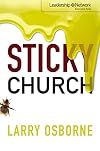
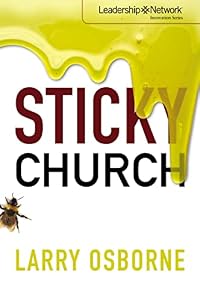
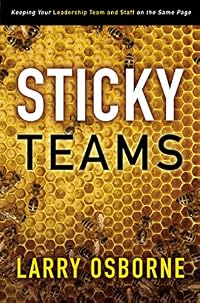
In Sticky Church, author and pastor Larry Osborne makes the case that closing the back door of your church is even more important than opening the front door wider. He offers a time-tested strategy for doing so: sermon-based small groups that dig deeper into the weekend message and tightly velcro members to the ministry. It's a strategy that enabled Osborne's congregation to grow from a handful of people to one of the larger churches in the nation-without any marketing or special show more programming. Sticky Church tells the inspiring story of North Coast Church's phenomenal growth and offers practical tips for launching your own sermon-based small group ministry. Topics include: - Why stickiness is so important. - Why most of our discipleship models don't work very well. - Why small groups always make a church more honest and transparent. - What makes groups grow deeper and sticker over time. Sticky Church is an ideal book for church leaders who want to start or retool their small group ministry-and velcro their congregation to the Bible and each other. show lessTags
Recommendations




Member Reviews
I knew I wanted to read Larry Osborne's new book Sticky Church as soon as I read the title. I would guess that that every pastor and every church has wrestled with the question about how to get people who visit their church to not only stay but how to get them connected. As Osborne points out we've tried just about everything but we still see too many of our people leaving through the back door.
The solution for Osborne and the folks at North Coast Church was to help people "stick" by getting them to be a part of their small group ministry. But the small groups at NCC were not your typical Bible study group or multiplying cell group. Osborne details the process that led him and his ministry team to focus on Sermon based small groups. As show more a result, those involved in small groups at NCC were given an opportunity to make application from what they heard the previous Sunday in the context of encouraging, accountable relationships.
I found Osborne's book to be extremely helpful in developing my own vision and strategy for ministry but probably not in the way Osborne would have imagined when writing this book. I pastor a rural church where we don't have small groups--we are a small group. I found many of Osborne's comments and principles to be very relevant to our situation and the ministry we are trusting God to develop. Osborne covers everything from preaching, to church health, to relationships, and leadership training. I imagine the principles I gleaned will be most beneficial to the way I give leadership to the local church.
My copy of Sticky Church is now marked up and well worn. My goal now is to go back through the book so I can process again the principles Osborne has shared. Let me share one principle that I found worth the price of the book (although thanks to the good folks at Zondervan I was given this copy to review for free!)
Just recently my kids have discover the joy of Legos, a toy that was a favorite of mine growing up as well. On pages 79-81 Osborne explains why we see such difficulty among people to "jell" with others when forming new relationship. The answer: people are like Legos. Like the little plastic bricks, there are only so many connectors to go around. When those connectors get filled up we find it difficult to make any new connections. When I read this and Osborne’s further application (you’ll just have to buy the book) I felt that both a light bulb went on and a weight was lifted at the same time. It’s not so much that the church is full of cliques; it’s that many of us already have our connectors filled (p.80). Brilliant!
Even if yours is not a church of small groups, or small groups are not yet on your ministry horizon this book is well worth reading. It will stay on my shelf and deserves a second read. Here’s hoping that the Lord uses this book to help our churches become even “stickier”. show less
The solution for Osborne and the folks at North Coast Church was to help people "stick" by getting them to be a part of their small group ministry. But the small groups at NCC were not your typical Bible study group or multiplying cell group. Osborne details the process that led him and his ministry team to focus on Sermon based small groups. As show more a result, those involved in small groups at NCC were given an opportunity to make application from what they heard the previous Sunday in the context of encouraging, accountable relationships.
I found Osborne's book to be extremely helpful in developing my own vision and strategy for ministry but probably not in the way Osborne would have imagined when writing this book. I pastor a rural church where we don't have small groups--we are a small group. I found many of Osborne's comments and principles to be very relevant to our situation and the ministry we are trusting God to develop. Osborne covers everything from preaching, to church health, to relationships, and leadership training. I imagine the principles I gleaned will be most beneficial to the way I give leadership to the local church.
My copy of Sticky Church is now marked up and well worn. My goal now is to go back through the book so I can process again the principles Osborne has shared. Let me share one principle that I found worth the price of the book (although thanks to the good folks at Zondervan I was given this copy to review for free!)
Just recently my kids have discover the joy of Legos, a toy that was a favorite of mine growing up as well. On pages 79-81 Osborne explains why we see such difficulty among people to "jell" with others when forming new relationship. The answer: people are like Legos. Like the little plastic bricks, there are only so many connectors to go around. When those connectors get filled up we find it difficult to make any new connections. When I read this and Osborne’s further application (you’ll just have to buy the book) I felt that both a light bulb went on and a weight was lifted at the same time. It’s not so much that the church is full of cliques; it’s that many of us already have our connectors filled (p.80). Brilliant!
Even if yours is not a church of small groups, or small groups are not yet on your ministry horizon this book is well worth reading. It will stay on my shelf and deserves a second read. Here’s hoping that the Lord uses this book to help our churches become even “stickier”. show less
Now here's an interesting scenario. I read this entire book, thinking it was written by Andy Stanley, until literally the last page. At which moment I closed the book, turned to the front cover and went "wow". What a strange phenomena, for I was really under the influence of Stanley writing as I read; going from the perspective of other things I've read of his. Very bizarre. Yes one might thinking I'm a numskull for not taking in the author before I read, but it doesn't suprise me I did such a thing. I often cannot quote the title of a book or author for that matter, details frequently escape me. As an aside I do have to say my IPOD nano has helped me immensely in remembering song titles and musicians; no excuse there.
This book was prep show more work for a conference I'm going to next week. Here's the main point of the book. Just because a church is getting people into the doors, doesn't mean they're good at keeping them there. But here's the main stuff which interested me, the role of small groups in retaining people. The thing that struck me most was allowing small groups within the church to stay together. In the evangelical church for the past 13 years that I've experienced, theory has been for a group to form and then keep breaking off into additional groups. The idea is to make room for more people, to not grow inward, to apprentice and allow for new leaders. In the 13 years that Chad and I have attended our current church we have been in or lead at least 8 small groups. Kid you not, I counted! Doesn't that seem a little nuts. Truth is we've been adhering to the whole break off theory, which as you can see with 8 groups under our belt averages out to a little like 15 months per group. Now that's nutty.
The book makes a big deal about saying people need the opportunity to develop ongoing, deep, intimate relationships. Yet via america's current evangelical small group theory, actually patterned after a small group practice of a Chinese church, we are in essence allowing people just enough time to begin getting close and then asking them to separate and move on. The author, Mr. Osbourne then says people and leaders of these groups have not spoken up too loudly about their discontent because they don't want to be seen as against the leadership. A sentiment of which I whole heartedly agree. Chad and I have been in this very spot.
From our early days at our current church we have bemoaned this getting close with people then having to separate and move on to another group. And reality it's been difficult to maintain the connections with those original ties. So they're always being started and broken. The author actually had the audacity and I say this in jest, to suggest it would be allright for some groups to stay together for life. Now there's a novel idea, relationships that actually thread through a lifetime. Of course there is a rightful caveat, that a welcoming spirit is given for newcomers to which I agree.
All in all a good book, saying things publicly that I'm sure the body of the evangelical church has been feeling and expressing behind closed doors for years. show less
This book was prep show more work for a conference I'm going to next week. Here's the main point of the book. Just because a church is getting people into the doors, doesn't mean they're good at keeping them there. But here's the main stuff which interested me, the role of small groups in retaining people. The thing that struck me most was allowing small groups within the church to stay together. In the evangelical church for the past 13 years that I've experienced, theory has been for a group to form and then keep breaking off into additional groups. The idea is to make room for more people, to not grow inward, to apprentice and allow for new leaders. In the 13 years that Chad and I have attended our current church we have been in or lead at least 8 small groups. Kid you not, I counted! Doesn't that seem a little nuts. Truth is we've been adhering to the whole break off theory, which as you can see with 8 groups under our belt averages out to a little like 15 months per group. Now that's nutty.
The book makes a big deal about saying people need the opportunity to develop ongoing, deep, intimate relationships. Yet via america's current evangelical small group theory, actually patterned after a small group practice of a Chinese church, we are in essence allowing people just enough time to begin getting close and then asking them to separate and move on. The author, Mr. Osbourne then says people and leaders of these groups have not spoken up too loudly about their discontent because they don't want to be seen as against the leadership. A sentiment of which I whole heartedly agree. Chad and I have been in this very spot.
From our early days at our current church we have bemoaned this getting close with people then having to separate and move on to another group. And reality it's been difficult to maintain the connections with those original ties. So they're always being started and broken. The author actually had the audacity and I say this in jest, to suggest it would be allright for some groups to stay together for life. Now there's a novel idea, relationships that actually thread through a lifetime. Of course there is a rightful caveat, that a welcoming spirit is given for newcomers to which I agree.
All in all a good book, saying things publicly that I'm sure the body of the evangelical church has been feeling and expressing behind closed doors for years. show less
Great book! Practical insights on how small groups can integrate with congregational life. It offered great concepts that clarified my thinking on Christian small groups - people "Velcroed" to the Bible and to friends (42-46), like legos people having limited space for connecting (80), the funnel of what a group can do (152).
Short, easy read. Osborne lays out how his church does small group ministry. I have been intrigued for a long time with the concept of sermon based small groups. Osborne certainly makes it sound appealing and fairly easy to implement. I am concerned, a little, how deep discipleship happens in this model. Well worth the read and much to think about.
Short, easy read. Osborne lays out how his church does small group ministry. I have been intrigued for a long time with the concept of sermon based small groups. Osborne certainly makes it sound appealing and fairly easy to implement. I am concerned, a little, how deep discipleship happens in this model. Well worth the read and much to think about.
I don't believe I've ever read a book on Church growth that I agreed with more. The basic premise of the book is that church grow best by retaining people through small groups rather than by attracting lots of new people. Growth best happens through small groups done well (closing the back door) rather than fancy marketing and programs (opening wide the front door). Osborne does a good job of telling how to do small groups well using his church's example. I recommend this book to pastors and church leaders concerned about the future and direction of their churches.
In this simple introduction to the philosophy and practice of sermon-based small groups, Osborne wants to help churches "close the back door" - as churches often fail to integrate visitors and new members into the life and ministry of the church. The Sticky Church (via sermon-based small groups) attempts to bond believers to what they need most: scripture and one another. Osborne presents a compelling vision. A-
Members
- Recently Added By
Author Information

28 Works 2,455 Members
Larry Osborne is a senior pastor at North Coast Church in Vista, California, a multi-campus ministry recognized as one of the ten most influential churches in America. His books on spirituality and leadership reach a wide audience. He travels the country speaking to business and church leaders about building healthy teams and innovative show more leadership. Larry resides in Oceanside, California, with his wife and family. show less
Series

Common Knowledge
- Canonical title
- Sticky Church
Classifications
Statistics
- Members
- 626
- Popularity
- 46,312
- Reviews
- 11
- Rating
- (4.00)
- Languages
- English
- Media
- Paper, Audiobook, Ebook
- ISBNs
- 5
- UPCs
- 3
- ASINs
- 5