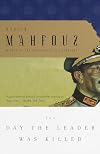
The Day the Leader Was Killed
by Naguib Mahfouz
On This Page
Description
From the Nobel Prize laureate and author of the acclaimed Cairo Trilogy, a beguiling and artfully compact novel set in Sadat's Egypt. The time is 1981, Anwar al-Sadat is president, and Egypt is lurching into the modern world. Set against this backdrop, The Day the Leader Was Killed relates the tale of a middle-class Cairene family. Rich with irony and infused with political undertones, the story is narrated alternately by the pious and mischievous family patriarch Muhtashimi Zayed, his show more hapless grandson Elwan, and Elwan's headstrong and beautiful fiancee Randa. The novel reaches its climax with the assassination of Sadat on October 6, 1981, an event around which the fictional plot is skillfully woven. The Day the Leader Was Killed brings us the essence of Mahfouz's genius and is further proof that he has, in the words of the Nobel citation, "formed an Arabic narrative art that applies to all mankind." show lessTags
Recommendations






































Member Reviews
روايه مختلفه عن باقى اعمال نجيب محفوظ يمكن لانه كتبها حديثا نسبيا ...قصيره نسبيا لكنها مركزه
احببتها على بساطه فكرتها فكره ربط مصير اشخاص فى بحور بلا شواطئ بمصير بلد تغرق ولا منجى لها
رأى نجيب محفوظ فى السادات صدمنى مكنتش متخيله انه بيكرهه للدرجه دى فمثلا ذكر تعليقا على مقتل السادات على لسان احد شخصياته ب:القتل انقذه من الجنون
روايه متلونه بكذا -كعادة محفوظ فى ابراز التناقض فى البشر- رأى المتدين و الملحد و من show more باع نفسه و من رفض و الكل يدور كالثور فى ساقيه بلا نهايه
show less
احببتها على بساطه فكرتها فكره ربط مصير اشخاص فى بحور بلا شواطئ بمصير بلد تغرق ولا منجى لها
رأى نجيب محفوظ فى السادات صدمنى مكنتش متخيله انه بيكرهه للدرجه دى فمثلا ذكر تعليقا على مقتل السادات على لسان احد شخصياته ب:القتل انقذه من الجنون
روايه متلونه بكذا -كعادة محفوظ فى ابراز التناقض فى البشر- رأى المتدين و الملحد و من show more باع نفسه و من رفض و الكل يدور كالثور فى ساقيه بلا نهايه
show less
The Day the Leader Was Killed is a succinct but significant work in contemporary Egypt. Naguib Mahfouz, through his sober and lyrical prose, has skillfully woven one of the darkest political backdrops in Egyptian history into his novel. Sealing off the seventies and reaching the threshold of a new decade, President Anwar al-Sadat implemented the Infitah, an open-door economic policy that would expedite the country forward to modernization. Like many of Mahfouz's works, this story is told in alternating first-person narratives by three characters--Muhtashimi Zayed, a pious, retired family patriarch; his grandson Elwan Fawwaz Muhtashimi; and Elwan's strong-willed, beautiful fiancée Randa Sulayman Mubarak. The story builds upon around show more this middle-class family and through the family's perspective zooms a picture of the social, economic, religious, gender and interpersonal aspects of the larger society in Egypt. For the patriarch, who devoted his whole life to prayers and religious rituals, his life was nothing but loneliness. He was especially despondent that the younger generation drifted from the Koran to whose life made a substantial influence. The old man could not forget "the woes of the world" (25) when he thought of his beloved grandson. Randa, like all her female contemporaries, faced gender challenges and the clash between traditional values and modern ideals.
The novelette evokes the assassination of Egyptian president Anwar Sadat on October 6, 1981. Sadat was saluting troops at the annual military parade when a team of assassins began firing weapons and throwing grenades into the reviewing stand. Sadat, along with 20 others was instantly killed in the deadly attack. The underlying cause of the fatal massacre traced back to the Camp David Accords between Israel and Egypt in 1978, which led to a negotiated peace between the two countries in the following year. The historic agreement brought peace to Egypt but no prosperity. The economy still slumped with no trace of a turn-around. Poverty-stricken Muslims and Copts in Egypt rubbed in friction and exploded into some gruesome round of violence in the Cairo slum. This is the very socioeconomic backdrop on which Mahfouz adroitly set his novel. Like the Cairo Trilogy and many of his works, Mahfouz captures and chronicles the most crucial of his own times. show less
The novelette evokes the assassination of Egyptian president Anwar Sadat on October 6, 1981. Sadat was saluting troops at the annual military parade when a team of assassins began firing weapons and throwing grenades into the reviewing stand. Sadat, along with 20 others was instantly killed in the deadly attack. The underlying cause of the fatal massacre traced back to the Camp David Accords between Israel and Egypt in 1978, which led to a negotiated peace between the two countries in the following year. The historic agreement brought peace to Egypt but no prosperity. The economy still slumped with no trace of a turn-around. Poverty-stricken Muslims and Copts in Egypt rubbed in friction and exploded into some gruesome round of violence in the Cairo slum. This is the very socioeconomic backdrop on which Mahfouz adroitly set his novel. Like the Cairo Trilogy and many of his works, Mahfouz captures and chronicles the most crucial of his own times. show less
These vicissitudes of history leave me a bit dazed. I remember the day in 1981 when Anwar Sadat was assassinated. I didn't understand my teacher's indifference. Mr Goldstein's views on Israel and geopolitics were unknown to me at that point. I didn't see him 15 years and we had a nice encounter at a cafe. A few years later he wrote some scathing nearly racist letters to our alternative weekly condemning the intifada. I emailed him and am not proud of the subsequent exchanges . He was a great teacher and I wish circumstances had been different.
This novella is very As I Lay Dying. Rotating perspectives illuminate the harsh economic reality of the Sadat years and the impact such had on a betrothed couple hoping for normalcy.
This novella is very As I Lay Dying. Rotating perspectives illuminate the harsh economic reality of the Sadat years and the impact such had on a betrothed couple hoping for normalcy.
this wasn't for me, although i enjoyed it more as it went along. the short chapters helped; each chapter is one of the three characters' point of view, and having only a few pages of each at a time kept it fresh and constantly moving. maybe i just don't know enough to pick up on the clues about the time and place, and the context of what was happening around these two families. missing that, i missed the point of most of it, and didn't really get this, even as i started to get more interested in the personal story by the end.
Ratings
Members
- Recently Added By
Author Information

335+ Works 19,085 Members
Naguib Mahfouz was born in Cairo, Egypt on December 11, 1911. He received a degree in philosophy from the University of Cairo. He took on several civil service and government department jobs to supplement his income while writing, but retired from that career in 1971. During his lifetime, he wrote more than 30 novels including The Games of Fate, show more The Cairo Trilogy, Children of Gebelawi, The Thief and the Dogs, Autumn Quail, Small Talk on the Nile, and Miramar. He received numerous awards including the Egyptian State Prize, the Presidential Medal from the American University in Cairo, and the Nobel Prize for Literature in 1988. He died as a result of a head injury on August 30, 2006 at the age of 94. (Bowker Author Biography) show less
Common Knowledge
- Canonical title
- The Day the Leader Was Killed
- Original publication date
- 1985 (Egypt) (Egypt); 1997 (English translation) (English translation)
- People/Characters
- Muhtashimi Zayed; Elwan Fawwaz Muhtashimi,; Randa Sulayman Mubarak
- Important places
- Egypt; Cairo, Egypt
- Important events
- Assassination of Anwar al-Sadat (1981)
- First words
- Little sleep.
- Blurbers
- Said, Edward
- Disambiguation notice
- Original Arabic title: Yawm qutila al-za-'im
Classifications
- Genres
- Fiction and Literature, General Fiction, Historical Fiction
- DDC/MDS
- 892.736 — Literature & rhetoric Literatures of other languages Afro-Asiatic literatures Arabic (Egypt, Lebanon, Palestine, Saudi Arabia, Sudan) Arabic fiction 1945–2000
- LCC
- PJ7846 .A46 .Y3813 — Language and Literature Oriental languages and literatures Oriental philology and literature Arabic Arabic literature Individual authors or works
- BISAC
Statistics
- Members
- 255
- Popularity
- 125,950
- Reviews
- 5
- Rating
- (3.53)
- Languages
- 7 — Arabic, Dutch, English, French, German, Italian, Spanish
- Media
- Paper, Ebook
- ISBNs
- 18
- ASINs
- 3