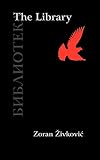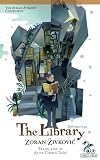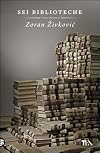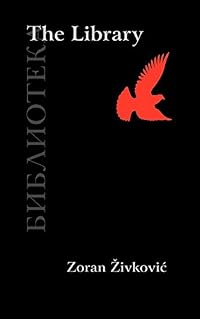
The Library
by Zoran Zivkovic
On This Page
Description
One of the most beloved "mosaic novels," The Library presents a series of tales centered on our love of books--taken, at times, to extremes. A writer encounters a website where all his possible future books are on display; a lonely man faces an infinite flow of hardback books through his mailbox; an ordinary library turns by night into an archive of souls; the Devil sets about raising standards of infernal literacy; one book houses all books; a connoisseur of hardcovers strives to expel a show more lone paperback from his collection. Winner of the 2003 World Fantasy Award for Best Novella! show lessTags
Recommendations

















Member Reviews
What would you do if you took a book off the shelf, read it, and then replaced it on the shelf only to find that after a few minutes of sitting in your chair or writing at your desk that the book had somehow reappeared by your side?
If you were a reader like the anonymous narrator of The Library you would not be surprised; not that your active mind would not be filled with questions about what is happening. As he says in the second of the six stories that comprise this small but eventful and exciting collection:
"I, however, wasn't surprised at all. I didn't let any of these annoying questions upset me. Long ago, I realized that the world is full of inexplicable wonders. It's no use even trying to explain them." (p 18)
Do not think that he show more takes the inexplicable lying down. No, he attempts to deal with the issues he faces, all dealing with books, and his experiences are alternately hilarious and horrifying; especially the "Infernal Library", a story that takes him . . . well you know where.
His world does not include the book that jumps off the shelf described above (that is from my own imagination), but he does have a mailbox in which the library volume entitled simply "World Literature" appears and reappears for what may seems like an infinite number of times. The narrator takes this in stride, always remembering to keep his mailbox neat and clean.
Zoran Zivkovic has six tales for the bibliophile that bring the reader in to a twenty-first century Kafkaesque world. Whether dealing with an on-line "virtual library" of everything he, the narrator, had written and would (perhaps) ever write, or trying to comprehend what kind of a library exists only at night inside a locked library. The challenge for the reader is to get beyond the apparent absurdity of the situations and discover the deeper questions that each eerie episode raises. It is only by trying to understand what each of these stories mean for both narrator and reader that you will be able to enjoy the further surprise and delight in store for you as you attempt to make your way through to the final story.
Having finished reading this I found myself with the feeling that I would never forget the libraries created by Zoran Zivkovic in this extraordinary collection. But just in case I do there is always the chance the book will miraculously appear beside me silently enticing me with its simple presence. show less
If you were a reader like the anonymous narrator of The Library you would not be surprised; not that your active mind would not be filled with questions about what is happening. As he says in the second of the six stories that comprise this small but eventful and exciting collection:
"I, however, wasn't surprised at all. I didn't let any of these annoying questions upset me. Long ago, I realized that the world is full of inexplicable wonders. It's no use even trying to explain them." (p 18)
Do not think that he show more takes the inexplicable lying down. No, he attempts to deal with the issues he faces, all dealing with books, and his experiences are alternately hilarious and horrifying; especially the "Infernal Library", a story that takes him . . . well you know where.
His world does not include the book that jumps off the shelf described above (that is from my own imagination), but he does have a mailbox in which the library volume entitled simply "World Literature" appears and reappears for what may seems like an infinite number of times. The narrator takes this in stride, always remembering to keep his mailbox neat and clean.
Zoran Zivkovic has six tales for the bibliophile that bring the reader in to a twenty-first century Kafkaesque world. Whether dealing with an on-line "virtual library" of everything he, the narrator, had written and would (perhaps) ever write, or trying to comprehend what kind of a library exists only at night inside a locked library. The challenge for the reader is to get beyond the apparent absurdity of the situations and discover the deeper questions that each eerie episode raises. It is only by trying to understand what each of these stories mean for both narrator and reader that you will be able to enjoy the further surprise and delight in store for you as you attempt to make your way through to the final story.
Having finished reading this I found myself with the feeling that I would never forget the libraries created by Zoran Zivkovic in this extraordinary collection. But just in case I do there is always the chance the book will miraculously appear beside me silently enticing me with its simple presence. show less
A very nice surprise. I'd read a newspaper column about Zivkovic, it was full of praise and so I hunted down some books by the author. This is the first one that arrived.
It's a very good collection of six shorts, running to just over one hundred pages, about certain libraries. To describe the ideas behind the stories would, I feel, slightly spoil things. Suffice to say the six libraries are: the Virtual Library / the Home Library / the Night Library / the Infernal Library / the Smallest Library / and the Noble Library.
Zivkovic's style is a little hard to pin down. The "about author" section describes him as belonging to the middle European fantastika tradition. There's certainly a dash of that here but there's also so much more. One of show more the first pages of this book contains a dedication to Michael Moorcock, the great fantasy / sci-fi author. Some stories are very light-hearted and in others there's the occasional pinch of urban horror here too, like something you might find in a collection by Thomas Ligotti. Throughout all this Zivkovic writes in a sparse style that brings to my mind the lightness of touch belonging to Japanese authors such as Soseki and Murakami (something reinforced by all these stories having a first person narrative).
So quite a mish-mash, in my opinion anyway. But Zivkovic makes it all work and with his lean prose it's easy to race through this collection in a couple of hours. I'm very impressed and I'll hunt down more of the author's works that have been translated into English. Hopefully he'll gain more recognition in the future.
The only reason I give The Library four, instead of five stars, is because, for all his nice ideas, I wish Zivkovic displayed slightly more breadth with the stories. For instance, one tale is essentially concerned with how someone / thing knows our narrator's future, whilst another is concerned with how someone / thing knows so much about our narrator's past. So: ideas that are not so different, I'm sure you'll agree. However, that's my only minor quibble with an otherwise very good and very promising collection of short stories. show less
It's a very good collection of six shorts, running to just over one hundred pages, about certain libraries. To describe the ideas behind the stories would, I feel, slightly spoil things. Suffice to say the six libraries are: the Virtual Library / the Home Library / the Night Library / the Infernal Library / the Smallest Library / and the Noble Library.
Zivkovic's style is a little hard to pin down. The "about author" section describes him as belonging to the middle European fantastika tradition. There's certainly a dash of that here but there's also so much more. One of show more the first pages of this book contains a dedication to Michael Moorcock, the great fantasy / sci-fi author. Some stories are very light-hearted and in others there's the occasional pinch of urban horror here too, like something you might find in a collection by Thomas Ligotti. Throughout all this Zivkovic writes in a sparse style that brings to my mind the lightness of touch belonging to Japanese authors such as Soseki and Murakami (something reinforced by all these stories having a first person narrative).
So quite a mish-mash, in my opinion anyway. But Zivkovic makes it all work and with his lean prose it's easy to race through this collection in a couple of hours. I'm very impressed and I'll hunt down more of the author's works that have been translated into English. Hopefully he'll gain more recognition in the future.
The only reason I give The Library four, instead of five stars, is because, for all his nice ideas, I wish Zivkovic displayed slightly more breadth with the stories. For instance, one tale is essentially concerned with how someone / thing knows our narrator's future, whilst another is concerned with how someone / thing knows so much about our narrator's past. So: ideas that are not so different, I'm sure you'll agree. However, that's my only minor quibble with an otherwise very good and very promising collection of short stories. show less
New books keep arriving, and you can't bear to get rid of a single old one. And so, slowly and imperceptibly, the volumes crowd out everything before them. Like glaciers.
It is no secret that wife has reservations about my bibliomania, the consequences of filling our house with tomes until, inevitably, it collapses under the weight.
So she fears.
She mentioned often while we were abroad how piles sprouted and exponentially grew, how archipelagos became mountain ranges. I am guilty, I remain an addict.
The premise behind this book excited me. Živković avoided my expectations and made this universal. It could be nearly anywhere. The Belgrade of his experience is revealed in only the slimmest of detail. More problematic, was that each of show more the six section never mention a single author. What unfolds is a Borgesian procedural about the universe as a library. It wasn't satisfying, just a bland summoning to something greater. show less
It is no secret that wife has reservations about my bibliomania, the consequences of filling our house with tomes until, inevitably, it collapses under the weight.
So she fears.
She mentioned often while we were abroad how piles sprouted and exponentially grew, how archipelagos became mountain ranges. I am guilty, I remain an addict.
The premise behind this book excited me. Živković avoided my expectations and made this universal. It could be nearly anywhere. The Belgrade of his experience is revealed in only the slimmest of detail. More problematic, was that each of show more the six section never mention a single author. What unfolds is a Borgesian procedural about the universe as a library. It wasn't satisfying, just a bland summoning to something greater. show less
أكو كتب دسمة من تقراها تاخذ عقلك وفكرك كله ومتنطيك مجال..
واكو كتب خفيفة تقراها لو متقراها ما راح يصير عندك فرق ..
واكو كتب نكدر نسميها "عصرونية" .. اللي هيه الكتب اللي تقراها بين ما تقره كتاب ثاني هيجي بس حتى تغيرلك الجو.
وكتاب "المكتبة" لزوران زيفكوفيج من هذا النوع الأخير بالضبط ..
احداث كلها من عالم الخيال بس بنفس الوكت مرتبطة بأحداث حقيقية تصير ويانه بعالم الكتب ..
واكو كتب خفيفة تقراها لو متقراها ما راح يصير عندك فرق ..
واكو كتب نكدر نسميها "عصرونية" .. اللي هيه الكتب اللي تقراها بين ما تقره كتاب ثاني هيجي بس حتى تغيرلك الجو.
وكتاب "المكتبة" لزوران زيفكوفيج من هذا النوع الأخير بالضبط ..
احداث كلها من عالم الخيال بس بنفس الوكت مرتبطة بأحداث حقيقية تصير ويانه بعالم الكتب ..
Amazing collection of six short stories all metafictionally linked (via the 6th story) and all about libraries (and books, bibliophiles, etc.).
I found this book via my Amazon Kindle and its preview/sample; I'm glad I picked this up in hardcopy, as this will be reread many times. If I had to use analogies, I'd say this author's Borges mixed with a dash of Charles de Lint.
If you're anything of a book collector and don't mind a touch of magic in your reading, you'll love this book.
Now to see what other English-translation books I can get to read immediately from this great Serbian/Yugoslav author who's on my list of authors to read as much as possible....
I found this book via my Amazon Kindle and its preview/sample; I'm glad I picked this up in hardcopy, as this will be reread many times. If I had to use analogies, I'd say this author's Borges mixed with a dash of Charles de Lint.
If you're anything of a book collector and don't mind a touch of magic in your reading, you'll love this book.
Now to see what other English-translation books I can get to read immediately from this great Serbian/Yugoslav author who's on my list of authors to read as much as possible....
Think Rod Sterling's "Night Gallery" centered on books. An intriguing collection of short tales (I was able to read it easily on one plane trip) that, through bizarre and wonderful tales, underscores some of the odder relationships we have with our books.
Storie impossibili di libri e di lettori
Spesse volte, rovistando tra gli scaffali pieni di vecchi libri, in antiche biblioteche, capita tra le mani qualche libro dal dorso dorato e rilegato in pelle, ricoperto di polvere e con le pagine ingrigite o ingiallite dal tempo. All’aprirlo si scopre che, quelle pagine, i tarli le hanno trafitto operandovi dei veri e proprii buchi, facendone così scomparire le lettere della stampa. Tutto è come se, noi avidi lettori di libri, che per vivere abbiamo bisogno del nutrimento della lettura, alla stessa maniera questi invisibili animaletti avessero la stessa esigenza, quella di alimentarsi per sopravvivere. Non è un caso del resto che uno dei siti cosìdetti “sociali”, come questo che mi show more ospita, prenda il nome da uno di questi terribili roditori, l’ “Anobium Punctatum”, dando il nome ad una delle tante biblioteche virtuali che si fanno sempre più numerose in rete. Il bibliofilo/bibliomane si comporta proprio così. Come un tarlo di biblioteca che manifesta il suo amore per i libri, cibandosi di essi, andando sempre in cerca di uno, antico o vecchio che sia, di nuovo acquisto o rubato, da una libreria o una biblioteca. C’è come una gradualità in questa dipendenza che fa della biblioteca il punto di riferiemento.
Lo scrittore serbo, nato a Belgrado, Zoran Živković nel suo recente libro “Sei Biblioteche” traspone abilmente questa passione in sei diversi racconti brevi che sembrano muoversi sul filo della perfetta follia bibliofila. L’autore distilla questa sua personale passione in quella dei personaggi dei suoi racconti e con loro si identifica a tal punto che anche il lettore meno dipendente da libri ne viene coinvolto. Sono personaggi solitari per natura ma ansiosi di condividere una compagnia libresca. Uno di questi personaggi abita in un appartamento così minuscolo, per giunta senza scaffali perchè, egli dice, ruberebbero spazio agli stessi libri, che inondano gli spazi. E’ gente questa che non sembra avere amici o famiglia. Interagisce soltanto con librai o bibliotecari, sia nella vita reale che online. Alcuni scrivono, altri sono soltanto lettori che non lasciano traccia del loro passaggio nel mondo.
Come narratori in prima persona non sono affidabili anche se prendono parte agli eventi di cui parlano. Come ad esempio nel racconto sulla “Biblioteca Virtuale”. Il protagonista irritato dallo spam che riceve nella sua posta eletttronica, cade nell’errore di leggere uno di questi messaggi trappola e si ritrova a confrontarsi con la sua bibliografia contenente non solo con i libri che ha scritto ma addirittura con quelli che dovrà ancora scrivere. Per non dire poi delle possibili date del suo decesso. Che cosa si può fare con notizie di questo genere? Lo stesso narratore è indeciso. La conclusione per lui è insoddisfacente.
Il tema dell’auto-conoscenza è presente invece nel racconto “La Biblioteca Notturna”. Un narratore nervoso, dopo di avere trascorso due ore a cinema, mentre invece avrebbe voluto andare in una libreria, si chiede come potrà mai trascorrere il fine settimana senza avere comprato un libro nuovo. Visto che sia le librerie che le biblioteche sono chiuse nel fine settimana. Lascia, allora, il locale in fretta ma è troppo tardi ormai. Anche se crede di essere riuscito ad entrare nell’edificio che pensa sia la biblioteca, scopre invece di essere finito in un posto davvero diverso e del tutto speciale. Contiene, infatti, le biografie di tutti coloro che sono vissuti. Dei dossiers che vengono rilegati quando le persone trapassano. E’ portato a pensare di trovarsi di fronte a libri-dossier del tipo di quelli che si fanno sui cittadini negli stati totalitari. E invece lo scopo di quella biblioteca è diverso in quanto in quei libri ci sono dettagli di ogni tipo. C’è anche nel suo dossier che addirittura contiene il biglietto con il quale è entrato a cinema poco prima. L’autore sembra voler metter in evidenza il senso della scrittura biografica e il ruolo che svolge la stessa biblioteca come raccoglitore e contenitore di informazioni. Ma il protagonista si chiede se è mai possibile comprimere la vita di un uomo tra le pagine di un solo libro e che senso abbia il tutto.
La “Biblioteca di Casa” si occupa del sovraccarico di informazione. Il protagonista, quello che abbiamo visto non avere scaffali per dare maggior spazio ai libri, soffre di una vera e propria ossessione che lo porta a spolverare accuratamente la sua cassetta postale per far sì che i libri che riceve possano essere accolti nella migliore maniera possibile. Gli arriva un volume sulla “Letteratura Mondiale”, il primo di una lunga serie, tutti simili e perfettamente ammassati nel ristretto spazio della sua minuscola stanza. Migliaia di libri sull’onda di un inatrrestabile fiume di parole che gli stessi volumi trasportano e che lui non saprà mai come fronteggiare.
La potenza dei libri può davvero impossessarsi della vita degli uomini come accade nel racconto La “Biblioteca Minima”. Quando il protagonista riceve il libro intitolato “Biblioteca Minima” può leggere una storia diversa ogni qualvolta lo apre. Diventa così ossessionato dal conservare questi racconti e sfida il lettore a riflettere su cosa significa scrivere un libro. E’ un’azione che scaturisce dall’immaginazione oppure è qualcosa del tutto diversa? E che cos’è la creatività? Non è forse solamente un’altro modo di copiare?
Il lettore non è salvo nemmeno nella tomba. Nella “Biblioteca Infernale”, l’inferno è diventato un centro terapeutico di lettura dove la presunta capacità della letteratura di “far bene” al lettore viene spinta fino all’estremo limite. Il diavolo si preoccupa di assegnare compiti di lettura alle persone che arrivano dalle sue parti. Nel racconto della “Biblioteca Raffinata” il tarlo della lettura si trasforma nella figura del suo protagonista che è lo stesso proprietario della biblioteca in una vicenda che lascio al lettore immaginare, anzi leggere.
L’autore di questo prezioso libro, che si legge in un paio di ore, scrive nella scia della tradizione fantastica europea, seguendo il filone di Kafka e Borges, per intenderci. Ma Živković non scrive in forma di realismo magico nè tantomeno in maniera surrealistica. Le sue storie sono simili a quelle di Borges nel senso che egli ha un approccio metafisico con la realtà piuttosto che magico. Sono storie iper-realistiche per la minuzia dei dettagli e degli elementi fantastici che si insinuano silenziosamente nella storia ed anche in maniera inaspettata. Un modo di raccontare tranquillo e rilassato, ma molto efficace e sintetico. A lettura ultimata, il lettore si renderà conto che non entrerà mai più come prima in una libreria o una biblioteca dopo di avere letto queste “storie impossibili” di libri e di biblioteche. Non sarà più il lettore di prima. show less
Spesse volte, rovistando tra gli scaffali pieni di vecchi libri, in antiche biblioteche, capita tra le mani qualche libro dal dorso dorato e rilegato in pelle, ricoperto di polvere e con le pagine ingrigite o ingiallite dal tempo. All’aprirlo si scopre che, quelle pagine, i tarli le hanno trafitto operandovi dei veri e proprii buchi, facendone così scomparire le lettere della stampa. Tutto è come se, noi avidi lettori di libri, che per vivere abbiamo bisogno del nutrimento della lettura, alla stessa maniera questi invisibili animaletti avessero la stessa esigenza, quella di alimentarsi per sopravvivere. Non è un caso del resto che uno dei siti cosìdetti “sociali”, come questo che mi show more ospita, prenda il nome da uno di questi terribili roditori, l’ “Anobium Punctatum”, dando il nome ad una delle tante biblioteche virtuali che si fanno sempre più numerose in rete. Il bibliofilo/bibliomane si comporta proprio così. Come un tarlo di biblioteca che manifesta il suo amore per i libri, cibandosi di essi, andando sempre in cerca di uno, antico o vecchio che sia, di nuovo acquisto o rubato, da una libreria o una biblioteca. C’è come una gradualità in questa dipendenza che fa della biblioteca il punto di riferiemento.
Lo scrittore serbo, nato a Belgrado, Zoran Živković nel suo recente libro “Sei Biblioteche” traspone abilmente questa passione in sei diversi racconti brevi che sembrano muoversi sul filo della perfetta follia bibliofila. L’autore distilla questa sua personale passione in quella dei personaggi dei suoi racconti e con loro si identifica a tal punto che anche il lettore meno dipendente da libri ne viene coinvolto. Sono personaggi solitari per natura ma ansiosi di condividere una compagnia libresca. Uno di questi personaggi abita in un appartamento così minuscolo, per giunta senza scaffali perchè, egli dice, ruberebbero spazio agli stessi libri, che inondano gli spazi. E’ gente questa che non sembra avere amici o famiglia. Interagisce soltanto con librai o bibliotecari, sia nella vita reale che online. Alcuni scrivono, altri sono soltanto lettori che non lasciano traccia del loro passaggio nel mondo.
Come narratori in prima persona non sono affidabili anche se prendono parte agli eventi di cui parlano. Come ad esempio nel racconto sulla “Biblioteca Virtuale”. Il protagonista irritato dallo spam che riceve nella sua posta eletttronica, cade nell’errore di leggere uno di questi messaggi trappola e si ritrova a confrontarsi con la sua bibliografia contenente non solo con i libri che ha scritto ma addirittura con quelli che dovrà ancora scrivere. Per non dire poi delle possibili date del suo decesso. Che cosa si può fare con notizie di questo genere? Lo stesso narratore è indeciso. La conclusione per lui è insoddisfacente.
Il tema dell’auto-conoscenza è presente invece nel racconto “La Biblioteca Notturna”. Un narratore nervoso, dopo di avere trascorso due ore a cinema, mentre invece avrebbe voluto andare in una libreria, si chiede come potrà mai trascorrere il fine settimana senza avere comprato un libro nuovo. Visto che sia le librerie che le biblioteche sono chiuse nel fine settimana. Lascia, allora, il locale in fretta ma è troppo tardi ormai. Anche se crede di essere riuscito ad entrare nell’edificio che pensa sia la biblioteca, scopre invece di essere finito in un posto davvero diverso e del tutto speciale. Contiene, infatti, le biografie di tutti coloro che sono vissuti. Dei dossiers che vengono rilegati quando le persone trapassano. E’ portato a pensare di trovarsi di fronte a libri-dossier del tipo di quelli che si fanno sui cittadini negli stati totalitari. E invece lo scopo di quella biblioteca è diverso in quanto in quei libri ci sono dettagli di ogni tipo. C’è anche nel suo dossier che addirittura contiene il biglietto con il quale è entrato a cinema poco prima. L’autore sembra voler metter in evidenza il senso della scrittura biografica e il ruolo che svolge la stessa biblioteca come raccoglitore e contenitore di informazioni. Ma il protagonista si chiede se è mai possibile comprimere la vita di un uomo tra le pagine di un solo libro e che senso abbia il tutto.
La “Biblioteca di Casa” si occupa del sovraccarico di informazione. Il protagonista, quello che abbiamo visto non avere scaffali per dare maggior spazio ai libri, soffre di una vera e propria ossessione che lo porta a spolverare accuratamente la sua cassetta postale per far sì che i libri che riceve possano essere accolti nella migliore maniera possibile. Gli arriva un volume sulla “Letteratura Mondiale”, il primo di una lunga serie, tutti simili e perfettamente ammassati nel ristretto spazio della sua minuscola stanza. Migliaia di libri sull’onda di un inatrrestabile fiume di parole che gli stessi volumi trasportano e che lui non saprà mai come fronteggiare.
La potenza dei libri può davvero impossessarsi della vita degli uomini come accade nel racconto La “Biblioteca Minima”. Quando il protagonista riceve il libro intitolato “Biblioteca Minima” può leggere una storia diversa ogni qualvolta lo apre. Diventa così ossessionato dal conservare questi racconti e sfida il lettore a riflettere su cosa significa scrivere un libro. E’ un’azione che scaturisce dall’immaginazione oppure è qualcosa del tutto diversa? E che cos’è la creatività? Non è forse solamente un’altro modo di copiare?
Il lettore non è salvo nemmeno nella tomba. Nella “Biblioteca Infernale”, l’inferno è diventato un centro terapeutico di lettura dove la presunta capacità della letteratura di “far bene” al lettore viene spinta fino all’estremo limite. Il diavolo si preoccupa di assegnare compiti di lettura alle persone che arrivano dalle sue parti. Nel racconto della “Biblioteca Raffinata” il tarlo della lettura si trasforma nella figura del suo protagonista che è lo stesso proprietario della biblioteca in una vicenda che lascio al lettore immaginare, anzi leggere.
L’autore di questo prezioso libro, che si legge in un paio di ore, scrive nella scia della tradizione fantastica europea, seguendo il filone di Kafka e Borges, per intenderci. Ma Živković non scrive in forma di realismo magico nè tantomeno in maniera surrealistica. Le sue storie sono simili a quelle di Borges nel senso che egli ha un approccio metafisico con la realtà piuttosto che magico. Sono storie iper-realistiche per la minuzia dei dettagli e degli elementi fantastici che si insinuano silenziosamente nella storia ed anche in maniera inaspettata. Un modo di raccontare tranquillo e rilassato, ma molto efficace e sintetico. A lettura ultimata, il lettore si renderà conto che non entrerà mai più come prima in una libreria o una biblioteca dopo di avere letto queste “storie impossibili” di libri e di biblioteche. Non sarà più il lettore di prima. show less
Jul 4, 2014 (Edited)Italian
Members
- Recently Added By
Lists

Speculative Fiction from around the World
610 works; 17 members
Author Information

68+ Works 1,206 Members
Awards and Honors
Awards
Work Relationships
Is contained in
Common Knowledge
- Canonical title*
- Sei biblioteche. Storie impossibili
- Original title
- Biblioteka
- Original publication date
- 2002
*Some information comes from Common Knowledge in other languages. Click "Edit" for more information.
Classifications
- Genres
- General Fiction, Fiction and Literature, Fantasy
- DDC/MDS
- 891.8235 — Literature & rhetoric Asian Literature East Indo-European and Celtic literatures West and South Slavic languages (Bulgarian, Slovene, Polish, Czech, Slovak, Serbo-Croatian, and Macedonian) Serbo-Croatian Fiction 1900–1991
- LCC
- PG1419.36 .I954 .B513 — Language and Literature Slavic languages and literatures. Baltic languages. Albanian language Slavic. Baltic. Albanian Serbo-Croatian
- BISAC
Statistics
- Members
- 139
- Popularity
- 234,587
- Reviews
- 8
- Rating
- (3.69)
- Languages
- 5 — Danish, English, Italian, Portuguese, Serbian
- Media
- Paper, Ebook
- ISBNs
- 11
- ASINs
- 1