The Nightingale
by Hans Christian Andersen
On This Page
Description
Despite being neglected by the emperor for a jewel-studded bird, the little nightingale revives the dying ruler with its beautiful song.Tags
Recommendations
















Member Recommendations
Member Reviews
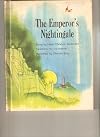
The Nightingale, illustrated by Nancy Ekholm Burkert.
Like The Little Mermaid, or The Ugly Duckling (with which it was originally published in 1843), The Nightingale is one of Hans Christian Andersen's original fairy-tales, relating the story of the Emperor of China, who learns to value natural beauty above mechanized dazzle. Discovering that foreign visitors consider the humble nightingale - whose song he has never heard - the greatest treasure of his kingdom, the Emperor demands a performance. Enchanted at first with the bird's beautiful song, he soon finds a new favorite in a jewel-encrusted copy of the nightingale, sent to him by the Emperor of Japan. Which is superior: the flesh-and-blood bird, whose songs are beautiful but show more irregular, or the beautiful machine, whose one song is always perfect?
Interpreted in a number of different ways over the years, The Nightingale has, for me, always been most meaningful as an exploration of the idea that many of the things truly worth having - beauty, authenticity, truth - are not the sort of things that can be caged and put on display. This picture-book retelling, with an immensely readable text - translated by actress Eva La Gallienne - and gorgeous watercolor artwork by Nancy Ekholm Burkert, who also illustrated Andersen's The Fir Tree, is one of my favorites! I would say that it's just about tied with Bagram Ibatoulline's version as the best one out there. show less
Like The Little Mermaid, or The Ugly Duckling (with which it was originally published in 1843), The Nightingale is one of Hans Christian Andersen's original fairy-tales, relating the story of the Emperor of China, who learns to value natural beauty above mechanized dazzle. Discovering that foreign visitors consider the humble nightingale - whose song he has never heard - the greatest treasure of his kingdom, the Emperor demands a performance. Enchanted at first with the bird's beautiful song, he soon finds a new favorite in a jewel-encrusted copy of the nightingale, sent to him by the Emperor of Japan. Which is superior: the flesh-and-blood bird, whose songs are beautiful but show more irregular, or the beautiful machine, whose one song is always perfect?
Interpreted in a number of different ways over the years, The Nightingale has, for me, always been most meaningful as an exploration of the idea that many of the things truly worth having - beauty, authenticity, truth - are not the sort of things that can be caged and put on display. This picture-book retelling, with an immensely readable text - translated by actress Eva La Gallienne - and gorgeous watercolor artwork by Nancy Ekholm Burkert, who also illustrated Andersen's The Fir Tree, is one of my favorites! I would say that it's just about tied with Bagram Ibatoulline's version as the best one out there. show less
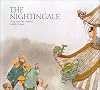
The Nightingale, illustrated by Mary J. Newill.
Originally published by D.B. Updike at the Merrymount Press in 1895, and then reprinted in this edition by R.H. Russell in 1898, this nineteenth-century retelling of Hans Christian Andersen's The Nightingale features the translation of H.W. Dulcken, and the gorgeous engraving-style illustrations of Mary J. Newill.
A student at the Birmingham School of Art, and a participant in the late nineteenth, and early twentieth-century Arts and Crafts Movement, Newill was a well-known illustrator, stained glass designer, and embroiderer. Her landscape work was considered particularly fine, and won praise from figures such as Walter Crane.
The five plates contained in The Nightingale are simply show more beautiful: detailed, bold, compelling. Judged on artwork alone, this outstanding little gem of a book merits a five-star rating. Unfortunately, Dulcken's stiff, archaic-sounding translation - so very Victorian in style - detracted somewhat from my enjoyment. Still, Newill's illustrations are the real appeal here, and they do not disappoint. If they ever do publish a retrospective of her work, I'll be first on line to buy it! show less
Originally published by D.B. Updike at the Merrymount Press in 1895, and then reprinted in this edition by R.H. Russell in 1898, this nineteenth-century retelling of Hans Christian Andersen's The Nightingale features the translation of H.W. Dulcken, and the gorgeous engraving-style illustrations of Mary J. Newill.
A student at the Birmingham School of Art, and a participant in the late nineteenth, and early twentieth-century Arts and Crafts Movement, Newill was a well-known illustrator, stained glass designer, and embroiderer. Her landscape work was considered particularly fine, and won praise from figures such as Walter Crane.
The five plates contained in The Nightingale are simply show more beautiful: detailed, bold, compelling. Judged on artwork alone, this outstanding little gem of a book merits a five-star rating. Unfortunately, Dulcken's stiff, archaic-sounding translation - so very Victorian in style - detracted somewhat from my enjoyment. Still, Newill's illustrations are the real appeal here, and they do not disappoint. If they ever do publish a retrospective of her work, I'll be first on line to buy it! show less
A beautifully illustrated and narrated story. This was given to me when I was 9 and I remember losing myself in the pictures of this book.
Fantastisk! Det var ett nöje att läsa den.
about a special bird that healed people.
"En una región muy remota de la antigua China Imperial había un ruiseñor que, posado en la rama de un árbol milenario, cantaba sin cesar, como lanzando sus notas al cielo azul".
The Chinese story of a nightingale and Emperor.
Members
- Recently Added By
Author Information

3,945+ Works 53,936 Members
Hans Christian Andersen, one of the best known figures in literature, is best know for combining traditional folk tales with his own great imagination to produce fairy tales known to most children today. The Danish writer was born in the slums of Odense. Although he was raised in poverty, he eventually attended Copenhagen University. Although show more Andersen wrote poems, plays and books, he is best known for his Fairy Tales and Other Stories, written between 1835 and 1872. This work includes such famous tales as The Emperor's New Clothes, Little Ugly Duckling, The Tinderbox, Little Claus and Big Claus, Princess and the Pea, The Snow Queen, The Little Mermaid, The Nightingale, The Story of a Mother and The Swineherd. Andersen's greatest work is still influential today, helping mold some of the works of writers ranging from Charles Dickens to Oscar Wilde and inspiring many of the works of Disney and other motion pictures. Andersen, who traveled greatly during his life, died in his home in Rolighed on August 4, 1875. (Bowker Author Biography) show less
Some Editions
Awards and Honors
Series
Belongs to Publisher Series
Work Relationships
Is contained in
Is retold in
Common Knowledge
- Canonical title
- The Nightingale
- Original publication date
- 1844
- People/Characters
- Nightingale
- Important places*
- China
*Some information comes from Common Knowledge in other languages. Click "Edit" for more information.
Classifications
Statistics
- Members
- 342
- Popularity
- 92,042
- Reviews
- 12
- Rating
- (4.06)
- Languages
- 13 — Catalan, Danish, Dutch, English, French, German, Greek, Italian, Norwegian (Bokmål), Norwegian, Portuguese, Spanish, Swedish
- Media
- Paper, Audiobook, Ebook
- ISBNs
- 130
- UPCs
- 2
- ASINs
- 16