
Nancy Ekholm Burkert
Author of Snow-White and the Seven Dwarfs: A Tale from the Brothers Grimm
About the Author
Works by Nancy Ekholm Burkert
Snow-White and the Seven Dwarfs: A Tale from the Brothers Grimm (1972) — Illustrator — 782 copies, 20 reviews
Associated Works
Tagged
Common Knowledge
- Birthdate
- 1933-02-16
- Gender
- female
- Education
- University of Wisconsin, Madison
- Occupations
- artist
illustrator - Awards and honors
- Caldecott Award 1973
New York Times Notable Book 1972
Boston Globe-Horn Book Award 1989 - Nationality
- USA
- Birthplace
- Sterling, Colorado, USA
- Places of residence
- Wisconsin, USA
- Associated Place (for map)
- USA
Members
Reviews

The only book both written and illustrated by Nancy Ekholm Burkert - whose beautiful artwork has graced such publications as Roald Dahl's James and the Giant Peach (the original edition, before Quentin Blake got a hold of it) and Snow-White and the Seven Dwarfs, chosen as a Caldecott Honor Book in 1973 - Valentine and Orson is a retelling of a medieval chivalric romance (part of the Carolingian cycle) concerning twin brothers, separated at birth. Divided into nine scenes, it is presented as show more a play being given by a village theater troupe in sixteenth-century Flanders, and is written in iambic pentameter couplets!
This is all explained in the most informative afterword, in which Burkert reveals that her interest in the tale was first sparked by seeing Pieter Bruegel the Elder's print, The Masquerade of Valentine and Orson, which inspired her to set her "play" in Flanders. The poetic form is taken from Chaucer, as a tribute to The Canterbury Tales. You might think that such high-brow antecedents would make Burkert's retelling rather inaccessible, but nothing could be further from the truth - her story is immensely engaging, and reads well.
The illustrations, which appear in every other two-page spread (the text-only spreads are enlivened by a highly decorative initial number, corresponding to the scene, and each paragraph is separated by a little motif, but they are otherwise plain), depict the Flemish players enacting their medieval French (and Greek?) tale, and are simply gorgeous! Full of life and vitality, color and humor, they are a fairy-tale-lover's dream - I enjoyed poring over them, and picking out Burkert's brush-strokes!
This is a beautiful volume, with every detail - from the poetic narrative to the page-layout - presented with care and artistry. Even the type-face (Dante) is well-chosen! The story itself is exciting, with everything from giants to magicians, and young readers with a taste for adventure-tales will enjoy rooting for Valentine and Orson's reunion, and the proving of Empress Bellisant's innocence. I found myself, as always with such tales, as indignant with the faithless misogyny of the husband - so willing to believe the worst of his wife, with no evidence - as I was with the false accuser, but there you have it - western literature abounds with such unfortunate themes.
Definitely not one for the youngest fairy-tale crowd, Valentine and Orson is a book I would recommend to independent young readers with a taste for epics and poetry. Just beautiful! show less
This is all explained in the most informative afterword, in which Burkert reveals that her interest in the tale was first sparked by seeing Pieter Bruegel the Elder's print, The Masquerade of Valentine and Orson, which inspired her to set her "play" in Flanders. The poetic form is taken from Chaucer, as a tribute to The Canterbury Tales. You might think that such high-brow antecedents would make Burkert's retelling rather inaccessible, but nothing could be further from the truth - her story is immensely engaging, and reads well.
The illustrations, which appear in every other two-page spread (the text-only spreads are enlivened by a highly decorative initial number, corresponding to the scene, and each paragraph is separated by a little motif, but they are otherwise plain), depict the Flemish players enacting their medieval French (and Greek?) tale, and are simply gorgeous! Full of life and vitality, color and humor, they are a fairy-tale-lover's dream - I enjoyed poring over them, and picking out Burkert's brush-strokes!
This is a beautiful volume, with every detail - from the poetic narrative to the page-layout - presented with care and artistry. Even the type-face (Dante) is well-chosen! The story itself is exciting, with everything from giants to magicians, and young readers with a taste for adventure-tales will enjoy rooting for Valentine and Orson's reunion, and the proving of Empress Bellisant's innocence. I found myself, as always with such tales, as indignant with the faithless misogyny of the husband - so willing to believe the worst of his wife, with no evidence - as I was with the false accuser, but there you have it - western literature abounds with such unfortunate themes.
Definitely not one for the youngest fairy-tale crowd, Valentine and Orson is a book I would recommend to independent young readers with a taste for epics and poetry. Just beautiful! show less
By Jacob Grimm - Snow-White and the Seven Dwarfs: A Tale from the Brothers Grimm (Sunburst Book) (10.2.1987) by Jacob Grimm
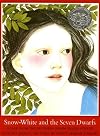
I'd never heard of the Grimm brothers version of Snow White, I grew up only knowing the Disney version. I liked the Disney version better, in this one I thought Snow White was really dumb. Unlike in the Disney version, she let her stepmother fool her THREE times, and almost kill her each time. Honestly at that point it's natural selection, I was shocked that she didn't die forever in this story. I thought the differences between the two were interesting, and I really enjoyed thinking of all show more of the similarities and differences while reading the book. show less
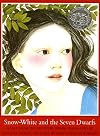
This picture book wasn’t the Snow White Version I was expecting or used to hearing. On page 3, the queen hires a hitman for her 7 year old step daughter and demands the lung and liver as proof. He lets the girl go and gives the queen instead the lung and liver of a boar, which the queen then eats. Thinking’s it’s her step daughter’s lung and liver, she eats it with enjoyment. That kind of blew me away. Snow White is also not poisoned by an apple right away, but instead the queen show more disguised herself as an old lady and laces snow whites girdle so tight, she faints from lack of oxygen. When that doesn’t kill her, she then poisons the apple and gives it to her. And then the story goes pretty much as expected with the prince rescuing her. I’ve noticed a recurring theme in some of these fairy tales is that the mom dies, the step mother shows up, but she’s always “proud, haughty, and jealous” of the step daughters and treat them horribly. And these poor girls seem to always be a serve to to someone. Cinderella and in this story, a 7 year old Snow White is taking care of 7 dwarf men. Then they’re rescued by a prince because they put up with servitude so selflessly. The stories themselves are good, but it just seems like the same plot over and over. show less
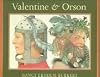
From Amazon.com, this marvelous review says it all:
Reviews Written by
E. R. Bird "Ramseelbird" Manhattan, NY)
Exit pursued by bear, stage right., January 21, 2005
I tend to limit my reviews solely to children and teen books. Call me limited, if you will, but I just feel more comfortable in the realm of books intended for an audience under the age of 19. Which makes my review of "Valentine and Orson" just that much more difficult. Written and illustrated by wonderful Quaker writer Nancy Ekholm show more Burkert, the book is a clever retelling of a lost romantic French play. Inspired by the master painter Pieter Bruegel the Elder, Burkert has crafted a book that is not really meant for children but appears in a distinctly picture bookish format. I say that it isn't intended for kids, but when read aloud, this story is appropriate for people of all ages. And it's thoroughly engaging to boot.
Our narrator is Pacolet, presented in this form as a Muslim dwarf. Before our eyes a troupe of actors appears and places a stage in the midst of a small village. They are presenting the exciting pantomime of Valentine and Orson in "nine momentous acts". In a plot worthy of Shakespeare himself (or, rather, reminiscent of) we meet Alexander, Emperor of Greece and his lovely wife Bellisant. When the Emperor's lascivious Archbishop makes a move on the lovely lady she shuns him, earning his wrath. A few well placed accusations on his part regarding that lady's faithfulness to her husband's bed is all this is needed to get her banished to the wilderness with a single servant to accompany her. Worse still, she's pregnant. And so, alone and in the wilderness, Bellisant gives birth to twins. One child (Orson) is stolen by a bear and raised to be a wild man. The other (Valentine) is found by the Emperor's brother-in-law and raised as a boy of the court. When Valentine is sent to kill Orson because of public complaints, he makes an amazing discovery and with his brother sets out to discover their true lineage.
You like stories of romance, adventure, big honkin' giants, and magic? Well brother, this one's for you. According to her Author's Note, Burkert based her rendition of this tale via Henry Watson's translation of a French prose version. Inspired by Chaucer's "Canterbury Tales", Burkert decided to make her job that much harder by (shudder) putting the story into, I kid you not, iambic pentameter couplets. In words of great restraint she notes, "It has been a lengthy and daunting process". Color me unsurprised. The result, however, is flawless. Not a beat of this puppy reads as anything but harmonious to the ear of the 21st century reader.
In fact, the book is so successful in terms of language that it almost seems a waste to illustrate it. I said almost. The fact of the matter is that Burkert's art is extraordinary. In the book, "The Art of Nancy Ekholm Burkert" (a recommendation of her work right there) one writer notes that her paintings are, "as highly ordered and rooted in traditional craftsmanship and discipline as any classically trained Renaissance artist". I have heard from highly reputable and Friendly sources too that the twins in this book portraying Valentine and Orson bear a stunning resemblance to the author/illustrator's own son. The illustrations amount to more than a happy family drama, though. With each picture we see a play being performed for simple country folk. Common objects are used for everything from swords to the wild man's beard. And just as the audience forgets that they're watching a play as they become drawn into the action, we too forget that we are watching an illustrator portray actors IN a play. The action is just as interesting to the real reader as it is to the imaginary audience. Quite a feat.
I wouldn't immediately suggest that you hand this book to the nearest toddler for their bedtime reading, of course. On the other hand, there are some kids out there (older readers generally) who love Shakespeare. So if you're hoping to give them something both beautiful and interesting, "Valentine and Orson" may just work. It makes a lovely gift and is a pleasure to present to one's own friends. All that and it's well-written too. A rare of work of picture book art. Take the greatest of care with it. show less
Reviews Written by
E. R. Bird "Ramseelbird" Manhattan, NY)
Exit pursued by bear, stage right., January 21, 2005
I tend to limit my reviews solely to children and teen books. Call me limited, if you will, but I just feel more comfortable in the realm of books intended for an audience under the age of 19. Which makes my review of "Valentine and Orson" just that much more difficult. Written and illustrated by wonderful Quaker writer Nancy Ekholm show more Burkert, the book is a clever retelling of a lost romantic French play. Inspired by the master painter Pieter Bruegel the Elder, Burkert has crafted a book that is not really meant for children but appears in a distinctly picture bookish format. I say that it isn't intended for kids, but when read aloud, this story is appropriate for people of all ages. And it's thoroughly engaging to boot.
Our narrator is Pacolet, presented in this form as a Muslim dwarf. Before our eyes a troupe of actors appears and places a stage in the midst of a small village. They are presenting the exciting pantomime of Valentine and Orson in "nine momentous acts". In a plot worthy of Shakespeare himself (or, rather, reminiscent of) we meet Alexander, Emperor of Greece and his lovely wife Bellisant. When the Emperor's lascivious Archbishop makes a move on the lovely lady she shuns him, earning his wrath. A few well placed accusations on his part regarding that lady's faithfulness to her husband's bed is all this is needed to get her banished to the wilderness with a single servant to accompany her. Worse still, she's pregnant. And so, alone and in the wilderness, Bellisant gives birth to twins. One child (Orson) is stolen by a bear and raised to be a wild man. The other (Valentine) is found by the Emperor's brother-in-law and raised as a boy of the court. When Valentine is sent to kill Orson because of public complaints, he makes an amazing discovery and with his brother sets out to discover their true lineage.
You like stories of romance, adventure, big honkin' giants, and magic? Well brother, this one's for you. According to her Author's Note, Burkert based her rendition of this tale via Henry Watson's translation of a French prose version. Inspired by Chaucer's "Canterbury Tales", Burkert decided to make her job that much harder by (shudder) putting the story into, I kid you not, iambic pentameter couplets. In words of great restraint she notes, "It has been a lengthy and daunting process". Color me unsurprised. The result, however, is flawless. Not a beat of this puppy reads as anything but harmonious to the ear of the 21st century reader.
In fact, the book is so successful in terms of language that it almost seems a waste to illustrate it. I said almost. The fact of the matter is that Burkert's art is extraordinary. In the book, "The Art of Nancy Ekholm Burkert" (a recommendation of her work right there) one writer notes that her paintings are, "as highly ordered and rooted in traditional craftsmanship and discipline as any classically trained Renaissance artist". I have heard from highly reputable and Friendly sources too that the twins in this book portraying Valentine and Orson bear a stunning resemblance to the author/illustrator's own son. The illustrations amount to more than a happy family drama, though. With each picture we see a play being performed for simple country folk. Common objects are used for everything from swords to the wild man's beard. And just as the audience forgets that they're watching a play as they become drawn into the action, we too forget that we are watching an illustrator portray actors IN a play. The action is just as interesting to the real reader as it is to the imaginary audience. Quite a feat.
I wouldn't immediately suggest that you hand this book to the nearest toddler for their bedtime reading, of course. On the other hand, there are some kids out there (older readers generally) who love Shakespeare. So if you're hoping to give them something both beautiful and interesting, "Valentine and Orson" may just work. It makes a lovely gift and is a pleasure to present to one's own friends. All that and it's well-written too. A rare of work of picture book art. Take the greatest of care with it. show less
Lists
Awards


You May Also Like


Associated Authors
Statistics
- Works
- 5
- Also by
- 12
- Members
- 983
- Popularity
- #26,195
- Rating
- 3.9
- Reviews
- 24
- ISBNs
- 15
- Languages
- 3