
Nancy Willard (1936–2017)
Author of A Visit to William Blake's Inn: Poems for Innocent and Experienced Travelers
About the Author
Nancy Willard was born in Ann Arbor, Michigan on June 26, 1936. She received a bachelor's degree in 1958 and a Ph.D in 1963 from the University of Michigan and a master's degree from Stanford University. She taught at Vassar College in the English department from 1965 until 2012. She published more show more than 70 books during her lifetime including collections of poetry, children's books, collections of short stories, novels, essays, and criticism. In 1982, she received the Newbery Medal for A Visit to William Blake's Inn. She died from natural causes on February 19, 2017 at the age of 80. (Bowker Author Biography) show less
Image credit: 2004 Eric Lindbloom
Series
Works by Nancy Willard
A Visit to William Blake's Inn: Poems for Innocent and Experienced Travelers (1981) — Author — 1,830 copies, 48 reviews
The High Rise Glorious Skittle Skat Roarious Sky Pie Angel Food Cake (1990) — Author — 196 copies, 4 reviews
Testimony of the Invisible Man; William Carlos Williams, Francis Ponge, Rainer Maria Rilke, Pablo Neruda. (1970) 7 copies
Dogstar Man [short fiction] 4 copies
Book 2 copies
Positive Relations @ School (& Elsewhere): Legal Parameters & Positive Strategies to Address Bullying & Harassment (2014) 2 copies
The merry history of a Christmas pie: With a delicious description of a Christmas soup (1974) 2 copies
In his country; poems 2 copies
A New Herball 1 copy
Associated Works
Cries of the Spirit: A Celebration of Women's Spirituality (2000) — Contributor — 404 copies, 2 reviews
The Year's Best Fantasy and Horror: Ninth Annual Collection (1996) — Contributor — 258 copies, 3 reviews
Poetry Speaks Expanded: Hear Poets Read Their Own Work from Tennyson to Plath (2007) — Contributor — 158 copies, 2 reviews
Tagged
Common Knowledge
- Legal name
- Willard, Nancy Margaret
- Birthdate
- 1936-06-26
- Date of death
- 2017-02-19
- Gender
- female
- Education
- University of Michigan (BA, PhD)
Stanford University (MA) - Occupations
- essayist
novelist
poet
teacher - Organizations
- Vassar College (lecturer)
- Awards and honors
- Michigan Author Award (1994)
- Relationships
- Lindbloom, Eric (husband)
- Cause of death
- coronary and pulmonary arrest
- Nationality
- USA
- Birthplace
- Ann Arbor, Michigan, USA
- Places of residence
- Poughkeepsie, New York, USA
- Place of death
- Poughkeepsie, New York, USA
- Associated Place (for map)
- New York, USA
Members
Discussions
Child goes on adventure with talking cat and flying horse in Name that Book (August 2013)
Reviews

This advanced picture-book/simple chapter-book retelling of the classic French fairy-tale of Beauty and the Beast, transplanted to the Hudson River Valley of the late nineteenth century, reminded me a bit of Robin McKinley's fabulous novelized retelling, Beauty, and I can't think of any praise higher than that! The familiar narrative is faithfully reproduced here, while it is also transformed: the merchant is a New York City businessman, with three daughters, and a mansion on Fifth Avenue, show more overlooking Central Park; the loss of his fortune necessitates that the family retrench and ruralize, withdrawing to a simple country cottage some seventy miles north of the city, along the Hudson; the surprise appearance of a ship thought lost draws him back to the city, where he finds nothing of value, and must leave again as penniless as he came. The fateful ice storm, in which the merchant stumbles upon a magnificent mansion (rather than a castle), the hospitality offered him, until his plucking of the Beast's rose, Beauty's subsequent sacrifice of herself, in order to save him, and her life with the Beast - all are familiar, as is the eventual resolution.
But although all these well-loved story elements are represented, albeit in somewhat new garb, Willard's retelling doesn't simply change their outward appearance. Somehow, she has transformed the way they feel, making the story something both old and new, something borrowed and also uniquely her own. Something that feels like it is a genuine Hudson River tale, to be told alongside such classics as The Legend of Sleepy Hollow or Rip Van Winkle. Clearly, this story has something to say about New York City and the Hudson River Valley (which happens to be my part of the world), and Willard's revisionism - something I sometimes find unconvincing, in such fairy-tale retellings - feels both respectful and genuine to me.
Willard's Beauty and the Beast didn't just convince me however, it entertained and enthralled me! I wanted more! More details, more insight into the various characters, more thoughtful asides, as when the narrator says: "Pretty girls are a dime a dozen. Beauty is much rarer than you might suppose." I found life in the Beast's mansion fascinating: Beauty's library made me envious, her discovery of the tower had me on the edge of my seat, and her star-gazing sessions with the Beast - "I often come here, to look at the heavenly beasts," he said. "Such faithful friends they are, the beasts." - were immensely satisfying. Barry Moser's wood engravings, for which he is particularly known, were simply lovely, although (again) I wish there had been more of them! I understand, from the brief note at the rear, that both author and illustrator were inspired by the Hudson River mansion of Wilderstein, in Rhinebeck - I sense a field-trip this summer!
All in all, Willard and Moser have produced a wonderful Beauty and Beast, one I highly recommend to fans of the tale, as well as to devotees of the Hudson River Valley region. I think I need to own a copy of my own... show less
But although all these well-loved story elements are represented, albeit in somewhat new garb, Willard's retelling doesn't simply change their outward appearance. Somehow, she has transformed the way they feel, making the story something both old and new, something borrowed and also uniquely her own. Something that feels like it is a genuine Hudson River tale, to be told alongside such classics as The Legend of Sleepy Hollow or Rip Van Winkle. Clearly, this story has something to say about New York City and the Hudson River Valley (which happens to be my part of the world), and Willard's revisionism - something I sometimes find unconvincing, in such fairy-tale retellings - feels both respectful and genuine to me.
Willard's Beauty and the Beast didn't just convince me however, it entertained and enthralled me! I wanted more! More details, more insight into the various characters, more thoughtful asides, as when the narrator says: "Pretty girls are a dime a dozen. Beauty is much rarer than you might suppose." I found life in the Beast's mansion fascinating: Beauty's library made me envious, her discovery of the tower had me on the edge of my seat, and her star-gazing sessions with the Beast - "I often come here, to look at the heavenly beasts," he said. "Such faithful friends they are, the beasts." - were immensely satisfying. Barry Moser's wood engravings, for which he is particularly known, were simply lovely, although (again) I wish there had been more of them! I understand, from the brief note at the rear, that both author and illustrator were inspired by the Hudson River mansion of Wilderstein, in Rhinebeck - I sense a field-trip this summer!
All in all, Willard and Moser have produced a wonderful Beauty and Beast, one I highly recommend to fans of the tale, as well as to devotees of the Hudson River Valley region. I think I need to own a copy of my own... show less
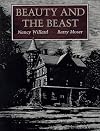
Beauty and the Beast, by Nancy Willard and Barry Mozer is by far the coolest, most creative version of this story ever. It is set in New York City in the early 20th century for a start. The girls’ dead mother had, while alive, dabbled in magic, herbs and astrology. She had a cabinet with old books and a map to a mysterious cottage outside of the city. She had used to visit it with an old woman, an astrologer. None of the others in the family had ever been there. When she died, it was all show more packed away in the attic, and only Beauty would explore it.
The astrologer had named the daughters Vanity, Money and Beauty, and warned the father that if he changed the names, he would be visited by bad fortune, but he did not heed her warning. Only Beauty’s name did not change. It is also important to note that Beauty, like her mother, had green eyes and red hair.
Beauty grows up to be intelligent and kind, wanting to run an animal hospital. She is loved by all, although her sisters are selfish and vain.
When the merchant’s ships are lost, and thus, the family fortune, they must move to the cottage. The older girls, now Vanessa and Mona, complain and will not help, on the journey or at the cottage, but Beauty takes to country life. She does everything that needs to be done on the farm.
Her father gets news of one of his ships, leaves with a promise of gifts, and Beauty, of course, only wants a rose.
All happens similarly, but the Beast sends the man home on a white horse, the saddlebag filled with jewels, and a book, THE LANGUAGE OF FLOWERS. Beauty rides the white horse back, taking only that book, and the books of her mother. When she arrives, she sees paintings that move and make sound and chairs that sing. She meets the Beast and he praises her bravery. In her rooms she finds everything she could ever want, dresses, a golden pen and ink, sketchbooks, a piano, a singing mirror, the rose her father picked for her, her mother’s books, and a diamond, cut into a star, that seems to light the room.
There is also a library, and in it, the book he gave her, which she reads.
The story is extremely similar to all others, but instead of a ring to take home, the Beast gives her a wreath. In the end, she and her husband, also with red hair, are married, her father lives with them, and the rest of the people of the palace, who have been shadows, are restored. Her sisters live as iron in the fireplace, watching her happiness.
This is a truly remarkable book. It utilizes real places and things from the time period, all swirled into the magic, being at once fantasy and historical fiction. The magic itself is a blend of fantasy and physical elements with mysterious properties, such as herbs and the constellations. The prince is not princely, but has muddy boots and a red beard, red hair being the sign of witches. He seems real, and the story, even with it’s magical nature, feels tangible.
The illustrations are prints from woodcarvings, some created from photographs. They are extraordinarily beautiful. The story is sensual and fantastic, without feeling like a lie, the way some fantasy can. Honestly, I cannot recommend this book enough, and have already ordered my own copy, as I must give this back to the library soon. It is one of the best stories I have ever read. Six Stars on a Five Star Scale. show less
The astrologer had named the daughters Vanity, Money and Beauty, and warned the father that if he changed the names, he would be visited by bad fortune, but he did not heed her warning. Only Beauty’s name did not change. It is also important to note that Beauty, like her mother, had green eyes and red hair.
Beauty grows up to be intelligent and kind, wanting to run an animal hospital. She is loved by all, although her sisters are selfish and vain.
When the merchant’s ships are lost, and thus, the family fortune, they must move to the cottage. The older girls, now Vanessa and Mona, complain and will not help, on the journey or at the cottage, but Beauty takes to country life. She does everything that needs to be done on the farm.
Her father gets news of one of his ships, leaves with a promise of gifts, and Beauty, of course, only wants a rose.
All happens similarly, but the Beast sends the man home on a white horse, the saddlebag filled with jewels, and a book, THE LANGUAGE OF FLOWERS. Beauty rides the white horse back, taking only that book, and the books of her mother. When she arrives, she sees paintings that move and make sound and chairs that sing. She meets the Beast and he praises her bravery. In her rooms she finds everything she could ever want, dresses, a golden pen and ink, sketchbooks, a piano, a singing mirror, the rose her father picked for her, her mother’s books, and a diamond, cut into a star, that seems to light the room.
There is also a library, and in it, the book he gave her, which she reads.
The story is extremely similar to all others, but instead of a ring to take home, the Beast gives her a wreath. In the end, she and her husband, also with red hair, are married, her father lives with them, and the rest of the people of the palace, who have been shadows, are restored. Her sisters live as iron in the fireplace, watching her happiness.
This is a truly remarkable book. It utilizes real places and things from the time period, all swirled into the magic, being at once fantasy and historical fiction. The magic itself is a blend of fantasy and physical elements with mysterious properties, such as herbs and the constellations. The prince is not princely, but has muddy boots and a red beard, red hair being the sign of witches. He seems real, and the story, even with it’s magical nature, feels tangible.
The illustrations are prints from woodcarvings, some created from photographs. They are extraordinarily beautiful. The story is sensual and fantastic, without feeling like a lie, the way some fantasy can. Honestly, I cannot recommend this book enough, and have already ordered my own copy, as I must give this back to the library soon. It is one of the best stories I have ever read. Six Stars on a Five Star Scale. show less

A strawberry pie-obsessed young boy named Little Tom Drum gets quite the surprise when he steals downstairs on the night before his birthday and gobbles up the pie his mother made for the big day. Afflicted with three mouths - presumably as punishment for being such a greedy boy? - he is confined to the house by his parents, given a private tutor, and eventually develops into a talented inventor. Then one day, with the help of a wish machine and some local children, Tom is restored to his show more old eight-year-old self...
Given author Nancy Willard's many folk and fairy-tale retellings - my personal favorite is her Hudson Valley version of Beauty and the Beast - I think it safe to say that the name of the eponymous hero of The Three Mouths of Little Tom Drum is a reference to Tom Thumb, the mischievous pint-sized protagonist of the first English-language fairy-tale ever recorded (in 1621). Although Willard's Tom is not the size of a thumb, he certainly does get himself into a scrape! All that said, although this reference will be of interest to folklore enthusiasts, I found myself somewhat ambivalent about the actual story here. I see online reviewers were put off by Willard's decision to have Tom Drum hidden away by his parents, as this is not the proper course of action to take, with children who look different from their peers. I wasn't particularly bothered by this, as it's clear that there is a fairy-tale element to Willard's story, and that it is not meant to be taken as a realistic narrative. On the other hand, illustrator Kevin Hawkes does dedicate the book to homeschoolers, so take that as you will. For my part, I just found the story a bit scattered, with too many disparate elements - the three-mouth punishment, the wish machine, the inventions, the social exclusion, etc. - that didn't seem to quite fit together in one organic whole. The artwork, as is always the case with Hawkes, was very appealing, but all in all, this isn't one I would particularly recommend. show less
Given author Nancy Willard's many folk and fairy-tale retellings - my personal favorite is her Hudson Valley version of Beauty and the Beast - I think it safe to say that the name of the eponymous hero of The Three Mouths of Little Tom Drum is a reference to Tom Thumb, the mischievous pint-sized protagonist of the first English-language fairy-tale ever recorded (in 1621). Although Willard's Tom is not the size of a thumb, he certainly does get himself into a scrape! All that said, although this reference will be of interest to folklore enthusiasts, I found myself somewhat ambivalent about the actual story here. I see online reviewers were put off by Willard's decision to have Tom Drum hidden away by his parents, as this is not the proper course of action to take, with children who look different from their peers. I wasn't particularly bothered by this, as it's clear that there is a fairy-tale element to Willard's story, and that it is not meant to be taken as a realistic narrative. On the other hand, illustrator Kevin Hawkes does dedicate the book to homeschoolers, so take that as you will. For my part, I just found the story a bit scattered, with too many disparate elements - the three-mouth punishment, the wish machine, the inventions, the social exclusion, etc. - that didn't seem to quite fit together in one organic whole. The artwork, as is always the case with Hawkes, was very appealing, but all in all, this isn't one I would particularly recommend. show less

The classic tale of the sorcerer's apprentice who attempts to use his master's magical tools, only to discover that he does not have the knowledge or skill to control them, has been retold many times, from Goethe's 1797 poem Der Zauberlehrling, to Walt Disney's 1940 animated film, Fantasia. This adaptation from children's poet Nancy Williams, and Caldecott Medal-winning illustrators Leo and Diane Dillon - who previously collaborated on the marvelous Pish, Posh, Said Hieronymus Bosch - takes show more the story in new directions, making the apprentice into a seamstress named Sylvia, come to the sorcerer's house to sew clothing for his many strange creatures.
I enjoyed Willard's poetic text here, but it was the Dillons' artwork that really made the book for me! Beautiful but disturbing - as their best work always is - with countless quirky little details that will draw the reader in, the Dillons' paintings are endlessly fascinating. I loved the ravenous-looking sewing machine, with its toothy grip, and the many little mechanical monsters that spring from its body, when Sylvia tries to chop it up. This artwork is simply magical - a fitting accompaniment to such an enchanted tale! Highly recommended to all young fairy-tale lovers, and to fans of the Dillons. show less
I enjoyed Willard's poetic text here, but it was the Dillons' artwork that really made the book for me! Beautiful but disturbing - as their best work always is - with countless quirky little details that will draw the reader in, the Dillons' paintings are endlessly fascinating. I loved the ravenous-looking sewing machine, with its toothy grip, and the many little mechanical monsters that spring from its body, when Sylvia tries to chop it up. This artwork is simply magical - a fitting accompaniment to such an enchanted tale! Highly recommended to all young fairy-tale lovers, and to fans of the Dillons. show less
Lists
Awards


You May Also Like


Associated Authors
Statistics
- Works
- 72
- Also by
- 19
- Members
- 5,436
- Popularity
- #4,580
- Rating
- 4.0
- Reviews
- 125
- ISBNs
- 198
- Languages
- 4
- Favorited
- 2