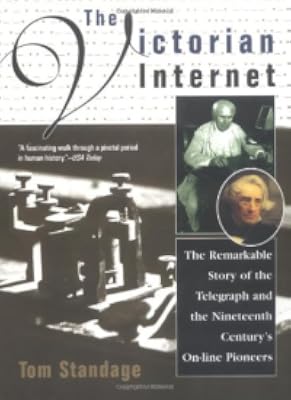
The Victorian Internet: The Remarkable Story of the Telegraph and the Nineteenth Century's On-Line Pioneers
by Tom Standage
On This Page
Description
The Victorian Internet tells the colorful story of the telegraph's creation and remarkable impact, and of the visionaries, oddballs, and eccentrics who pioneered it, from the eighteenth-century French scientist Jean-Antoine Nollet to Samuel F. B. Morse and Thomas Edison. The electric telegraph nullified distance and shrank the world quicker and further than ever before or since, and its story mirrors and predicts that of the Internet in numerous ways.Tags
Recommendations


















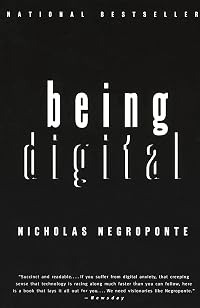

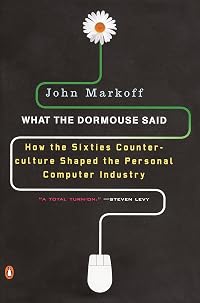
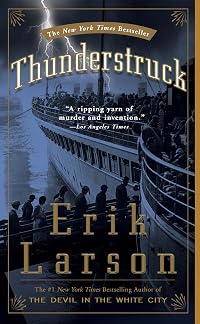
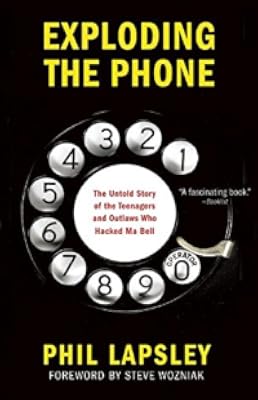

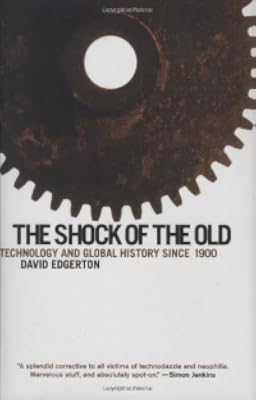
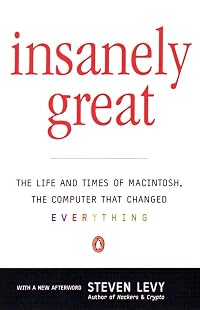
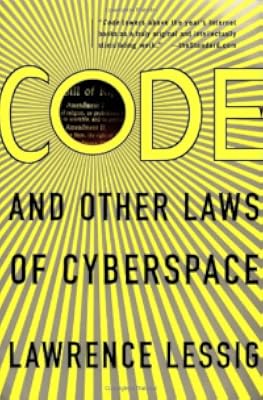
Member Recommendations

Member Reviews
The second edition of Tom Standage’s Victorian Internet does not contain much that is new, but that is OK because most of it is still valid. Standage’s thesis is simple: The telegraph revolutionized Victorian communication much like the Internet revolutionized late twentieth-century communication. It did more to tie the country together than the transcontinental railroad. It also generated many of the same complaints and caused many of the same sorts of social problems as the Internet. It generated a coded economy, generated security concerns, and created its own abbreviated, slangy argot. Plus la change …
The Victorian Internet was published in 1998 at the height of the Internet's new popularity. At the time I thought an analogy with telegraphy seemed like a cheap gimmick and so I didn't read it - anyway I was too busy working at an Internet company. Now many editions later, including an introduction by the father of the Internet Vince Cerf, I discovered it's real strength is not to dwell on telegraphy versus the Internet, rather to use the context of the Internet as a gateway for understanding telegraphy. It allows for understanding an aspect of the Industrial Revolution from about 1840 to 1870 in a personal way because it was so similar to the Internet revolution of our own time. Standage doesn't tell us they are similar, he doesn't show more need to. Although the technologies are different, the cultural impacts are nearly identical, people don't change. Indeed the telegraph probably had a more profound change on culture in the 19th century then the Internet in the 21st (although the Internet story is not over).
This is fun, well written and interesting narrative history. It is also a lesson how disruptive technology can be, yet also how fleeting and soon forgotten. Telegraphy was a central part of everyone's life but with the telephone it was gone (though not overnight). How long will the Internet last? The telegraph was dominate for about 40 years. The Internet has been a part of mass culture since about 1992 (invention of the web browser and deregulation of the backbone for commercial use) or only about 20 years. show less
This is fun, well written and interesting narrative history. It is also a lesson how disruptive technology can be, yet also how fleeting and soon forgotten. Telegraphy was a central part of everyone's life but with the telephone it was gone (though not overnight). How long will the Internet last? The telegraph was dominate for about 40 years. The Internet has been a part of mass culture since about 1992 (invention of the web browser and deregulation of the backbone for commercial use) or only about 20 years. show less
The most effective way to demonstrate a parallelism is to describe the unfamiliar in such a way that its similarity to the familiar is obvious. Standage's short but effective history of the telegraph's initial period of rapid growth resonates with today's reader. Only in his concluding two-page epilogue does he feel the need to explicitly draw a parallel between the telegraph and the Internet. Outside of the current fascination with the Internet economy, this is still a fascinating and thought-provoking book. The quantum change in human communication capabilities was the first utilization of electricity and wire--everything since then has been a refinement. Learning that a young Tom Edison lived on huge amounts of weak coffee and apple show more pie, its easy for the reader to envision him as an early hacker, endangering his health with the 19th century equivalent of Jolt Cola and Twinkies. This book is equally enjoyable to anyone who enjoys the history of technology, and those who have a more specific interest in the Internet and want to learn what lessons a historical high-tech boom can offer. A quick & enjoyable read. I accept the author's contention that 1) the Internet today parallels the 19th c. telegraph network, 2) the telegraph represented a significantly more dramatic change. show less
While the term ‘Victorian Internet’ conjures up visions of a steampunk alternate history, the invention and spread of the telegraph system in the 19th century had much the same effect on society then as the internet has had in our own time. It turned a world where messages took weeks to cross the Atlantic to one where it took mere minutes. It changed the speed of business and of war. New forms of crime sprang up to take advantage of the new technology and encryption was developed to deal with this. A new class of people sprang up- the telegraph operators, the only people who knew the knack of sending and receiving messages. They could go anywhere and be assured of a job. Suddenly, anyone who could afford the price of the telegram show more could talk to people across the globe. The telegraph system was hyped by some as the technology that would bring world peace- after all, if you could talk to someone instantly, you wouldn’t want to make war on them, would you?
Sadly, that last wasn’t true. And the telegraph operators soon found their economic boom over and them selves obsolete as a new, voice over protocol was invented- the telephone. But the world was permanently changed by the technology that, for a lot of purposes, made distance immaterial.
Standage tells us not just about the invention of the technology of the telegraph system, but about the personalities of the people who created it, and the consequences that it had in business, government, romance (yes, love did bloom across the wires) and newspapers. He gives a complete picture but keeps it light. And interesting read about a part of history that changed the world as much as the printing press did before it and the internet after it. A quick read for non-fiction. show less
Sadly, that last wasn’t true. And the telegraph operators soon found their economic boom over and them selves obsolete as a new, voice over protocol was invented- the telephone. But the world was permanently changed by the technology that, for a lot of purposes, made distance immaterial.
Standage tells us not just about the invention of the technology of the telegraph system, but about the personalities of the people who created it, and the consequences that it had in business, government, romance (yes, love did bloom across the wires) and newspapers. He gives a complete picture but keeps it light. And interesting read about a part of history that changed the world as much as the printing press did before it and the internet after it. A quick read for non-fiction. show less
Very enlightening! It’s amazing the parallels that exist between the early days of telegraphy and our own internet and cell phones. This very readable book takes you through the early development of the idea of telegraphy. It was a radical in it’s time. In fact I suspect even more radical then our own cell phones of today. I would loved to have seen some discussion or wireless telegraphy being my only suggestion. Recommended!!
I feel slightly guilty giving it 3*, in terms of a historical account it’s well written and researched (4* easy). However the author gives no thoughts or psychosocial analysis bar a few sentences right near the ending which were intriguing and I wish were elaborated on.
I found the similarities between the Internet and telegraph to be telling of the human condition and Utopianism towards technology- how it’ll make way for peace, decrease borders, etc but if you’ve ever sat on an old COD lobby- you can concur the Internet can be a bad place and I assume similar was the case with telegraph. To me all are tools which can be beneficial or maleficial depending on how and when you use them. It’s a magical forest and there are goblins show more and fairies inside it- how you interact with them, how much you let them hurt you is up to you.
Anyways, PSA aside the Utopianism I noticed is applied to telegram and Internet, etc but not so to AI? It’s seen as something scary rather than being given the Utopianism treatments other revolutionary information technologies have gotten? Why so?
I theorise it’s some sort of existential threat- something horses would feel towards cars were they conscious enough. More on this later. show less
I found the similarities between the Internet and telegraph to be telling of the human condition and Utopianism towards technology- how it’ll make way for peace, decrease borders, etc but if you’ve ever sat on an old COD lobby- you can concur the Internet can be a bad place and I assume similar was the case with telegraph. To me all are tools which can be beneficial or maleficial depending on how and when you use them. It’s a magical forest and there are goblins show more and fairies inside it- how you interact with them, how much you let them hurt you is up to you.
Anyways, PSA aside the Utopianism I noticed is applied to telegram and Internet, etc but not so to AI? It’s seen as something scary rather than being given the Utopianism treatments other revolutionary information technologies have gotten? Why so?
I theorise it’s some sort of existential threat- something horses would feel towards cars were they conscious enough. More on this later. show less
This is an interesting history of the telegraph. Standage not only examines how it was invented and spread, but the impact it had on how people communicated, the culture of the telegraph industry, and the ways it was used and abused. Throughout, Standage draws parallels between the telegraph and the internet: both revolutionized communication, were optimistically but falsely hailed as facilitators of world peace, were used to facilitate business transactions, and were abused by scammers.
The book was originally written in the late 1990s, so it has a very rosy view of the internet and its possibilities. An afterword was added in 2007 that addressed the dotcom bust, but still paints a positive picture of the internet. It would be show more interesting to see another afterword now.....
All in all, this is a very interesting and readable book. show less
The book was originally written in the late 1990s, so it has a very rosy view of the internet and its possibilities. An afterword was added in 2007 that addressed the dotcom bust, but still paints a positive picture of the internet. It would be show more interesting to see another afterword now.....
All in all, this is a very interesting and readable book. show less
Members
- Recently Added By
Published Reviews
ThingScore 75
"an engaging and readable account of the invention, growth, and decline of the telegraph. "
added by wademlee
Lists

Read These Too
458 works; 9 members

Books Read in 2021
5,361 works; 113 members

Books in the Bibliography of The Alchemy of Us by Ainissa Ramirez
181 works; 1 member
Author Information

21+ Works 7,232 Members
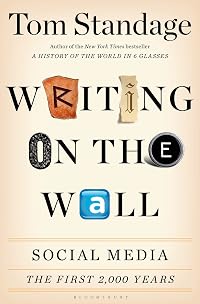
Tom Standage is a journalist and author from England. A graduate of Oxford University, he has worked as a science and technology writer for The Guardian, as the business editor at The Economist, has been published in Wired, The New York Times, and The Daily Telegraph. His non-fiction works include The Victorian Internet, A History of the World in show more Six Glasses, An Edible History of Humanity (on the New York Times bestseller list in 2014), and Writing on the Wall: Social Media -- The First 2,000 Years. (Bowker Author Biography) show less
Some Editions
Awards and Honors
Notable Lists
Common Knowledge
- Canonical title
- The Victorian Internet: The Remarkable Story of the Telegraph and the Nineteenth Century's On-Line Pioneers
- Original publication date
- 1998
- People/Characters
- Samuel Morse; Claude Chappe; William Fothergill Cooke; Charles Wheatstone
- Dedication
- To Mr & Mrs G.
- First words
- In the nineteenth century, there were no televisions, aeroplanes, computers, or spacecraft; neither were there antibiotics, credit cards, microwave ovens, compact discs, or mobile phones.
- Last words
- (Click to show. Warning: May contain spoilers.)But as for the Internet — well, they had one of their own.
- Blurbers
- Cerf, Vinton; Petroski, Henry
- Original language
- English
Classifications
- Genres
- History, Technology, General Nonfiction, Nonfiction, Science & Nature
- DDC/MDS
- 384.109 — Society, government, & culture Commerce, communications & transportation regulations Communications Telegraph
- LCC
- HE7631 .S677 — Social sciences Transportation and communications Transportation and communications Telecommunication industry. Telegraph
- BISAC
Statistics
- Members
- 1,478
- Popularity
- 15,755
- Reviews
- 32
- Rating
- (3.86)
- Languages
- English, German
- Media
- Paper, Audiobook, Ebook
- ISBNs
- 15
- ASINs
- 12