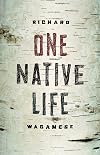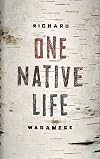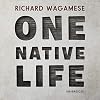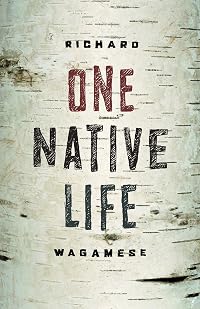
One Native Life
by Richard Wagamese
On This Page
Description
One Native Life is a look back down the road Richard Wagamese has traveled — from childhood abuse to adult alcoholism — in reclaiming his identity. It's about what he has learned as a human being, a man, and an Ojibway in his 52 years on Earth. Whether he's writing about playing baseball, running away with the circus, making bannock, or attending a sacred bundle ceremony, these are stories told in a healing spirit. Through them, Wagamese shows readers how to appreciate life for the show more journey it is.. show less
Tags
Recommendations





Member Recommendations
Member Reviews
Richard Wagamese's book is one that is inspirational, for both Aboriginals and the rest of us, I think. I really admired his remarkable quest for knowledge -- of his Indian culture, of music and so many other areas. His message that traditions ground us -- all of us -- and that we need to "bring back the living room" and reconnect with each other are so true. I am humbled by his generosity of spirit, of seeking not only to be understood but to understand. This is remarkable given the history of Aboriginal people in Canada, and it is something I've seen in many Aboriginal people I've worked with over many years. Sadly, it is often missing in politicians on both sides of the issue, but it is a key ingredient to achieving lasting show more reconciliation.
All this, plus the writing is beautiful! show less
All this, plus the writing is beautiful! show less
This is less a memoir, and more a book of meditations -- little sketches of moments in time, with a deep reflection in each one on the measure of one (native) man's life. Wagamese offers some deeply moving and highly emotional observations, without ever once dripping into mawkishness.
There is truth and reconciliation here, in a very real sense. In the past dozen years, that phrase has become so overdone and so hackneyed in our country, that many people tune it out when they hear it. To many, it is only a glib advertisement for dealing with "that whole native question" without once giving thought to the real people and the real conditions that shaped the lives of those who seek settlement with how their past was shaped. Wagamese gives us show more a clean line of sight into what truth and reconciliation really means:
There is a song that is Canada. You can hear it in the bush and tree and rock, in the crash of a Pacific surf and the blowing of the breeze across the prairie sky. There are ancient notes in its chorus, voices sprung from Métis roots, Ojibway, Cree, Micmac and then French, German, Scottish and English. It's a magnificent cacophony.
I have learned that to love this country means to love its people. All of them. When we say "all my relations" it's meant in a teaching way, to rekindle community. We are part of the great, grand circle of humanity, and we need each other.
It wouldn't be Canada with one voice less.
To rekindle community. To rekindle that which was broken, and torn from, the first peoples. He spares no one in this, including himself: what it means to rekindle the remnants of a frozen life: first the harm that was done to him, to his people; then the harm that was done to him by his people; and finally the harm he did to himself because of the burdens he carried.
This is a book then, for finding out the real meaning of truth and reconciliation. It is also a book for anyone who is looking for home, for their roots, for their clan or tribe.
"You become invisible when you're homeless."
He writes of the obvious homelessness of a youth without family, without hope, on the streets of the numerous cities across this country in which he alternately starved, was ignored, was abused, became an abuser of drugs and alcohol. But also implied is the rootlessness of not knowing your origins, of not knowing where you belong, of not having a place to hang your spiritual hat without the connections of ancestors, be they Ojibway, be they French or Irish or Italian. In the end, having that label of who you are makes all the difference in the world -- for labels are both a weapon, and a balm.
You learned that labels have weight. You learned to drink so that you wouldn't have to carry those labels or feel them stuck to you like arrows. And in your drunken stumble the shutters on their homes snapped closed because you've become exactly what they expected.
When you found your people, you became Ojibway. You became Anishinabe. You became Sturgeon Clan. You became Wagamese again, and in that name was a recognition of being that felt like a balm on the rawness where they'd scraped the Indian away. Ojibway. It resonated in you. It was a label that held the promise of discovery, of homecoming, of reclamation and rejuvenation.
This is a book I will cherish and keep close at hand for dipping into often, for grounding myself when I feel the night is too long. show less
There is truth and reconciliation here, in a very real sense. In the past dozen years, that phrase has become so overdone and so hackneyed in our country, that many people tune it out when they hear it. To many, it is only a glib advertisement for dealing with "that whole native question" without once giving thought to the real people and the real conditions that shaped the lives of those who seek settlement with how their past was shaped. Wagamese gives us show more a clean line of sight into what truth and reconciliation really means:
There is a song that is Canada. You can hear it in the bush and tree and rock, in the crash of a Pacific surf and the blowing of the breeze across the prairie sky. There are ancient notes in its chorus, voices sprung from Métis roots, Ojibway, Cree, Micmac and then French, German, Scottish and English. It's a magnificent cacophony.
I have learned that to love this country means to love its people. All of them. When we say "all my relations" it's meant in a teaching way, to rekindle community. We are part of the great, grand circle of humanity, and we need each other.
It wouldn't be Canada with one voice less.
To rekindle community. To rekindle that which was broken, and torn from, the first peoples. He spares no one in this, including himself: what it means to rekindle the remnants of a frozen life: first the harm that was done to him, to his people; then the harm that was done to him by his people; and finally the harm he did to himself because of the burdens he carried.
This is a book then, for finding out the real meaning of truth and reconciliation. It is also a book for anyone who is looking for home, for their roots, for their clan or tribe.
"You become invisible when you're homeless."
He writes of the obvious homelessness of a youth without family, without hope, on the streets of the numerous cities across this country in which he alternately starved, was ignored, was abused, became an abuser of drugs and alcohol. But also implied is the rootlessness of not knowing your origins, of not knowing where you belong, of not having a place to hang your spiritual hat without the connections of ancestors, be they Ojibway, be they French or Irish or Italian. In the end, having that label of who you are makes all the difference in the world -- for labels are both a weapon, and a balm.
You learned that labels have weight. You learned to drink so that you wouldn't have to carry those labels or feel them stuck to you like arrows. And in your drunken stumble the shutters on their homes snapped closed because you've become exactly what they expected.
When you found your people, you became Ojibway. You became Anishinabe. You became Sturgeon Clan. You became Wagamese again, and in that name was a recognition of being that felt like a balm on the rawness where they'd scraped the Indian away. Ojibway. It resonated in you. It was a label that held the promise of discovery, of homecoming, of reclamation and rejuvenation.
This is a book I will cherish and keep close at hand for dipping into often, for grounding myself when I feel the night is too long. show less
This book came from the library but how I wish it was mine to keep forever. I will probably end up buying a copy because it has struck a chord with me like very few books have. I'm sure this book will be one of my favourite reads in 2013.
I only discovered Richard Wagamese's writing because his book, Indian Horse, was chosen as one of the 5 finalists for the 2013 Canada Reads contest. Although it wasn't the book chosen by the panel I still think it is a book that every Canadian should read. And now I think that every Canadian should read One Native Life.
Wagamese was born to Ojibway residential school survivors who didn't know how to care for their children. One winter the adults went to town to sell a load of furs and forgot to come show more back for Richard and his 3 siblings. When the food and wood ran out the older two took the younger ones in a sleigh to Minaki, which was quite far away. Richard spent time in foster homes and then was adopted by a white family living in southern Ontario. It's hard to understand why they adopted a child that they seemed not to want. Richard ran away from home and lived on the streets or in rental accommodation while holding low paying jobs and drinking too much. One of his brothers found him through the adoption agency and he was reunited with them. After that he explored his native heritage and honed his writing craft. He has forgiven his family for the treatment he experienced with them. In this book he shares his journey and the wisdom he has learned along the way.
Many times while reading this book I recognized a kinship with Richard. I marked some passages that really spoke to me and I'll quote 3 of them although there were many more:
"The sky that traces the curve of the mountain today is an impossible blue. Cloudless, it is at once near enough to touch and as distant as a star. You could fall into it. That's how it feels."
In this next passage he recounts learning how to make bannock with his mother and I instantly thought of my mother making baking powder biscuits:
"I'd been raised with the Western science that calls for precise measurements and a decisive experimental process. I clung to the security of numbers. But what my mother taught me that day had nothing to do with grams or ounces, teaspoons or cups. Instead she told me to take a couple of handfuls of flour, a splat of lard, a splotch of baking powder and a nip of salt. Then to swash it with milk or water, pat it about until it felt warm and soft, and bake it until it looked good."
In this final passage Richard talks about an interview he had with Johnny Cash and the prescription he gave for repairing the ills of modern life:
"We need to bring back the living room, he said. There needs to be a time in every home when families gather to be together, to hear each other, to see each other, to be in community. There needs to be a time when harmony rules and we fill a room with our collective thought."
I wish I could write as well as that but since I can't I'm glad that there are writers like Wagamese who can. show less
I only discovered Richard Wagamese's writing because his book, Indian Horse, was chosen as one of the 5 finalists for the 2013 Canada Reads contest. Although it wasn't the book chosen by the panel I still think it is a book that every Canadian should read. And now I think that every Canadian should read One Native Life.
Wagamese was born to Ojibway residential school survivors who didn't know how to care for their children. One winter the adults went to town to sell a load of furs and forgot to come show more back for Richard and his 3 siblings. When the food and wood ran out the older two took the younger ones in a sleigh to Minaki, which was quite far away. Richard spent time in foster homes and then was adopted by a white family living in southern Ontario. It's hard to understand why they adopted a child that they seemed not to want. Richard ran away from home and lived on the streets or in rental accommodation while holding low paying jobs and drinking too much. One of his brothers found him through the adoption agency and he was reunited with them. After that he explored his native heritage and honed his writing craft. He has forgiven his family for the treatment he experienced with them. In this book he shares his journey and the wisdom he has learned along the way.
Many times while reading this book I recognized a kinship with Richard. I marked some passages that really spoke to me and I'll quote 3 of them although there were many more:
"The sky that traces the curve of the mountain today is an impossible blue. Cloudless, it is at once near enough to touch and as distant as a star. You could fall into it. That's how it feels."
In this next passage he recounts learning how to make bannock with his mother and I instantly thought of my mother making baking powder biscuits:
"I'd been raised with the Western science that calls for precise measurements and a decisive experimental process. I clung to the security of numbers. But what my mother taught me that day had nothing to do with grams or ounces, teaspoons or cups. Instead she told me to take a couple of handfuls of flour, a splat of lard, a splotch of baking powder and a nip of salt. Then to swash it with milk or water, pat it about until it felt warm and soft, and bake it until it looked good."
In this final passage Richard talks about an interview he had with Johnny Cash and the prescription he gave for repairing the ills of modern life:
"We need to bring back the living room, he said. There needs to be a time in every home when families gather to be together, to hear each other, to see each other, to be in community. There needs to be a time when harmony rules and we fill a room with our collective thought."
I wish I could write as well as that but since I can't I'm glad that there are writers like Wagamese who can. show less
It began similar to the last short essay memoir about nature I read, but then it went to be more about short memory stories about his broken life and it's healing. nothing wrong with that, but it wasn't really anything new or more profound. perhaps it was when the book was written - I am aware it was published something like ten years ago. It was interesting to read it juxtaposed with Here I Am. Both books are about a culture nearly wiped out by another, (Jewish vs First Nations) but the two cultures on the whole approach their history and future SO differently, as least that is how the books present it. One is"Ha! We are still here and we are survivors and you won't lick us!" The other is "Our ways of doing things were right but you show more messed it up." At least, that is what I felt as I read the books. Not my fav book. show less
What an amazing person Richard Wagamese was - to have lived such a hard life and remain so positive. I found this touching, inspiring and uplifting.
An autobiography of healing and acceptance told in uplifting short stories.
Ratings
Members
- Recently Added By
Lists

CBC's 100 True Stories
100 works; 6 members
Author Information

22+ Works 3,418 Members
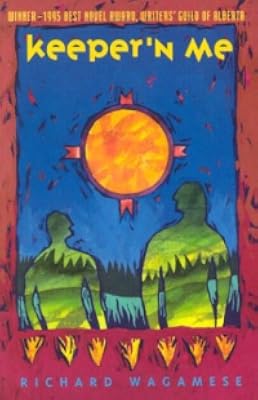
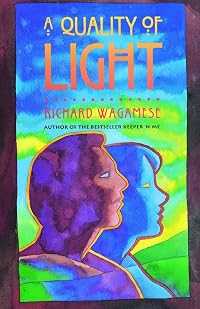
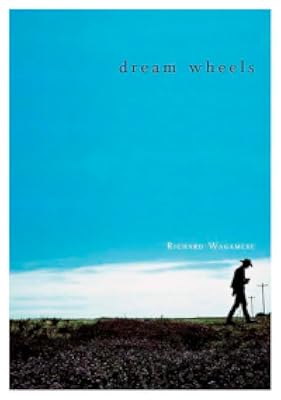
Canadian author Richard Wagamese was one of the leading indigenous writers in North America. He began his writing career in 1979, first as a journalist and then as a radio and television broadcaster. In 1991, he became the first indigenous writer to win a National Newspaper Award for column writing. His debut novel, Keeper 'n Me, won the Alberta show more Writers Guild's Best Novel Award in 1994. His other books included A Quality of Light, Ragged Company, One Native Life, The Next Sure Thing, Indian Horse, Him Standing, and Medicine Walk. He also published an anthology of his newspaper columns entitled The Terrible Summer, a collection of poetry entitled Runaway Dreams, and a memoir entitled For Joshua: An Ojibway Father Teaches His Son. He won the Canadian Authors Association Award for Fiction in 2007 for Dream Wheels and the George Ryga Award for Social Awareness in Literature in 2011 for his memoir One Story, One Song. He was also the 2012 recipient of the National Aboriginal Achievement Award for Media and Communications and the 2013 recipient of the Canada Council on the Arts Molson Prize. He died on March 10, 2017 at the age of 61. (Bowker Author Biography) show less
Common Knowledge
- Epigraph
- Defenseless under the night Our world in stupor lies; Yet, dotted everywhere, Ironic points of light Flash out wherever the Just Exchange their messages: My I, composed like them Of Eros and of dust, Beleaguere... (show all)d by the same Negation and despair, Show an affirming flame. -- W.H. Auden, "September 1, 1939"
- Dedication
- For Debra, for all the mornings of the world...
- First words
- The sublime moments in life are like the first push of light up against the lip of a mountain.
- Last words
- (Click to show. Warning: May contain spoilers.)When you walk the territory of your being, the truth is everywhere around you.
- Blurbers
- Boyden, Joseph; MacGregor, Roy; Crozier, Lorna
Classifications
Statistics
- Members
- 162
- Popularity
- 202,242
- Reviews
- 6
- Rating
- (4.50)
- Languages
- English
- Media
- Paper, Audiobook, Ebook
- ISBNs
- 14
- ASINs
- 2