
In Search of the Dark Ages
by Michael Wood
On This Page
Description
Examines a thousand year period of British history beginning with the invasion by the Anglo-Saxon immigrants and continuing through William the Conqueror in 1066.Tags
Recommendations








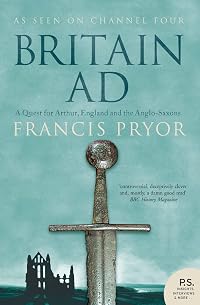


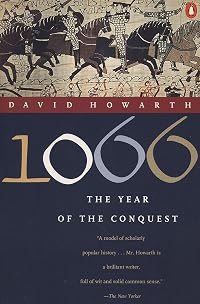
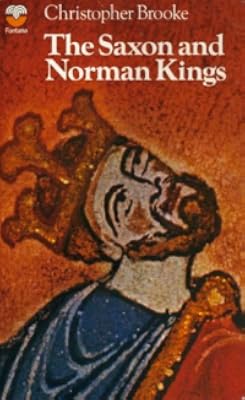


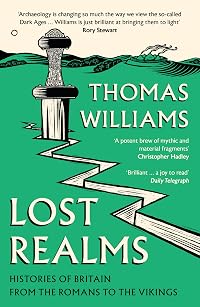





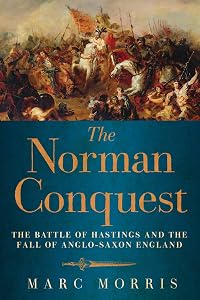
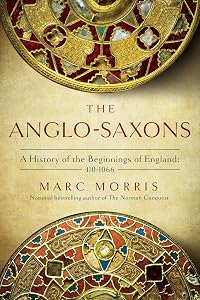




Member Recommendations

ed.pendragon Another accessible book by the enthusiastic Michael Wood, historian and presenter of many BBC TV programmes such as the ones on which these are based.
Member Reviews
There is something of a juvenile romantic in Michael Wood's Search. Its a joy to follow the informed speculations on Boadices, King Authur, Offa, Alfred the Great, Athelstan, Eric Bloodaxe, Ethelred the Unready, and William the Conquerer and their peoples. To bring them and their times back to life is a conjuring act of a magician. It is so interesting to see the materials an anthropologist, archaeologist, and historian have to work with and to make something of them. To see how these stories come to light and change over time adds spice to this whole field of inquiry.
Quotes: (page 18) “Was Prasutagas a puppet king set up by the Romans to further their interests in opposition to other branches of the royal family, perhaps after show more Antedos had been deposed or died? But most important of all, who was Boudica? We know she was Prasutugas' wife---but what was the ancestry and royal status which ( along with charismatic personality) enabled her to command such allegiance when the revolt broke out? These are all questions which probably can never be answered, but political-infighting between pro-Roman and anti-Roman tribes and groups should never be underestimated when dealing with these events. In the meantime only the full excavation of undoubted Iceni royal center could give us some answers to questions which we see present only though Roman eyes.”
( on Alfred the Great, page 125) “To embark upon such a systematic programme of instruction at such a time was the act of a remarkable man, practical, resolute, and ruthless he took on himself not only the strain of defense but also concern for the future lives of his subjects. That is why, alone among English kings, he is ' the Great', and why he has rightly never lost the esteem of the English-speaking world...He became a man who saved the essential Englishness of our culture and language.”
(page 145) “We can, explain the king's delay in moving north in terms other than idleness. We know from different sources how difficult it was to raise a large army unless the king traveled through his shires personally. Athelstan's agents will have told him the size of the invasion force, and he obviously took time to bring together as many West-Saxon and Mercian levies as he could. Unlike Harold in 1066 he was not lured into precipitate action as the news came of allied mounted columns devastating the crops, burning down houses and driving off refugees, with 'complaining rumour' everywhere.”
(page 213) “On 5 January 1066 Edward died in his new church at Westminster. The very next day, 'before the funeral meats were cold', Earl Harold seized the thrown and was crowned in the abbey. It was alleged by some that on his deathbed Edward had put his kingdom in Harold's protection, and the Bayeux Tapestry portrays such a scene. But the unseemly haste of the earl's consecration indicates the true nature of the changeover: an all-powerful dynasty, not of royal blood, had effectively usurped the throne of the Cerdicings. It was a coup d' etat carried off with great speed and purpose. When the news reached William he received it in silence, his face black with fury. A protest was immediately sent off to the English court asking for an explanation.” show less
Quotes: (page 18) “Was Prasutagas a puppet king set up by the Romans to further their interests in opposition to other branches of the royal family, perhaps after show more Antedos had been deposed or died? But most important of all, who was Boudica? We know she was Prasutugas' wife---but what was the ancestry and royal status which ( along with charismatic personality) enabled her to command such allegiance when the revolt broke out? These are all questions which probably can never be answered, but political-infighting between pro-Roman and anti-Roman tribes and groups should never be underestimated when dealing with these events. In the meantime only the full excavation of undoubted Iceni royal center could give us some answers to questions which we see present only though Roman eyes.”
( on Alfred the Great, page 125) “To embark upon such a systematic programme of instruction at such a time was the act of a remarkable man, practical, resolute, and ruthless he took on himself not only the strain of defense but also concern for the future lives of his subjects. That is why, alone among English kings, he is ' the Great', and why he has rightly never lost the esteem of the English-speaking world...He became a man who saved the essential Englishness of our culture and language.”
(page 145) “We can, explain the king's delay in moving north in terms other than idleness. We know from different sources how difficult it was to raise a large army unless the king traveled through his shires personally. Athelstan's agents will have told him the size of the invasion force, and he obviously took time to bring together as many West-Saxon and Mercian levies as he could. Unlike Harold in 1066 he was not lured into precipitate action as the news came of allied mounted columns devastating the crops, burning down houses and driving off refugees, with 'complaining rumour' everywhere.”
(page 213) “On 5 January 1066 Edward died in his new church at Westminster. The very next day, 'before the funeral meats were cold', Earl Harold seized the thrown and was crowned in the abbey. It was alleged by some that on his deathbed Edward had put his kingdom in Harold's protection, and the Bayeux Tapestry portrays such a scene. But the unseemly haste of the earl's consecration indicates the true nature of the changeover: an all-powerful dynasty, not of royal blood, had effectively usurped the throne of the Cerdicings. It was a coup d' etat carried off with great speed and purpose. When the news reached William he received it in silence, his face black with fury. A protest was immediately sent off to the English court asking for an explanation.” show less
So much fun to read. Having been a big fan of the TV specials of the same name, I couldn't help but hear Michael's voice reading this book to me. A not-too-in-depth look at several dark age rulers through British history.
This 40th anniversary edition of the book to accompany a 1980’s BBC television series has been updated and expanded from the original, but retains the overall structure of the original, and this is the fundamental weakness of the book compared to later works, such as Marc Morris’ The Anglo-Saxons and Max Adams The First Kingdom. The book covers the history of England from the Roman invasion through to the Norman conquest through chapters looking at the lives of specific individuals. This approach allows for excellent narrative storytelling of particular periods, but is necessarily disjointed.
The first chapter skilfully recounts the rebellion of Boudica in the early years of Roman occupation. I enjoyed this history of Roman Britain, show more but it isn’t about the “Dark Ages”.
There follows five chapters comprising about a third of the book broadly covering the period from 400 to 850 (ie more than two thirds of the period nominally under discussion), which deal with:
• King Arthur - the real “Dark Ages” (about 410-600) period when we don’t know how the Germanic tribes from Europe settled in South and Eastern Britain.
• Sutton Hoo - a pagan burial in the kingdom of the East Angles, probably of King Rædwald (early 600s)
• Penda (died 655) - the last pagan king of a major kingdom (Mercia)
• Theodore of Tarsus and Hadrian the African - an archbishop of Canterbury and abbot of Canterbury in 670 onwards, initiating a “renaissance” in learning, but feeling a bit politically correct perhaps as an added chapter, as they were originally a Syrian and an African (from now Libya).
• Offa (reigned 757 to 796) - who created a significantly enlarged kingdom of Mercia that claimed overlordship of other kingdoms (West Saxon, East Angles, Kent) and had diplomatic links with Charlemagne.
The chapters on Penda and Theodore & Hadrian are additions in this updated edition.
The book now switches to the more successful West Saxon (Wessex) dynasty with chapters on:
• Alfred the Great (lived 848-899) - who ruled Wessex from 871, resisting the Vikings who had first raided Britain in 753 (Thanet, and more famously Lindisfarne in 793), and uniting the Anglo-Saxons against the Viking invaders from 886
• Aethelflaed (lived about 870 to 918) - who was Alfred’s daughter and ruled in Mercia, with her brother Edgar ruling in Wessex, consolidating the Anglo-Saxon kingdoms of Wessex and Mercia
• Athelstan (lived 894 to 939) - grandson of Alfred who expanded the Anglo-Saxon kingdom, as King of the Anglo-Saxons from 924 to 927 and King of the English from 927 to his death in 939, after conquering the Viking kingdom of Northumbria (York).
• Lady Wynflaed (died mid-tenth century) - a rich widow whose Will is analysed to provide details of her life - see https://blogs.bl.uk/digitisedmanuscripts/2018/09/wynflaed-and-the-price-of-fashi...
• Eadgyth Princess of Wessex, Queen of Germany (lived 910-946) - a granddaughter of Alfred the Great, who at 19 married Otto, a German prince, who became king (East Francia). Although written records are mainly German, this chapter discusses how royal princesses were part of the medieval diplomatic alliance process.
The chapters on Aethelflaed, Lady Wynflaed and Eadgyth are further additions in this updated edition.
The Anglo-Saxon kingdom is then disrupted by Vikings again and this is examined by looking at the life of Eric Bloodaxe (died 954), who ended his life after twice being King of Northumbria (c. 947–948 and 952–954).
The Anglo-Saxon kings are again looked at through the reign of Ethelred the Unready (reigned 978 to 1013 and again 1014 until his death in 1016), who was overthrown by Sweyn of Denmark in 1013-1014. Although mainly told through extracts from the contemporary Anglo-Saxon Chronicles, this chapter failed to illuminate Ethelred’s character for me. Although succeeded by his son Edmund “Ironside in 1016, Edmund was killed by Sweyn’s son Cnut (also king of Denmark and Norway) and an Anglo-Saxon rule was not reimposed until 1042, when the last Anglo-Saxon king, Edward “the Confessor” ruled to 1066.
The final chapter looks at how William “the Conqueror” came to have a claim to the English crown and the battles of 1066 that allowed him to take the crown.
Overall, this book is very readable and provides engaging portraits of individuals who lived during the long period covered by the history, but feels more like a series of snapshots.
I received a Netgalley copy of this book, but this review is my honest opinion. show less
The first chapter skilfully recounts the rebellion of Boudica in the early years of Roman occupation. I enjoyed this history of Roman Britain, show more but it isn’t about the “Dark Ages”.
There follows five chapters comprising about a third of the book broadly covering the period from 400 to 850 (ie more than two thirds of the period nominally under discussion), which deal with:
• King Arthur - the real “Dark Ages” (about 410-600) period when we don’t know how the Germanic tribes from Europe settled in South and Eastern Britain.
• Sutton Hoo - a pagan burial in the kingdom of the East Angles, probably of King Rædwald (early 600s)
• Penda (died 655) - the last pagan king of a major kingdom (Mercia)
• Theodore of Tarsus and Hadrian the African - an archbishop of Canterbury and abbot of Canterbury in 670 onwards, initiating a “renaissance” in learning, but feeling a bit politically correct perhaps as an added chapter, as they were originally a Syrian and an African (from now Libya).
• Offa (reigned 757 to 796) - who created a significantly enlarged kingdom of Mercia that claimed overlordship of other kingdoms (West Saxon, East Angles, Kent) and had diplomatic links with Charlemagne.
The chapters on Penda and Theodore & Hadrian are additions in this updated edition.
The book now switches to the more successful West Saxon (Wessex) dynasty with chapters on:
• Alfred the Great (lived 848-899) - who ruled Wessex from 871, resisting the Vikings who had first raided Britain in 753 (Thanet, and more famously Lindisfarne in 793), and uniting the Anglo-Saxons against the Viking invaders from 886
• Aethelflaed (lived about 870 to 918) - who was Alfred’s daughter and ruled in Mercia, with her brother Edgar ruling in Wessex, consolidating the Anglo-Saxon kingdoms of Wessex and Mercia
• Athelstan (lived 894 to 939) - grandson of Alfred who expanded the Anglo-Saxon kingdom, as King of the Anglo-Saxons from 924 to 927 and King of the English from 927 to his death in 939, after conquering the Viking kingdom of Northumbria (York).
• Lady Wynflaed (died mid-tenth century) - a rich widow whose Will is analysed to provide details of her life - see https://blogs.bl.uk/digitisedmanuscripts/2018/09/wynflaed-and-the-price-of-fashi...
• Eadgyth Princess of Wessex, Queen of Germany (lived 910-946) - a granddaughter of Alfred the Great, who at 19 married Otto, a German prince, who became king (East Francia). Although written records are mainly German, this chapter discusses how royal princesses were part of the medieval diplomatic alliance process.
The chapters on Aethelflaed, Lady Wynflaed and Eadgyth are further additions in this updated edition.
The Anglo-Saxon kingdom is then disrupted by Vikings again and this is examined by looking at the life of Eric Bloodaxe (died 954), who ended his life after twice being King of Northumbria (c. 947–948 and 952–954).
The Anglo-Saxon kings are again looked at through the reign of Ethelred the Unready (reigned 978 to 1013 and again 1014 until his death in 1016), who was overthrown by Sweyn of Denmark in 1013-1014. Although mainly told through extracts from the contemporary Anglo-Saxon Chronicles, this chapter failed to illuminate Ethelred’s character for me. Although succeeded by his son Edmund “Ironside in 1016, Edmund was killed by Sweyn’s son Cnut (also king of Denmark and Norway) and an Anglo-Saxon rule was not reimposed until 1042, when the last Anglo-Saxon king, Edward “the Confessor” ruled to 1066.
The final chapter looks at how William “the Conqueror” came to have a claim to the English crown and the battles of 1066 that allowed him to take the crown.
Overall, this book is very readable and provides engaging portraits of individuals who lived during the long period covered by the history, but feels more like a series of snapshots.
I received a Netgalley copy of this book, but this review is my honest opinion. show less
Long named 'The Dark Ages', the time from the fall of the Roman Empire to the Battle of Hastings has been overlooked by history. There are few contemporary sources but the five hundred year stretch is full of events and characters that shape our lives even now. I remember reading this book many years ago (though not on publication!) and enjoying it but coming to this new edition was a joy. Wood has expanded his tales to include new ones, arguably to appeal more to modern desires, but this is still a very readable and insightful approach to a forgotten era.
Vivid and thorough story, doing his utmost to highlight the lives of ordinary people, or at least, non-Kings, especially women.
The church when Christianity is adopted, gets very involved, providing administrative skills, guidance (?) dispassionate help (?) prayer support, encouragement against the pagans. It seems reliant on Monasticism, ritual, relics, but not much on the bible. A couple of references to translations of the gospels into the vernacular.
One feels sorry for the way that the last two centuries of A/S life was blighted by the Viking invasions.
Shocking to hear of slavery throughout, general savagery and chopping off the hands of hostages.
My kindle copy had no maps, but did have an index and good illustrations.
The church when Christianity is adopted, gets very involved, providing administrative skills, guidance (?) dispassionate help (?) prayer support, encouragement against the pagans. It seems reliant on Monasticism, ritual, relics, but not much on the bible. A couple of references to translations of the gospels into the vernacular.
One feels sorry for the way that the last two centuries of A/S life was blighted by the Viking invasions.
Shocking to hear of slavery throughout, general savagery and chopping off the hands of hostages.
My kindle copy had no maps, but did have an index and good illustrations.
I like Michael Wood's work. I'll go ahead and damn him with the praise that his summation of history and archaeology is "accessible". I have no doubt that he's passionate, thorough, articulate and competent (more damning praise). Still, I didn't enjoy this book. I couldn't wait to be done with it and if you quizzed me on its contents, I don't think I'd do very well. This likely has much to do with my familiarity with the subject matter. If the names Offa, Athelstan and Ethelred are already quite familiar to you, you'll make out rather well. If not, they may seem like little more than an anonymous procession of Anglo-Saxon kings who set about unifying England when not getting harassed by Danish vikings. Things come alive when Wood show more describes the battle of Hastings. It's gripping stuff, but was, for me, too little too late. My ignorance of pre-Norman English history is largely to blame for my dissatisfaction. Still, after 250 pages I remain fairly benighted.
So, not a great read. But Mr. Wood is not entirely at fault. show less
So, not a great read. But Mr. Wood is not entirely at fault. show less
A good introduction to this period of Britain's history by the great Michael Wood, possibly the most accessible historian of the past couple of decades. The style is clear and concise and eminently readable, with chapters focusing on major figures of the times, such as Alfred the Great, Athelstan, Eric Bloodaxe and William the Conquerer. This was, I think, Woods' first major work for the BBC back in the 80's and as such it has dated, as recent archaeology has shed new light on the Dark Ages. But this is a great starting point and in a postscript at the end Woods' is generous enough to point people in the direction of more recent works in this area. Well worth a look.
Members
- Recently Added By
Published Reviews
He humanizes some of the most uninspiring or obscure figures in British history, including Ethelred the Unready; Eric Bloodaxe, ruler of Viking York; Anglo-Saxon imperialist king Offa, who staged a coup d'etat; and Alfred the Great, pioneer of town planning
added by John_Vaughan
Lists

Kindle Non-Fiction
222 works; 1 member

Books Read in 2024
4,727 works; 128 members
Author Information

Common Knowledge
- Original publication date
- 1981
- People/Characters
- Ambrosius Aurelianus; Athelstan; Boudica; Offa, King of Mercia; Alfred the Great; William the Conqueror
- Important places
- England
- Important events
- Revolt of Boadicea; Siege of Badon Hill; Offa's Thirteith Jubilee; Battle of Edington; Massacre of St. Bricels Day; Norman Conquest of England
- Related movies
- In Search of Offa (1979 | IMDb); In Search of Boadicea (1980 | IMDb); In Search of Arthur (1980 | IMDb); In Search of Alfred the Great (1980 | IMDb); In Search of William the Conqueror (1981 | IMDb); In Search of Ethelred the Unready (1981 | IMDb) (show all 8); In Search of Athelstan (1981 | IMDb); In Search of Eric Bloodaxe (1981 | IMDb)
- Epigraph
- She was very tall, the glance of her eye most fierce; her voice harsh. A great mass of the reddish hair fell down to her hips. Around her neck was a large golden necklace, and she always wore a tunic of many colours over whic... (show all)h she fastened a thick cloak with a brooch. Her appearance was terrifying.
Dio Cassius, Roman history.
Chapter 1. Boadicea.
Then Arthur fought against them in those days with the kings of the Britons, and it was he who led their battles.
Nennius, History of the Britons.
Chapter 2. King Arthur.
[And similar for cha... (show all)pters 3 to 9]. - Dedication
- For my mother and father
- First words
- The modern British are a nation of immigrants.
Introduction.
Boadicea has a place of her own in British folk history.
Boadicea. - Quotations
- There was no capital of the Mercian empire. Offa was itinerant and only ruled by moving from place to place, constantly showing himself to friends and cowing his enemies.
- Last words
- (Click to show. Warning: May contain spoilers.)It was the Anglo-Saxon achievement to build England; it was left to the Normans and their successors to make Great Britain. And now, when one considers the vicissitudes of the later history of Britain and Ireland, it is tempting to think that they have not yet succeeded so well.
(Click to show. Warning: May contain spoilers.)The lineaments (and the thought world) of the state created by Alfred, Athelstan, and their successors, may have been much more long-lived than we have suspected.
Postscript (1987). - Original language
- English
Classifications
- Genres
- History, Nonfiction, General Nonfiction, Anthropology
- DDC/MDS
- 942.01 — History & geography History of Europe England and Wales England Anglo-Saxon B.C. 55 - A.D. 1066
- LCC
- DA135 .W83 — History of Europe, Asia, Africa and Oceania Great Britain History of Great Britain England History By period Early and medieval to 1485
- BISAC
Statistics
- Members
- 1,209
- Popularity
- 20,649
- Reviews
- 17
- Rating
- (3.84)
- Languages
- English
- Media
- Paper, Audiobook, Ebook
- ISBNs
- 14
- ASINs
- 11