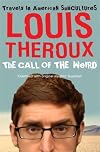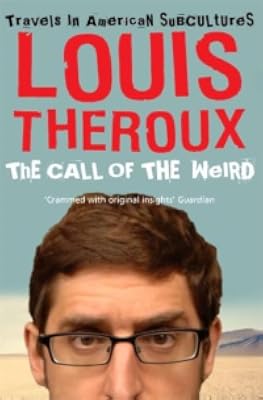
The Call of the Weird: Travels in American Subcultures
by Louis Theroux
On This Page
Description
For ten years Louis Theroux has been making programmes about off-beat characters on the fringes of US society. Now he revisits America and the people who have most fascinated him to try to discover what motivates them, why they believe the things they believe, and to find out what has happened to them since he last saw them.Along the way Louis thinks about what drives him to spend so much time among weird people, and considers whether he's learned anything about himself in the course of ten show more years working with them. Has he manipulated the people he's interviewed, or have they manipulated him? From his Las Vegas base, Louis revisits the assorted dreamers and outlaws who have been his TV feeding ground.Attempting to understand a little about himself and the workings of his own mind, Louis considers questions such as: What is the difference between pathological and "normal" weirdness? Is there something particularly weird about Americans? What does it mean to be weird, or "to be yourself"? And do we choose our beliefs or do our beliefs choose us? show lessTags
Recommendations











Member Reviews
All in all, Louis Theroux is an interesting person. He looks and acts like a wooden Englishman, but due to this, I feel he often gains access to the most bizarre people, whether they be neo nazis, UFO addicts, prostitutes, former cult members, Ike Turner (!) or porn stars; Louis covers it all.
It's basically a bunch of conversations with people that he met during a stint ten years prior to writing this book. He wondered what had happened to some of them since, so he looked them up.
And indeed, they are still weird. And some are quite demented:
...
And then there's great lucidity from the most odd people, as from UFO enthusiast Thor:
From meeting "porn stars":
On more white-power idiots:
On trying to maintain a hardcore image, the rapper David Banner:
On what the Heaven's Gate cult did days before committing mass suicide:
On the racist band Prussian Blue, since then disbanded due to growing up:
And a nice, introspective conclusion to it all:
All in all: nice if you want to see the innards of very weird worlds, and at its worst is like a freak show, where you are an enabler. Keep an open mind and get a few laughs and frights. show less
It's basically a bunch of conversations with people that he met during a stint ten years prior to writing this book. He wondered what had happened to some of them since, so he looked them up.
And indeed, they are still weird. And some are quite demented:
We drove up a rough driveway through a pine forest, past a sign saying “Whites Only,” into a clearing with a church and a guard tower and scattered mobile homes. The walls of the pastor’sshow more
office were lined with racist leaflets in metal holders. Cold and cluttered, it was like the office of an underfunded charitable organization, albeit one dedicated to the eradication of world Jewry. A pair of German shepherds called Hans and Fritz prowled around. There was a stack of flyers with Adolf Hitler wearing a Santa Claus hat.
...
At one table, hearing that I was from England, the talk turned to David Icke, the Coventry City goalkeeper who reinvented himself as a New Age prophet. “Doesn’t he believe there are twelve-foot lizard people running the planet?” I asked. “He believes the reptilian people have an agenda here, that’s correct,” said Darrell, a success coach from Las Vegas. “But lizards?” “Reptilians,” Darrell said.
And then there's great lucidity from the most odd people, as from UFO enthusiast Thor:
"I think our threats are much greater from our politicians than from extraterrestrials.” This turned out to be Thor’s new theme: the disaster of the Bush presidency. “Quite frankly, I’ve come to sympathize with the aliens. If they need the human crud we have on this planet to propagate, they’re welcome to it. I just wish they’d start by abducting Adolf Bush and his cronies. The guy did not win the election. If he was a president in Central America we would have invaded by now . . . We’ve got body bags coming back from a no-win war where all the people hate us. He’s a stumblebum moron. I wouldn’t be surprised if he’s a clone because his chip ain’t working right.” He said he lived an hour or two outside Vegas, in Nevada, in “an isolated location,” still with Liz. He didn’t seem averse to meeting up. We made a plan to go for coffee in September. We spoke for an hour or so, mainly about politics, finding much to agree on. That I should find so much political common ground with a one-time alien hunter struck me as curious.
From meeting "porn stars":
“It’s an industry of lonely people in a crowd,” Bill Margold was saying. “They’re scared to get close to each other. You’re far better off having someone to sleep next to than having someone to sleep with, because you have to trust someone you sleep next to. I don’t think these people can maintain relationships. They don’t want to let their guards down long enough to get to know the people they’re having sex with, so they keep avoiding getting to know them by fucking them.”
On more white-power idiots:
A little later, we went out to a Mexican restaurant called Fiesta Guadalajara. I asked Jerry about Butler. “I like him but he’s getting old. And I think he’s going a bit senile. Sometimes when he’s speaking he’ll be in the middle of a story and he’ll forget what he was saying.” “What if he gets so senile that he forgets who he’s supposed to hate?” I said. Jerry ignored this remark. “I suppose there won’t be any Mexican food in the whites-only homeland,” I said. “Hmmm, I’d never thought of that possibility,” Jerry said. He paused. “They wouldn’t be allowed to vote, but they could cook and clean for us. After all, we’re not extremists.” Jerry paused again. He made a Benny Hill face of coy mock-seriousness. Then he giggled: “Hee hee hee hee.”
On trying to maintain a hardcore image, the rapper David Banner:
Unlike Mello, Banner is someone with whom it is relatively easy to draw the line between persona and real person. On his albums he raps about pimping and stomping bitches, but he is in fact highly educated, a former schoolteacher and student-body president, who is, as he put it, “a semester and a thesis away” from his master’s degree. In between making tweaks on a track where the phrase “that’s why we get crunk in this bitch” was fractionally too low in the mix, Banner lamented the double standard that dictated that rappers should have experienced firsthand the episodes they describe in their raps. “You don’t go to Will Smith and see if he really can fly a flying saucer before he does Independence Day. And besides, the person who really did those things may not be the best storyteller.” And yet even Banner, with his studious bent, wasn’t immune to hip-hop machismo. He hinted that he might have a criminal background that he couldn’t reveal (“I would never tell about the things I really did”) and was a little sheepish about having been a teacher.
On what the Heaven's Gate cult did days before committing mass suicide:
Having made money designing websites, the group splurged in its last few months on outings to the San Diego Wild Animal Park and Sea World and a UFO conference in Laughlin, Nevada. They kept itemized ledgers of all their expenditures. They traveled to Las Vegas, saw Cirque du Soleil ($2,661), gambled (winning $58.91), and ascended the Stratosphere, the second-tallest structure west of the Mississippi. Among their last acts, three days before the suicides began, was a group outing to see the Mike Leigh film Secrets and Lies.
On the racist band Prussian Blue, since then disbanded due to growing up:
The name Prussian Blue came a couple of years later. The girls read the name of the color in a magazine, April said—“and since their eyes are blue and my dad’s side of the family are Prussian Germans they thought it would be a good name for the group. Prussian Blue is also a compound that should be present in the residue left over from Zyklon-B and which is not present—get this—not present at the so-called ‘gas chambers’ in Auschwitz. It’s kind of tongue-in-cheek.”
And a nice, introspective conclusion to it all:
I’d hoped the trip might be an opportunity for me to get in touch with my own weirdness. Without a camera, I wondered if I might become more immersed in my stories and therefore more open—forced to acknowledge my shadow side. But if anything, I found myself less susceptible to the call of the weird the second time round. The Nazis seemed more lamentable; the gangsta rappers more irresponsible; the gurus more manipulative. Instead of an inner weirdo, I was surprised to find an inner curmudgeon. Perhaps it’s understandable to be more jaded on one’s second exposure to something strange. I also suspect the protection of the camera and crew on my first TV-making sorties had allowed me, in a dilettante-ish way, to imagine I had more in common with my subjects than was really the case. In going back unarmed, as it were, I was forced to be more realistic. As Mello T himself said, when it comes to pimping he’d rather go to bed early and do a crossword puzzle. And yet in one important respect I did start to recognize a kind of weirdness in myself. Occasionally, I saw parallels between the seductions of some of the strange worlds I was covering and my own journalism. In reporting these stories over the years, maintaining relationships partly out of genuine affection and partly out of the vanity of wanting to generate “material” for a program or a book, I realized I too had created a tiny offbeat subculture, with its own sincerity and its own evasions. A little like a cult leader or a prostitute, I had been working in a gray area somewhere south of absolute candor . . . but like the other cults and subcultures contained in these pages, I have also been pleased to find a depth of feeling in our group. Though occasionally I’d been rebuffed by my old subjects, or shocked by their beliefs, and though I’d sometimes questioned my own motivations, in general I was more amazed by their willingness to put up with me a second time, and surprised by my affection for them. I’d been moved at times, and irritated, and upset, but the emotions had been real. This is my Weirdness.
All in all: nice if you want to see the innards of very weird worlds, and at its worst is like a freak show, where you are an enabler. Keep an open mind and get a few laughs and frights. show less
Louis Theroux's Weird Weekends is one of my favorite TV comedies (even though it's technically a documentary). It's an iconic time capsule of extreme 1990s American culture, after the fall of Communism when anything seem possible ("The End of History"), but before 9/11 brought us back to reality. Theroux filmed odd-balls and dreamers, people un-moored in one way or another from bourgeois sensibility, following a dream or idea over the line to that region the rest of us call simply: "weird". In typical British style, Theroux is the comedic straight-man who provides a springboard for his subjects to self-deprecate as passion and conviction finds a bemused audience. Yet, the show was never disrespectful, in the end both subject and viewer show more come away a little more enlightened, usually with a new found sense of compassion and humanity. I'll never forget the people and their weird subcultures, and wonder what happened to them.
In the mid-aughts, Louis decided to go back and revisit his subjects and find out what's happened since. Most of them are less radical now, either out of their subculture entirely, or toned down. A few of them are as unpleasant as ever, mainly the racists, but they still seem like normal people - which is Theroux's greatest gift, to find common humanity. None of the stories grabbed me like in the original series, it all seemed less engrossing. However if your a fan of Weird Weekends, this is a short book and well worth the time to follow up. show less
In the mid-aughts, Louis decided to go back and revisit his subjects and find out what's happened since. Most of them are less radical now, either out of their subculture entirely, or toned down. A few of them are as unpleasant as ever, mainly the racists, but they still seem like normal people - which is Theroux's greatest gift, to find common humanity. None of the stories grabbed me like in the original series, it all seemed less engrossing. However if your a fan of Weird Weekends, this is a short book and well worth the time to follow up. show less
Louis Theroux makes documentaries about subjects i find fascinating, though his movies always end up making me feel a little queasy. I don't know if it's my latent journalism muscle or simply the same cringe-twinge that you might get from an average episode of The Office, but there's almost always at least one moment, after he's gone in-depth with his subjects and gotten them to expose more honesty than you'd really expect, that he says something off.
The first time I noticed this was when I watched The Most Hated Family in America, a documentary about the Westboro Baptist Church's founding family back before they were individually famous (e.g., People knew the church was full of hateful bigots, but the country wasn't really on a show more first-name basis with any of them). 90% of the film is intensely interesting, gripping stuff. Then he corners a couple of the younger teens to ask them if they really believed this stuff, and wouldn't they rather just be normal and have boyfriends?
To me, it felt like overstepping the bounds of journalism and into the realm of pop psychologist. Not only was it fairly mean to the kids to put them on the spot like that on camera, it to me sort of undercut the documentary up to that point. Theroux clearly had a point of view; how fair a representation was everything else he'd shown us? I found that almost all of his films have similar points of uncomfortable blurring of the lines, as if he goes around not to document stories but to insert himself in the middle of them as savior.
The Call of the Weird is his book-length re-expoloration of some of his earlier American documentary subjects, in an attempt to ... reconnect with them? His motives don't really matter, as the book is largely a recitation of his films, followed by interviewing the subjects, who have little desire to open up yet again.
Theroux makes a number of reflexively defensive points: in his foreward, he talks about how he hoped the book wouldn't be just another "Look at all the freaks in America!" roadshow, or if it was that it would the purest distillation of the form (as if this is better?). In the book proper, he seems on an eternal journey of enlightenment, realizing that the former subjects have nothing to gain by talking to him, or that it's kind of silly to expect a specific former subject who had never dropped his "persona" to suddenly open up his deepest personal feelings simply because Theroux wants him to.
All that being said, the discussions of the various subcultures are fascinating, because as I said at the top Theroux picks interesting subjects and documents them well. Additionally, the most revealing part of the book came when Theroux mentioned his surprise that the UFO people were so unwilling to look skeptically at their beliefs. He talked of his own tendency toward self-doubt and "logical-mindedness," and his inability to understand people that wouldn't look so askance at themselves. This for me explains my reactions to his documentaries, though it more suggests that maybe it's just not the best field/format for him.
In all, the book suffers from the primary problem that Theroux's documentaries do: He mapped out an entire story in his head that didn't materialize in the same way once he took it on the road. What we're left with is his attempts to reconcile the two. show less
The first time I noticed this was when I watched The Most Hated Family in America, a documentary about the Westboro Baptist Church's founding family back before they were individually famous (e.g., People knew the church was full of hateful bigots, but the country wasn't really on a show more first-name basis with any of them). 90% of the film is intensely interesting, gripping stuff. Then he corners a couple of the younger teens to ask them if they really believed this stuff, and wouldn't they rather just be normal and have boyfriends?
To me, it felt like overstepping the bounds of journalism and into the realm of pop psychologist. Not only was it fairly mean to the kids to put them on the spot like that on camera, it to me sort of undercut the documentary up to that point. Theroux clearly had a point of view; how fair a representation was everything else he'd shown us? I found that almost all of his films have similar points of uncomfortable blurring of the lines, as if he goes around not to document stories but to insert himself in the middle of them as savior.
The Call of the Weird is his book-length re-expoloration of some of his earlier American documentary subjects, in an attempt to ... reconnect with them? His motives don't really matter, as the book is largely a recitation of his films, followed by interviewing the subjects, who have little desire to open up yet again.
Theroux makes a number of reflexively defensive points: in his foreward, he talks about how he hoped the book wouldn't be just another "Look at all the freaks in America!" roadshow, or if it was that it would the purest distillation of the form (as if this is better?). In the book proper, he seems on an eternal journey of enlightenment, realizing that the former subjects have nothing to gain by talking to him, or that it's kind of silly to expect a specific former subject who had never dropped his "persona" to suddenly open up his deepest personal feelings simply because Theroux wants him to.
All that being said, the discussions of the various subcultures are fascinating, because as I said at the top Theroux picks interesting subjects and documents them well. Additionally, the most revealing part of the book came when Theroux mentioned his surprise that the UFO people were so unwilling to look skeptically at their beliefs. He talked of his own tendency toward self-doubt and "logical-mindedness," and his inability to understand people that wouldn't look so askance at themselves. This for me explains my reactions to his documentaries, though it more suggests that maybe it's just not the best field/format for him.
In all, the book suffers from the primary problem that Theroux's documentaries do: He mapped out an entire story in his head that didn't materialize in the same way once he took it on the road. What we're left with is his attempts to reconcile the two. show less
This book follows on from Theroux's entertaining BBC series and revisits some of the more memorable characters he's interviewed, including male porn stars, prostitutes, a Nazi-mom, and Ike Turner. It's readable and enjoyable for what it is but don't expect any mind-blowing conclusions to be reached.
This book is a follow up to Louis Theroux's tv series Weird Weekends, in which he spent time with members of various sub-cultures in America. Some years later, he decided to track down some of the subjects of the show and see what had become of them. It isn't necessary to have seen the tv series (I hadn't seen all of it) as Louis provides a recap of what happened when he met his subjects initially before describing how he tracked them down - sometimes with difficulty - and details of their second encounter.
Inevitably, some of the sub-cultures Louis became involved in are more interesting than others (although this is an entirely subjective opinion of course), and some are more disturbing than others. The final story, where he met a show more deeply racist mother, who was encouraging her twin daughters (who were only 11 years old) to sing White Power songs. This story in particular left me with a feeling of bitter distaste, as well as sympathy for the two young girls and their baby sister, who had had their mother's views forced upon them, and were not really allowed to think for themselves.
Other encounters included Ike Turner - a man who does seem to have some charisma, but holds some very contradictory opinions - I personally did not like him at all; a group of UFO enthusiasts, the Aryan Nations (another chilling chapter, although the main person who Louis had dealings with came over as pathetic more than anything else); the owners and workers in the Wild Horse brothel; and a former porn star, who had now dropped out of the business and seemed to lead a relatively conventional life. The most resonant and poignant of all the stories was the one where Louis met survivors of the Heavens Gate religious group, who committed mass suicide in 1997.
I could definitely imagine Louis' voice in my head as I read the book - and felt the frustrations and the surprise that he felt when meeting certain people. He is a lively and engaging narrator, who clearly did his best not to judge the people he was meeting - not always successfully. A lot of the book is humorous, but there are some thought-provoking moments as well. If you're a fan of Louis Theroux - or even if you're not - this book is well worth a read. show less
Inevitably, some of the sub-cultures Louis became involved in are more interesting than others (although this is an entirely subjective opinion of course), and some are more disturbing than others. The final story, where he met a show more deeply racist mother, who was encouraging her twin daughters (who were only 11 years old) to sing White Power songs. This story in particular left me with a feeling of bitter distaste, as well as sympathy for the two young girls and their baby sister, who had had their mother's views forced upon them, and were not really allowed to think for themselves.
Other encounters included Ike Turner - a man who does seem to have some charisma, but holds some very contradictory opinions - I personally did not like him at all; a group of UFO enthusiasts, the Aryan Nations (another chilling chapter, although the main person who Louis had dealings with came over as pathetic more than anything else); the owners and workers in the Wild Horse brothel; and a former porn star, who had now dropped out of the business and seemed to lead a relatively conventional life. The most resonant and poignant of all the stories was the one where Louis met survivors of the Heavens Gate religious group, who committed mass suicide in 1997.
I could definitely imagine Louis' voice in my head as I read the book - and felt the frustrations and the surprise that he felt when meeting certain people. He is a lively and engaging narrator, who clearly did his best not to judge the people he was meeting - not always successfully. A lot of the book is humorous, but there are some thought-provoking moments as well. If you're a fan of Louis Theroux - or even if you're not - this book is well worth a read. show less
This book is about 'Merika -- the crazy fringes of the U.S.
Theroux visits white supremacists, con-artists, gangsta rappers/pimps, porn stars & producers, prostitutes, suicide cult survivors, and alien enthusiasts.
Although Theroux is technically "half-American," his lens is very British. This book is the story of his attempts to reconnect with people he'd previously featured in his BBC documentaries. Understandably, some of those people don't want to see Louis again and the meetings can be awkward.
While I enjoyed this glimpse into the more freakish corners of my own country, I think I might have enjoyed it more (and rated it higher) if I had seen some of the characters in the original filmed encounters.
Edit: I found the Gangsta Rap show more episode on YouTube and seeing "Mello T" in person really added to the reading experience. Also, Theroux is much more amusing on film than in print. His attempts at rapping about driving a Fiat and drinking red wine made me snicker. show less
Theroux visits white supremacists, con-artists, gangsta rappers/pimps, porn stars & producers, prostitutes, suicide cult survivors, and alien enthusiasts.
Although Theroux is technically "half-American," his lens is very British. This book is the story of his attempts to reconnect with people he'd previously featured in his BBC documentaries. Understandably, some of those people don't want to see Louis again and the meetings can be awkward.
While I enjoyed this glimpse into the more freakish corners of my own country, I think I might have enjoyed it more (and rated it higher) if I had seen some of the characters in the original filmed encounters.
Edit: I found the Gangsta Rap show more episode on YouTube and seeing "Mello T" in person really added to the reading experience. Also, Theroux is much more amusing on film than in print. His attempts at rapping about driving a Fiat and drinking red wine made me snicker. show less
Louis Theroux makes documentaries about subjects i find fascinating, though his movies always end up making me feel a little queasy. I don't know if it's my latent journalism muscle or simply the same cringe-twinge that you might get from an average episode of The Office, but there's almost always at least one moment, after he's gone in-depth with his subjects and gotten them to expose more honesty than you'd really expect, that he says something off.
The first time I noticed this was when I watched The Most Hated Family in America, a documentary about the Westboro Baptist Church's founding family back before they were individually famous (e.g., People knew the church was full of hateful bigots, but the country wasn't really on a show more first-name basis with any of them). 90% of the film is intensely interesting, gripping stuff. Then he corners a couple of the younger teens to ask them if they really believed this stuff, and wouldn't they rather just be normal and have boyfriends?
To me, it felt like overstepping the bounds of journalism and into the realm of pop psychologist. Not only was it fairly mean to the kids to put them on the spot like that on camera, it to me sort of undercut the documentary up to that point. Theroux clearly had a point of view; how fair a representation was everything else he'd shown us? I found that almost all of his films have similar points of uncomfortable blurring of the lines, as if he goes around not to document stories but to insert himself in the middle of them as savior.
The Call of the Weird is his book-length re-expoloration of some of his earlier American documentary subjects, in an attempt to ... reconnect with them? His motives don't really matter, as the book is largely a recitation of his films, followed by interviewing the subjects, who have little desire to open up yet again.
Theroux makes a number of reflexively defensive points: in his foreward, he talks about how he hoped the book wouldn't be just another "Look at all the freaks in America!" roadshow, or if it was that it would the purest distillation of the form (as if this is better?). In the book proper, he seems on an eternal journey of enlightenment, realizing that the former subjects have nothing to gain by talking to him, or that it's kind of silly to expect a specific former subject who had never dropped his "persona" to suddenly open up his deepest personal feelings simply because Theroux wants him to.
All that being said, the discussions of the various subcultures are fascinating, because as I said at the top Theroux picks interesting subjects and documents them well. Additionally, the most revealing part of the book came when Theroux mentioned his surprise that the UFO people were so unwilling to look skeptically at their beliefs. He talked of his own tendency toward self-doubt and "logical-mindedness," and his inability to understand people that wouldn't look so askance at themselves. This for me explains my reactions to his documentaries, though it more suggests that maybe it's just not the best field/format for him.
In all, the book suffers from the primary problem that Theroux's documentaries do: He mapped out an entire story in his head that didn't materialize in the same way once he took it on the road. What we're left with is his attempts to reconcile the two. show less
The first time I noticed this was when I watched The Most Hated Family in America, a documentary about the Westboro Baptist Church's founding family back before they were individually famous (e.g., People knew the church was full of hateful bigots, but the country wasn't really on a show more first-name basis with any of them). 90% of the film is intensely interesting, gripping stuff. Then he corners a couple of the younger teens to ask them if they really believed this stuff, and wouldn't they rather just be normal and have boyfriends?
To me, it felt like overstepping the bounds of journalism and into the realm of pop psychologist. Not only was it fairly mean to the kids to put them on the spot like that on camera, it to me sort of undercut the documentary up to that point. Theroux clearly had a point of view; how fair a representation was everything else he'd shown us? I found that almost all of his films have similar points of uncomfortable blurring of the lines, as if he goes around not to document stories but to insert himself in the middle of them as savior.
The Call of the Weird is his book-length re-expoloration of some of his earlier American documentary subjects, in an attempt to ... reconnect with them? His motives don't really matter, as the book is largely a recitation of his films, followed by interviewing the subjects, who have little desire to open up yet again.
Theroux makes a number of reflexively defensive points: in his foreward, he talks about how he hoped the book wouldn't be just another "Look at all the freaks in America!" roadshow, or if it was that it would the purest distillation of the form (as if this is better?). In the book proper, he seems on an eternal journey of enlightenment, realizing that the former subjects have nothing to gain by talking to him, or that it's kind of silly to expect a specific former subject who had never dropped his "persona" to suddenly open up his deepest personal feelings simply because Theroux wants him to.
All that being said, the discussions of the various subcultures are fascinating, because as I said at the top Theroux picks interesting subjects and documents them well. Additionally, the most revealing part of the book came when Theroux mentioned his surprise that the UFO people were so unwilling to look skeptically at their beliefs. He talked of his own tendency toward self-doubt and "logical-mindedness," and his inability to understand people that wouldn't look so askance at themselves. This for me explains my reactions to his documentaries, though it more suggests that maybe it's just not the best field/format for him.
In all, the book suffers from the primary problem that Theroux's documentaries do: He mapped out an entire story in his head that didn't materialize in the same way once he took it on the road. What we're left with is his attempts to reconcile the two. show less
Members
- Recently Added By
Author Information

17+ Works 1,157 Members
Common Knowledge
- Original publication date
- 2005
- People/Characters
- Louis Theroux; Jason Andrews; Susan Austin; David Banner; Rob Black; Richard Boylan (show all 90); Daniel Brainsted; Richard Butler; Chacha Caine; Mike Caine; Harold Camping; Anita Cannibal; Charlie; Dan Clausing; LeAra Clausing; Coup Dada; Terry Danton; Dee; Dena; Dianne; Dresden; Art Eagle; Arch Edwards; Fantasy; April Gaede; Lamb Gaede; Lynx Gaede; Steve Gibbs; Lance Gilman; Bo Gritz; Jerry Gruidl; Charles Hall; Robert Herrera; Young Jeezy; Jerald; Pat Johnson; Coach K; Kay; Kinky; Korton; Jim Lane; Ma-Bay; Chris Mabry (Big Yayo); Audrey Madison; Andre Madness; Bill Margold; Marie [in The Call of the Weird]; Mark [in The Call of the Weird]; Jim Marrs; Jack MacLamb; Mike McQueeny; Tom Metzger; J. J. Michaels; Monique; John Moore; Oregon; Wayne Parker (Oscody); Gene Puffer; Summer Rain; Jim Ramm; Larry Raugust; Pat Ress; Ricky; Rio; Dave Roach; Billy Roper; Dennis Rubenstein; Sarah [in The Call of the Weird]; Scarlett; John Shaw (J-Dogg); Bob Short; Tom Simmons; Jim South; Jim South Jr; Sunshine; Marshall Sylver; Mello T; Tammy (Hayley); Michael Telstarr; Thor Templar; Ike Turner; Mac Turner; Shaun Walker; Charlie Wallace (LYLC); Walter; Wamp; Paris Waters; Holly Wellin; Tommy X; Michael Yee
- Important places
- Cornville, Arizona, USA; Phoenix, Arizona, USA; Malibu, California, USA; Marysville, California, USA; San Diego, California, USA; San Fernando Valley, California, USA (show all 22); Atlanta, Georgia, USA; Almost Heaven, Idaho, USA; Coeur d'Alene, Idaho, USA; Hayden, Idaho, USA; Kamiah, Idaho, USA; Payette, Idaho, USA; Jackson, Mississippi, USA; Florissant, Missouri, USA; Carlin, Nevada, USA; Elko, Nevada, USA; Las Vegas, Nevada, USA; Laughlin, Nevada, USA; Sandy Valley, Nevada, USA; The Wild Horse, Nevada, USA; Memphis, Tennessee, USA; Hillsboro, West Virginia, USA
- Epigraph
- "You may lie with your mouth, but with the mouth you make as you do so you none the less tell the truth."Friedrich Nietzsche
- Dedication
- For Nancy
- First words
- One cold December day in 1996, I met up with an elderly racist leader named Pastor Richard Butler.
- Last words
- (Click to show. Warning: May contain spoilers.)And for now, I put down my pen.
- Original language
- English
Classifications
- Genres
- Travel, Nonfiction, General Nonfiction
- DDC/MDS
- 306.10973090511 — Society, government, & culture Social sciences, sociology & anthropology Social Behavior - Dating, Marriage, Divorce Subcultures History, geographic treatment, biography North America
- LCC
- E169 .Z83 .T48 — History of the United States United States General
- BISAC
Statistics
- Members
- 824
- Popularity
- 33,628
- Reviews
- 23
- Rating
- (3.31)
- Languages
- Dutch, English
- Media
- Paper, Audiobook, Ebook
- ISBNs
- 12
- ASINs
- 6