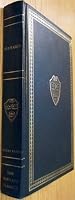
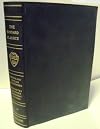
Plutarch's Lives of Themistocles, Pericles, Aristides, Alcibiades and Coriolanus, Demosthenes and Cicero, Caesar and Antony
by Plutarch
On This Page
Description
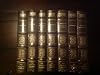
Compiled and Edited by Charles W. Eliot in 1909, the Harvard Classics is a 51-volume Anthology of classic literature from throughout the history of western civilization. The set is sometimes called "Eliot's Five-Foot Shelf." The interior of this book is a facsimile reproduction of the 1909 edition. Search for the other books in this series with the keyword hcbooks.Tags
Recommendations

























Member Reviews
Note: This edition of Plutarch’s Lives, published as part of the Harvard Classics, is not the complete set written by Plutarch. The original collection consisted of 23 pairs of biographies, each containing a Greek and Roman figure, and four unpaired biographies. My version covers Themistocles, Pericles, Aristides, Alcibiades, Coriolanus, Demosthenes, Cicero, Julius Caesar, and Antony. Alcibiades and Coriolanus are paired together as well as Demosthenes and Cicero.
If you want a pretty decent picture of both the everyday lives of Greeks and Roman as well as an overview of ancient, you’d be hard pressed to do better than Plutarch. Writing in the late 1st century, Plutarch is about as close to a contemporary source as one could want. In show more the Harvard Classics collection of Plutarch’s Lives, we get a cross section of historical figures:
• Themistocles: Athenian general who saved Greece from the Persians in the 5th century BCE
• Pericles: Successor to Themistocles who instilled democracy into Athenian politics
• Alcibiades: Athenian statesman and general
• Coriolanus: Exiled Roman general who teamed with the Volsci to invade Rome
• Demosthenes: Greek orator who opposed Macedonian expansion
• Cicero: Roman politician and orator who revered Demosthenes
• Julius Caesar: Roman emperor who conquered most of Europe
• Antony: Roman consul who succeeded Caesar
Each of these men lived interested, entangled, and boisterous lives. At a time when Western civilization was emerging from the crucible of the Fertile Crescent, each of these subjects sought to direct the future of their worlds. Whether through words or wars, they put in a lot of effort to live lives that they thought were full of dignity, valor, and righteousness.
Plutarch tries to explore the character of each of his subjects, to search for both the good and bad qualities which help to put their actions in some context for the reader. Unfortunately, the writing in this edition is a bit stilted. It’s a 1969 reprint of a 1859 revision of an 1683 translation, so there’s not exactly a lot of modern narrative construction here. All in all, though, the material is very educational and will get you quickly versed in ancient history. show less
If you want a pretty decent picture of both the everyday lives of Greeks and Roman as well as an overview of ancient, you’d be hard pressed to do better than Plutarch. Writing in the late 1st century, Plutarch is about as close to a contemporary source as one could want. In show more the Harvard Classics collection of Plutarch’s Lives, we get a cross section of historical figures:
• Themistocles: Athenian general who saved Greece from the Persians in the 5th century BCE
• Pericles: Successor to Themistocles who instilled democracy into Athenian politics
• Alcibiades: Athenian statesman and general
• Coriolanus: Exiled Roman general who teamed with the Volsci to invade Rome
• Demosthenes: Greek orator who opposed Macedonian expansion
• Cicero: Roman politician and orator who revered Demosthenes
• Julius Caesar: Roman emperor who conquered most of Europe
• Antony: Roman consul who succeeded Caesar
Each of these men lived interested, entangled, and boisterous lives. At a time when Western civilization was emerging from the crucible of the Fertile Crescent, each of these subjects sought to direct the future of their worlds. Whether through words or wars, they put in a lot of effort to live lives that they thought were full of dignity, valor, and righteousness.
Plutarch tries to explore the character of each of his subjects, to search for both the good and bad qualities which help to put their actions in some context for the reader. Unfortunately, the writing in this edition is a bit stilted. It’s a 1969 reprint of a 1859 revision of an 1683 translation, so there’s not exactly a lot of modern narrative construction here. All in all, though, the material is very educational and will get you quickly versed in ancient history. show less
Themistocles, Pericles, Aristides, Alcibiades, Coriolanus, Demosthenes, Cicero, Caesar, Antony
Ratings
Members
- Recently Added By
Lists

501 Must-Read Books
508 works; 72 members
Author Information

1,618+ Works 25,883 Members
PLUTARCH. c.46--c.125 Considered by many to be the most important Greek writer of the early Roman period, Plutarch was a member of a well-to-do Greek family, a chief magistrate, a priest at Delphi, and an exceptionally well-read individual. His philosophical views were based on those of Plato and, although a Greek, he esteemed the achievements and show more attributes of the Romans. By the time Plutarch's works were published for the first time in the eleventh century, some had already been lost. He wrote innumerable essays on philosophical, historical, political, religious, and literary subjects, 78 of which survive today and are known collectively as the "Moralia." He is known primarily, however, for his Parallel Lives of Greeks and Romans, which consists of 50 biographies---23 of prominent Greeks, 23 of Roman leaders, and 4 separate lives---accompanied at intervals by short comparative essays. Although historical information is included in the work, Plutarch wrote it originally to inspire emulation in youth, so the emphasis is on character, moral choice, and anecdote. Sir Thomas North's 1579 translation into English of Parallel Lives became an important source for William Shakespeare which he used for three plays, Julius Caesar, Antony and Cleopatra, and Coriolanus. (Bowker Author Biography) show less
All Editions
Series
Belongs to Publisher Series
Harvard Classics (12)
Work Relationships
Is contained in
Common Knowledge
- Canonical title
- Plutarch's Lives of Themistocles, Pericles, Aristides, Alcibiades and Coriolanus, Demosthenes and Cicero, Caesar and Antony
- Alternate titles
- Plutarch
- People/Characters
- Alcibiades; Marcus Antonius; Aristides, 2nd century; Julius Caesar; Marcus Tullius Cicero; Coriolanus (show all 9); Demosthenes; Pericles; Themistocles
- Original language
- Greek (Ancient) (Ancient)
- Disambiguation notice
- This is the Harvard Classics selection of Plutarch's Lives, which is volume 12 of the Harvard Classics series; the series editor was Charles William Eliot. It should not be combined with different works called Plutarch's Live... (show all)s. It uses the translation referred to as John Dryden's translation, corrected and revised by Arthur Hugh Clough, with additional introductions and notes. It contains:
- Plutarch's Life of Themistocles
- Plutarch's Life of Pericles
- Plutarch's Life of Aristides
- Plutarch's Life of Alcibiades
- Plutarch's Life of Coriolanus
- Comparison of Alcibiades with Coriolanus
- Plutarch's Life of Demosthenes
- Plutarch's Life of Cicero
- Comparison of Demosthenes and Cicero
- Plutarch's Lives of Caesar and Antony
Classifications
Statistics
- Members
- 685
- Popularity
- 41,629
- Reviews
- 2
- Rating
- (3.45)
- Languages
- English, French
- Media
- Paper, Ebook
- ISBNs
- 9
- ASINs
- 70