
Charles William Eliot (1834–1926)
Author of The Apology, Phaedo and Crito of Plato / The Golden Sayings of Epictetus / The Meditations of Marcus Aurelius
About the Author
Disambiguation Notice:
Please do not combine this page with any of the Charles Eliot author pages, as there are other authors called Charles Eliot who are not Charles William Eliot.
Image credit: George Grantham Bain Collection,
LoC Prints and Photographs Division,
LC-DIG-ggbain-00573
LoC Prints and Photographs Division,
LC-DIG-ggbain-00573
Works by Charles William Eliot
The Apology, Phaedo and Crito of Plato / The Golden Sayings of Epictetus / The Meditations of Marcus Aurelius (1909) — Editor — 1,668 copies, 4 reviews
The Autobiography of Benjamin Franklin / The Journal of John Woolman / Fruits of Solitude (1909) — Editor — 934 copies, 5 reviews
Stories from the Thousand and One Nights (The Arabian Nights' Entertainment) (1909) — Editor — 818 copies, 2 reviews
On Taste / On the Sublime and Beautiful / Reflections on the French Revolution / A Letter to a Noble Lord (1900) 787 copies, 1 review
Essays, Civil and Moral, and The New Atlantis; Areopagitica and Tractate on Education; Religio Medici (1909) — Editor — 641 copies
Faust, Part I / Egmont / Hermann and Dorothea / Doctor Faustus (2004) — Editor — 309 copies, 2 reviews
Modern English Drama: Dryden; Sheridan; Goldsmith; Shelley; Browning; Byron (2004) — Editor — 257 copies, 1 review
English Philosophers of the Seventeenth and Eighteenth Centuries: Locke; Berkeley; Hume (2004) 235 copies, 2 reviews
Elizabethan Drama, Volume II: Dekker; Jonson; Beaumont and Fletcher; Webster; Massinger (2004) — Editor — 220 copies
The Editor's Introduction; Reader's Guide; Index to the First Lines of Poems, Songs & Choruses, Hymnes & Psalms; General Index; Chronological Index (2015) 213 copies, 1 review
The Harvard Classics in a Year: A Liberal Education in 365 Days (2014) — Author — 49 copies, 3 reviews
Education for efficiency, and The new definition of the cultivated man, (Riverside educational monographs) (2015) 3 copies
The Religion of the Future 3 copies
Great Riches 3 copies
The Road Toward Peace: A Contribution to the Study of the Causes of the European War and of the Means of Preventing War in the Future 3 copies, 1 review
The Idexicon : a guide to the great ideas of the Eastern and Western Worlds — Editor — 3 copies
The Durable Satisfactions of Life 2 copies
The New Education, its organization — Author — 2 copies
The exemption from taxation of church property, and the property of educational, literary and charitable institutions. (2010) 1 copy
Harvard Classics 1 copy
The Apology, Phaedo and Crito of Plato (Harvard Classics, The Five-Foot Shelf of Books, Volume 2) 1 copy
The Editor's Introduction; Reader's Guide; Indexes (Harvard Classics Edition Deluxe, Registered, 50) 1 copy
The Harvard Classics 32: Literary and Philosophical Essays Montaigne, Sainte Beuve, Renan, Etc. 1 copy
Associated Works
An Inquiry into the Nature and Causes of the Wealth of Nations (1776) — Editor, some editions — 7,234 copies, 55 reviews
Two Years Before the Mast / Twenty-Four Years After (1840) — Editor, some editions — 1,127 copies, 4 reviews
Plutarch's Lives of Themistocles, Pericles, Aristides, Alcibiades and Coriolanus, Demosthenes and Cicero, Caesar and Antony (1984) — Editor — 686 copies, 2 reviews
The New Junior Classics: The Young Folks' Shelf of Books Set (2021) — Introduction, some editions — 378 copies, 8 reviews
David Copperfield, Volume 1 (1850) — Editor, some editions; Editor, some editions — 357 copies, 4 reviews
Autobiography; Essay on Liberty; Characteristics; Inaugural Address; Essay on Scott (2004) — Editor — 242 copies
Stories of Wonder and Magic (1938) — Introduction to 1st edition, some editions — 233 copies, 4 reviews
Stories That Never Grow Old (1938) — Introduction to 1st edition, some editions — 232 copies, 5 reviews
Poetry Reading Guide Indexes (1938) — Introduction to 1st edition, some editions — 220 copies, 2 reviews
Stories About Boys and Girls (1938) — Introduction to 1st edition, some editions — 207 copies, 2 reviews
The Junior Classics Volume 05: Stories That Never Grow Old (1912) — Introduction — 69 copies, 1 review
The Junior Classics Volume 04: Heroes and Heroines of Chivalry (1912) — Introduction — 66 copies, 1 review
Anton Chekhov, Plays — Editor, some editions — 1 copy
Tagged
Common Knowledge
- Legal name
- Eliot, Charles William
- Other names
- Eliot, C. W.
- Birthdate
- 1834-03-20
- Date of death
- 1926-08-22
- Gender
- male
- Education
- Harvard College (AB|1853)
- Occupations
- chemist
university professor
university administrator - Organizations
- Massachusetts Institute of Technology
Harvard University
Acadia National Park (founder) - Awards and honors
- American Academy of Arts & Sciences (1857)
American Philosophical Society (1871)
Légion d'Honneur (Officier, 1903)
Order of the Rising Sun (1st Class, 1909)
Order of Merit of the Prussian Crown (1st Class, 1909)
Royal Society of Literature (Fellow, 1909) (show all 12)
British Academy (Corresponding Fellow, 1914)
American Academy of Arts and Letters Gold Medal (1915)
Order of the Crown of Belgium (1919)
Order of St. Sava (1923)
Légion d'Honneur (Commandeur, 1924)
Theodore Roosevelt Distinguished Service Medal (1924) - Relationships
- Eliot, Charles William, II (grandson)
Eliot, Charles (3) (son)
Eliot, T. S. (cousin) - Nationality
- USA
- Birthplace
- Boston, Massachusetts, USA
- Places of residence
- Cambridge, Massachusetts, USA
- Place of death
- Northeast Harbor, Maine, USA
- Burial location
- Mount Auburn Cemetery, Cambridge, Massachusetts, USA
- Disambiguation notice
- Please do not combine this page with any of the Charles Eliot author pages, as there are other authors called Charles Eliot who are not Charles William Eliot.
- Associated Place (for map)
- Massachusetts, USA
Members
Reviews
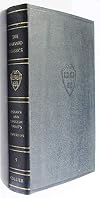
I thought these essays were claptrap when I had to read some of them in school. Now forty years later my opinion is confirmed. One can see how appropriate is Mr. Emerson's best known quotation ("Consistency is the hobgoblin of little minds"). "English Traits" (one of the more readable of the pieces in this collection) is one of the most inconsistent works I've ever come across. But Emerson is not all harmlessly quaint. I don't see how anybody familiar with the history of the 20th century can show more read "Self Reliance", his most famous and once popular essay, without a shudder. show less
After reading the first volume of President Eliot's Five Foot Shelf, I'm afraid I really do wonder about the President's mindset. It's not that these works of Mr. Franklin, Mr. Woolman and Mr. Penn are not worth reading--they certainly are, and in the cases of Mr. Woolman and Mr. Penn, in parts "inspiring". But all three raise more questions than they provide answers. I read Franklin in high school and remembered mostly his table or scheme for self-improvement, which to a high school boy show more seemed rather absurd. This time, though, I found more sympathy for old Ben and noticed what I had not seen before, his humorous touches.
But why in the world would these be chosen as the first volume of Mr. Eliot's ambitious effort? Was he serious? If so, what was his point? show less
But why in the world would these be chosen as the first volume of Mr. Eliot's ambitious effort? Was he serious? If so, what was his point? show less
Edmund Burke: On Taste, On the Sublime and Beautiful, Reflections on the French Revolution, Letter by Edmund Burke

Burke's comments on the contemporary French Revolution were important, however, they were confusing and mixed up with his fairly novel (at the time) concept of the importance of "property rights" to liberty. While brilliant, it is nonsense.
So is his defense of the English colonials in America based on their "antient" [his repeated word, which I think he made up?] rights as Englishmen. Just nonsense, but he just could never get himself to recognize that all people -- not just those of "the show more nobility"--are not only entitled to liberty but are collectively the source of all authority.
Wikipedia has done a great bio of him, and now I realize that "conservatives" have misled us in appropriating him as one of theirs. He is not. Not only did he almost get hung for his support of the American Revolution, but he also savaged the British East India Company and its "CEO". His peers thought him a "liberal". Lord Acton named him as one of the three great liberals -- see also Gladstone, Thos B Macaulay.
The Wiki article has quoted from his other work and in those he is genuinely eloquent. In addition, although it appears he began as a paid pigeon, he matured into an independent voice of genuine principle, with unequaled eloquence.
Of course, the effect of Burke's remonstrations against the most extreme forms of "Leftist" expressions was to embolden the Right. In effect, the British joined with the entire ancien regime in attacking the upstarts in France and went to a war. The war only forced the French people to defend themselves, which they did with unity and zeal they would not otherwise have exerted. The French managed to win the war in their "people's defense" against the entire "nobility" of Europe. But this of course, pushed them into the nasty little embrace of Napoleon Bonaparte.
Burke could not seem to focus on what the constitutes a "danger" to Liberty. show less
So is his defense of the English colonials in America based on their "antient" [his repeated word, which I think he made up?] rights as Englishmen. Just nonsense, but he just could never get himself to recognize that all people -- not just those of "the show more nobility"--are not only entitled to liberty but are collectively the source of all authority.
Wikipedia has done a great bio of him, and now I realize that "conservatives" have misled us in appropriating him as one of theirs. He is not. Not only did he almost get hung for his support of the American Revolution, but he also savaged the British East India Company and its "CEO". His peers thought him a "liberal". Lord Acton named him as one of the three great liberals -- see also Gladstone, Thos B Macaulay.
The Wiki article has quoted from his other work and in those he is genuinely eloquent. In addition, although it appears he began as a paid pigeon, he matured into an independent voice of genuine principle, with unequaled eloquence.
Of course, the effect of Burke's remonstrations against the most extreme forms of "Leftist" expressions was to embolden the Right. In effect, the British joined with the entire ancien regime in attacking the upstarts in France and went to a war. The war only forced the French people to defend themselves, which they did with unity and zeal they would not otherwise have exerted. The French managed to win the war in their "people's defense" against the entire "nobility" of Europe. But this of course, pushed them into the nasty little embrace of Napoleon Bonaparte.
Burke could not seem to focus on what the constitutes a "danger" to Liberty. show less
The Harvard Classics, Volume 2: The Apology, Phaedo and Crito of Plato, the Golden sayings of Epictetus, the Meditations of Marcus Aurelius by Charles William Eliot

As usual, the edition listed is a more recent one than the one that I just added the bk cover image to but they're both reissues of the same bk. The cover I added is from the Harvard Classics edition published by P. F. Collier & Son Corporation. This was probably the 1st philosophy bk I ever read. I remember reading it while I was a research volunteer for the University of Maryland hospital in downtown Baltimore. I might've been 21. My memories of it are more vividly associated w/ that show more circumstance than they are w/ its contents. I was the freak in the study who was composing a piece called "d composition" & reading classic philosophy. One of my roomies seemed to be fascinated by me. Somehow, from observing this intellectual behavior of mine, he concluded that I was some sort of hard-core orgy participant or something? He was a gigolo. After I was out of the hospital, he & I stayed in touch. I invited him to a party, he arrived w/ a friend in tow w/ a camera - both practically w/ their tongues lolling out. Their disappoinment at finding this a fairly tame painter's party was all too clear. Where's the orgy?
But back to the bk: Marcus Aurelius was the one who made the most impression on me. An emperor who was abstinent & tried to be fair? Or was the editor of the series trying to perpetuate ruling class myths that an elite university like Harvard was all too happy to use as a PR smokescreen for its own agenda? Hard to say in retrospect, but I doubt that I'll read Aurelius again to reform an opinion. I give it 4 stars anyway just b/c the whole experience of reading such a thing was important to me at that time in my life. show less
But back to the bk: Marcus Aurelius was the one who made the most impression on me. An emperor who was abstinent & tried to be fair? Or was the editor of the series trying to perpetuate ruling class myths that an elite university like Harvard was all too happy to use as a PR smokescreen for its own agenda? Hard to say in retrospect, but I doubt that I'll read Aurelius again to reform an opinion. I give it 4 stars anyway just b/c the whole experience of reading such a thing was important to me at that time in my life. show less
Lists
Awards

You May Also Like


Associated Authors
Statistics
- Works
- 191
- Also by
- 48
- Members
- 19,807
- Popularity
- #1,095
- Rating
- 4.0
- Reviews
- 61
- ISBNs
- 378
- Languages
- 4
- Favorited
- 2


