
Charles Darwin (1809–1882)
Author of The Origin of Species
About the Author
Charles Robert Darwin, born in 1809, was an English naturalist who founded the theory of Darwinism, the belief in evolution as determined by natural selection. Although Darwin studied medicine at Edinburgh University, and then studied at Cambridge University to become a minister, he had been show more interested in natural history all his life. His grandfather, Erasmus Darwin, was a noted English poet, physician, and botanist who was interested in evolutionary development. Darwin's works have had an incalculable effect on all aspects of the modern thought. Darwin's most famous and influential work, On the Origin of Species, provoked immediate controversy. Darwin's other books include Zoology of the Voyage of the Beagle, The Variation of Animals and Plants Under Domestication, The Descent of Man, and Selection in Relation to Sex. Charles Darwin died in 1882. (Bowker Author Biography) show less
Disambiguation Notice:
Note that the Norton Critical Edition entitled "Darwin" is not written by Charles Darwin. It is a modern volume with numerous contributors, and edited by Philip Appleman. In addition, the rare work "Charles Darwin and the Voyage of the Beagle" was written by Nora Barlow, and is not the same work as Darwin's own "Voyage of the Beagle".
Image credit: Charles Darwin selon Jules Pizzetta, Galerie des naturalistes : histoire des sciences naturelles depuis leur origine jusqu’à nos jours, Paris, 1891
Series
Works by Charles Darwin
The Annotated Origin: A Facsimile of the First Edition of On the Origin of Species (2009) 129 copies, 2 reviews
The Voyage of Charles Darwin: His Autobiographical Writings Selected and Arranged By Christopher Ralling (1978) 85 copies, 1 review
Geological observations on the volcanic islands and parts of South America visited during the voyage of H.M.S. "Beagle" (1972) 25 copies
Metaphysics, Materialism, and the Evolution of Mind: The Early Writings of Charles Darwin (2011) 22 copies
The Works of Charles Darwin, Volume 25: The Effects of Cross and Self Fertilization in the Vegetable Kingdom (1990) 20 copies
Charles Darwin's Natural Selection: Being the Second Part of his Big Species Book Written from 1856 to 1858 (1975) 13 copies
The Correspondence of Charles Darwin: Volume 7, 1858-1859, Supplement to the Correspondence 1821-1857 (1992) 12 copies
The Beagle letters 12 copies
Charles Darwin : his life told in an autobiographical chapter, and in a selected series of his published letters (1902) 11 copies
L' evoluzione: l'origine della specie, l'origine dell'uomo e la selezione sessuale, i fondamenti dell'origine della specie, autobiografia (1994) 10 copies
More Letters of Charles Darwin: A Record of His Work in a Series of Hitherto Unpublished Letters, Volume 2 (2002) 8 copies
The Zoology of the Voyage of H. M. S. Beagle, Part IV: Fish and Part V: Reptiles (1980) — Editor — 7 copies
The Works of Charles Darwin, Volume 14: Monographs of the Fossil Lepadidae and the Fossil Balanidae (1989) 6 copies
Diario de la Patagonia: Notas y Reflexiones de un Naturalista Sensible (Spanish Edition) (2006) 5 copies
More Letters of Charles Darwin: A Record of His Work in a Series of Hitherto Unpublished Letters (2016) 5 copies
[unidentified works] 5 copies
The Works of Charles Darwin, Volume 4: The Zoology of the Voyage of the H. M. S. Beagle, Part I: Fossil Mammalia and Part II: Mammalia (1980) 5 copies
The Correspondence of Charles Darwin: Volume 12, 1864 (The Correspondence of Charles Darwin) (2001) 5 copies
The Works of Charles Darwin, Volume 11: A Monograph of the Sub-Class Cirripedia, Volume I: The Lepadidae (1989) 5 copies
Selections from Darwin's The Origin of Species: The shape of the argument (Science Classics Module for Humanities Studies) (2009) 5 copies
More Letters of Charles Darwin: A Record of His Work in a Series of Hitherto Unpublished Letters, Volume 1 (2000) 4 copies
The Works of Charles Darwin, Volume 12: A Monograph of the Sub-Class Cirripedia, Volume II: The Balanidae (Part One) (1989) 4 copies
Darwin für Kinder und Erwachsene: »Die ungeheure Verschiedenartigkeit der Pflanzen und Tiere« (2008) 4 copies
The Works of Charles Darwin, Volume 13: A Monograph of the Sub-Class Cirripedia, Volume II: The Balanidae (Part Two) (1989) 4 copies
Narrative of the Surveying Voyages of His Majesty's Ships Adventure and Beagle: Between the Years 1826 and 1836 (2015) 3 copies
On The Origin Of Species & Other Bonus Works: Einstein Theory of Relativity, An Inquiry into the Nature and Causes of the Wealth of Nations (2015) 3 copies
Sind Affen Rechtshänder? Notizhefte M und N und die 'Biographische Skizze eines Kindes' (1998) 3 copies
Darwin Now 3 copies
The Correspondence of Charles Darwin Parts 1 and 2 Hardback: Volume 16, 1868: Parts 1 and 2 (2008) 3 copies
O SEGREDO DA EVOLUÇÃO 3 copies
Voyage of the Beagle Vol 29 2 copies
The Voyage of the Beagle Abridged and Edited by Millicent Selsam, Illustrated by Anthony Ravielli 2 copies
Charles Darwin Hauptwerke: 3 Bände im Schuber: Die Entstehung der Arten, Die Abstammung des Menschen, Reise eines Naturforschers um die Welt (2021) 2 copies
Origin Of Species The 2 copies
The Origin of Species (+ Audiobook): With The Descent of Man, The Autobiography of Charles Darwin & The Voyage of the Beagle (2015) 2 copies
සත්ත්ව සහ ශාක විශේෂයන්ගේ සම්භවය 2 copies
El origen de las especies (Clasicos Para Ninos/ Classics for Children) (Spanish Edition) (2010) 2 copies
Erinnerungen an die Entwicklung meines Geistes und Charakters (Autobiographie) 1876 - 1881. Tagebuch des Lebens und Scha (1986) 2 copies
A Monograph on the Fossil Balanidae and Verrucidae of Great Britain (1854) with index (1858) 2 copies
Harc a természetben 2 copies
Taccuini filosofici. Taccuini «M» e «N». Note sul senso morale. Teologia e selezione naturale (2010) 2 copies
Charles Darwin: Complete Collection of Works with analysis and historical background (Annotated and Illustrated) (Annotated Classics) (2013) 2 copies
Resa kring jorden. D. 1 1 copy
Voyage D'Un Naturaliste Autour Du Monde Fait a Bord Du Navire Le Beagle de 1831 a 1836 (1883) (2010) 1 copy
Nguồn gốc của muôn loài 1 copy
Originea speciilor 1 copy
The Descent of Man 1 copy
«L'origine della specie», «L'origine dell'uomo» e altri scritti sull'evoluzione. Ediz. integrale (2020) 1 copy
The formation of vegetable mould, though the action of worms, with observations on their habits 1 copy
Entendendo Darwin 1 copy
℗L'℗origine della specie 1 copy
Escritos íntimos 1 copy
Charles Darwin1809-1882 1 copy
Um Outro Darwin 1 copy
Intelligence in Animals 1 copy
S&S Little Classics 1 copy
Monographs on the Fossil Lepadidae, Balanidae and Verrucidae (Cambridge Library Collection - Life Sciences) (2009) 1 copy
Geology 1 copy
Moral Sense of Man 1 copy
The Life and Letters of Charles Darwin, Vol. 2 of 3 (Classic Reprint): Including an Autobiographical Chapter (2018) 1 copy
O pochodzeniu człowieka 1 copy
Dobór płciowy 1 copy
Darwin's Diary in Argentina: Observations and dicoveries by the author of the Theory of Evolution (2024) 1 copy
The Expression of the Emotions in Man and Animals and Other Writings (Graphyco Annotated Edition) (2020) 1 copy
Essay on Instinct 1 copy
Darwin Kuramı 1 copy
Inheritance 1 copy
Egy természettudós utazásai 1 copy
Aves y Mamiferos Argentinos 1 copy
Autobiografía 1 copy
Associated Works
The Assassin's Cloak: An Anthology of the World's Greatest Diarists (2000) — Contributor, some editions — 622 copies, 9 reviews
The Norton Anthology of English Literature, 4th Edition, Volume 2 (1979) — Contributor — 271 copies, 1 review
The Graphic Canon, Vol. 2: From "Kubla Khan" to the Brontë Sisters to The Picture of Dorian Gray (2012) — Contributor — 213 copies, 2 reviews
Dr. Jekyll and Mr. Hyde / The Secret Sharer / Transformation: Three Tales of Doubles (2008) — Contributor — 23 copies, 2 reviews
Die englische Literatur 08 in Text und Darstellung. 19. Jahrhundert 2 (1982) — Contributor — 5 copies
The Delphian Course : Part Seven : Story of the Drama, Nature Study — Contributor — 4 copies
Tagged
Common Knowledge
- Legal name
- Darwin, Charles Robert
- Birthdate
- 1809-02-12
- Date of death
- 1882-04-19
- Gender
- male
- Education
- University of Edinburgh
Christ's College, Cambridge (1831) - Occupations
- naturalist
scientist - Organizations
- Royal Society (Fellow)
- Awards and honors
- Fellow of the Royal Society
Wollaston Medal (1859) - Relationships
- Darwin, Erasmus (paternal grandfather)
Wedgwood, Josiah (maternal grandfather)
Darwin, Francis (son)
Darwin, George Howard (son)
Darwin, Leonard (son)
Darwin, Bernard (grandson) (show all 27)
Darwin, Charles Galton (grandson)
Darwin, Chris (great-great-grandson)
Darwin, Emma (great-great-granddaughter)
Barlow, Horace (great-grandson)
Barlow, Nora (granddaughter)
Barlow, Phyllida (great-great-granddaughter)
Chapman, Matthew (great-great-grandson)
Cornford, Christopher (great-grandson)
Cornford, Frances (granddaughter)
Cornford, John (great-grandson)
Galton, Sir Francis (cousin)
Keynes, Milo (great-grandson)
Keynes, Quentin (great-grandson)
Keynes, Randal (great-great-grandson)
Keynes, Richard (great-grandson)
Keynes, Simon (great-great-grandson)
Padel, Oliver J. (great-great-grandson)
Padel, Ruth (great-great-granddaughter)
Pryor, Sophie (great-granddaughter)
Raverat, Gwen (granddaughter)
Vaughan Williams, Ralph (grandnephew) - Cause of death
- coronary thrombosis
- Nationality
- UK
- Birthplace
- Shrewsbury, Shropshire, England, UK
- Places of residence
- Shrewsbury, Shropshire, England, UK
Edinburgh, Midlothian, Scotland, UK (1825-1828)
Cambridge, Cambridgeshire, England, UK (1828-1839)
HMS Beagle (1831-1836)
London, Middlesex, England, UK (1839-1842)
Down, Kent, England, UK (1842-1882) - Place of death
- Downe, Kent, England, UK
- Burial location
- Westminster Abbey, London, Middlesex, England, UK
- Map Location
- England, UK
- Disambiguation notice
- Note that the Norton Critical Edition entitled "Darwin" is not written by Charles Darwin. It is a modern volume with numerous contributors, and edited by Philip Appleman. In addition, the rare work "Charles Darwin and the Voyage of the Beagle" was written by Nora Barlow, and is not the same work as Darwin's own "Voyage of the Beagle".
Members
Discussions
Anyone up for Charles Darwin? in Legacy Libraries (June 28)
New Charles Darwin's Origin of the Species LE in Folio Society Devotees (February 2024)
The Zoology of the Voyage of HMS Beagle by Charles Darwin – RGS LE Facsimile - 1994 in Fine Press Forum (July 2023)
On the Origin of Species by Charles Darwin in 75 Books Challenge for 2012 (December 2013)
Best editions of the Voyage? in Evolve! (October 2012)
Happy 200th Birthday, Abraham Lincoln and Charles Darwin! in The Green Dragon (February 2009)
Reviews
The Annotated Origin: A Facsimile of the First Edition of On the Origin of Species by Charles Darwin
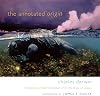
This is the best edition available (as far as I am aware) of one of the most important books ever written, in which Darwin provided the answer to what had been called the "mystery of mysteries", the origin of species.
Darwin shows that "species are not immutable"; that all living creatures are linked by common descent; and that natural selection is the mechanism by which evolutionary change takes place.
This edition really does provide the best of both worlds. It gives us a facsimile of the show more first edition of "On the Origin of Species" side by side with up-to-date explanations and comments by James T. Costa.
You do not have to be a scientific specialist to read the "Origin", but I do feel that you can get more out of it if you have first read a modern introduction to evolution such as Ernst Mayr's "What Evolution Is" or Jerry Coyne's "Why Evolution Is True". This, along with Costa's annotations, allows you to appreciate what Darwin got right and what he got wrong, as well as the historical context of the times.
There were things that Darwin could not know 150 years ago: he knew nothing of modern genetics or the causes of variation; he mistakenly thought that the Lamarckian inheritance of acquired characteristics played a part in evolution; and later theorists such as Ernst Mayr have added to our understanding of how one species branches off from another in the speciation process. This is where the prior reading I have suggested and Costa's annotations are particularly useful.
I must admit that there are sections (those on variation and hybridism, for example) that I found myself skimming. But, on the other hand, chapters such as those on the "Struggle for Existence" and "Natural Selection" drew me into reading every word.
Stephen Jay Gould summed up Darwin by saying that he was conservative in his personal life, liberal in his political views (in his strong opposition to slavery for example), and radical in his scientific ideas. I'll end with Darwin's own succinct summary, from his Introduction, of the most important of these radical scientific ideas, his theory of natural selection:
"As many more individuals of each species are born than can possibly survive; and as, consequently, there is a frequently recurring struggle for existence, it follows that any being, if it vary however slightly in any manner profitable to itself, under the complex and sometimes varying conditions of life, will have a better chance of surviving, and thus be naturally selected. From the strong principle of inheritance, any selected variety will tend to propagate its new and modified form." show less
Darwin shows that "species are not immutable"; that all living creatures are linked by common descent; and that natural selection is the mechanism by which evolutionary change takes place.
This edition really does provide the best of both worlds. It gives us a facsimile of the show more first edition of "On the Origin of Species" side by side with up-to-date explanations and comments by James T. Costa.
You do not have to be a scientific specialist to read the "Origin", but I do feel that you can get more out of it if you have first read a modern introduction to evolution such as Ernst Mayr's "What Evolution Is" or Jerry Coyne's "Why Evolution Is True". This, along with Costa's annotations, allows you to appreciate what Darwin got right and what he got wrong, as well as the historical context of the times.
There were things that Darwin could not know 150 years ago: he knew nothing of modern genetics or the causes of variation; he mistakenly thought that the Lamarckian inheritance of acquired characteristics played a part in evolution; and later theorists such as Ernst Mayr have added to our understanding of how one species branches off from another in the speciation process. This is where the prior reading I have suggested and Costa's annotations are particularly useful.
I must admit that there are sections (those on variation and hybridism, for example) that I found myself skimming. But, on the other hand, chapters such as those on the "Struggle for Existence" and "Natural Selection" drew me into reading every word.
Stephen Jay Gould summed up Darwin by saying that he was conservative in his personal life, liberal in his political views (in his strong opposition to slavery for example), and radical in his scientific ideas. I'll end with Darwin's own succinct summary, from his Introduction, of the most important of these radical scientific ideas, his theory of natural selection:
"As many more individuals of each species are born than can possibly survive; and as, consequently, there is a frequently recurring struggle for existence, it follows that any being, if it vary however slightly in any manner profitable to itself, under the complex and sometimes varying conditions of life, will have a better chance of surviving, and thus be naturally selected. From the strong principle of inheritance, any selected variety will tend to propagate its new and modified form." show less
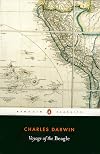
Darwin is both surprisingly readable and surprisingly relatable. This account of his famous voyage comes before his revelations on the origin of species, although the seeds are being sown throughout this book. It is fascinating to see the planting not only of those seeds, but of the seeds of plate tectonic theory, as Darwin observes the signs of plate movement in geologically active areas of the world such as South America. Reading this book, and relating to this young man with the inquiring show more mind, I found myself wondering if I too, given the same evidence, could have drawn the same conclusions.
The appendix is an interesting contrast to the rest of the book, as it demonstrates two opposing reactions to the evidence presented by the voyage - evidence that seems to contradict the Biblical story of the great flood which at the time was considered literal truth. While Darwin eventually discarded the Biblical story in favour of a theory that matched the evidence presented, his friend Captain Fitzroy argued that the evidence could be made to fit the accepted truth. These two opposing approaches to new discoveries are still in play today.
Another surprise was that Darwin pretty much hated everywhere he went. He suffered awfully from sea sickness and was pretty brutally honest about the places he visited. Of New Zealand he said "the scenery is nowhere beautiful, and only occasionally pretty" and "I believe we are all glad to leave New Zealand. It is not a pleasant place.". Harsh.
On the other hand, his talent for vivid description is really amazing. I can easily see why this book was popular when it came out. It's probably better than a lot of travel books that come out today!
One of the few places that Darwin actually liked was the lush rainforest of South America. Here I was surprised, because even Darwin seemed to accept that the inevitable fate of this magnificent forest was to be cleared for farm land, and the idea doesn't even seem to particularly worry him. It's another expression of the English ideas that helped justify confiscation of Maori land - that the only good use of land is to work it, and that land in its natural state is "useless".
Elsewhere, he observes native species in delicate island ecosystems being driven to extinction by introduced species or human settlement and simply accepts it as a natural consequence of those changes. How different to our modern view of such things!
Great book. Intelligent, relatable and revealing. show less
The appendix is an interesting contrast to the rest of the book, as it demonstrates two opposing reactions to the evidence presented by the voyage - evidence that seems to contradict the Biblical story of the great flood which at the time was considered literal truth. While Darwin eventually discarded the Biblical story in favour of a theory that matched the evidence presented, his friend Captain Fitzroy argued that the evidence could be made to fit the accepted truth. These two opposing approaches to new discoveries are still in play today.
Another surprise was that Darwin pretty much hated everywhere he went. He suffered awfully from sea sickness and was pretty brutally honest about the places he visited. Of New Zealand he said "the scenery is nowhere beautiful, and only occasionally pretty" and "I believe we are all glad to leave New Zealand. It is not a pleasant place.". Harsh.
On the other hand, his talent for vivid description is really amazing. I can easily see why this book was popular when it came out. It's probably better than a lot of travel books that come out today!
One of the few places that Darwin actually liked was the lush rainforest of South America. Here I was surprised, because even Darwin seemed to accept that the inevitable fate of this magnificent forest was to be cleared for farm land, and the idea doesn't even seem to particularly worry him. It's another expression of the English ideas that helped justify confiscation of Maori land - that the only good use of land is to work it, and that land in its natural state is "useless".
Elsewhere, he observes native species in delicate island ecosystems being driven to extinction by introduced species or human settlement and simply accepts it as a natural consequence of those changes. How different to our modern view of such things!
Great book. Intelligent, relatable and revealing. show less
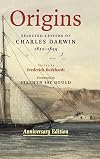
This is a fascinating selection of letters written by Charles Darwin, a man who is summed up by Stephen Jay Gould in the Foreword as being "radical in his scientific ideas, liberal in his political and social views, and conservative in personal lifestyle..."
The letters in this volume cover the period stretching from his childhood up to the publication of "On the Origin of Species" in 1859, including letters sent while on his voyage round the world on the Beagle. ("...if it was not for show more sea-sickness the whole world would be sailors.")
The letters give us an insight into Darwin's personal life as well as the development of his ideas. For example, there is the moving letter that Darwin wrote to his wife Emma in 1851 informing her of the tragic death of "Our poor dear dear child" Annie. (Darwin was at Annie's bedside in Malvern where she was undergoing treatment, but Emma was at home in the late stages of another pregnancy).
We again see Darwin preoccupied by the death of another child ("poor Baby") in 1858 when his friends Hooker, Lyell and Huxley were arranging the joint presentation of papers on natural selection written by Darwin and by Alfred Russel Wallace.
There is plenty of ammunition in these letters to shoot down the ridiculous conspiracy theory which claims that Darwin stole the credit for the theory of natural selection from Wallace. Wallace certainly deserves credit for independently coming up with the same idea, but Wallace himself was always happy to play second fiddle to Darwin. For example, in 1908 Wallace made a speech to the Linnaean Society in which he explicitly defended Darwin's priority, pointing out that "...the idea occurred to Darwin in October 1838, nearly twenty years earlier than to myself (in February 1858); and that during the whole of that twenty years he had been laboriously collecting evidence..."
So, for example, in a letter of 1844 Darwin tentatively lets his friend Hooker in on his secret theorising and research: "...I am almost convinced...that species are not (it is like confessing a murder) immutable...I think I have found out (here's presumption!) the simple way by which species become exquisitely adapted to various ends." He also sets out the theory in an 1857 letter to Asa Gray.
Darwin probably started thinking seriously about "transmutation" on the last stretch of his Beagle voyage in 1836. He certainly opened his first notebook on the subject in 1837, and the idea of natural selection as the mechanism of evolutionary change came to him, after reading Malthus, in 1838.
In 1842 he wrote what he called the "pencil sketch of my species theory", and in 1844 he wrote a fuller and more polished version. We can here read the letter/note he wrote to Emma asking her to see to it that the 1844 essay was published in the event of his death.
The letters in this book, taken together with Darwin's notebooks and the two essays/sketches, show beyond question that all the key ideas that Darwin made public in 1859 in "On the Origin of Species" had already been developed by him much earlier.
There is a second volume of letters available (entitled "Evolution") covering the period from 1860 to 1870, but Cambridge does not yet seem to have published a third volume covering Darwin's later years. show less
The letters in this volume cover the period stretching from his childhood up to the publication of "On the Origin of Species" in 1859, including letters sent while on his voyage round the world on the Beagle. ("...if it was not for show more sea-sickness the whole world would be sailors.")
The letters give us an insight into Darwin's personal life as well as the development of his ideas. For example, there is the moving letter that Darwin wrote to his wife Emma in 1851 informing her of the tragic death of "Our poor dear dear child" Annie. (Darwin was at Annie's bedside in Malvern where she was undergoing treatment, but Emma was at home in the late stages of another pregnancy).
We again see Darwin preoccupied by the death of another child ("poor Baby") in 1858 when his friends Hooker, Lyell and Huxley were arranging the joint presentation of papers on natural selection written by Darwin and by Alfred Russel Wallace.
There is plenty of ammunition in these letters to shoot down the ridiculous conspiracy theory which claims that Darwin stole the credit for the theory of natural selection from Wallace. Wallace certainly deserves credit for independently coming up with the same idea, but Wallace himself was always happy to play second fiddle to Darwin. For example, in 1908 Wallace made a speech to the Linnaean Society in which he explicitly defended Darwin's priority, pointing out that "...the idea occurred to Darwin in October 1838, nearly twenty years earlier than to myself (in February 1858); and that during the whole of that twenty years he had been laboriously collecting evidence..."
So, for example, in a letter of 1844 Darwin tentatively lets his friend Hooker in on his secret theorising and research: "...I am almost convinced...that species are not (it is like confessing a murder) immutable...I think I have found out (here's presumption!) the simple way by which species become exquisitely adapted to various ends." He also sets out the theory in an 1857 letter to Asa Gray.
Darwin probably started thinking seriously about "transmutation" on the last stretch of his Beagle voyage in 1836. He certainly opened his first notebook on the subject in 1837, and the idea of natural selection as the mechanism of evolutionary change came to him, after reading Malthus, in 1838.
In 1842 he wrote what he called the "pencil sketch of my species theory", and in 1844 he wrote a fuller and more polished version. We can here read the letter/note he wrote to Emma asking her to see to it that the 1844 essay was published in the event of his death.
The letters in this book, taken together with Darwin's notebooks and the two essays/sketches, show beyond question that all the key ideas that Darwin made public in 1859 in "On the Origin of Species" had already been developed by him much earlier.
There is a second volume of letters available (entitled "Evolution") covering the period from 1860 to 1870, but Cambridge does not yet seem to have published a third volume covering Darwin's later years. show less
Lists
. (1)
Five star books (1)
Reading list (1)
Reading LIst (1)
bound (1)
Favourite Books (1)
BitLife (1)
19th Century (1)
Unread books (1)
Folio Society (4)
Big tags (1)
100 (1)
A Reading List (1)
. (1)
Awards


You May Also Like


Associated Authors
Statistics
- Works
- 344
- Also by
- 28
- Members
- 32,655
- Popularity
- #593
- Rating
- 4.1
- Reviews
- 291
- ISBNs
- 1,897
- Languages
- 26
- Favorited
- 73


