
Ernst Mayr (1904–2005)
Author of What Evolution Is
About the Author
Ernst Mayr is Professor Emeritus in the Museum of Comparative Zoology at Harvard University
Image credit: University of Konstanz
Works by Ernst Mayr
The Growth of Biological Thought: Diversity, Evolution, and Inheritance (1982) 339 copies, 2 reviews
What Makes Biology Unique? Considerations on the Autonomy of a Scientific Discipline (2004) 137 copies, 3 reviews
Populations, Species, and Evolution: An Abridgment of Animal Species and Evolution (1970) 102 copies
Histoire de la biologie : Diversité, évolution et hérédité, tome 2 : De Darwin à nos jours (1995) 4 copies
Histoire de la biologie, diversité, évolution, hérédité, tome 1 : Des origines à Darwin (1995) 2 copies
Birds of paradise 2 copies
Artbegriff und Evolution 2 copies
The birds of Timor and Sumba 2 copies
O QUE É EVOLUÇÃO 1 copy
BIOLOGIA , CIÊNCIA ÚNICA 1 copy
Evolution and behaviour 1 copy
The problem of land connections across the South Atlantic, with special reference to the Mesozoic 1 copy
Evolution 1 copy
Die Hauptbücherei Wien : ein Bau von Ernst Mayr = The main city library Vienna : a building by Ernst Mayr (2004) 1 copy
Check List of Birds of the World Volume 1 : Second edition Revision of the work of James L. Peters (1960) 1 copy
CHECK-LIST OF BIRDS OF THE WORLD: A CONTINUATION OF THE WORK OF JAMES L. PETERS: VOLUME XV. (1962) 1 copy
Filozofija evolucije 1 copy
Biyolojiyi Benzersiz Kılan Nedir?;Bilimsel Bir Disiplinin Özerkliği Üzerine Düşünceler (2022) 1 copy
Speciation and systematics 1 copy
Associated Works
Acquiring Genomes: The Theory of the Origins of the Species (2002) — Foreword, some editions — 200 copies, 2 reviews
Tagged
Common Knowledge
- Legal name
- Mayr, Ernst Walter
- Birthdate
- 1904-07-05
- Date of death
- 2005-02-03
- Gender
- male
- Education
- University of Greifswald
University of Berlin
Staatsgymnasium, Dresden-Neustadt, Germany - Occupations
- evolutionary biologist
tropical explorer
taxonomist
ornithologist
historian of science - Organizations
- Harvard University
American Museum of Natural History - Awards and honors
- National Medal of Science ( [1969])
Balzan Prize (1983)
International Prize for Biology (1994)
Lewis Thomas Prize for Writing about Science (1998)
Crafoord Prize (1999)
Japan Prize (show all 12)
Darwin-Wallace Medal (1958)
George Sarton Medal (1986)
Darwin Medal (1984)
Benjamin Franklin Medal of the American Philosophical Society
Linnean Medal (1977)
Daniel Giraud Elliot Medal (1967) - Nationality
- Germany
- Birthplace
- Kempten, Germany
- Places of residence
- Kempten, Germany (birth)
Bedford, Massachusetts, USA (death) - Place of death
- Bedford, Massachusetts, USA
- Associated Place (for map)
- Bedford, Massachusetts, USA
Members
Reviews
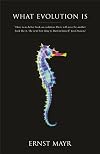
Ernst Mayr was one of the leading evolutionary biologists of the last century. He lived to be a hundred years old and was well into his nineties when he wrote this book, showing that his brain was as sharp as ever.
It is a wide-ranging book which succinctly covers all the key issues relating to evolution, but I would particularly like to draw attention to two aspects of Mayr's approach.
Firstly, he shows that Darwinian evolutionary theory actually consists of several distinct strands. For show more example, after the publication of Darwin's "On the Origin of Species", the idea of the common descent of all living creatures ("the tree of life") became widely accepted relatively quickly, whereas the mechanism of evolutionary change - natural selection - took much longer to gain widespread support, even amongst scientists.
Similarly, Mayr shows that evolution over time within one species and the branching off of a new species from an existing one (speciation) are two distinct but related processes. (Mayr himself played a central role in developing a fuller understanding of the speciation process.)
The second important aspect of Mayr's approach is his criticism of the fact that "most treatments of evolution are written in a reductionist manner in which all evolutionary phenomena are reduced to the level of the gene". This is directed against those like Richard Dawkins who see the gene as being the target of natural selection. Mayr shows that natural selection cannot "see" individual genes and that it is the organism as a whole which is the target of selection. It is the organism that lives or dies and succeeds or fails in reproducing, not the individual gene.
This last point has been reinforced by the fact that we now know that one gene can affect several different parts of an organism or its behaviour, and that several genes often interact with each other to produce one characteristic.
I strongly recommend this book. But I must point out that, although it is largely very clearly written, a few parts are quite difficult, especially for anyone who is new to evolutionary theory. For that reason I would recommend Jerry Coyne's book, "Why Evolution Is True", as a companion volume for newcomers. show less
It is a wide-ranging book which succinctly covers all the key issues relating to evolution, but I would particularly like to draw attention to two aspects of Mayr's approach.
Firstly, he shows that Darwinian evolutionary theory actually consists of several distinct strands. For show more example, after the publication of Darwin's "On the Origin of Species", the idea of the common descent of all living creatures ("the tree of life") became widely accepted relatively quickly, whereas the mechanism of evolutionary change - natural selection - took much longer to gain widespread support, even amongst scientists.
Similarly, Mayr shows that evolution over time within one species and the branching off of a new species from an existing one (speciation) are two distinct but related processes. (Mayr himself played a central role in developing a fuller understanding of the speciation process.)
The second important aspect of Mayr's approach is his criticism of the fact that "most treatments of evolution are written in a reductionist manner in which all evolutionary phenomena are reduced to the level of the gene". This is directed against those like Richard Dawkins who see the gene as being the target of natural selection. Mayr shows that natural selection cannot "see" individual genes and that it is the organism as a whole which is the target of selection. It is the organism that lives or dies and succeeds or fails in reproducing, not the individual gene.
This last point has been reinforced by the fact that we now know that one gene can affect several different parts of an organism or its behaviour, and that several genes often interact with each other to produce one characteristic.
I strongly recommend this book. But I must point out that, although it is largely very clearly written, a few parts are quite difficult, especially for anyone who is new to evolutionary theory. For that reason I would recommend Jerry Coyne's book, "Why Evolution Is True", as a companion volume for newcomers. show less
Perfect. Here at last is a great book explaining the essential facts about evolutionary biology to everyone -novices and afficionados alike. There's a lot of introductory books on the topic, but this one stands out for at least two reasons.
First, Ernst Mayr is not taking side when dealing with arguable issues. Well, he certainly has his convictions (pro-gradualism, anti-selfish gene hypothesis...) but, he is very honest and fairplay with views opoosite to his own. We can't say the same about show more every author...
Then, and above all, he's not assuming his readers are a bunch of fools unable to grasp such difficult topics if they are not trained and qualified for it. He defines every key concepts, even the toughest ones in a enlightening prose, supported by enough examples to make the whole understandable even by laymen (like me!). There's a lot to learn, that's what we are here for.
Besides, the plan is well structured and organised: proofs that evolution is a fact, how it works and accounts for biodiversity and, finally, a closing chapter about human evolution. A straighforward appendix draws back on the main points by completing them. There's even a glossary to make the whole easier to go through.
A MUST read. show less
First, Ernst Mayr is not taking side when dealing with arguable issues. Well, he certainly has his convictions (pro-gradualism, anti-selfish gene hypothesis...) but, he is very honest and fairplay with views opoosite to his own. We can't say the same about show more every author...
Then, and above all, he's not assuming his readers are a bunch of fools unable to grasp such difficult topics if they are not trained and qualified for it. He defines every key concepts, even the toughest ones in a enlightening prose, supported by enough examples to make the whole understandable even by laymen (like me!). There's a lot to learn, that's what we are here for.
Besides, the plan is well structured and organised: proofs that evolution is a fact, how it works and accounts for biodiversity and, finally, a closing chapter about human evolution. A straighforward appendix draws back on the main points by completing them. There's even a glossary to make the whole easier to go through.
A MUST read. show less

This book is an exceptional history of science because it was written by a very prominent scientist. It's hard to imagine that a better history of biology will become available anytime soon. Especially the chapters on diversity and evolution are fascinating and understandable even for a layman, the final chapter on inheritance is more difficult because some familiarity with cell biology is required. At the end there's an interesting synopsis of some philosophical consequences drawn from the show more preceding chapters. If you're interested in the history of biology, this is the book you should begin with. show less
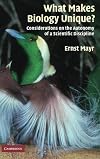
This book is a pretty good defense of the autonomy of biology. However, although the author is a great biologist and a good historian of biological science, he is clearly not a philosopher. So the arguments are not as strong as they could be. I would recommend Elliott Sober's philosophical works instead, or even Mayr's own Growth of Biological Thought which provides better, historical illustrations of the autonomy of biology.
Lists
Awards


You May Also Like


Associated Authors
Statistics
- Works
- 74
- Also by
- 5
- Members
- 2,539
- Popularity
- #10,114
- Rating
- 4.1
- Reviews
- 15
- ISBNs
- 111
- Languages
- 12
- Favorited
- 10