
John Maynard Smith (1920–2004)
Author of The Theory of Evolution
About the Author
Works by John Maynard Smith
Byte-sized evolution 1 copy
Frank: Bishop of Zanzibar 1 copy
The Logic of Animal Conflict 1 copy
Yaşamın Kökenleri 1 copy
La Théorie De L' Evolution 1 copy
Genes, Memes, & Minds 1 copy
The Logic of Animal Conflict 1 copy
Associated Works
Tagged
Common Knowledge
- Birthdate
- 1920-01-06
- Date of death
- 2004-04-19
- Gender
- male
- Education
- University College London
University of Cambridge (Trinity College)
Eton College - Occupations
- geneticist
evolutionary biologist - Organizations
- Communist Party of Great Britain
- Awards and honors
- Balzan Prize (1991)
Copley Medal (1999)
Kyoto Prize (2001)
Darwin-Wallace Medal (2008)
Crafoord Prize (1999)
Frink Medal (1990) (show all 8)
Darwin Medal (1986)
Linnean Medal (1995) - Nationality
- England
- Birthplace
- London, England, UK
- Places of residence
- Exmoor, Devon, England, UK
- Place of death
- Lewes, East Sussex, England, UK
- Map Location
- England, UK
Members
Reviews
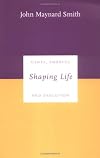
Don't be fooled by the small size of this book; it is not a book for a casual reader. If you are not familiar with evolutionary genetics, you may find the amount of jargon offputting. Do you know what cytoplasmic streaming is? Then you will find it readable. The author never bothers to define any terms, but sprinkles them freely throughout his work. This is okay if you are aiming a book at a scientific audience, but this is aimed at a general audience, or at least the author thinks it is. In show more addition, it probably isn't the best work to choose, since it was written nearly 20 years ago, and EvoDevo has moved along a lot since that time. The final chapter was absolutely out of the realm of science, as he speculated that your political views determined which view of evolutionary development you took; as he became more conservative, his views moved toward that of a reductionist. There may be some truth to that, but I think there are way to many people on the side of genetic control for a group of specialists mostly dominated by political liberals for this to be the case. In any case, it was strictly anecdotal, and should have been left out of the book, since it appeared it might have been included for the purpose of making a "point" about people who were politically out of tune with him. This is not the place for that, and without more solid eidence than, oh, I know some people, and this is my own views, this should not have been included at all. Overall, a bit of a disappointment, but then, it is quite out of date, so maybe I shouldn't have expected much. show less

When you read a books of previously published essays you have to expect repetition, and lack of continuity. Repitition of content is one thing. Smith seems to have reused whole paragraphs and groups of paragraphs in different essays. At least once I checked that I didn't have a bad copy with the same pages bound in twice.
You also expect the editors to give you at least a few hints as to the context of the essays, if that is important to reading them. Several of these essays are book reviews, show more but the book reviewed is not named in the chapter, just in the bibliographic information at the back of the book. The beginning of the first chapter that is a book review beginns with 'This book...' The book reviewed, that is, NOT obvious in this context.
In the end, I think I learned something from reading this, but I'm not eager to read another book by him, unless there is some indication that it has been better edited before publishing. show less
You also expect the editors to give you at least a few hints as to the context of the essays, if that is important to reading them. Several of these essays are book reviews, show more but the book reviewed is not named in the chapter, just in the bibliographic information at the back of the book. The beginning of the first chapter that is a book review beginns with 'This book...' The book reviewed, that is, NOT obvious in this context.
In the end, I think I learned something from reading this, but I'm not eager to read another book by him, unless there is some indication that it has been better edited before publishing. show less

Some interesting insights, neatly put. For example, "Evolution tends to adapt the nature of animals and plants to their environments. In history, man has adapted his environment to his nature". Contrast this with the Darwin-centric view of (for example) Dawkins. He also makes the point that humans have for a considerable time, sought (and in many cases succeeded, even without today's technologies), to 'direct the evolution of their domestic animals and plants'.
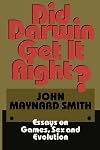
An wide-ranging and entertaining introduction to several current issues in evolutionary theory.
Lists
You May Also Like


Associated Authors
Statistics
- Works
- 31
- Also by
- 3
- Members
- 1,295
- Popularity
- #19,822
- Rating
- 4.0
- Reviews
- 6
- ISBNs
- 61
- Languages
- 6
- Favorited
- 5
