
Mark Ridley
Author of Richard Dawkins: How a Scientist Changed the Way We Think
About the Author
Mark Ridley works in the Department of Zoology, University of Oxford, UK.
Disambiguation Notice:
Often confused with science writer and businessman Matt Ridley
Works by Mark Ridley
The Cooperative Gene: How Mendel's Demon Explains the Evolution of Complex Beings (2001) 100 copies, 1 review
Associated Works
Tagged
Common Knowledge
- Canonical name
- Ridley, Mark
- Birthdate
- 1956
- Gender
- male
- Education
- University of Oxford
University of Cambridge - Occupations
- zoologist
- Relationships
- Dawkins, Richard (Doctoral Advisor)
- Nationality
- UK
- Disambiguation notice
- Often confused with science writer and businessman Matt Ridley
- Associated Place (for map)
- UK
Members
Reviews
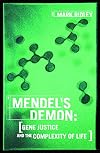
Mendel's Demon remains, unchallenged, my most favourite evolution book. Here's the gist. One day, you decide to get some extra housework done and clone(copy) yourself. That clone decides he'd rather be at the bar and makes a clone of himself, a clone of a clone if you will, who promptly decides that that is so unfair and makes a copy of himself, a clone of a clone of a clone, and so on and so forth. However, every time a clone makes a copy of himself, there is a chance that a piece of DNA is show more miscopied. Of course, every time he clones himself, this copy error is past down to the next clone, who could introduce a new copy error, so now culminatively two or three errors are now being past down to the next clone. Fast forward couple of thousand generations, and you will have clones with hundred's of thousands of copy errors in their DNA, and looking like horribly mishapen monster clones, who would exact their revenge on the clones at the pub if they could still move or breathe properly.
Mendel's Demon guides us through the various novel ways evolution has come up to correct this problem, the most novel way being the most familiar, through sex. Yay sex! What not to like about this book? show less
Mendel's Demon guides us through the various novel ways evolution has come up to correct this problem, the most novel way being the most familiar, through sex. Yay sex! What not to like about this book? show less
Richard Dawkins: How a Scientist Changed the Way We Think: Reflections by Scientists, Writers, and Philosophers by Alan Grafen
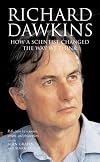
Rather disappointing collection of essays, much of them sycophantic, and some rambling. There is a small section of interesting dissenting voices, but two of the three essays are of very poor quality, and the third, by Bateson, has some bizarre bitter comments aimed at Dawkins and an obviously personal rivalry. However, there are also one or two strong chapters, which are more carefully and clearly argued, such as Cronin's sexual selection chapter. Could have been so much more.

This collection of essays celebrates the contributions of Richard Dawkins. Most of the contributors focus on his selfish gene theory, though there is a short grouping at the back of the book that discuss his ability to generate religious controversy. One section deals solely with his ability to write in a comprehensible, interesting manner. There are a couple of clunkers among the essays, chiefly the one by Matt Ridley, but most of them are intersting and informative. The book is not as show more interesting to read as books by its subject, however. show less
This book's about to celebrate the 30th anniversary of the 'Selfish Gene', perhaps the most important of Dawkins' works. It's a bit disappointment that the title's misleading, because most of the essays are not about Dawkins but the book and it's impacts. I enjoyed the last two chapters the most, these are about the man and his extraordinary abilities to explain one of the most influental and most wonderful theory of mankind's history. Evolution.
Lists
Awards

You May Also Like


Associated Authors
Statistics
- Works
- 21
- Also by
- 3
- Members
- 977
- Popularity
- #26,369
- Rating
- 3.8
- Reviews
- 9
- ISBNs
- 48
- Languages
- 6