

George Gaylord Simpson (1902–1984)
Author of The Meaning of Evolution
About the Author
Disambiguation Notice:
George Gaylord Simpson whose CK is above The Meaning of Evolution et. al. He did not write Origin of Species but did write a foreword for an edition.
Image credit: June 1926 Yale PhD photo inscribed "for Professor R.S.Lull with the deepest regards of his pupil George G. Simpson"
Works by George Gaylord Simpson
Behavior and evolution — Editor — 13 copies
Discoverers of the Lost World: An account of some of those who brought back to life South American mammals long buried i (1984) 7 copies
Kehitys, luonto ja ihminen 2 copies
A Catalogue of the Mesozoic Mammalia in the Geological Department of the British Museum (1980) 2 copies
Horses 1 copy
L'Évolution et sa signification : une étude de l'histoire de la vie et de sa signification humaine 1 copy
A Biologia e o Homem 1 copy
George Gaylord Simpson 1 copy
Associated Works
The Autobiography of Charles Darwin: 1809-1882 (1887) — Introduction, some editions — 1,023 copies, 21 reviews
Ants, Indians, and Little Dinosaurs: A Celebration of Man & Nature for the 75th Anniversary of Natural History Magazine (1975) — Contributor — 203 copies, 1 review
Tagged
Common Knowledge
- Birthdate
- 1902-06-16
- Date of death
- 1984-10-06
- Gender
- male
- Education
- University of Colorado
Yale University (Ph.D.) - Occupations
- paleontologist
professor - Organizations
- The American Museum
Harvard University - Awards and honors
- Daniel Giraud Elliot Medal (1944)
Mary Clark Thompson Medal (1943)
Darwin Medal (1962)
Darwin-Wallace Medal (1958)
Linnean Medal (1962) - Short biography
- George Gaylord Simpson was an American paleontologist. Simpson was perhaps the most influential paleontologist of the twentieth century, and a major participant in the modern evolutionary synthesis, contributing Tempo and mode in evolution (1944), The meaning of evolution (1949) and The major features of evolution (1953). He was an expert on extinct mammals and their intercontinental migrations.nHe anticipated such concepts as punctuated equilibrium (in Tempo and mode) and dispelled the myth that the evolution of the horse was a linear process culminating in the modern Equus caballus. He coined the word hypodigm in 1940, and published extensively on the taxonomy of fossil and extant mammals. Simpson was influentially, and incorrectly, opposed to Alfred Wegener's theory of continental drift.
He was Professor of Zoology at Columbia University, and Curator of the Department of Geology and Paleontology at the American Museum of Natural History from 1945 to 1959. He was Curator of the Museum of Comparative Zoology at Harvard University from 1959 to 1970, and a Professor of Geosciences at the University of Arizona until his retirement in 1982. - Nationality
- USA
- Birthplace
- Chicago, Illinois, USA
- Places of residence
- Chicago, Illinois, USA
New Haven, Connecticut, USA
Cambridge, Massachusetts, USA - Place of death
- Tucson, Arizona, USA
- Disambiguation notice
- George Gaylord Simpson whose CK is above The Meaning of Evolution et. al. He did not write Origin of Species but did write a foreword for an edition.
- Associated Place (for map)
- USA
Members
Reviews

The Dechronization of Sam Magruder is the book-within-a-book story of a man who goes back in time 80 million years, proving that his theory of time travel works yet living out his life absolutely isolated from human contact.
Sam Magruder lives in 2162. We first learn of his amazing adventure when slabs of stone from 80 million years ago are discovered to contain “universal Swahili” – the language of 2162 – chronicling Maguder’s amazing time jump. He writes of how he figures out show more “when” he is, how he survives, and of his musings on his purpose now that he can’t ever get back to his life in 2162.
This is a treasure of a book. I really enjoyed the descriptions of how he survived the first days, how he tried to make sense of what happened to him, and how he got through his life.
Surrounding the 8 slabs of Magruder’s story is philosophical argument about his life its meaning by the Universal Historian, the Common Man, the Pragmatist, the Ethnologist, and Pierre Precieux, discoverer of the slabs. Each represents a different philosophical viewpoint. One thing that was terribly amusing was that Magruder’s discussion of his (lack of) sex life was eliminated from the general translation available to the general public, but kept, for scientific accuracy in the official text.
Surrounding the book-within-a-book, is an introduction by Arthur C. Clarke, an afterward by Stephen Jay Gould, and a memoir by Joan Simpson Burns, daughter of the author, George Gaylord Simpson. All are well thought out and interesting reads on their own.
This book was found after the author’s death by his daughter. He was the preeminent paleontologist of the 20th century, and this book is, according to Clarke, Gould, and his daughter, unconsciously autobiographical and revelatory of his strengths and weaknesses. show less
Sam Magruder lives in 2162. We first learn of his amazing adventure when slabs of stone from 80 million years ago are discovered to contain “universal Swahili” – the language of 2162 – chronicling Maguder’s amazing time jump. He writes of how he figures out show more “when” he is, how he survives, and of his musings on his purpose now that he can’t ever get back to his life in 2162.
This is a treasure of a book. I really enjoyed the descriptions of how he survived the first days, how he tried to make sense of what happened to him, and how he got through his life.
Surrounding the 8 slabs of Magruder’s story is philosophical argument about his life its meaning by the Universal Historian, the Common Man, the Pragmatist, the Ethnologist, and Pierre Precieux, discoverer of the slabs. Each represents a different philosophical viewpoint. One thing that was terribly amusing was that Magruder’s discussion of his (lack of) sex life was eliminated from the general translation available to the general public, but kept, for scientific accuracy in the official text.
Surrounding the book-within-a-book, is an introduction by Arthur C. Clarke, an afterward by Stephen Jay Gould, and a memoir by Joan Simpson Burns, daughter of the author, George Gaylord Simpson. All are well thought out and interesting reads on their own.
This book was found after the author’s death by his daughter. He was the preeminent paleontologist of the 20th century, and this book is, according to Clarke, Gould, and his daughter, unconsciously autobiographical and revelatory of his strengths and weaknesses. show less
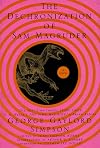
This is such a great little story! The bright pink cover is at odds with the storyline but don't let that put you off, I actually quite like the colour...it's 'quirky'. A very quick read and therein lies it's only flaw....it ended too soon. I hung on every word and would have liked to see many, many more of them.
The book was only ever intended as an amusement for the author, but by chance was it found after his death and published, and lucky for us that it was.
Short synopsis would be that an show more academic (Sam McGruder) from the far future (the year 2162), travels back in time to a place in prehistory where dinosaurs roamed, with no chance of ever getting back. Now, it's not JUST the story that hooks the reader, it's all the thought provoking ideas that the story presents too. What would 'I' do? How would 'I' cope? Would I cope?!
I wanted it to go on and on and on......
It's very short so any details I give are likely to be spoilers but suffice to say it's a great book and one not to be missed. From the moment you pick it up it will draw you in. Even if it's not your usual type of reading material, it's still worth the read.
Remember....don't let the pink cover put you off! show less
The book was only ever intended as an amusement for the author, but by chance was it found after his death and published, and lucky for us that it was.
Short synopsis would be that an show more academic (Sam McGruder) from the far future (the year 2162), travels back in time to a place in prehistory where dinosaurs roamed, with no chance of ever getting back. Now, it's not JUST the story that hooks the reader, it's all the thought provoking ideas that the story presents too. What would 'I' do? How would 'I' cope? Would I cope?!
I wanted it to go on and on and on......
It's very short so any details I give are likely to be spoilers but suffice to say it's a great book and one not to be missed. From the moment you pick it up it will draw you in. Even if it's not your usual type of reading material, it's still worth the read.
Remember....don't let the pink cover put you off! show less
This slim novel was found in Simpson's papers 10 years after his death. He was a famous vertebrate paleontologist who wrote lots of scientific books during his illustrious career, but this is fiction. It's the story of Sam Magruder who goes back in time to the age of the dinosaurs. Magruder is alone- the only human for a billion years, and most of the transcendent bits of the novel deal with how he copes. It's a lovely, haunting little book.
I have no idea how I came across this book, it's not one you see hanging around the bookshop much. But however I found it, I'm really glad I did. I love time travel stories and this was a good one. And who doesn't love dinosuars? It's a nice, easy read and it's a short book, which is a bit of a pity as I didn't want it to end.
Lists
Awards

You May Also Like


Associated Authors
Statistics
- Works
- 43
- Also by
- 6
- Members
- 1,209
- Popularity
- #21,244
- Rating
- 4.1
- Reviews
- 10
- ISBNs
- 55
- Languages
- 6
- Favorited
- 2
