
Blaise Pascal (1623–1662)
Author of Pensées
About the Author
French Mathematician Blaise Pascal did much to set in motion what is known today as modern mathematics. An unusually creative mathematician, he developed a number of theorems and mathematical structures, including the beginnings of probability theory and a more sophisticated understanding of the show more geometry of conic structures. At the age of 16, Pascal wrote a brilliant paper on conics; the paper consisted of one single printed page on which he states his major theorem - the opposite sides of any hexagon inscribed in a cone intersect in a straight line. This theorem led Pascal to develop several hundred related theorems in geometry. Pascal's activities, however, were not confined to pure mathematics. When he was about 19 years old, he built a calculating machine that he demonstrated to the king of France. It worked well enough to allow him to build and sell about 50 of them over a few years' time. His work on problems in atmospheric pressure eventually resulted in an early version of the gas law. At the age of 25, Pascal entered a Jansenist monastery to begin an ascetic life of study and argument. However, he continued his mathematical work. With Pierre de Fermat, Pascal laid the foundation for the theory of probability. In 1654, Pascal's friend, the Chevelier de Mere, had asked him to analyze a problem arising from a game of chance. Pascal in turn exchanged a number of letters with Fermat about the problem. This correspondence became the starting point for a theory of probability. However, neither published the ideas developed in the correspondence. The letters did inspire one of Pascal's contemporaries, Christian Huygens of Holland, to publish in 1657 a short tract on the mathematics of games involving dice. Pascal's name is now attached to "Pascals' Triangle" of binomial coefficients which plays and important role in the study combinations and probability. The triangle was known at least 600 years before Pascal became interested in it, but because of his contributions to its study, the triangle eventually became associated with his name. A sensitive and temperamental man, Pascal was obsessed with religious philosophy, a subject on which he wrote extensively. In his general philosophy he was very much taken with the concept of the infinite, which unsettled him and inspired in him a sense of awe. Over a period of years, he wrote on many religious, philosophical, and mathematical subjects. His notes and letters were edited and published posthumously as his Pensees. (Bowker Author Biography) show less
Image credit: Wikipedia
Series
Works by Blaise Pascal
Mind on Fire: A Faith for the Skeptical and Indifferent (Classics of Faith and Devotion) (1989) 302 copies, 2 reviews
Las provinciales ; Opúsculos ; Cartas ; Obras matemáticas ; Obras físicas (2015) 17 copies, 1 review
Selected "Pensees" and Provincial Letters/Pensees et Provinciales choisies: A Dual-Language Book (Dover Dual Language French) (Vol i) (2004) 17 copies
Tankar. 2 12 copies
Os Pensadores: Pascal 12 copies
Coleção Grandes Obras do Pensamento Universal (pascal - Do Espítito Geométrico / Pensamentos) (2006) 11 copies, 1 review
Delphi Collected Works of Blaise Pascal (Illustrated) (Delphi Series Eleven Book 2) (2020) 10 copies
The physical treatises of Pascal;: The equilibrium of liquids and the weight of the mass of the air (1973) 8 copies
Scientific Treatises 7 copies
Pascal 6 copies
Pensamentos Escolhidos 5 copies
Entretien avec M. de Sacy sur Epictete et Montaigne: Original inedit (Les carnets DDB) (1994) 4 copies
Írások a szerelem szenvedélyéről, a geometriai gondolkodásról és a kegyelemről : válogatott írások (1999) 4 copies, 1 review
Tankar och Smärre Skrifter 3 copies
Les Provinciales (Extraits) 3 copies
Opuscoli e lettere 3 copies
Blaise Pascal : Oeuvres compltes - annotes et en franais moderne - Arvensa Editions (French Edition) (2014) 3 copies
Myšlenky 3 copies
Œuvres complètes / 3 copies
Svět Blaise Pascala 3 copies
Die Kunst zu überzeugen und die anderen kleineren philosophischen und religiösen Schriften (1963) 3 copies
Pascal 3 copies
The life of Mr. Paschal with his letters relating to the Jesuits. In two volumes. Translated into English by W. A. (2010) 3 copies
Lettres provinciales, vol 2 2 copies
Les provinciales : extraits 2 copies
Oeuvres Completes 2 copies
Lettres écrites à un provincial / 2 copies
L'œuvre de Pascal 2 copies
Myśli oraz Rozprawa o kondycji możnych ; Modlitwa o dobry użytek chorób ; Rozprawa o namiętnościach miłości (2004) 2 copies
Blaise Pascal. Lettres écrites à un Provincial : . Chronologie et introduction par Antoine Adam (1967) 2 copies
Le manuscrit des Pensées de Pascal 2 copies
Blaise Pascal. Les Provinciales : . Écrits des curés de Paris. Pierre Nicole et Jean Racine. Lettres. Le Père Gabriel Daniel. Réponse aux… (1962) 2 copies
El la "Pensoj" de Blazio Paskalo 2 copies
Pensées de Pascal 2 copies
Opuscoli e lettere 2 copies
Discours sur la religion et sur quelques autres sujets qui ont été trouvés après sa mort parmi ses papiers (1992) 2 copies
Rasprava o ljubavnim strastima 2 copies
La morale dei gesuiti 2 copies
Complete Works of Voltaire 80A: Eloge et Pensees de Pascal, edition etablie par Condorcet, annotee par Voltaire (2008) 2 copies
Equilibrio dei liquidi 2 copies
Pensées. Texte établi d'aprés les manuscrits et les meilleures éditions par Jacques Hautmont. (1982) 1 copy
Opúsculos 1 copy
Scritti sulla grazia 1 copy
Generation of conic sections 1 copy
Il buon uso delle malattie 1 copy
LES PROVINCIALES - extraits / COLELCTION "LES CLASSIQUES POUR TOUS" N°118 / EDITION NOUVELLE. 1 copy
Oeuvres choisies 1 copy
Parcal's Pensées 1 copy
Refleksije u samoći 1 copy
Pascal. Pensées : Extraits. Avec une notice biographique... des notes... par Robert Barrault (1965) 1 copy
Do espírito geométrico e Da arte de persuadir: E outros escritos de ciência, política e fé (Portuguese Edition) (2017) 1 copy
Voilà ce que c'est que la foi: 15 textes présentés et commentés par Jean de Saint-Cheron (2023) 1 copy
Variety 1 copy
Pensées - Enhanced Version 1 copy
Sentez -Ölüm Son Değildir- 1 copy
Les Provinciales B 3-DAV 1 copy
Pascal. Les Provinciales 1 copy
Trois discours sur la condition des grands suivi de Préface pour un traité du vide et Entretien avec M. de Sacy (2013) 1 copy
Lettres Provinciales: Book I 1 copy
Pensieri a altri scritti 1 copy
Pascal Pensamentos 1 copy
Pensieri 1 copy
Lettres provinciales 1 copy
De l'autorité en matière de philosophie Entretiens de Pascal avec M. de Saci (French Edition) (2013) 1 copy
Opúsculos 1 copy
Frammenti (Vol. 2) 1 copy
Treatise on the Arithmetical Triangle ; Correspondence with Fermat on the Theory of Probabilities 1 copy
Les provinciales I 1 copy
Pensieri Lettere provinciali 1 copy
Misli 1 copy
The Pensées. Translated with an introduction by J. M. Cohen (Penguin Classics. no. L110.) (1961) 1 copy
Tanker 1 copy
Expériences Nouvelles Touchant Le Vuide, Faites Dans Des Tuyaux, Syringues (Sciences) (French Edition) (2013) 1 copy
L'oeuvre de Pascal 1 copy
Les pages immortelles 1 copy
Les provinciales. Pensées. 1 copy
Pensées = Thoughts 1 copy
On Geometrical Demonstration 1 copy
Das Ich besteht in meinem Denken: Aus den »Gedanken«. [Was bedeutet das alles?] (Reclams Universal-Bibliothek) (2017) 1 copy
Tankar : II 1 copy
Relación de la gran experiencia del equilibrio de los líquidos Récit de la grande éxperience de l'équilibre des liqueurs (1981) 1 copy
Pensées suivies des Ecrits sur la grâce - Texte établi, annoté et préfacé par Jacques Chevalier (Blaise Pascal) (1937) 1 copy
Il mistero di Cristo : il Memoriale, il mistero di Gesù, dai Pensieri, compendio della vita di G. C. 1 copy
Tankar 1 1 copy
Œuvres, tome V 1 copy
Oeuvres completes 1 copy
Œuvres de Blaise Pascal 1 copy
[Pensieri] 2 1 copy
Scrieri alese 1 copy
Œuvres, tome IV 1 copy
Selections from the Thoughts of Pascal, translated from the French, with an introduction by Benjamin E. Smith (1902) 1 copy, 1 review
Pensieri Misero, grande uomo 1 copy
Les Pensées de Blaise Pascal. Texte revu sur le manuscrit autographe - Tome I et II - 2 volumes 1 copy
LES PROVINCIALES de Blaise Pascal. Avec une préface et des notes par Auguste Molinier. (2 volumes) 1 copy
PENSEES 2 1 copy
Œuvre 1 copy
L'homme est un roseau pensant: Pensées (Liasses I-XV) (Folio Sagesses) (French Edition) (2016) 1 copy
Lettre à un provincial 1 copy
The Gospel of the Gospels: Abrege De LA Vie De Jesus Christ (Archives of Ancient Art) (English, French and French Edition) (1999) 1 copy
Pensieri scelta 1 copy
Le Coeur et ses raisons / Logik des Herzens. Zweisprachig. Auswahl, Übersetzung und Nachwort von Fritz Paepcke. (1963) 1 copy
Pensees de Blaise Pascal Sur La Religion Et Sur Quelques Autres Sujets... (French Edition) (2012) 1 copy
Pascal. Pensées et opuscles 1 copy
Blaise Pascal. Pensées et opuscules : Publiés avec une introduction, des notices, des notes par M. Léon Brunschvicg (1946) 1 copy
Breve 1 copy
Les Provinviales ; Penseés 1 copy
Discours sur les passions de l'amour - avec des vers inédits - collection "Classiques" (1947) 1 copy
Associated Works
The Philosopher's Handbook: Essential Readings from Plato to Kant (2000) — Contributor — 235 copies, 1 review
The Sheed and Ward Anthology of Catholic Philosophy (A Sheed & Ward Classic) (2005) — Contributor — 33 copies
The Middle Ages to the 17th Century: Literature of the Western World (1962) — Contributor, some editions — 24 copies
Tagged
Common Knowledge
- Legal name
- Pascal, Blaise
- Other names
- Montalte, Louis de
- Birthdate
- 1623-06-19
- Date of death
- 1662-08-19
- Gender
- male
- Education
- at home
- Occupations
- mathematician
physicist
theologian
philosopher
inventor
scientist - Relationships
- Périer, Gilberte Pascal (sister)
Pascal, Jacqueline (sister) - Short biography
- Blaise Pascal was born in Clermont-Ferrand, France. His parents were Antoinette Bégon and Étienne Pascal, a local magistrate and presiding judge of the tax court there. He had two sisters, Gilberte and Jacqueline. Their mother died in 1626, when Blaise was three, and a few years later the family moved to Paris. Étienne Pascal, also a mathematician and natural philosopher who was proficient in Latin and Greek, devoted himself to the education of his children, who all showed exceptional abilities. Although often ill and in pain, Blaise proved to be talented in mathematics and science from a young age. In 1640, at age 16. he published an essay on conic sections, Essai pour les coniques, which won praise as an important contribution to the relatively new field of projective geometry. Between 1642 and 1644, Pascal conceived and constructed a calculating device, known as the Pascaline, the world's first mechanical calculator. In 1646, Etienne fell and fractured his leg and seriously injured his hip; he received medical treatment from two brothers who were disciples of Jean du Vergier de Hauranne, abbé de Saint-Cyran and director of the abbey of Port-Royal in Paris. The abbé Saint-Cyran had introduced an austere moral and theological creed known as Jansenism and the whole Pascal family converted. Pascal became devoutly religious and his sister Jacqueline eventually became a Jansenist nun. Over the next few years, Pascal tested the theories of Galileo and of Evangelista Torricelli. In a famous experiment in 1648, he had his brother-in-law take barometric readings at various altitudes on the Puy-de-Dôme, the highest mountain in the Auvergne, so he could test Torricelli's ideas on atmospheric pressure. During this time, Pascal invented the syringe and the hydraulic press. The years 1651–1654 were another period of intense scientific work for Pascal, during which he composed treatises on the equilibrium of liquid solutions, on the weight and density of air, and on the arithmetic triangle. Together with Pierre de Fermat, he created the calculus of probabilities. Pascal had a carriage accident in November 1654 in which he narrowly escaped death, and considered this a summons to begin a new life in seclusion from the world. He entered the abbey of Port-Royal and remained there until his death at age 39 in 1662. The two works for which he is chiefly remembered, Lettres Provinciales (1657) and the Pensées (1658), date from the years of his life at Port-Royal. Pascal's contributions to science have been honored in a variety of ways. In 1972, Nicklaus Wirth named his new computer language Pascal. The Pascal (symbol Pa) is the unit of pressure designated by the International System of Units.
- Nationality
- France
- Birthplace
- Clermont-Ferrand, France
- Places of residence
- Clermont-Ferrand, France
Paris, France
Rouen, France
Port-Royal Abbey, Paris, France - Place of death
- Paris, France
- Burial location
- Saint-Étienne-du-Mont, Paris, France
- Associated Place (for map)
- Paris, France
Members
Discussions
Any thoughts on Pensees from Folio? in Folio Society Devotees (September 2024)
Reviews
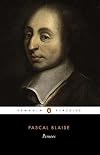
"It is a bad sign when, on seeing a person, you remember his book" — Pascal Pensées
On Contradiction
The prelapsarian urgency with which the (first part of) Pensées is written suggests the intensity of someone trying to land the first blow on the corpus of an enemy — rather than, for instance, the blank fervor of faith. (I am taking this interpretation from a direct reading of a certain text, though I have forgotten the original . . . perhaps it was Spivak or Sloterdijk.) My personal show more notes from a time of intensity are written the same way, and certainly with my own enemy in (the back of my) mind. Here, Pascal decries, "A maker of witticisms, a bad character" (46), which is another way of saying "the poet." (One wonders at the (intentional?) irony in this phrase, itself a witticism, especially given that Pascal is currently supplying at least three witty epigraphs in Sloterdijk's Critique of Cynical Reason.) Someone ought to introduce Pascal, with his attendant metrophobia (fear of poetry) to our (modern?) Pascal: i.e. William Blake, whose Proverbs of Hell is a collection of witticisms to rival the Pensées/.
Shouts and Murmurs: Conversation Overhead between Pascal and Blake
ON LUST
Full of lust; therefore we are full of evil; we ought to hate ourselves — Pascal (479)
The head Sublime, the heart Pathos, the genitals Beauty, the hands & feet Proportion. — Blake
You are only a king of lust — Pascal (314)
The lust of the goat is the bounty of God — Blake
Enough is as good as a feast— Pascal
You never know what is enough unless you know what is more than enough. — Blake
ON DIVERSION
Now, to remind ourselves of our duty, we must set ourselves a task we dislike — Pascal (104)
The busy bee has no time for sorrow — Blake
Reasons why we like the chase better than the quarry. — Pascal (139)
The fox condemns the trap, not himself — Blake
[I have no friends] to your advantage — Pascal (154)
If others had not been foolish, we should be so. — Blake
ON DEATH
All good maxims are in the world. We only need to apply them — Pascal (380)
Drive your cart and your plow over the bones of the dead. — Blake
There are no limits in things. (Laws would put them there, and the mind cannot suffer it) — Pascal (380)
No bird soars too high, if he soars with his own wings. — Blake
These reasons were only found [afterward] because it shocks him. — Pascal (276)
One thought, fills immensity. — Blake
God humiliated; by His grace, I await death in peace — Pascal (736)
The chief characters in Thomas Bernhard novels are always carrying around a copy of the Pensées; perhaps those monologuing obsessives, for whom nobody else really exists, are feeling an elective affinity for such work. Aside, I am recalling that humorous episode in Gargoyles in which the prince has gathered everyone around for a reading of the Elective Affinities and instead decides to read an article from an old newspaper about how potatoes are stored for the winter in England. Sometimes we think we're reading the Pensées whereas we're actually reading an article from an old newspaper. I want to say many things at once about the dialogic first part of Pensées, which is producing its hermetic eccentricity, and about the hermetic second part of Pensées, which is producing a stale orthodoxy on Christian dogma not new to anyone. (Thoughts both in praise of and against dialogue with another: Walter Benjamin stating that, in addition to intelligence, one needs an equal part of stupidity for any great work. Quayle on the dialogic process: "People who are really very [hermetic] can get into sensitive situations and have a tremendous impact on [the text]." Pascal on the Other: "We never love a person but only qualities.") In either case, there is evidently a contradiction between the early Pascal, whose short phrases read like hard-fought victories in an essai against Montaigne, and the late Pascal, who's quoting facile scripture at length.
Pascal assists us in this investigation of contradiction with an approach we might not have expected: "Contradiction is a bad sign of truth; several things which are certain are contradicted; several things which are false pass without contradiction. Contradiction is not a sign of falsity, nor the want of contradiction a sign of truth" (384). This is a curious phrase, which suggests, at its extreme, an incompatibility between tertium non datur and the Holy Trinity. An insistence with letting contradictions lie — this is one aspect of what Edward Said calls "Late Style," and which, precociously, appears rather early in the text. Yet this perspective is later contradicted by Pascal himself: "Thus, we must have a meaning in which all the contrary passages [in scripture] are reconciled. It is not enough to have one which suits many concurring passages; but it is necessary to have one which reconciles even contradictory passages. Every author has a meaning in which all the contradictory passages agree, or he has no meaning at all"(683). We are contrasting this with Pascal's earlier statement that truths may just as well contain contradictions. (We also recall Pascal's perspective on the immanent contradictions of what he perceives to be true in mind-body Dualism, in the corporeal presence of both Lusts and the higher affinities, and in the divine contradiction between the Temporal and the Eternal.) So, catching Pascal in a contradiction, one wonders whether this is the kind of contradiction which suggests truth or one which "has no meaning at all." The better reading would be to let it lie, but we are tempted to resolve it the same way Pascal does: abstracting one step further back and constructing a meaning which reconciles everything. This is a way to make everything go smoothly, but also recalls Susan Sontag's paraphrase of Sartre: "Evil is the systematic substitution of the general for the particular." Bad writing is, if anything, evil, and this process perhaps explains why the latter orthodox sections of the Pensées smell a touch like hellfire. Pascal, who has at some point lost his interlocutor, may have wondered why those last sections caused no trouble. Yet, even in those dry parts, we are heartened by Pascal's incidental notions of Catholic guilt, which we might benefit from yet. Pascal being just like us in his perseveration on the guilty condition (in his case, due awareness of Lust) — the only difference being that the present-day equivalent to seventeenth-century Catholic self-hatred is hating oneself due to the knowledge that one will never write oneself out from under Susan Sontag. show less
After reading The Pensees of Blaise Pascal, it is hard to know what to say. At Pascal's passing, the fragments—some of which resembled aphorisms and some of which stretched to several pages of prose—were left unorganized and unedited. Since then, readers have contemplated The Pensees (literally, thoughts), attempting to decipher them and extract some sort of worldview. As I read, I also attempted to understand the fragmentary remarks and discovered that, to the extent that I could show more understand them, Monsieur Pascal's opinions differed from my own. According to Pascal, man's reason is a weak thing that life ultimately cannot rely on, making the human condition miserable. His worldview is imbued with a supernatural and otherworldly perspective that is challenging to reconcile with reality due to the overwhelming significance of ideas like immortality and original sin. It's possible that his personal physical illnesses led him to believe that all people detested the human body. Voltaire expresses ideas similar to mine when he states, "Nature does not make us unhappy all the time," among the many intellectuals who have thought about Pascal over the years since his Pensees were left to us in 1670. Pascal always talks like a sick man who wants everyone on the planet to suffer."Twenty-fifth Letter, On Mr. Pascal's Pensees" in Philosophical Letters. According to Pascal, we are doomed to be unhappy, the body is completely corrupted and unredeemable, self-esteem is to be despised, and God's thoughts are impenetrable, but we would be better off if we accepted the wager that he does exist. For my part, I reject both Mr. Pascal's bet and his worldview. I celebrate the ongoing advancements made by humans through reason, despite our limitations, and I look forward to continuing to be amazed by the mysteries of life. show less
Wow- I read the edited version, which the Levis got down to about 180, plus a few other essays which were reasonably helpful. Having done this, I'm pretty happy saying that someone should really do a 90 page version, which would give you much of the important material, without any of the random notes. When people read, say, Heidegger or Dostoevsky, they don't feel obliged to read the notes they made on the back of restaurant menus along the lines of "look up Kierkegaard on the color green" show more or "think through monasticism viz self-hatred". But apparently you need them for Pascal. Well, it ruins the reading experience.
Also ruining the reading experience is Pascal being a Jansenist, which raises my Pelagian hackles; and his droning on about miracles, which raises my rationalist hackles. Really, nobody alive today who is reading Pascal needs 40 pages on miracles.
Despite which, I can see that this would have been a really amazing book if he'd lived to re-draft it about a billion times.
Start with the modern, reflective, rational self; add grand conversion experience. Okay- now think about 'human nature,' concluding that it's a combination of reason and passions; of will and heart and so on. Look around you and realize that everything is shitty, thanks to original sin. Remember that you've only been happy since you converted: no more scepticism, no more self-obsession. Don't you want other people to be like that? Of course you do. You think everyone's an asshole, but you're nice enough to wish they weren't, and that they were happy. Okay. Think about conversion. Because you're a Jansenist (jerk) you believe that conversion comes from the grace of God, and only from God. Now you're in a bind: you want other people to convert, and that you should help them; and you believe that there's nothing you can do to help them. Yes, reason is important, but it can't help us be happy. Yes, (eternal) happiness is the most important thing, but there's nothing we can do to be happy. Oh shit. Begin angsting in a highly entertaining, intelligent way, which anticipates, among others, Kant and Adorno. Voila: a great book. That happens to be 100 pages too long thanks to the inclusion of nonsense about miracles.
The famous wager's pretty boring by comparison to all that: just an attempt to provide a 'proof' for belief that Pascal thinks can never work without grace.
Anyway, these editors do a fantastic job giving you a way in to this mess, which is otherwise totally overwhelming (qua quantity) and underwhelming (qua quality). show less
Also ruining the reading experience is Pascal being a Jansenist, which raises my Pelagian hackles; and his droning on about miracles, which raises my rationalist hackles. Really, nobody alive today who is reading Pascal needs 40 pages on miracles.
Despite which, I can see that this would have been a really amazing book if he'd lived to re-draft it about a billion times.
Start with the modern, reflective, rational self; add grand conversion experience. Okay- now think about 'human nature,' concluding that it's a combination of reason and passions; of will and heart and so on. Look around you and realize that everything is shitty, thanks to original sin. Remember that you've only been happy since you converted: no more scepticism, no more self-obsession. Don't you want other people to be like that? Of course you do. You think everyone's an asshole, but you're nice enough to wish they weren't, and that they were happy. Okay. Think about conversion. Because you're a Jansenist (jerk) you believe that conversion comes from the grace of God, and only from God. Now you're in a bind: you want other people to convert, and that you should help them; and you believe that there's nothing you can do to help them. Yes, reason is important, but it can't help us be happy. Yes, (eternal) happiness is the most important thing, but there's nothing we can do to be happy. Oh shit. Begin angsting in a highly entertaining, intelligent way, which anticipates, among others, Kant and Adorno. Voila: a great book. That happens to be 100 pages too long thanks to the inclusion of nonsense about miracles.
The famous wager's pretty boring by comparison to all that: just an attempt to provide a 'proof' for belief that Pascal thinks can never work without grace.
Anyway, these editors do a fantastic job giving you a way in to this mess, which is otherwise totally overwhelming (qua quantity) and underwhelming (qua quality). show less
As far as I'm concerned, Pascal's "shorts" are far more clever, succinct, surprising, and woven together than those of Rouchefoucauld and others. There are many threaded thoughts woven amongst more than 900 maxims and mini-essays each of which stand on their own. The profundity and diversity of topics makes the Pensees something to read slowly and ponder -- it takes much more time than reading the same amount of text in typical prose. Here Pascal masterfully forces us to contemplate just show more about every philosophical aspect of nature, religion, culture, and government, and the human condition in general. Starting with a discussion of the mathematical versus the intuitive mind (there are advantages in both but true genius lies in the mathematically trained also being able to see the big picture and beyond the concrete), he then portrays theology in nature, argues against atheism, supports Catholic doctrine, and finds the source of all unhappiness. show less
Lists
Awards


You May Also Like


Associated Authors
Statistics
- Works
- 418
- Also by
- 14
- Members
- 10,490
- Popularity
- #2,268
- Rating
- 3.9
- Reviews
- 76
- ISBNs
- 574
- Languages
- 24
- Favorited
- 40


