
Edmund Burke (1) (1729–1797)
Author of Reflections on the Revolution in France
For other authors named Edmund Burke, see the disambiguation page.
About the Author
Born in Ireland in 1729, Edmund Burke was an English statesman, author, and orator who is best remembered as a formidable advocate for those who were victims of injustice. He was the son of a Dublin lawyer and had also trained to practice law. In the 1760s, Burke was elected to the House of Commons show more from the Whig party. Burke spent most of his career in Parliament as a member of the Royal Opposition, who was not afraid of controversy, as shown by his support for the American Revolution and for Irish/Catholic rights. His best-known work is Reflections on the French Revolution (1790). Some other notable works are On Conciliation with the American Colonies (1775) and Impeachment of Warren Hastings (1788). Edmund Burke died in 1797. (Bowker Author Biography) show less
Image credit: Courtesy of the NYPL Digital Gallery (image use requires permission from the New York Public Library)
Series
Works by Edmund Burke
A Philosophical Enquiry into the Origin of Our Ideas of the Sublime and Beautiful (1757) 1,235 copies, 7 reviews
On Taste / On the Sublime and Beautiful / Reflections on the French Revolution / A Letter to a Noble Lord (1900) 787 copies, 1 review
Select Works of Edmund Burke: Thoughts on the Cause of the Present Discontents and The Two Speeches on America (1999) 50 copies
Speech of Edmund Burke, Esq. on American taxation, April 19, 1774. The fourth edition (1774) 17 copies
The Writings and Speeches of Edmund Burke. Volume IV: Party, Parliament, and the Dividing of the Whigs, 1780-1794 (2015) 7 copies
Mõtisklusi Prantsuse revolutsioonist ja mõningate Londoni ühingute toimingutest seoses selle sündmusega (2008) 5 copies
The beauties of Burke 5 copies
Burke's Speeches 4 copies
The Writings and Speeches of Edmund Burke. Volume II: Party, Parliament and the American Crisis, 1766-1774 (1981) 4 copies
A letter from Mr. Burke, to a member of the National assembly; in answer to some objections to his book on French affairs (1990) 4 copies
Burke's Speech On Conciliation With The Colonies (March 22, 1775) / Webster's First Bunker-Hill Oration (1921) 4 copies
The Writings and Speeches of Edmund Burke: Volume III: Party, Parliament, and the American Crisis 1774-1780 (1996) 4 copies
THE WRITINGS & SPEECHES OF EDMUND BURKE: VOLUME IX - Articles of Charge Against Warren Hastings, Esq.; Speeches in the I (2008) 4 copies
Edmund Burke : Selections 3 copies
THE WRITINGS & SPEECHES OF EDMUND BURKE: VOLUME IV - Letter to a Member of the National Assembly; Appeal from the New to (2008) 3 copies, 1 review
Het wezen van het conservatisme een bloemlezing uit 'Reflections on the Revolution in France' (2002) 3 copies
THE WRITINGS & SPEECHES OF EDMUND BURKE: VOLUME III - On the Nabob of Arcot's Debt; Speech on the Army Estimates; Reflec (2008) 2 copies
The Works of Edmund Burke Part Seven 2 copies
THE WRITINGS & SPEECHES OF EDMUND BURKE: VOLUME VI - Fourth Letter on the Proposals for Peace; To Charles James Fox on t (2008) 2 copies
THE WRITINGS & SPEECHES OF EDMUND BURKE: VOLUME VIII - Reports on the Affairs of India; Articles of Charge of High Crime (2008) 2 copies
THE WRITINGS & SPEECHES OF EDMUND BURKE: VOLUME X - Speeches in the Impeachment of Warren Hastings, Esq. (Continued) (2008) 2 copies
THE WRITINGS & SPEECHES OF EDMUND BURKE: VOLUME XI - Speeches in the Impeachment of Warren Hastings, Esq. (Continued); S (2008) 2 copies
Orations and Essays 2 copies
THE WRITINGS & SPEECHES OF EDMUND BURKE: VOLUME II - On Conciliation With America; Security of the Independence of Parli (2008) 2 copies
A compleat history of the late war 2 copies
The Writings and Speeches of Edmund Burke. Volume V: India: Madras and Bengal, 1774-1785 (1981) 2 copies
The Writings and Speeches of Edmund Burke. Volume VI: India: The Launching of the Hastings Impeachment, 1786-1788 (1991) 2 copies
The Writings and Speeches of Edmund Burke. Volume VII: India: The Hastings Trial, 1789-1794 (2000) 2 copies
The Writings and Speeches of Edmund Burke. Volume IX: Pt. I: The Revolutionary War, 1794-1797, and Pt. II: Ireland (1991) 2 copies
THE WRITINGS & SPEECHES OF EDMUND BURKE: VOLUME VII - Speeches in Parliament; Abridgement of English History (The Writin (2008) 2 copies
Mr. Burke's speech, on the 1st December 1783, upon the question for the speaker's leaving the chair, in order for the House to resolve itself into a committee on Mr. Fox's East… (2010) 2 copies, 1 review
The Writings and Speeches of Edmund Burke. Volume VIII: The French Revolution, 1790-1794 (1990) 2 copies
The Works of the Right Honourable Edmund Burke: With a Portrait, and Life of the Author, Volume 4 2 copies
THE WRITINGS & SPEECHES OF EDMUND BURKE: VOLUME V - Observations on the Conduct of the Minority; Thoughts and Details on (2008) 2 copies
Edmund Burke; Being first principles selected from his writings, with an introductory essay — Author — 1 copy
The works and correspondence of the Right Honourable Edmund Burke Volume v.6 1852 [Leather Bound] 1 copy
Burke : select works. Vol.1, Thoughts on the present discontents. The two speeches on America 1 copy
The Collected Works of EDMUND BURKE: The Complete Works PergamonMedia (Highlights of World Literature) (2015) 1 copy
Selections from Edmund Burke. Edited with notes and introduction by Bliss Perry (English Readings.) (1908) 1 copy
Speech on the law of libel 1 copy
Edmund Burke Works 1 copy
Speeches: Volume 2 1 copy
The political tracts and speeches of Edmund Burke, Esq. Member of Parliament for the city of Bristol 1 copy
The speeches of the Right Honourable Edmund Burke, in the House of commons, and in Westminster-Hall 1 copy
Selections From Edmund Burke — Author — 1 copy
Selected prose 1 copy
Burke's Tracts 1 copy
Address to the King 1 copy
Speeches on America 1 copy
Associated Works
The American Revolution: Writings from the Pamphlet Debate 1773-1776: (Library of America #266) (2015) — Contributor — 103 copies
Benjamin Franklin's Autobiography [Norton Critical Edition, 2nd ed.] (2012) — Contributor — 48 copies
Tagged
Common Knowledge
- Birthdate
- 1729-01-12
- Date of death
- 1797-07-09
- Gender
- male
- Education
- Trinity College, Dublin (BA|1848)
Abraham Shackletons' Quaker school, Ballitore - Occupations
- political philosopher
writer
politician
Member of the Parliament of Great Britain
secretary (for Ireland) - Organizations
- The Literary Club
House of Commons
Church of England - Relationships
- Johnson, Samuel (friend)
Burke, Mary (mother)
Burke, Richard (father)
Nugent, Jane Mary (wife)
Burke, Richard (son)
Burke, Christopher (son) (show all 7)
Nagle, Edmund (ward) - Short biography
- Edmund Burke was born in Dublin, Ireland. His father was a prosperous Protestant lawyer who raised his son in that faith. Burke graduated from Trinity College Dublin in 1848. He went to London to study law at the Middle Temple, but gave it up to become a writer and public figure. He served as a Member of the British Parliament for nearly 30 years. He became one of the foremost political thinkers and statesmen of the 18th century, and was widely admired for his intellect, his vast knowledge of political affairs, his powers of persuasion, and his vivid writing. He's mainly remembered today for his support of the American War of Independence and his later opposition to the French Revolution. Among his many written works, the most famous remains Reflections on the Revolution in France (1790).
- Nationality
- Great Britain
- Birthplace
- Dublin, Ireland
- Places of residence
- Dublin, Ireland
London, England, UK - Place of death
- Beaconsfield, Buckinghamshire, England, UK
- Burial location
- Beaconsfield, Buckinghamshire, England, UK
- Map Location
- England, UK
Members
Discussions
Impartial History of the War in America Between Great Britain and Her Colonies DLE BIS! (Item#3107; $295) in Easton Press Collectors (April 2023)
Reviews
A Philosophical Enquiry into the Origin of Our Ideas of the Sublime and Beautiful (Oxford World's Classics) by Edmund Burke
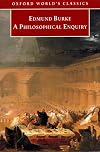
Edmund Burke's influential 'Philosophical Enquiry' (1757) should be considered as an early attempt at phenomenology and the psychology of aesthetics rather than as a full-blown philosophical work. He addresses language, for example, only briefly as a somewhat desultory if fruitful coda.
Still, Burke's description of the 'sublime' (the human response to external stimuli that evoke awe, terror or reverence) still stands as a stimulating insight into what remains a psychological mystery - show more intense feeling that exists without language although it can be triggered by language.
His description of 'beauty' is perhaps less successful because he is describing the norms of his time far more than he is doing in the case of the 'sublime'. The modern mind will naturally baulk at the negative associations he gives to 'blackness' and at his essentialist view of simpering women.
Philosophy generally only works when it describes things regardless of contingent cultural conditions unless (as in the case of Heidegger) it is fully aware of that contingency and factors it in as part of the philosophy - in other words that the thinker is maximally aware of the conditions of his thinking.
Burke is clearly not aware of the conditioning of his thinking. So, for all the acute analysis of the 'sublime ' which has been so influential in Western cultural history, I am afraid we have to say that Burke as philosopher does not quite stand the test of time.
Where he does stand the test of time is as a source of insight into the eighteenth century mind as it turns a little from the Enlightenment towards recognising that our responses to the world cannot be encompassed by pure reason but have other more emotional drivers.
To his credit, he does not try to rationalise the sentiments underpinning and surrounding both the sublime and the beautiful. He allows them to 'be' as experiences that we can all recognise (even if they are more culturally variable than he seems to think) and then he investigates them.
This is the work of an ambitious young man - he was only 28 at the time. A certain earnestness of enquiry is present through the work. He knows he does not know. He is trying to think his way to some sort of understanding that he knows is incomplete. The book is definitely exploratory.
The work remains reasonably readable today because eighteenth century prose tends to clarity more than obscurity. The longeurs only come when you see him puzzling through thoughts that were hard to clarify for himself as much as for us.
Yet when he lets rip with descriptions of our actual emotional responses to the sublime and the beautiful, then the two and a half centuries that separate us from him drift away. Much that he writes is embedded not in his century but in us. And he writes well when he needs to.
Curiously, based on Adam Phillips' notes (it is appropriate that the Editor is a psychotherapist and not a philosopher), the vast majority of Burke's many classical and literary quotations are marked out as 'misquoted'.
Evidently Burke was churning this out in his lodgings without access to a library and from memory. One assumes that the bulk of his readers were also school classicists from memory and not from the academy or else this might have been used against him.
There is perhaps an insight here into a fluidity in the use of texts that would not be tolerable in later ages and that misquotation was probably regarded as fine so long as it was not the Bible. His audience could read the Latin and scan a line. The misremembered word was not relevant to the project.
Phillips refers to the eroticism of the 'Philosophical Enquiry' but that it is too strong. Burke is simply culturally enabled to describe some truths without the dead weight of the Victorian age and still retain some delicacy.
Although not a great work of philosophy, this is still worth reading for its cultural importance. It enables reason to be balanced by sentiment but, more importantly, it opens the door to experimental psychology ... exactly what is happening when an external object excites an emotion?
He does not answer that question adequately - there is no cause given for the effect beyond the phenomena themselves - but he is asking the right questions. He is also providing clear and credible descriptions of the relationships between observer and phenomena.
His 'philosophy of language' is also not stupid. It too asks an important question which he cannot adequately answer. How is it that words alone, which have no necessary link to the reality they describe, can be formed to excite emotions such as awe, delight, desire and pleasure?
This is an important question which still has no satisfactory answer. He contributes by pointing out the mystery that we read without forming clear pictures as we read and yet we 'understand' something from the linking of the words rather than any deep consideration of what they portray.
Read any line of 'literature' and ask yourself if you actually envision each word and each event clearly rather than construct a meaning internally that, on careful consideration, is seemingly disconnected from the 'pictures' the language should represent and you will see what I mean.
These final observations by Burke on language are worth dwelling on although having described the mystery he has only the most limited account of what is going on. As before, he asks the right question, supplies the evidence of the problem and then moves on.
The science and philosophy he uses may be state of the art in 1757 (he knows his Locke) and he is a philosopher to the degree that he does what helps to define philosophy (asking awkward questions of the facts of the matter) but he does not do much more than that.
What he does manage to do is get his readers to see that abstract ratiocination can only go so far in describing our responses to the world and that our emotional life, especially in relation to core underlying drives like fear and erotic desire, needs to be observed more closely in order to understand it. show less
Still, Burke's description of the 'sublime' (the human response to external stimuli that evoke awe, terror or reverence) still stands as a stimulating insight into what remains a psychological mystery - show more intense feeling that exists without language although it can be triggered by language.
His description of 'beauty' is perhaps less successful because he is describing the norms of his time far more than he is doing in the case of the 'sublime'. The modern mind will naturally baulk at the negative associations he gives to 'blackness' and at his essentialist view of simpering women.
Philosophy generally only works when it describes things regardless of contingent cultural conditions unless (as in the case of Heidegger) it is fully aware of that contingency and factors it in as part of the philosophy - in other words that the thinker is maximally aware of the conditions of his thinking.
Burke is clearly not aware of the conditioning of his thinking. So, for all the acute analysis of the 'sublime ' which has been so influential in Western cultural history, I am afraid we have to say that Burke as philosopher does not quite stand the test of time.
Where he does stand the test of time is as a source of insight into the eighteenth century mind as it turns a little from the Enlightenment towards recognising that our responses to the world cannot be encompassed by pure reason but have other more emotional drivers.
To his credit, he does not try to rationalise the sentiments underpinning and surrounding both the sublime and the beautiful. He allows them to 'be' as experiences that we can all recognise (even if they are more culturally variable than he seems to think) and then he investigates them.
This is the work of an ambitious young man - he was only 28 at the time. A certain earnestness of enquiry is present through the work. He knows he does not know. He is trying to think his way to some sort of understanding that he knows is incomplete. The book is definitely exploratory.
The work remains reasonably readable today because eighteenth century prose tends to clarity more than obscurity. The longeurs only come when you see him puzzling through thoughts that were hard to clarify for himself as much as for us.
Yet when he lets rip with descriptions of our actual emotional responses to the sublime and the beautiful, then the two and a half centuries that separate us from him drift away. Much that he writes is embedded not in his century but in us. And he writes well when he needs to.
Curiously, based on Adam Phillips' notes (it is appropriate that the Editor is a psychotherapist and not a philosopher), the vast majority of Burke's many classical and literary quotations are marked out as 'misquoted'.
Evidently Burke was churning this out in his lodgings without access to a library and from memory. One assumes that the bulk of his readers were also school classicists from memory and not from the academy or else this might have been used against him.
There is perhaps an insight here into a fluidity in the use of texts that would not be tolerable in later ages and that misquotation was probably regarded as fine so long as it was not the Bible. His audience could read the Latin and scan a line. The misremembered word was not relevant to the project.
Phillips refers to the eroticism of the 'Philosophical Enquiry' but that it is too strong. Burke is simply culturally enabled to describe some truths without the dead weight of the Victorian age and still retain some delicacy.
Although not a great work of philosophy, this is still worth reading for its cultural importance. It enables reason to be balanced by sentiment but, more importantly, it opens the door to experimental psychology ... exactly what is happening when an external object excites an emotion?
He does not answer that question adequately - there is no cause given for the effect beyond the phenomena themselves - but he is asking the right questions. He is also providing clear and credible descriptions of the relationships between observer and phenomena.
His 'philosophy of language' is also not stupid. It too asks an important question which he cannot adequately answer. How is it that words alone, which have no necessary link to the reality they describe, can be formed to excite emotions such as awe, delight, desire and pleasure?
This is an important question which still has no satisfactory answer. He contributes by pointing out the mystery that we read without forming clear pictures as we read and yet we 'understand' something from the linking of the words rather than any deep consideration of what they portray.
Read any line of 'literature' and ask yourself if you actually envision each word and each event clearly rather than construct a meaning internally that, on careful consideration, is seemingly disconnected from the 'pictures' the language should represent and you will see what I mean.
These final observations by Burke on language are worth dwelling on although having described the mystery he has only the most limited account of what is going on. As before, he asks the right question, supplies the evidence of the problem and then moves on.
The science and philosophy he uses may be state of the art in 1757 (he knows his Locke) and he is a philosopher to the degree that he does what helps to define philosophy (asking awkward questions of the facts of the matter) but he does not do much more than that.
What he does manage to do is get his readers to see that abstract ratiocination can only go so far in describing our responses to the world and that our emotional life, especially in relation to core underlying drives like fear and erotic desire, needs to be observed more closely in order to understand it. show less
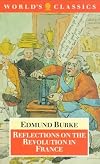
The British Edmund Burke was a radical thinker and politician - he not only opposed himself to the persecution of Catholics, he also defended the American Revolution. Delving into his 'Reflections' is therefore fascinating: what would such a man, from across the Channel, think of the cataclysmic events going on in France?
Well, for sure, he is annoying more than once. Naïve, without supporting absolutism he is nevertheless badly underestimating its impact. His praises of Louis XVI and show more Marie-Antoinette, presented here as innocent martyrs (lol!) are exasperating and misplaced. His accusations that atheists are behind the events is not only wrong but irritating for its over-simplicity. Above all, contrary to some other foreign thinkers (Thomas Paine, Mary Wollstonecraft...) he seems to completely miss the point as to the true significance of such a Revolution, the radically new socio-political ideal it embodied.
Having said that, one would be wrong to dismiss him as being ignorant or clueless regarding what was then going on in France. In fact, for all his faults, he also knows how to be of a breath taking relevance and prescience.
Haranguing against the new leaders of the country, that he accuses of being a bunch of oligarchs, incompetent and usurpers, he is everything but surprised to see them implementing policies (persecutions, confiscations, violence) that make a joke out of the principles they are supposed to defend. Himself a politician, he mocks the 'philosophes' (Rousseau in particular) whose ideas he deems impracticable.
The complete overthrown of the social order as it was and that he supports (the scaffold monarchy-nobility-Church, ruling over a submitted people well kept in its lower place) was for him far more than useless - simple reforms at the image of the Magna Carta (1215) or the Bill of Rights (1688) would have been enough, so he claims, to tamper its excesses. The new regime, where the king is just a puppet, the nobility persecuted, and the Church desacralized, can only lead to instability, disorder, violence. Predicting the bloodbaths and tyrannies to come, in a passage that has since then become famous, and in which he describes the relationship between the army and the government, he even announces the possibility of a 'popular general' taking advantage of it all so as to seize power! Knowing this was published in 1790 and that Burke died in 1797 that is, way before Bonaparte's coup, here's a incredibly insightful analysis and stunning prediction!
Without agreeing with his views (for instance as to the unending debates in order to understand why it turned so bloody), putting aside his naivety as to the real nature of the Old Regime, and if you can overlook his failure to grasp the massive impact of such an event (the Bill of Rights applied only to England; The Declaration of the Right of Man to the whole of mankind...) here is, for all its shortcomings, an unmissable criticism of the French Revolution. If anything, his views upon the Terror yet to come and the inevitable consequences that might ensued are brilliant. show less
Well, for sure, he is annoying more than once. Naïve, without supporting absolutism he is nevertheless badly underestimating its impact. His praises of Louis XVI and show more Marie-Antoinette, presented here as innocent martyrs (lol!) are exasperating and misplaced. His accusations that atheists are behind the events is not only wrong but irritating for its over-simplicity. Above all, contrary to some other foreign thinkers (Thomas Paine, Mary Wollstonecraft...) he seems to completely miss the point as to the true significance of such a Revolution, the radically new socio-political ideal it embodied.
Having said that, one would be wrong to dismiss him as being ignorant or clueless regarding what was then going on in France. In fact, for all his faults, he also knows how to be of a breath taking relevance and prescience.
Haranguing against the new leaders of the country, that he accuses of being a bunch of oligarchs, incompetent and usurpers, he is everything but surprised to see them implementing policies (persecutions, confiscations, violence) that make a joke out of the principles they are supposed to defend. Himself a politician, he mocks the 'philosophes' (Rousseau in particular) whose ideas he deems impracticable.
The complete overthrown of the social order as it was and that he supports (the scaffold monarchy-nobility-Church, ruling over a submitted people well kept in its lower place) was for him far more than useless - simple reforms at the image of the Magna Carta (1215) or the Bill of Rights (1688) would have been enough, so he claims, to tamper its excesses. The new regime, where the king is just a puppet, the nobility persecuted, and the Church desacralized, can only lead to instability, disorder, violence. Predicting the bloodbaths and tyrannies to come, in a passage that has since then become famous, and in which he describes the relationship between the army and the government, he even announces the possibility of a 'popular general' taking advantage of it all so as to seize power! Knowing this was published in 1790 and that Burke died in 1797 that is, way before Bonaparte's coup, here's a incredibly insightful analysis and stunning prediction!
Without agreeing with his views (for instance as to the unending debates in order to understand why it turned so bloody), putting aside his naivety as to the real nature of the Old Regime, and if you can overlook his failure to grasp the massive impact of such an event (the Bill of Rights applied only to England; The Declaration of the Right of Man to the whole of mankind...) here is, for all its shortcomings, an unmissable criticism of the French Revolution. If anything, his views upon the Terror yet to come and the inevitable consequences that might ensued are brilliant. show less
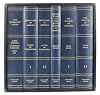
Classics of Conservatism: Heirloom Edition is an impressive and meticulously crafted volume that successfully marries intellectual depth with fine-press aesthetics. The book brings together a thoughtfully selected range of foundational conservative writings—spanning political theory, cultural commentary, economics, and moral philosophy—offering readers a panoramic view of the ideas that have shaped conservative thought over centuries.
What sets this edition apart is not only the content show more but the presentation. The heirloom binding, high-quality paper, and elegant typography make the book feel like a keepsake designed to endure. Each section is introduced with clear, concise context that helps both newcomers and seasoned readers see how each thinker fits into the broader conservative tradition. The editors strike a careful balance: they honor the original voices while providing enough framing for modern readers to understand the historical moment, the debates of the time, and the lasting influence of each work.
As a collection, it works both as a reference volume and as a readable anthology. Whether the reader is exploring conservatism for intellectual enrichment, historical study, or personal reflection, this edition offers exceptional clarity and craftsmanship. It is the sort of book that invites slow reading, thoughtful consideration, and long-term appreciation—exactly wmhat one hopes for in an heirloom publication. show less
What sets this edition apart is not only the content show more but the presentation. The heirloom binding, high-quality paper, and elegant typography make the book feel like a keepsake designed to endure. Each section is introduced with clear, concise context that helps both newcomers and seasoned readers see how each thinker fits into the broader conservative tradition. The editors strike a careful balance: they honor the original voices while providing enough framing for modern readers to understand the historical moment, the debates of the time, and the lasting influence of each work.
As a collection, it works both as a reference volume and as a readable anthology. Whether the reader is exploring conservatism for intellectual enrichment, historical study, or personal reflection, this edition offers exceptional clarity and craftsmanship. It is the sort of book that invites slow reading, thoughtful consideration, and long-term appreciation—exactly wmhat one hopes for in an heirloom publication. show less
Reflections on the revolution in France, and on the proceedings in certain societies in London relative to that event : in a letter intended to have been sent to a gentleman in Paris by Edmund Burke

British philosopher Edmund Burke’s critique of the French Revolution could be summed up with the adage “don’t throw the baby out with the bathwater.” As events progressed, Burke could have followed this up with “See, I told you so!”
Lists
Europe (1)
Awards


You May Also Like


Associated Authors
Statistics
- Works
- 242
- Also by
- 13
- Members
- 7,975
- Popularity
- #3,038
- Rating
- 3.8
- Reviews
- 51
- ISBNs
- 484
- Languages
- 18
- Favorited
- 16

