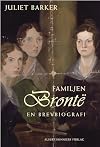
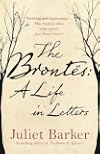
The Brontës: A Life in Letters
by Juliet Barker
On This Page
Description
Barker's selection of letters reveals the authentic voices of Charlotte, Emily, and Anne, as well as their brother, Branwell, and father, Reverend Patrick Bronte. Charlotte was a letter writer of supreme ability, ranging from facetious notes and intimate gossip to artfully composed pages of literary criticism, while Emily and Anne remain tantalizingly evasive, as few of their letters are extant. The letters detail the siblings' strange, self-absorbed childhood, highlighted by wild show more imaginative games and the years of struggle to earn a living before Jane Eyre, Wuthering Heights, and The Tenant of Wildfell Hall took the literary world by storm. The letters continue through the final years and the terrible marring of success as one by one Branwell, Emily, and Anne died tragically young and as Charlotte, battling against grief, loneliness and ill-health, emerged from anonymity to take her place in London literary society and, finally, found all too brief happiness in marriage to her father's curate. show lessTags
Recommendations











Member Reviews
Arguably one of the best researched biographies of the Bronte family and definitely unique. Riding on the coattails of success from Juliet Barker's first book, The Brontes, she came back with a follow-up. The Brontes: a Life in Letters offers new material in the forms of letters, manuscripts, the reminiscing of friends and teachers, and school documents on the lives of four of the Bronte siblings: Charlotte, Emily, Anne, and Branwell. (Sisters Maria and Elizabeth Bronte both died when they were eleven and ten respectively.) Nineteen new letters are published for the very first time.
Barker's careful selection of letters creates a humanizing effect. You don't think about well known "celebrity" types being real people with real feelings show more and faults. For example, waiting for the reviews of Jane Eyre to come out. As it was, Charlotte suffered from an inferiority complex when it came to social settings. She was truly shocked when people referred to her as a friend. On paper Charlotte had no problem being candid about the political climate of the day or, on a lighter subject, offering book recommendations on all sorts of subjects such as poetry, history, fiction, biography, natural history, and divinity. She and her siblings liked to live in the imaginary world of Gondal and were torn between several callings: teaching or writing or painting? Less is known about Emily, Anne and Branwell. Although Branwell's involvement with a married woman and subsequent alcoholism complicated the lives of all the Brontes. Like a sniper of the disease variety, tuberculosis picked off the Brontes one by one. Branwell, Emily, and Anne all succumbed to the illness.
One of my favorite parts was learning that the Brontes wrote to established poets to inquire about their own future success as writers. Branwell wrote to William Wordsworth and Charlotte sought the advice of Robert Southey. The biography ramps up in interest when the three Brontes sisters decided to become published authors, cleverly disguised behind androgynous pseudonyms of Currer, Ellis and Acton Bell. However, The Westminster Review and W.M. Thackery both pegged the Jane Eyre author as being a woman. Charlotte wanted her books to be considered for the words she wrote rather than the sex of the author. What a progressive idea. I can only imagine the material she could have written into her old age. show less
Barker's careful selection of letters creates a humanizing effect. You don't think about well known "celebrity" types being real people with real feelings show more and faults. For example, waiting for the reviews of Jane Eyre to come out. As it was, Charlotte suffered from an inferiority complex when it came to social settings. She was truly shocked when people referred to her as a friend. On paper Charlotte had no problem being candid about the political climate of the day or, on a lighter subject, offering book recommendations on all sorts of subjects such as poetry, history, fiction, biography, natural history, and divinity. She and her siblings liked to live in the imaginary world of Gondal and were torn between several callings: teaching or writing or painting? Less is known about Emily, Anne and Branwell. Although Branwell's involvement with a married woman and subsequent alcoholism complicated the lives of all the Brontes. Like a sniper of the disease variety, tuberculosis picked off the Brontes one by one. Branwell, Emily, and Anne all succumbed to the illness.
One of my favorite parts was learning that the Brontes wrote to established poets to inquire about their own future success as writers. Branwell wrote to William Wordsworth and Charlotte sought the advice of Robert Southey. The biography ramps up in interest when the three Brontes sisters decided to become published authors, cleverly disguised behind androgynous pseudonyms of Currer, Ellis and Acton Bell. However, The Westminster Review and W.M. Thackery both pegged the Jane Eyre author as being a woman. Charlotte wanted her books to be considered for the words she wrote rather than the sex of the author. What a progressive idea. I can only imagine the material she could have written into her old age. show less
Second read, 2022: Reading Charlotte's letters is an Experience, which age cannot wither, nor custom stale (to borrow from Shakespeare). I find myself just as riveted and reflective the second time through, if not more so. So much of what she says goes straight to the heart and resonates there.
It's an odd feeling (and of questionable soundness) to be reading private letters at a remove of nearly 200 years and think, "This person is my friend," and yet that is the power of Charlotte's writing. At least for me. So much so that, paradoxically, I'm even uneasy with the fact that they've been published and that I'm able to read them. Part of me is always like, "She wouldn't like this..."
But I do love these letters so.
Original review from show more 2018:
I find the Brontes utterly fascinating. And their letters are as captivating as I would expect.
This book is almost entirely made up of letters, with a few editorial asides to explain context as needed. And really, how could one ever learn about them better than through their own words?
Most of the letters are Charlotte's. She's the only one of the sisters who really managed to develop strong friendships outside the home (thus giving her people to write to). There are letters and diary papers giving tantalizing glimpses of Anne and Emily, but they remain mysterious as ever when all is said and done.
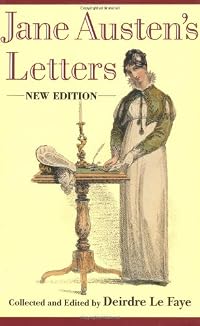
If you've ever read Jane Austen's letters, you may have felt as I did that they are a tad... disappointing (though who wants to admit that they found Jane Austen's letters disappointing??!). She is a correspondent who relays mundane facts and sometimes skewers people with her satire, but one doesn't feel that she is opening her heart. Why do I bring that up? Because that is not the case with Charlotte Bronte's letters. She is earnest, thoughtful and passionate, and the words seem to spill from her heart directly to her paper.
(Incidentally, people kept telling her she should read Jane Austen, but they weren't compatible from a literary point of view. Charlotte found Austen's novels well crafted, but felt that her characters were too distant and their emotions too tidy. Her critique needn't offend ardent Austen fans... she isn't dismissive; she merely differs.)
But ANYWAY, this is not about Austen, this is about the Brontes. I'm still no closer to understanding how they learned to write with such power, but Charlotte's letters do make me feel that she would be my friend. As any biography of the Brontes must be, it's by turns tragic or triumphant, but always relatable. show less
It's an odd feeling (and of questionable soundness) to be reading private letters at a remove of nearly 200 years and think, "This person is my friend," and yet that is the power of Charlotte's writing. At least for me. So much so that, paradoxically, I'm even uneasy with the fact that they've been published and that I'm able to read them. Part of me is always like, "She wouldn't like this..."
But I do love these letters so.
Original review from show more 2018:
I find the Brontes utterly fascinating. And their letters are as captivating as I would expect.
This book is almost entirely made up of letters, with a few editorial asides to explain context as needed. And really, how could one ever learn about them better than through their own words?
Most of the letters are Charlotte's. She's the only one of the sisters who really managed to develop strong friendships outside the home (thus giving her people to write to). There are letters and diary papers giving tantalizing glimpses of Anne and Emily, but they remain mysterious as ever when all is said and done.
If you've ever read Jane Austen's letters, you may have felt as I did that they are a tad... disappointing (though who wants to admit that they found Jane Austen's letters disappointing??!). She is a correspondent who relays mundane facts and sometimes skewers people with her satire, but one doesn't feel that she is opening her heart. Why do I bring that up? Because that is not the case with Charlotte Bronte's letters. She is earnest, thoughtful and passionate, and the words seem to spill from her heart directly to her paper.
(Incidentally, people kept telling her she should read Jane Austen, but they weren't compatible from a literary point of view. Charlotte found Austen's novels well crafted, but felt that her characters were too distant and their emotions too tidy. Her critique needn't offend ardent Austen fans... she isn't dismissive; she merely differs.)
But ANYWAY, this is not about Austen, this is about the Brontes. I'm still no closer to understanding how they learned to write with such power, but Charlotte's letters do make me feel that she would be my friend. As any biography of the Brontes must be, it's by turns tragic or triumphant, but always relatable. show less
My slow book the last week or so has been this book, read a chapter at a time, until yesterday, when it reached critical mass and I had to continue through unchecked until it was completed. In truth, although long a fan of Jane Eyre and aware of the three sisters as authors and that they had a brother, I had no idea of the tragedy of their lives or the strong autobiographical features of all their novels. This book tells the story almost entirely with the letters of the Brontes themselves, with small bridges to describe connecting events, and is tremendously moving.
A collection of letters that reads like a novel. This is a must-read for anyone intested in the story of the remarkable and tragic Bronte family. Since Charlotte had the most extensive correspondence outside the family, we hear her voice the most, but the letters give insight into her sisters Emily and Anne, brother Branwell, and father Patrick as well. Juliet Barker interjects only enough information to place each letter in context, allowing the letters to tell the story.
A fantastic (and highly useful) collection for any Bronte or Victorian enthusiast.
Absolutely essential for any lover of the Brontes. Some of the letters will break your heart, especially those dealing with loss and loneliness. Provides remarkable insight into the world of this creative and turbulent family.
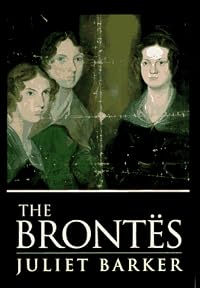
Anyone interested in the Brontë family will be fascinated by The Brontës: A Life in Letters. I read this book in conjunction with Juliet Barker's other book about the Brontës, The Brontës: Wild Genius on the Moors: The Story of Three Sisters, and it was a great pairing. Both books are arranged chronologically so it is easy to read them side by side. Many of the letters in this book are excerpted in the biography where they are given more context, but here you can see their full texts.
I read the Kindle version of the other book because at 1184 pages I thought the physical book would be too unwieldy for me, so it is especially nice to have the paper version of this book with its chronology and list of correspondence pages easily show more available for a quick reference. show less
I read the Kindle version of the other book because at 1184 pages I thought the physical book would be too unwieldy for me, so it is especially nice to have the paper version of this book with its chronology and list of correspondence pages easily show more available for a quick reference. show less
Members
- Recently Added By
Lists

Best Biographies, Autobiographies and Memoirs
464 works; 156 members
Author Information

11+ Works 3,115 Members
Common Knowledge
- Canonical title
- The Brontës: A Life in Letters
- People/Characters
- Charlotte Brontë; Emily Brontë; Anne Brontë; Branwell Brontë
- Important places
- Haworth, Yorkshire, England, UK; Yorkshire, England, UK
- Disambiguation notice
- The Brontes and The Brontes: A Life in Letters are NOT the same work; the former is a biography and the latter is a collection of the sisters' letters. Please do not combine them.
Classifications
Statistics
- Members
- 370
- Popularity
- 84,346
- Reviews
- 7
- Rating
- (4.32)
- Languages
- English, Swedish
- Media
- Paper, Audiobook, Ebook
- ISBNs
- 8
- ASINs
- 4