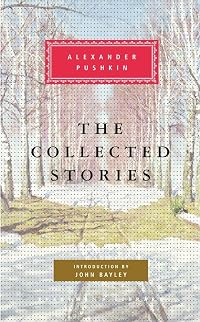
The Complete Prose Tales of Alexandr Sergeyevitch Pushkin
by Alexander Puschkin
On This Page
Description
Alexander Pushkin (1799-1837) is best known for his great achievments in poetry, but the fixtion he wrote in the last decade of his life was to have a tremendous impact on the subsequent development of Russian prose, influencing such later writers as Gogol, Dostoevsky, and Tolstoy. This is a new translation of all his prose fiction, from his famous story "The Queen of Spades" down to unfinished stories and fragments that appear in English for the first time. Pushkin's non-fictional A History show more of Pugachev, also translated into English for the first time, is included because it furnished the historical background of his novel The Captain's Daughter. The translator has taken care to achieve a balance between faithfulness to the original and readability in English, and several Russian editions have been collated to establish an accurate text. The translations are annotated to place each work in its historical context, and to eluvidate passages not easily understandable to today's reader. Appendixes present a chapter that Pushkin deleted from The Captain's Daughter; fictional fragments; Pushkin's outlines of projected works; and the apocryphal novella The Lonely Cottage on Vasilev Island. show lessTags
Recommendations
















Member Reviews
Reading Pushkin's prose is both gratifying and frustrating. Gratifying because his completed short stories are jewels. His language is concise and sublimely simple, each sentence pared down to its most essential. His parodies are more homage than ridicule, and his almost novels hook you despite yourself. They are frustrating because so many of his prose works were left unfinished. They are still worth reading just for the clarity of his 18th century language placed upon 19th century motifs. The translation is decent with some additional endnotes.
Contains:
The Moor of Peter the Great
A Novel in Letters
The Tales of the late Ivan Belkin
The History of the Village of Gorukhino
Roslavlev
Dubrovsky
The Queen of Spades
Kirdjali
Egyptian Nights
The show more Captain's Daughter show less
Contains:
The Moor of Peter the Great
A Novel in Letters
The Tales of the late Ivan Belkin
The History of the Village of Gorukhino
Roslavlev
Dubrovsky
The Queen of Spades
Kirdjali
Egyptian Nights
The show more Captain's Daughter show less
Very very readable tales...the only negative is that a number are unfinished.
The first, "The Moor of Peter the Great" must be largely autobiographical, the author being half Russian nobility, and (on his mother's side)half Ethiopian. When the eponymous "Moor" has a marriage arranged for him by the Tsar, with a young aristocratic lady, is her repugnance to the unavoidable event primarily from racist feelings or the fact she loves another? Sadly it stops at this point.
"Dubrovsky" (unfinished but came to an adequate ending) was, perhaps, the most memorable. When a practical-joke loving aristocrat with a nasty side, arranges to relieve his neighbor of his estate folllowing a disagreement...he reckons without that individual's son....
Also show more loved "The Queen of Spades" where a coldhearted loser at the card table attempts to get an elderly lady to reveal her strategy for cheating... show less
The first, "The Moor of Peter the Great" must be largely autobiographical, the author being half Russian nobility, and (on his mother's side)half Ethiopian. When the eponymous "Moor" has a marriage arranged for him by the Tsar, with a young aristocratic lady, is her repugnance to the unavoidable event primarily from racist feelings or the fact she loves another? Sadly it stops at this point.
"Dubrovsky" (unfinished but came to an adequate ending) was, perhaps, the most memorable. When a practical-joke loving aristocrat with a nasty side, arranges to relieve his neighbor of his estate folllowing a disagreement...he reckons without that individual's son....
Also show more loved "The Queen of Spades" where a coldhearted loser at the card table attempts to get an elderly lady to reveal her strategy for cheating... show less
im a sucker for the classic russian authors. who else has such a command on literary story? they are the champs. hate their novels, however. all russian novels ramble on as if they didnt know what an editor was. their short stories are the best. pushkins collected stories belongs on every bookshelf. have an hour to kill? pull it off the shelf and read a short story. fill your life with literary joy.
The six stories within "The Tales of the Late Ivan Petrovich Belkin" were my favorite from this collection. The final entry "The History of Pugachev" is not a story, but a 100-page dry historical record of an 18th century rebel and his uprising and didn't really belong, if you ask me.
As Aitken says in the introduction, "Until his emergence, writing in Russia, with the exception of a handful of works, had been mainly imitative, pursuing pseudo-classical principles, and reflecting closely the trends of various Western European cultures - French, in particular. The lyrical simplicity and the absolute precision of Pushkin's poetry, the natural, straightforward grace of his prose perfectly expressed the Russian mood..."
Pushkin's influence and stature in Russian literature is undeniable; Dostoevsky among others was a strong admirer, and 43 years after Pushkin's death, gave a rousing speech to his memory at the dedication of a monument to him in Moscow.
Quotes:
On the past, from "A Novel in Letters":
"You cannot imagine how show more strange it is to read, in 1829, a novel written in 1775."
Also this, from "The History of the Village of Gorukhino":
"The concept of a golden age is natural to all nations and proves only that people are never satisfied with the present and, from experience having little hope in the future, they adorn the irrevocable past with all the colorful fancies of their imagination."
On peace, from "The Captain's Daughter":
"When I reflect that this happened during my lifetime, and that I now live under the mild reign of Emperor Alexander, I cannot help but feel amazed at the rapid progress of civilization and the spread of the laws of humanity. Young man, if these lines of mine should ever fall into your hands, remember that those changes which come as a result of moral improvements are better and more durable than any which are the outcome of violent events."
On Napoleon's retreat from Moscow, from "Roslavlev":
"…Never again will Europe dare to fight with a people who chop off their own hands and burn their capital."
On transience, from "The Queen of Spades":
"Along this very staircase,” he thought, “perhaps at this same hour sixty years ago, in an embroidered coat, his hair dressed a` l’oiseau royal, his three-cornered hat pressed to his heart, there may have crept into this very bedroom a young and happy man now long since turned to dust in his grave – and today the aged heart of his mistress ceased to beat.” show less
Pushkin's influence and stature in Russian literature is undeniable; Dostoevsky among others was a strong admirer, and 43 years after Pushkin's death, gave a rousing speech to his memory at the dedication of a monument to him in Moscow.
Quotes:
On the past, from "A Novel in Letters":
"You cannot imagine how show more strange it is to read, in 1829, a novel written in 1775."
Also this, from "The History of the Village of Gorukhino":
"The concept of a golden age is natural to all nations and proves only that people are never satisfied with the present and, from experience having little hope in the future, they adorn the irrevocable past with all the colorful fancies of their imagination."
On peace, from "The Captain's Daughter":
"When I reflect that this happened during my lifetime, and that I now live under the mild reign of Emperor Alexander, I cannot help but feel amazed at the rapid progress of civilization and the spread of the laws of humanity. Young man, if these lines of mine should ever fall into your hands, remember that those changes which come as a result of moral improvements are better and more durable than any which are the outcome of violent events."
On Napoleon's retreat from Moscow, from "Roslavlev":
"…Never again will Europe dare to fight with a people who chop off their own hands and burn their capital."
On transience, from "The Queen of Spades":
"Along this very staircase,” he thought, “perhaps at this same hour sixty years ago, in an embroidered coat, his hair dressed a` l’oiseau royal, his three-cornered hat pressed to his heart, there may have crept into this very bedroom a young and happy man now long since turned to dust in his grave – and today the aged heart of his mistress ceased to beat.” show less
Read: The Guests Were Arriving at the Dacha, A Novel in Letters, Kirdzhali, A Tale of Roman Life, Egyptian Nights, The Captain's Daughter. Collectively, his works address the meaning of aristocracy in 19th century Russia. Pushkin lived a life worthy of his novels. He is described in the intro as "rich and rakish." He gambled. He died in a duel. He had previously been exiled and then was befriended by the Tsar. He married 17-year old Natasha which was both a source of joy and complication in his life. He seems to have referred to himself in "A Novel in Letters."
Queen of Spades and The Shot are the only two I've read so far. Can't say I'm crazy about either, but will keep reading intermittently and adjust my stars. I see others have loved Pushkin. I'll read some reviews to see which stories are most prized.
Members
- Recently Added By
Lists

Russian Literature
184 works; 35 members

Harold Bloom - The Western Canon: C. The Democratic Age
336 works; 15 members
Author Information

Aleksandr Sergeyevich Pushkin, one of Russian's greatest poets, was born in Moscow on June 6, 1799. He studied Latin and French literature at the Lyceum. Pushkin was often in conflict with the government and was kept under surveillance for much of his later life. He was also exiled for a period of time. His works include Eugene Onegin and Ruslan show more and Ludmila. Pushkin died on February 10, 1837 in St. Petersburg of a wound received during a duel protecting the honor of his wife. (Bowker Author Biography) show less

Alexander Pushkin has a Legacy Library. Legacy libraries are the personal libraries of famous readers, entered by LibraryThing members from the Legacy Libraries group.
Some Editions
Series
Belongs to Publisher Series
Work Relationships
Contains
Common Knowledge
- Alternate titles
- The Captain's daughter and other stories (Everyman's Library, 1992) (Everyman's Library, 1992)
- Original publication date
- 1836; 1999 (English translation, Everyman's revised and expanded edition) (English translation, Everyman's revised and expanded edition)
- People/Characters
- Emelian Pugachev; Yemelyan Pugachev; Ivan Kuzmich; Shvabrin; Vasiliva Egorovna; Petr Andreevich Grinev (show all 10); Savelich; Maria Mironova; Catherine II; Laik Cossacks
- Important places
- Tsarkoe Selo, Russia; Fort Belogorsk, Russia; Orenbourg, Russia; St. Petersburg, Russia
- Important events
- The Pugachev Rebellion (1773)
- Related movies
- The Tempest (1958)
- Quotations
- Instead of a merry life in St Petersburg, boredom awaited me in some remote godforsaken region.
- Last words
- (Click to show. Warning: May contain spoilers.)Maria Ivanovna set out to return to the country the same day, without as much as taking one curious look at Petersburg...
- Original language
- Russian
- Disambiguation notice
- Note: the 1999 Everyman's Library Collected Stories edition says "This translation of the complete stories first published by Stanford University Press, 1983" and is correctly combined here.
Classifications
- Genres
- Fiction and Literature, General Fiction
- DDC/MDS
- 891.733 — Literature & rhetoric Asian Literature East Indo-European and Celtic literatures Russian and East Slavic languages Russian fiction 1800–1917
- LCC
- PG3347 .A15 — Language and Literature Slavic languages and literatures. Baltic languages. Albanian language Slavic. Baltic. Albanian Russian literature Individual authors and works 1800-1870 Pushkin
- BISAC
Statistics
- Members
- 1,067
- Popularity
- 23,943
- Reviews
- 11
- Rating
- (4.19)
- Languages
- 8 — Dutch, English, Finnish, French, German, Italian, Russian, Spanish
- Media
- Paper, Ebook
- ISBNs
- 32
- ASINs
- 15