
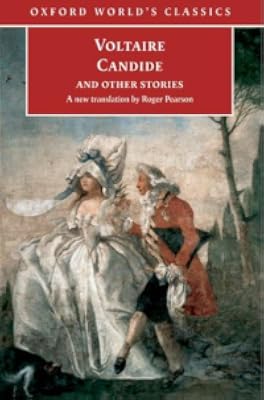
Candide and Other Stories
by Voltaire
On This Page
Description
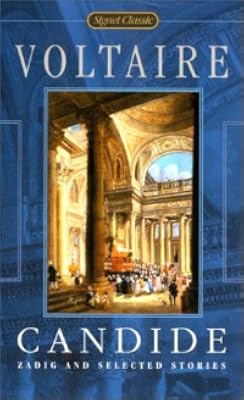
Candide is the most famous of Voltaire's 'philosophical tales', in which he combined witty improbabilities with the sanest of good sense. This edition includes four other prose tales - Micromegas, Zadig, The Ing--ecirc--;nu, and The White Bull - and a verse tale based on Chaucer's The Wife of Bath's Tale,: What Pleases the Ladies. - ;'If this is the best of all possible worlds, then what must the others be like?'Young Candide is tossed on a hilarious tide of misfortune, experiencing the full show more horror and injustice of this 'best of all possible worlds' - the Old and the New - before finally accep show lessTags
Recommendations




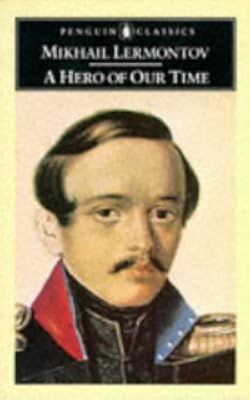
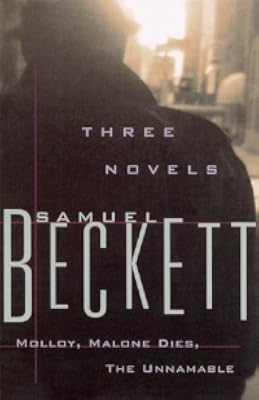
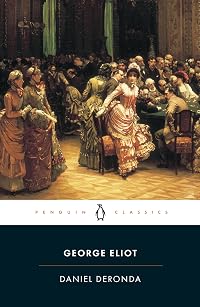


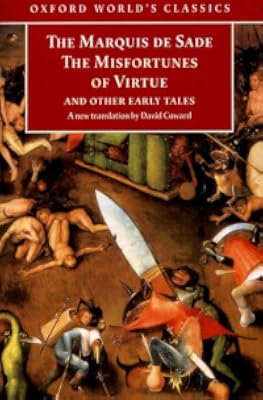







Member Recommendations
Member Reviews
I confess I didn't read all of the stories here, but the three earlier tales (Candide, Micromegas and Zadig) are all well worth while. Zadig in particular is the kind of thing I dislike- Arabian-Nights inspired strings of deeds aren't really my cup of tea- and yet it went down reasonably well. Micromegas is fine, but there's not much reason to read it instead of Gulliver's Travels. The main attraction, on the other hand, really is a doozy.
'Candide' actually shocked me, which is impressive, because I usually roll my eyes at 'shocking' books (I'm looking at you, Will 'let's have a main character fellate a dead dog' Self), but Voltaire's fairly simple descriptions of war and war-crimes are, for whatever reason, still very moving. You'll show more get plenty of intellectual stimulation too- a 'perfect' plot that gets shredded by actual events, human folly and evil, and one of the all time great closing lines. I imagine I'll find myself re-reading Candide many times. Not so much Zadig or Micromegas. show less
'Candide' actually shocked me, which is impressive, because I usually roll my eyes at 'shocking' books (I'm looking at you, Will 'let's have a main character fellate a dead dog' Self), but Voltaire's fairly simple descriptions of war and war-crimes are, for whatever reason, still very moving. You'll show more get plenty of intellectual stimulation too- a 'perfect' plot that gets shredded by actual events, human folly and evil, and one of the all time great closing lines. I imagine I'll find myself re-reading Candide many times. Not so much Zadig or Micromegas. show less
I didn't know how funny Voltaire was. Candide had me laughing out loud a good deal of the time. The humor reminded me of South Park. Really. The same absolute disregard of any propriety. Reading this book, first published in 1759, gave me the conviction that we humans really can communicate across "the wrackful siege of battering days," as Shakespeare put it in Sonnet 60.
Along with reading this edition I listened along to the very fine, very witty narration by Jack Davenport in the AudioGO edition--he was fantastic, and I recommend his reading of Candide even for those of you who think you know this book well.
I need to laud the translator Roger Pearson, as well, who has somehow made Candide sound like it was written in English show more originally--really smooth and with a delightful rhythm and cadence to the sentences. show less
Along with reading this edition I listened along to the very fine, very witty narration by Jack Davenport in the AudioGO edition--he was fantastic, and I recommend his reading of Candide even for those of you who think you know this book well.
I need to laud the translator Roger Pearson, as well, who has somehow made Candide sound like it was written in English show more originally--really smooth and with a delightful rhythm and cadence to the sentences. show less
Voltaire is a famous philosopher of the Enlightenment, and Candide his most famous work. It's very short, less than a hundred pages, and the edition I read filled out the book with three other novellas, Zadig, Ingenu, The White Bull and a short story Micromegas. Although Candide is the most celebrated work in the book, it wasn't necessarily my favorite--but I did find it amusing. Candide is a satiric send-up of Leibniz's theory of optimism through Candide's mentor Dr. Pangloss, who believes we live in "the best of all possible worlds" even in the face of increasingly insane disasters. I thought particularly funny the "genealogy of syphilis" where Pangloss traces the lineage of his infection back in a "direct line from one of Christopher show more Columbus's shipmates." I also rather loved the iconoclastic and grumpy twitting of classics by Pococurante. I might not agree with his lambasting of Homer and Virgil (though I though he was dead on about Milton) but I agreed with his principle that "Ignorant readers are apt to judge a writer by his reputation. For my part, I read only to please myself. I like nothing but what makes for my purpose."
The short story Micromegas deals with giant visitors to Earth from the star Sirius and the planet Saturn and scoffs at humans' self-centeredness. I think I loved Zadig the most though. The opening gives a nod to 1,001 Arabian Nights and tells the story of Zadig of Ancient Babylonia. He offers up a deduction early on that would make Sherlock Holmes proud and enough wisdom to make Solomon feel abashed. I loved the irreverence of Ingenu (in another edition known as Master Simple). In it a young man raised by the Huron Indians in Quebec confounds others with his reactions to things French, particularly on religious matters. Being convinced to convert to Christianity, for example, he goes about trying to find someone to circumcise him, since that's obviously what the Bible requires, then insists the only way for him to be baptized is in a river, and refuses to recognize the authority of the Pope. The White Bull is also quite fun, as involved are just about every animal who had a role in the Bible--particularly the serpent from Eden whose dialogue with a Princess seems to spoof Milton.
The stories aren't what I expected from what the introduction called "fables of reason" meant to elucidate philosophy. They're not at all dry or inaccessible and were quite fun with lots of lines I'd be tempted to quote if there weren't so many that were wise, witty and striking. These short satires reminded me quite a bit of Swift's Gulliver's Travel only with less bathroom humor and more good-natured. show less
The short story Micromegas deals with giant visitors to Earth from the star Sirius and the planet Saturn and scoffs at humans' self-centeredness. I think I loved Zadig the most though. The opening gives a nod to 1,001 Arabian Nights and tells the story of Zadig of Ancient Babylonia. He offers up a deduction early on that would make Sherlock Holmes proud and enough wisdom to make Solomon feel abashed. I loved the irreverence of Ingenu (in another edition known as Master Simple). In it a young man raised by the Huron Indians in Quebec confounds others with his reactions to things French, particularly on religious matters. Being convinced to convert to Christianity, for example, he goes about trying to find someone to circumcise him, since that's obviously what the Bible requires, then insists the only way for him to be baptized is in a river, and refuses to recognize the authority of the Pope. The White Bull is also quite fun, as involved are just about every animal who had a role in the Bible--particularly the serpent from Eden whose dialogue with a Princess seems to spoof Milton.
The stories aren't what I expected from what the introduction called "fables of reason" meant to elucidate philosophy. They're not at all dry or inaccessible and were quite fun with lots of lines I'd be tempted to quote if there weren't so many that were wise, witty and striking. These short satires reminded me quite a bit of Swift's Gulliver's Travel only with less bathroom humor and more good-natured. show less
It's a very long time since I read Candide, said by some to be the first novel, first published in 1759. It is 'picaresque' i.e. episodic, so there's no real plot. It's a sarcastic parody of contemporary moralistic French literature and ridicules just about everything that moralists hold dear (e.g. religion, the government, the army etc)
Candide is living in a kind of Eden where he is exhorted to be an optimist by his mentor, Pangloss. But Candide's observations of life are anything but positive, and he sees so much hardship and misery in the world that he rejects Pangloss's maxim "all is for the best in the best of all possible worlds".
Candide is living in a kind of Eden where he is exhorted to be an optimist by his mentor, Pangloss. But Candide's observations of life are anything but positive, and he sees so much hardship and misery in the world that he rejects Pangloss's maxim "all is for the best in the best of all possible worlds".
? I have no idea what to make of this. Maybe I just don't understand philosophy. OK as a read, not as hard as I thought it would be, but I'm not sure I'd have understood that this was about thought processes if the introduction hadn't told me so. I tried, at least.
This classic is a must read if you enjoy satire. It's funny and clever; an interesting read at face value and an intriguing read when read in-depth. This version of the translation is good and the notes are really helpful for decoding some of the metaphors and allegories. All in all, this collection is a good selection of Voltaire's works and a great introduction to the genre.
I did not find "genius" when I read this book. I was disappointed. Everyone at one time praised Voltaire as being some sort of god that he tried to replace with reasoning. Maybe they favored his philosophy and therefore favored what he wrote. An optimistic hayseed confronts reality and is shown how stupid his attitude is in the real world.
Members
- Recently Added By
Lists

Favourite Books
1,817 works; 316 members

LT picks: Blue Books
197 works; 44 members

Read
293 works; 4 members

Best Satire
188 works; 29 members
Author Information

1,806+ Works 41,882 Members
François-Marie Arouet known as Voltaire, was born in Paris in 1694. He was educated by the Jesuits at the Collège Louis-le-Grand (1704-1711), where he learned Latin and Greek; later in life he became fluent in Italian, Spanish, and English. By the time he left school, Voltaire had decided he wanted to be a writer. His father then obtained a job show more for him as a secretary to the French ambassador in the Netherlands. Most of Voltaire's early life revolved around Paris. From early on, Voltaire had trouble with the authorities for critiques of the government and religious intolerance. These activities were to result in two imprisonments and a temporary exile to England. The name "Voltaire", which the author adopted in 1718, is an anagram of "AROVET LI," the Latinized spelling of his surname, Arouet, and the initial letters of "le jeune" ("the young"). The name also echoes in reverse order the syllables of the name of a family château in the Poitou region: "Airvault". The adoption of the name "Voltaire" following his incarceration at the Bastille is seen by many to mark Voltaire's formal separation from his family and his past. Voltaire continued to write plays, such as Mérope (or La Mérope française) and began his long research into science and history. From 1762, he began to champion unjustly persecuted people, the case of Jean Calas being the most celebrated. This Huguenot merchant had been tortured to death in 1763, supposedly because he had murdered his son for wanting to convert to Catholicism. His possessions were confiscated and his remaining children were taken from his widow and were forced to become members of a monastery. Voltaire, seeing this as a clear case of religious persecution, managed to overturn the conviction in 1765. n February 1778, Voltaire returned for the first time in 20 years to Paris. He soon became ill again and died on 30 May 1778. show less
Some Editions
Series
Belongs to Publisher Series
Work Relationships
Common Knowledge
- Canonical title
- Candide and Other Stories
- Original title
- Candide and Other Romances by Voltaire
- Original publication date
- 1759
- Important places
- Paris, Île-de-France, France
- Disambiguation notice
- Please don't combine books which just contain Candide with ones which also contain other works by Voltaire, and take care that any selected works etc are actually the same book, as different selections are not the same book a... (show all)nd should therefore not be combined.
Classifications
Statistics
- Members
- 1,224
- Popularity
- 20,150
- Reviews
- 11
- Rating
- (3.91)
- Languages
- Dutch, English, French, Spanish
- Media
- Paper, Ebook
- ISBNs
- 20
- ASINs
- 17