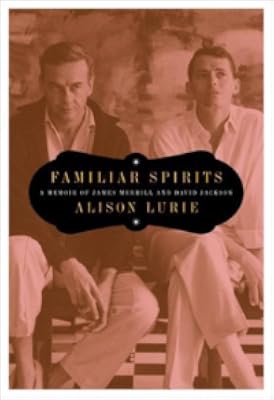
Familiar Spirits: A Memoir of James Merrill and David Jackson
by Alison Lurie
On This Page
Description
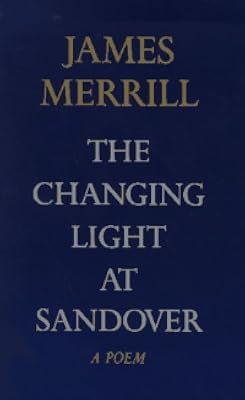
"James Merrill and his longtime partner David Jackson were brilliant, rich, charming, generous, and sophisticated, and Merrill was a world-famous poet, known for the autobiographical element in his work. They were also, for over a quarter-century, deeply involved with ghosts, gods, and spirits, with whom they communicated through a Ouija board. Among the results of this intense preoccupation with the occult were a book-length poem, which some critics have called a masterpiece, and the show more possible destruction of several lives." "The Pulitzer Prize-winning novelist Alison Lurie knew James Merrill and David Jackson for more than forty years. Now, in Familiar Spirits, she reveals both the worldly and otherworldly sources of Merrill's brilliant poem, The Changing Light at Sandover, which he called his "chronicles of love and loss." In her signature mix of comedy and analysis, she recalls Merrill and Jackson's life together in New York, Athens, and Key West, and speculates on the meaning of their adventures in both the real and unreal worlds. Her account of Merrill and Jackson's peculiar relationship with the supernatural and its tragic end will not only surprise many readers, it will also stand as a poignant memorial to her lost friends."--Jacket. show lessTags
Recommendations


















Member Reviews
This is an excellently written, at times horribly unfair memoir of James Merrill and David Jackson by the Pulitzer Prize-winning author of Foreign Affairs. Embarrasingly, I admit to never having heard of her before ordering this memoir. She is certainly an accomplished writer and has a real gift for bringing to life James Merrill and David Jackson. I found her memoir essential reading for anyone interested in the life of Merrill, one of America's best poets of the previous century, and that of his friend, David Jackson, who apparently was a gifted writer in his own right, but unlucky when it came to getting published.
Merrill and Jackson's life together makes for very interesting reading. It runs the gamut of emotions, from hilarity to show more estrangement to a profound sadness. I thought it really conveyed the subjective understanding Lurie had of Merrill and Jackson, and the way that a wonderful relationship can come unstuck.
What I did not care for, however, are Lurie's repeated claims that it was Merrill and Jackson's experiences with the occult that led to the relative tragedy of their later lives. Lurie's argument is quite sophisticated, and probably correct to a degree: the Ouija board seemed to consume quite a big part of Merrill and Jackson's time, which might have been more 'healthily' spent, if not more productively. She never directly comes out and contends that the spirits they contacted were malevolent - but there is a suggestion of this. As I said earlier, I am wary of dismissing the reality of the spirits, whether they were benevolent, malevolent or neutral. What I would contend is that Merrill and Jackson's relationship had many other stresses placed upon it. That they - especially Jackson - sometimes claimed to be unhappy with the communications, is certainly true. But things are inevitably more complicated. The poem might also have served as a way for Merrill and Jackson to spend time together, or as a way for Jackson to express his frustrations at being 'left behind' by the publishing world.
Of course, I did not know Merrill and Jackson personally, as Lurie assuredly did. But hers is only one perspective on Sandover. Many critics have praised the poem. Lurie makes a snide remark in the memoir that these have been mostly male critics, which seems neither here nor there to me. I see little reason for distinguished critics - and friends of Merrill - like Bloom or JD McClatchy to sing the poem's praises if they do not really feel that it is a worthy thereof.
As Lurie writes at the end of the memoir: If you take no chances, make no sacrifices, and reject the irrational in any form, how can you ever 'make it new'? And if you decide to take these chances, will the end justify the means? Unfortunately, we cannot know the answer to any of these questions until long, long afterwards.
I mostly agree with that statement, but with the caveat that I doubt we can ever know exactly what led to an artistic truimph, or a human tragedy. James Merrill remains one of my favourite poets, but I know feel that I have a better understanding of his life and untimely death. If Lurie had left it at that, I would have been more satisfied. But I suppose she has her reasons for saying what she does, and I accept that we have a difference of opinion on this matter. show less
Merrill and Jackson's life together makes for very interesting reading. It runs the gamut of emotions, from hilarity to show more estrangement to a profound sadness. I thought it really conveyed the subjective understanding Lurie had of Merrill and Jackson, and the way that a wonderful relationship can come unstuck.
What I did not care for, however, are Lurie's repeated claims that it was Merrill and Jackson's experiences with the occult that led to the relative tragedy of their later lives. Lurie's argument is quite sophisticated, and probably correct to a degree: the Ouija board seemed to consume quite a big part of Merrill and Jackson's time, which might have been more 'healthily' spent, if not more productively. She never directly comes out and contends that the spirits they contacted were malevolent - but there is a suggestion of this. As I said earlier, I am wary of dismissing the reality of the spirits, whether they were benevolent, malevolent or neutral. What I would contend is that Merrill and Jackson's relationship had many other stresses placed upon it. That they - especially Jackson - sometimes claimed to be unhappy with the communications, is certainly true. But things are inevitably more complicated. The poem might also have served as a way for Merrill and Jackson to spend time together, or as a way for Jackson to express his frustrations at being 'left behind' by the publishing world.
Of course, I did not know Merrill and Jackson personally, as Lurie assuredly did. But hers is only one perspective on Sandover. Many critics have praised the poem. Lurie makes a snide remark in the memoir that these have been mostly male critics, which seems neither here nor there to me. I see little reason for distinguished critics - and friends of Merrill - like Bloom or JD McClatchy to sing the poem's praises if they do not really feel that it is a worthy thereof.
As Lurie writes at the end of the memoir: If you take no chances, make no sacrifices, and reject the irrational in any form, how can you ever 'make it new'? And if you decide to take these chances, will the end justify the means? Unfortunately, we cannot know the answer to any of these questions until long, long afterwards.
I mostly agree with that statement, but with the caveat that I doubt we can ever know exactly what led to an artistic truimph, or a human tragedy. James Merrill remains one of my favourite poets, but I know feel that I have a better understanding of his life and untimely death. If Lurie had left it at that, I would have been more satisfied. But I suppose she has her reasons for saying what she does, and I accept that we have a difference of opinion on this matter. show less
Novelist Alison Lurie writes with obvious affection and compassion about her friends of 40 years, the poet James Merrill and his life partner David Jackson, and her memoir offers many valid and interesting insights, especially regarding Merrill's (and Lurie would argue, also Jackson's) central work, the epic poem The Changing Light at Sandover, and the couple's involvement with the spirit world. She is also generally perceptive about the dynamics of the men's relationship, and her sympathy for Jackson, as the unfamous, failed writer, is palpable. But sometimes, particularly in regard to the men's extramarital relationships and dalliances after Sandover is finished, she comes off as judgmental and, to some degree, ineffectual. One show more wonders whether she was really as close to the couple as she would like to be (she seems at one point to have a sort of crush on Jackson), and if she was close, why she was not more vocal to them about her concerns for their well-being. Still, she has given us a beautifully written book about one of the most fascinating and important poetic and personal collaborations in 20th-century American poetry. show less
Ratings
Members
- Recently Added By
Author Information

33+ Works 6,194 Members
Novelist Alison Lurie was born September 3, 1926 in Chicago, Illinois to Harry and Bernice Stewart Lurie. She is an American novelist and academic. Lurie won the Pulitzer Prize for her 1984 novel Foreign Affairs. She received an A.B. from Radcliffe College in 1947. After finishing college, Lurie worked as an editorial assistant for Oxford show more University Press in New York, but she wanted to make a living as a writer. After years of receiving rejection slips, she devoted herself to raising her children. Lurie had taught at Cornell University since 1968, becoming a full professor in 1976 specializing in folklore and children's literature. Lurie's first novel was "Love and Friendship" (1962) and its characters were modeled on friends and colleagues. Afterwards, she published "The Nowhere City" (1965), "Imaginary Friends" (1967), "The War Between the Tates" (1974), which tells of the collapse of a perfect marriage between a professor and his wife, "Only Children" (1979), and "The Truth About Lorin Jones" (1988). "Foreign Affairs" (1984) won the Pulitzer Prize; it tells the story of two academics in England who learn more about love than academia. Her more recent books include the novels "Women and Ghosts" (1994), and "The Last Resort" (1998), and a work of nonfiction, "Familiar Spirits (2001)." Among her awards and honors, she received honorary degrees from the University of Oxford (2006) and the University of Nottingham (2007). And from 2012-2014, she was the official author of the state of New York. Alison Lurie died on December 3, 2020 in Ithaca, NY at the age of 94. (Bowker Author Biography) show less
Awards and Honors
Awards
Classifications
- Genres
- Biography & Memoir, LGBTQ+, Fiction and Literature, Literature Studies and Criticism, Poetry
- DDC/MDS
- 811.5409 — Literature & rhetoric American literature in English American poetry 20th Century 1945-1999
- LCC
- PS3525 .E6645 .Z774 — Language and Literature American literature American literature Individual authors 1900-1960
- BISAC
Statistics
- Members
- 122
- Popularity
- 259,616
- Reviews
- 2
- Rating
- (3.52)
- Languages
- English
- Media
- Paper
- ISBNs
- 2