On This Page
Description
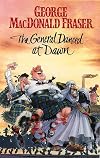
Private McAuslan, J., the Dirtiest Soldier in the World (alias the Tartan Caliban or the Highland Division's answer to Pekin Man) demonstrates his unfitness for the service in this first volume of stories of life in a Scottish regiment. Unkempt, ungainly and unwashed... civilian readers may regard him with shocked disbelief, but a generation of ex-servicemen have already hailed him with delight as an old familiar friend. 'Written in the first person, and reading authentically, it purports to show more record episodes in the life of the young officer, newly commissioned into a Highland regiment after service in the ranks at the very end of the war... Twenty-five years have not dimmed Mr Fraser's recollections of those hectic days of soldiering. One takes leave of his characters with real and grateful regret'SIR BERNARD FERGUSSON, 'Sunday Times' 'It's a while since I enjoyed a book so much, and, indeed, once I'd finished it, I felt like starting it all over again'GLASGOW EVENING TIMES 'It's great fun and rings true: a Highland Fling of a book'ERIC LINKLATER show lessTags
Recommendations












Member Reviews
After the ponderous tome [b:Blue Mars|77504|Blue Mars (Mars Trilogy, #3)|Kim Stanley Robinson|https://i.gr-assets.com/images/S/compressed.photo.goodreads.com/books/1429497319l/77504._SY75_.jpg|40711], I read this hilarious little short story collection in a couple of hours. It centres on fictional Highland battalion in the years after WWII. The attitudes are therefore, shall we say, of their time. There’s bit of racism, antisemitism, and general colonial arrogance, however as it is invariably white men who come off looking like idiots, this can be treated as historical. The stories follow roughly chronological order, as the narrator gets into officer training, is assigned a battalion, and learns their quirks. Once said quirks become show more clear, the stories become very funny indeed. I even found a football match entertaining, mainly because of how much money was riding on it.
If you’ve enjoyed M*A*S*H in film, TV, or book forms, you’ll also enjoy ‘The General Danced at Dawn’. The tone and spirit are very similar, albeit Scottish rather than American. Thus the importance of kilts, whisky, and Highland dancing. Edinburgh Castle is the setting for the latter few stories. The most entertaining recurring character is Private McAuslan, the dirtiest soldier in the world. He stars in the final and best story, ‘McAuslan’s Court-Martial’. This farcical triumph of the underdog demonstrates the fundamental absurdity of the army and made me laugh aloud several times. The whole book is worth reading for that story alone, but to get its full impact you must be aware of everything that came before. I seem to recall reading the first [b:Flashman|142458|Flashman (The Flashman Papers, #1)|George MacDonald Fraser|https://i.gr-assets.com/images/S/compressed.photo.goodreads.com/books/1320656064l/142458._SY75_.jpg|1137467] book, also by George Macdonald Fraser, many years ago and finding the main character very unpleasant. ‘The General Danced at Dawn’ is much more fun, as it undermines the dignity and pretensions of every character with great wit and verve. show less
If you’ve enjoyed M*A*S*H in film, TV, or book forms, you’ll also enjoy ‘The General Danced at Dawn’. The tone and spirit are very similar, albeit Scottish rather than American. Thus the importance of kilts, whisky, and Highland dancing. Edinburgh Castle is the setting for the latter few stories. The most entertaining recurring character is Private McAuslan, the dirtiest soldier in the world. He stars in the final and best story, ‘McAuslan’s Court-Martial’. This farcical triumph of the underdog demonstrates the fundamental absurdity of the army and made me laugh aloud several times. The whole book is worth reading for that story alone, but to get its full impact you must be aware of everything that came before. I seem to recall reading the first [b:Flashman|142458|Flashman (The Flashman Papers, #1)|George MacDonald Fraser|https://i.gr-assets.com/images/S/compressed.photo.goodreads.com/books/1320656064l/142458._SY75_.jpg|1137467] book, also by George Macdonald Fraser, many years ago and finding the main character very unpleasant. ‘The General Danced at Dawn’ is much more fun, as it undermines the dignity and pretensions of every character with great wit and verve. show less
I was struck by the nuances of British racial theory in the following exchange: a Pipe-sergeant is telling of a famous piper who rallied his regiment by playing the regimental march after being shot in both ankles during an attack on an Afghan position. "'He said after that he was wild at the thought of his regiment being stopped by a bunch o' n******.' Sergeant McGaw stirred uncomfortably. 'I don't like that. He shouldn't have called them n******.' "Neither he should, and you're right for once' said the pipey. He sipped neatly at his glass. 'They wass not n******; they wass wogs.'"
In a later scene Fraser describes an unspecified royal Dutchess giving out prizes at Regimental Games. When the youngster who took second place in the show more childrens' foot race replies to her remarks with an unprintable description of his opponent: "There was a few seconds' horrified frozen silence, in which the Duchess's charming smile altered by not one fraction." the Regimental Sergeant-Major quickly leans forward to add, "'He is saying "Thank you very much", Your Highness. In Gaelic.'" The author remarks: "You cannot shake a Regimental Sergeant-Major; whatever the situation, he is unconquerable. 'How very nice of him,' said the Duchess, still smiling, as Donnie trotted away. 'How awfully nice.' You cannot shake a royal Duchess either." show less
In a later scene Fraser describes an unspecified royal Dutchess giving out prizes at Regimental Games. When the youngster who took second place in the show more childrens' foot race replies to her remarks with an unprintable description of his opponent: "There was a few seconds' horrified frozen silence, in which the Duchess's charming smile altered by not one fraction." the Regimental Sergeant-Major quickly leans forward to add, "'He is saying "Thank you very much", Your Highness. In Gaelic.'" The author remarks: "You cannot shake a Regimental Sergeant-Major; whatever the situation, he is unconquerable. 'How very nice of him,' said the Duchess, still smiling, as Donnie trotted away. 'How awfully nice.' You cannot shake a royal Duchess either." show less
This book never fails to make me laugh until my sides hurt, and my badly-battered former library copy is one of my most prized possessions. Although it's fiction, it deals with a part of the Second World War that is not often addressed in literature; specifically, the North African campaign, and how brutal the fighting was for all parties involved. The context used is one of the Highland Regiments of the British Army, and the personalities involved are all utterly hilarious. From the enlisted men to the officers, the chaplain who goes into metaphysical trances in the pulpit, and the assorted cast of civilians of all kinds, it uses humor to talk about what the men saw and experienced in a way that makes readers laugh aloud, but also show more makes them reach for a notepad to do further research after they're done reading. In summation: amazing realistic wartime fiction, encourages further learning, and side-splittingly funny. show less
Private McAuslan reviews:
See your man Fraser? Aye, wull, he's written a gey lot of books aboot Flashman, and they're stotters, so they are. But this yins different; it's all aboot his time as an officer in ra Gordon Highlanders, in ra desert, after ra war. There's some awfy guid baurs in this book, and some smashin' characters, and a wee bit canny observation, too. Ah liked it fine, but. He only got wan thing wrang; ah'm no dirty. Ra court-martial said so.
See your man Fraser? Aye, wull, he's written a gey lot of books aboot Flashman, and they're stotters, so they are. But this yins different; it's all aboot his time as an officer in ra Gordon Highlanders, in ra desert, after ra war. There's some awfy guid baurs in this book, and some smashin' characters, and a wee bit canny observation, too. Ah liked it fine, but. He only got wan thing wrang; ah'm no dirty. Ra court-martial said so.
This and the second of this series, MacAuslan in the Rough, are some of Fraser's best work, more consistently funny and with more decent characters than the better-known Flashman books. These stories are apparently loosely based on the latter part of Fraser's real military career, as an officer in a Scottish regiment just after World War II. Since his non-fiction account Quartered Safe Out Here ends with his going for promotion to officer after sreving as an enlisted man in Burma, in effect this acts as a sequel to Quartered, though on the whole that is more serious. (I suppose even FRaser would find it hard to be funny about fighting the Japanese in Burma.)
Humorous account of a young officer in charge of a platoon of Scots Highlanders in the time directly after WWII, from 1946-1950 in the Middle East, North Africa nad home in Scotland. Well done stories like Fraser usually tells. I had read this years ago, but it was still fresh and funny. Very specific though, and many of the Scots words that he used with his characters were not translate, which is perhaps for the good.
Great tales from an Army long gone.
Members
- Recently Added By
Author Information

48+ Works 19,651 Members
Author George MacDonald Fraser was born April 2, 1925 in Carlisle. He was refused entrance to the medical faculty of Glasgow University, so he joined the army in 1943. He served as an infantryman with the 17th Indian Division of the XIVth Army in Burma, a lance corporal and was commissioned in the Gordon Highlanders. After the war, he became a show more sports reporter with the Carlisle Journal; and during this time, he met and married Kathleen Hetherington, a reporter from another paper. He worked as a reporter and sub-editor on the Cumberland News and then moved to Glasgow, in 1953, where he worked at the Glasgow Herald as a features editor and deputy editor. Fraser's first novel was "Flashman" (1969), which was followed by nine sequels, so far, that deal with different venues of the 19th century ranging from Russia, Borneo and China to the Great Plains of the America West. Some of the other titles in the Flashman Papers are "Royal Flash" (1970), "Flashman in the Great Game" (1975), "Flashman and the Redskins" (1982), and "Flashman and the Angel of the Lord" (1994). Some of his non-fiction work includes "The Steel Bonnets" (1971), which is a factual study of the Anglo-Scottish border thieves in the seventeenth century, and "Quartered Safe Out Here" (1992). Fraser has also written a number of screenplays that include "The Three Musketeers" (1973), "Royal Flash" (1975), "Octopussy" (1983), and "Return of the Musketeers" (1989). He has also written a series of short stories about Private McAuslan whose titles include "The General Danced at Dawn" (1970), "McAuslan in the Rough" (1974), and "The Sheik and the Dustbin and other McAuslan Stories" (1988). He died of cancer on January 2, 2008. (Bowker Author Biography) show less
Series

Work Relationships
Is contained in
Classifications
Statistics
- Members
- 234
- Popularity
- 138,649
- Reviews
- 7
- Rating
- (4.01)
- Languages
- English
- Media
- Paper, Audiobook, Ebook
- ISBNs
- 8
- ASINs
- 8