On This Page
Description
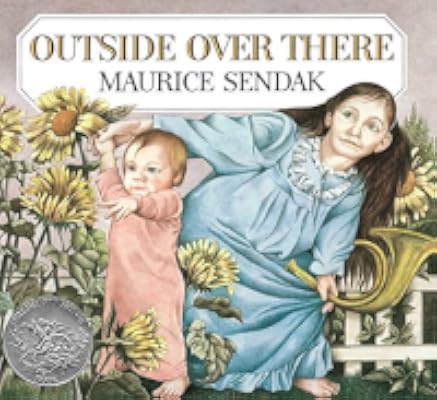
With Papa off to sea and Mama despondent, Ida must go outside over there to rescue her baby sister from goblins who steal her to be a goblin's bride.Tags
Recommendations













Member Reviews
Much as I hate interpretations of artists based on their books, I've got to say - Sendak has got some serious problems with women. The other two books in this trilogy (Where The Wild Things Are & In The Night Kitchen) focus on boys, boys who are wild and crazy and mess things up and take chances and play, play, play! with no real consequence because boys will be boys and that is the way of the world. They fall in and out of their clothes and wander about with arrogant nakedness, they create violent, mythical worlds, they abandon their parents and are forgiven and return to dinner waiting for them, still hot. (Basically the theme of his many other books, as well.)
Here, we have Ida.
Poor Ida is a good girl. She takes care of her baby show more sister while Papa is at sea (and Mama sits under the arbor, in a catatonic state). And one day, while she is winding her horn to soothe the baby, the goblins come in and replace Sister with a baby made of ice. Dear baby, says Ida, I love you so. But the baby - oh, horror - melts in her arms and shatters on the floor. Ida puts on her cloak and takes her horn and goes to find her sister, hidden among goblins in a goblin wedding.
Typical children's book. But underneath it all, there is a current of real viciousness. The prose is clumsy, always seeming ready to rhyme, never succeeding - the one or two couplets are even more awkward than the rest. The illustrations are violent and disturbing. Here is Ida in a passion, eyes wide, on her tip-toes and her fist up in rage; here is Ida tumbling backwards out her window, through the mass of sunflowers grown by the tune of her wonder-horn, falling 'outside over there'. Here is Ida, wide-eyed and with a docile face, limbs akimbo, raincoat trailing, crawling among goblins. Here is wicked Ida, playing a captivating tune on her horn, making goblins dance fast and faster until they cannot breathe, until they beg for mercy, until the 'frenzied jig, a hornpipe that makes sailors wild' has churned the goblins into a rush of water passing by.
Here is Ida, smiling at her murders.
Sendak never describes his boys like this. They are wild, they are free. When they step out of bounds, an adventure begins.
But Ida makes "a serious mistake". (What mistake? Leaving through the window backwards? Going to find her sister? What mistake?) Ida is "foolish, never looking". Ida is careless. She "never watched" the goblins come. She did not notice the changeling until the water pooled on the floor and dripped water on her feet. Ida must be taught by her father's song (coming on from off the sea) where to search for the baby. Ida is "sly", Ida is "terrible", Ida is a girl and allowed only to "watch the baby and her Mama ... which is just what Ida did."
Huh.
Supposedly Jim Henson's Labyrinth is based on this book, and I see glimpses of Shyamalan's The Village, too.
I can't remember reading this as a child - which doesn't mean that I didn't - only that I don't remember. (But I didn't read it. I would have remembered.) show less
Here, we have Ida.
Poor Ida is a good girl. She takes care of her baby show more sister while Papa is at sea (and Mama sits under the arbor, in a catatonic state). And one day, while she is winding her horn to soothe the baby, the goblins come in and replace Sister with a baby made of ice. Dear baby, says Ida, I love you so. But the baby - oh, horror - melts in her arms and shatters on the floor. Ida puts on her cloak and takes her horn and goes to find her sister, hidden among goblins in a goblin wedding.
Typical children's book. But underneath it all, there is a current of real viciousness. The prose is clumsy, always seeming ready to rhyme, never succeeding - the one or two couplets are even more awkward than the rest. The illustrations are violent and disturbing. Here is Ida in a passion, eyes wide, on her tip-toes and her fist up in rage; here is Ida tumbling backwards out her window, through the mass of sunflowers grown by the tune of her wonder-horn, falling 'outside over there'. Here is Ida, wide-eyed and with a docile face, limbs akimbo, raincoat trailing, crawling among goblins. Here is wicked Ida, playing a captivating tune on her horn, making goblins dance fast and faster until they cannot breathe, until they beg for mercy, until the 'frenzied jig, a hornpipe that makes sailors wild' has churned the goblins into a rush of water passing by.
Here is Ida, smiling at her murders.
Sendak never describes his boys like this. They are wild, they are free. When they step out of bounds, an adventure begins.
But Ida makes "a serious mistake". (What mistake? Leaving through the window backwards? Going to find her sister? What mistake?) Ida is "foolish, never looking". Ida is careless. She "never watched" the goblins come. She did not notice the changeling until the water pooled on the floor and dripped water on her feet. Ida must be taught by her father's song (coming on from off the sea) where to search for the baby. Ida is "sly", Ida is "terrible", Ida is a girl and allowed only to "watch the baby and her Mama ... which is just what Ida did."
Huh.
Supposedly Jim Henson's Labyrinth is based on this book, and I see glimpses of Shyamalan's The Village, too.
I can't remember reading this as a child - which doesn't mean that I didn't - only that I don't remember. (But I didn't read it. I would have remembered.) show less
Outside Over There is one of Maurice Sendak’s books that, like two others of his most famous works, Where the Wild Things Are and In the Night Kitchen, take us into the world of a child’s dreams. The child faces some fierce obstacles, but comes out the better for them on the other side.
In this book, Ida is a young girl who is in charge of watching her baby sister while her father is at sea and her mother spends all her time in their arbor - watching for their father or depressed, or both. Ida doesn’t play close attention however and one day the baby is stolen by goblins. Ida climbs out her window, to a land called "outside over there,” to rescue her sibling.
She is successful of course, fulfilling her papa’s wishes, who just show more wrote to them:
“I’ll be home one day,
And my brave, bright little Ida
Must watch the baby and her Mama
For her Papa, who loves her always.”
According to Sendak, as reported in The Art of Maurice Sendak by Salma G. Lanes, this book was intended to form a unit with the thematically similar Where the Wild Things Are and In the Night Kitchen. Sendak explained: ''They are all variations on the same theme: how children master various feelings - danger, boredom, fear, frustration, jealousy - and manage to come to grips with the realities of their lives.''
The illustrations, as always, are amazing - evocative, atmospheric, intriguing, and expressive.
Some may find the story too mysterious or “dark” for children; I found it a revelation. show less
In this book, Ida is a young girl who is in charge of watching her baby sister while her father is at sea and her mother spends all her time in their arbor - watching for their father or depressed, or both. Ida doesn’t play close attention however and one day the baby is stolen by goblins. Ida climbs out her window, to a land called "outside over there,” to rescue her sibling.
She is successful of course, fulfilling her papa’s wishes, who just show more wrote to them:
“I’ll be home one day,
And my brave, bright little Ida
Must watch the baby and her Mama
For her Papa, who loves her always.”
According to Sendak, as reported in The Art of Maurice Sendak by Salma G. Lanes, this book was intended to form a unit with the thematically similar Where the Wild Things Are and In the Night Kitchen. Sendak explained: ''They are all variations on the same theme: how children master various feelings - danger, boredom, fear, frustration, jealousy - and manage to come to grips with the realities of their lives.''
The illustrations, as always, are amazing - evocative, atmospheric, intriguing, and expressive.
Some may find the story too mysterious or “dark” for children; I found it a revelation. show less
Recommended by L's infant teacher, Marina, as "super creepy." She was not wrong! The illustrations are of a very different style than some of Sendak's other work (Night Kitchen, Wild Things). Fairy-tale darkness is here in full force: While Ida's papa is away at sea and "Mama in the arbor" staring off into the distance, Ida is taking care of her beloved baby sister...who is stolen by small, hooded goblins through the window and replaced with a baby "made of ice." Ida then goes to rescue her sister back from the goblins.
I wasvvery familiar with Where the Wild Things Are and In the Night Kitchen as these have been read many times over in my house. I was not, however, acquainted with this book until this summer. I was reading Victor LaValle’s The Changeling which continuously alluded to this book, so I purchased it from Amazon right away. Aside from winning numerous awards and inspiring LaValle’s The Changeling, this is the book that inspired the movie Labrynth.
This book is dark, mysterious, magical. The father is away at sea. The mother is depressed, aloof.. sitting alone in the arbor, most likely experiencing postpartum depression. Ida, the older sister, is the one who must watch over her baby sister, but turns away while playing her horn, show more neglectful. With her back turned, faceless goblins enter through the window stealing away the baby and leaving an ice version of a baby in its place. Ida scoops up the changeling that the goblins left behind which then melts in her arms. In pursuit of her sister, Ida goes out the window backwards to “outside over there,” off to a baby goblin wedding, where the only real baby is her sister. Ida is eventually successful in recovering her sister by putting the goblins into a dancing frenzy with her tune. When she safely returns home with the baby, her mother reads a letter from her father asking her to watch over her baby sister “which is just what Ida did.”
For me, this book invited so many questions. Was it Ida’s tune initially that invited the goblins? Was she jealous of the baby and that is why she wished her away? Why was going out the window a “serious mistake?” Was it because she was going out the window backwards?
The artwork in this book is not of the cartoonish quality found in In the Night Kitchen. The art is reminiscent of 19th century German paintings. Many have compared the image of Ida floating in the sky to Bernini’s “St. Theresa’s in Ecstasy,” which brings up many questions of what kind of ecstasy might Sendak be implying that Ida is experiencing. Other hidden or not so hidden references within this book include: Mozart’s Magic Flute, the kidnapping and murder of the Lindhbergh baby, and paintings of William Blake. There is something very Freudian about the book with it’s dreamlike quality. Ida’s name is strikingly similarly to Id. Do all the characters of the dream reflect the thoughts and feelings of the dreamer?
Sendak has said that the three children’s book (Outside Over There, Where the Wild Things Are and In the Night Kitchen) are part of a trilogy. He has asserted in The Art of Maurice Sendak that: “They are all variations on the same theme: how children master various feelings – danger, boredom, fear, frustration, jealousy – and manage to come to grips with the realities of their lives.” Many adults find this story creepy and disturbing whereas children are intrigued. I read this to my daughter who had just turned 5. She was mesmerized and when we finished she turned back to the page where the goblins are stealing the baby and asked me to read it again. I did and she said, “that is my favorite part.”
I love this book for pushing boundaries, for exploring themes most children’s book authors are afraid to explore, for the amazingly beautiful artwork, and for the questions and mysteries the reader is left to ponder. I highly recommend this book for everyone! Maurice Sendak has also said he does not write for children, but simply writes. He has escaped this notion that we need to protect our children from the experience of loss and strangeness in life. I remember loving Grimm’s Fairy Tales as a chid, so I can fully relate to the intrigue of this genre to children. This is a children’s book with many layers of interest for all ages.
For discussion questions and more, please see: http://www.book-chatter.com/?p=1774 show less
This book is dark, mysterious, magical. The father is away at sea. The mother is depressed, aloof.. sitting alone in the arbor, most likely experiencing postpartum depression. Ida, the older sister, is the one who must watch over her baby sister, but turns away while playing her horn, show more neglectful. With her back turned, faceless goblins enter through the window stealing away the baby and leaving an ice version of a baby in its place. Ida scoops up the changeling that the goblins left behind which then melts in her arms. In pursuit of her sister, Ida goes out the window backwards to “outside over there,” off to a baby goblin wedding, where the only real baby is her sister. Ida is eventually successful in recovering her sister by putting the goblins into a dancing frenzy with her tune. When she safely returns home with the baby, her mother reads a letter from her father asking her to watch over her baby sister “which is just what Ida did.”
For me, this book invited so many questions. Was it Ida’s tune initially that invited the goblins? Was she jealous of the baby and that is why she wished her away? Why was going out the window a “serious mistake?” Was it because she was going out the window backwards?
The artwork in this book is not of the cartoonish quality found in In the Night Kitchen. The art is reminiscent of 19th century German paintings. Many have compared the image of Ida floating in the sky to Bernini’s “St. Theresa’s in Ecstasy,” which brings up many questions of what kind of ecstasy might Sendak be implying that Ida is experiencing. Other hidden or not so hidden references within this book include: Mozart’s Magic Flute, the kidnapping and murder of the Lindhbergh baby, and paintings of William Blake. There is something very Freudian about the book with it’s dreamlike quality. Ida’s name is strikingly similarly to Id. Do all the characters of the dream reflect the thoughts and feelings of the dreamer?
Sendak has said that the three children’s book (Outside Over There, Where the Wild Things Are and In the Night Kitchen) are part of a trilogy. He has asserted in The Art of Maurice Sendak that: “They are all variations on the same theme: how children master various feelings – danger, boredom, fear, frustration, jealousy – and manage to come to grips with the realities of their lives.” Many adults find this story creepy and disturbing whereas children are intrigued. I read this to my daughter who had just turned 5. She was mesmerized and when we finished she turned back to the page where the goblins are stealing the baby and asked me to read it again. I did and she said, “that is my favorite part.”
I love this book for pushing boundaries, for exploring themes most children’s book authors are afraid to explore, for the amazingly beautiful artwork, and for the questions and mysteries the reader is left to ponder. I highly recommend this book for everyone! Maurice Sendak has also said he does not write for children, but simply writes. He has escaped this notion that we need to protect our children from the experience of loss and strangeness in life. I remember loving Grimm’s Fairy Tales as a chid, so I can fully relate to the intrigue of this genre to children. This is a children’s book with many layers of interest for all ages.
For discussion questions and more, please see: http://www.book-chatter.com/?p=1774 show less
This has to be one of my favorite of all of Sendak's work. How true the story is! It is about a father who is physically away, a mother who is emotionally absent, and a girl who has to take on the role of caretaker for her younger sibling and overall her family. She does not like the responsibility and simply wants to play her horn. But, she ultimately takes responsibility for those she loves and outwits the goblins. How many children in the world have to the parents? How many children have to take responsibility for the family when all they want to do is be a child? How many children do not like the responsibility, but truly love their families and would do anything to help? In my opinion, this is Sendak's most honest and real story.
The most striking thing about this book for me was the illustrations. Sendak conveys a sense of fantasy and unease through his use of hyper realism and exaggerated proportions. Elements of the drawings reappear throughout the book in subtle ways... it is very clever.
The plot features a young girl, Ida, who's baby sister gets abducted by goblins. She climbs out her window, "outside over there," and saves her sister from a goblin wedding. The story ends happily, with the sisters reunited, and messages of love from the parents.
I may use caution when exposing this book to young or emotionally sensitive children. The story-line and illustrations are pretty eerie, and could easily be frightening.
The plot features a young girl, Ida, who's baby sister gets abducted by goblins. She climbs out her window, "outside over there," and saves her sister from a goblin wedding. The story ends happily, with the sisters reunited, and messages of love from the parents.
I may use caution when exposing this book to young or emotionally sensitive children. The story-line and illustrations are pretty eerie, and could easily be frightening.
Sendak's story of a younger sister stolen by goblins and returned by music is very reminiscent of classic fairy stories like Goblin Market. They are adventures and moral tales all at once, so clearly he is tapping into this tradition when he centres the story around the baby getting stolen by the sister's lack of attention. Playing her music again to tire the goblins into revealing the one true human baby is the sister's redemption in true fairytale style, so the story makes a nice thematic circle. I don't think that Sendak's illustrations quite held up to the whimsical nature of the tale though. The human characters are drawn too realistically to have as much charm as his later children protagonists, and the goblins are just faceless show more hooded beings and then babies which doesn't really endear them to readers through the typical comedy of the grotesque. show less
Members
- Recently Added By
Lists

Caldecott Honor Books
296 works; 23 members

Kidnapping -- children's/young adult fiction
598 works; 3 members

Kidnapping, babysitting -- children's/young adult fiction
18 works; 3 members

Best Science Fiction Comics and Graphic Novels
144 works; 11 members

National Book Award winners
65 works; 11 members

Books Read in 2022
5,168 works; 111 members

Written and Illustrated By
805 works; 1 member

Books We Loved As Children
603 works; 252 members
Author Information

Maurice Sendak was born on June 10, 1928 in Brooklyn, New York. While in high school, he worked part time as an illustrator for All-American Comics adapting the Mutt and Jeff newspaper comic strip to a comic book format. His first professional illustrations were for a physics textbook, Atomics for the Millions, published in 1947. He later worked show more as a window-display director for F.A.O. Schwartz while attending night school at the Art Students League. In 1950, he illustrated his first children's book The Wonderful Farm by Marcel Aymé. He wrote his first children's book Kenny's Window in 1956 and went on to become a prolific author-illustrator. His works include Chicken Soup with Rice; In the Night Kitchen; Outside Over There; Higglety Pigglety Pop; The Sign on Rosie's Door; We Are All in the Dumps with Jack and Guy; Brundibar; Bumble Ardy; and My Brother's Book. He received numerous awards including the Caldecott medal for Where The Wild Things Are in 1964, the Hans Christian Andersen International Medal in 1970, the Laura Ingalls Wilder Award, and the National Medal of Arts in 1996. Characters from two of his books were the basis of an animated television special, Really Rosie, which first aired in 1975. He was also the set designer and lyricist for a subsequent off-Broadway musical of the same title. He was the lyricist, as well as the set and costume designer, for the original production of an opera based on Where The Wild Things Are in 1980. In addition, he has designed sets and costumes for performances of operas by Mozart, Prokofiev, and other classical composers. He died due to complications from a recent stroke on May 8, 2012 at the age of 83. (Bowker Author Biography) show less
Awards and Honors
Awards
Distinctions
Series

Work Relationships
Common Knowledge
- Canonical title
- Outside Over There
- Original publication date
- 1981
- Dedication
- For Barbara Brooks
- First words
- When Papa was away at sea, and Mama in the arbor, Ida played her wonder horn to rock the baby still -- but never watched.
- Last words
- (Click to show. Warning: May contain spoilers.)Which is just what Ida did.
Classifications
Statistics
- Members
- 1,263
- Popularity
- 19,408
- Reviews
- 47
- Rating
- (3.88)
- Languages
- 7 — Czech, English, French, German, Italian, Portuguese, Spanish
- Media
- Paper
- ISBNs
- 23
- UPCs
- 2
- ASINs
- 11