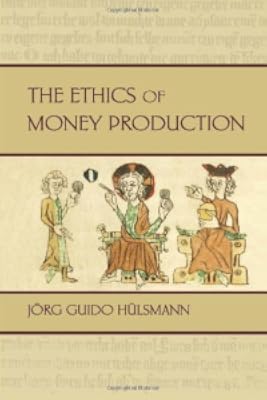
The Ethics of Money Production
by Jörg Guido Hülsmann
On This Page
Description
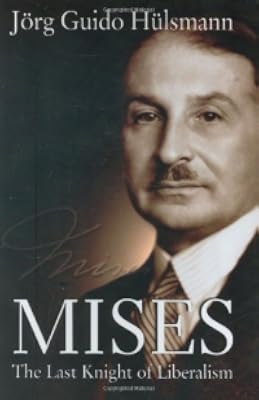
This pioneering work, in hardback, by Jörg Guido Hülsmann, professor of economics at the University of Angers in France and the author of Mises: The Last Knight of Liberalism, is the first full study of a critically important issue today: the ethics of money production. There is a reason that this book has been translated to Chinese, German, Spanish, Czech, and there are many more on the way. This book hits the intellectual sweet spot, speaking to the issues that are driving economic show more events right now. We MUST deal with the money problem in a principled way, else we never get back on the course of sustainable prosperity. By "money production," the author is speaking not in the colloquial sense of the phrase "making money," but rather the actual production of money as a commodity in the whole economic life. The choice of the money we use in exchange is not something that needs to be established and fixed by government. In fact, his thesis is that a government monopoly on money production and management has no ethical or economic grounding at all. Legal tender laws, bailout guarantees, tax-backed deposit insurance, and the entire apparatus that sustains national monetary systems, has been wholly unjustified. Money, he argues, should be a privately produced good like any other, such as clothing or food. In arguing this way, he is disputing centuries of assumptions about money for which an argument is rarely offered. People just assume that government or central banks operating under government control should manage money. Hulsmann explores monetary thought from the ancient world through the Middle Ages to modern times to show that the monopolists are wrong. There is a strong case in both economic and ethical terms for the idea that money production should be wholly private. He takes on the "stabilization" advocates to show that government management doesn't lead to stability but to inflation and instability. He goes further to argue against even the theoretical case for stabilization, to say that money's value should be governed by the market, and that the costs associated with private production are actually an advantage. He chronicles the decline of money once nationalized, from legally sanctioned counterfeiting to the creation of paper money all the way to hyperinflation.In his normative analysis, the author depends heavily on the monetary writings of 14th-century Bishop Nicole Oresme, whose monetary writings have been overlooked even by historians of economic thought. He makes a strong case that "paper money has never been introduced through voluntary cooperation. In all known cases it has been introduced through coercion and compulsion, sometimes with the threat of the death penalty. . . . Paper money by its very nature involves the violation of property rights through monopoly and legal-tender privileges." The book is also eerily prophetic of our times: Consider the current U.S. real-estate boom. Many Americans are utterly convinced that American real estate is the one sure bet in economic life. No matter what happens on the stock market or in other strata of the economy, real estate will rise. They believe themselves to have found a bonanza, and the historical figures confirm this. Of course this belief is an illusion, but the characteristic feature of a boom is precisely that people throw any critical considerations overboard. They do not realize that their money producer-the Fed-has possibly already entered the early stages of hyperinflation, and that the only reason why this has been largely invisible was that most of the new money has been exported outside of the U.S . . . Because a paper-money producer can bail out virtually anybody, the citizens become reckless in their speculations; they count on him to bail them out, especially when many other people do the same thing. To fight such behavior effectively, one must abolish paper money. Regulations merely drive the reckless behavior into new channels. show lessTags
Recommendations










Member Reviews
Barrons 14 Dec 2009, Gene Epstein, "a clear, back-to-basics look at the nature of money production in free and controlled markets."
Bevallom a pénzteremtés mechanizmusa sosem volt teljesen világos számomra. Ez nem feltétlenül baj, hiszen nem ez a szakmám, teljes életet lehet élni így is. Sőt, ha jól látom kormányzati pozíciót is be lehet bátran tölteni.
Hülsmann könyve nagyszerűen végigveszi a pénzteremtési mechanizmus történetét, nemcsak elmagyarázza a különféle módszereket, hanem általában elég jól ismerteti a változások okát is. Azt gondolom a könyv mindenkinek hasznos aki szeretne megismerkedni ezekkel a fogalmakkal, és meg szeretné érteni, hogy miként is működik a pénz.
A könyv címe rögtön jelzi, hogy nem egyszerűen egy ismeretterjesztő könyvről van szó, a szerző állást is foglal, elemzi a pénzteremtési show more mechanizmusokat, véleményezi is őket. Mivel a könyvet a Mises Intézet adta ki az nem lepett meg túlzottan, hogy a jelenlegi pénzrendszert nem dicsérte túlzottan, az már inkább, hogy a aranyfedezet klasszikus időszakáról is elég negatívan írt.
A legtöbb esetben ez etikai elemzés logikus és szerintem azoknak sem zavaró akik nem értenek egyet az Osztrák Iskolával. Nagyon alapvető dolgokra (pl. magántulajdon maximális tisztelete) épít csak
Két olyan pont volt, amikor kicsit furcsának tűnt az elemzés.
Egyrészt volt egy fejezet, ahol a jelenlegi rendszer társadalmi következményeiről írt a szerző, és ezek nekem igen erőltetettnek tűntek. Tényleg csak egy hajszál hiányzott ahhoz, hogy a szexuális problémáinkért is a pénzrendszert okolja. Az igazsághoz hozzátartozik, hogy a könyv végig rettentően sok referenciát tartalmaz, ennél a fejezetnél is hivatkozott olyan kutatásokra melyeket ismerve lehet, hogy nem lett volna ennyire légbőlkapott a magyarázat.
A másik furcsa dolog az volt, hogy nagyon sokszor hivatkozott a szerző arra, hogy vajon a kereszténység szemszögéből nézve mi morális és mi nem. Történelmileg persze valóban nagyon fontos lehet, hogy mit írt Nicholas Oresme a XIV. században a pénzről, de ha most szeretnénk eldönteni, hogy mi helyes morálisan és mi nem, akkor ez azért nem túl releváns szerintem.
Összességében a könyv nagyon alapos munka, rengeteg mindent megértettem belőle ami korábban nem volt világos. show less
Hülsmann könyve nagyszerűen végigveszi a pénzteremtési mechanizmus történetét, nemcsak elmagyarázza a különféle módszereket, hanem általában elég jól ismerteti a változások okát is. Azt gondolom a könyv mindenkinek hasznos aki szeretne megismerkedni ezekkel a fogalmakkal, és meg szeretné érteni, hogy miként is működik a pénz.
A könyv címe rögtön jelzi, hogy nem egyszerűen egy ismeretterjesztő könyvről van szó, a szerző állást is foglal, elemzi a pénzteremtési show more mechanizmusokat, véleményezi is őket. Mivel a könyvet a Mises Intézet adta ki az nem lepett meg túlzottan, hogy a jelenlegi pénzrendszert nem dicsérte túlzottan, az már inkább, hogy a aranyfedezet klasszikus időszakáról is elég negatívan írt.
A legtöbb esetben ez etikai elemzés logikus és szerintem azoknak sem zavaró akik nem értenek egyet az Osztrák Iskolával. Nagyon alapvető dolgokra (pl. magántulajdon maximális tisztelete) épít csak
Két olyan pont volt, amikor kicsit furcsának tűnt az elemzés.
Egyrészt volt egy fejezet, ahol a jelenlegi rendszer társadalmi következményeiről írt a szerző, és ezek nekem igen erőltetettnek tűntek. Tényleg csak egy hajszál hiányzott ahhoz, hogy a szexuális problémáinkért is a pénzrendszert okolja. Az igazsághoz hozzátartozik, hogy a könyv végig rettentően sok referenciát tartalmaz, ennél a fejezetnél is hivatkozott olyan kutatásokra melyeket ismerve lehet, hogy nem lett volna ennyire légbőlkapott a magyarázat.
A másik furcsa dolog az volt, hogy nagyon sokszor hivatkozott a szerző arra, hogy vajon a kereszténység szemszögéből nézve mi morális és mi nem. Történelmileg persze valóban nagyon fontos lehet, hogy mit írt Nicholas Oresme a XIV. században a pénzről, de ha most szeretnénk eldönteni, hogy mi helyes morálisan és mi nem, akkor ez azért nem túl releváns szerintem.
Összességében a könyv nagyon alapos munka, rengeteg mindent megértettem belőle ami korábban nem volt világos. show less
Sep 23, 2015Hungarian
A bevezetésnek kétszer futottam neki, de nem sikerült elolvasnom. Remélem a könyv érdekesebb lesz.
A határhaszon elmélet nagyon hasznos fejezet volt. Nehéz olvasni.
Egyelőre fel is adtam, talán majd később.
A határhaszon elmélet nagyon hasznos fejezet volt. Nehéz olvasni.
Egyelőre fel is adtam, talán majd később.
Aug 11, 2018Hungarian
Ratings
Members
- Recently Added By
Lists

Ancap Part 2 - Beginner
12 works; 1 member
Author Information
10 Works 170 Members
Classifications
Statistics
- Members
- 59
- Popularity
- 524,269
- Reviews
- 3
- Rating
- (3.40)
- Languages
- English
- Media
- Paper, Ebook
- ISBNs
- 2
- ASINs
- 1