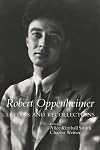
Robert Oppenheimer, letters and recollections
by J. Robert Oppenheimer
Stanford Nuclear Age Series (2)
On This Page
Description
Robert Oppenheimer (1904-1967) is one of the few American scientists who have become public and controversial figures in the twentieth century.T his book adds a new dimension to the Oppenheimer story by offering a look at the private man behind the public figure. It consists of letters spanning the period from his Harvard student days in 1922 to his departure from Los Alamos in 1945. The letters are supplemented by recollections of those who knew Oppenheimer and by his own recollections from show more an interview a few years before his death. 'A beautifully organized collection of letters and reminiscences ...The editors have interviewed those who knew and worked with him, stirred in the necessary explanatory background, and produced an account, both scholarly and highly readable, which throws fresh light on a man who will probably always remain something of an enigma. Amid devotional defense and almost rabid attack, their book is a model of objectivity.' New York Times Book RevieW 'An intimate, carefully documented, and honest book.' Scientific American 'The first scholarly attempt to come to grips with the development of Oppenheimer's elusive personality, it is all the more impressive because its many revealing letters and candid commentary were gathered from those who knew him best.' Science 'A milestone in Oppenheimer scholarship ...The full measure of Oppenheimer the man, the scientist, and the public figure remains to be taken, but the publication of this rich volume will markedly aid the accomplishment of that ultimate and demanding task.' show lessTags
Recommendations
























Member Reviews
Really good. I loved reading this book.
Ratings
Members
- Recently Added By
Author Information

18+ Works 350 Members
An American physicist, born in New York City, Robert Oppenheimer graduated from Harvard University summa cum laude in 1925. He made significant contributions to the development of quantum mechanics and was the key figure in the rapid development of the first atom bomb. After extensive study with key researchers in Britain and Germany (he received show more his Ph.D. in 1927 from the University of Gottingen), Oppenheimer returned to the United States to establish and run simultaneously two influential schools of theoretical physics, at the California Institute of Technology and the University of California, Berkeley. Theoretical physics had never before been studied with such intensity in the United States. During the 1930s, he made numerous contributions to atomic and nuclear physics. Oppenheimer and his students developed almost all consequences of the Dirac theory of the electron, including the predicted positively charged electron, discovered by Carl Anderson in 1932 and named the position. Oppenheimer also published early papers, theoretically discussing black holes and neutron stars. These papers were ignored by astronomers for many years. Oppenheimer is best known to the general public as the leader of the successful American effort to develop the atom bomb at Los Alamos, New Mexico (1942--45). In 1947 he was appointed director of the Institute of Advanced Study at Princeton, New Jersey. After the war, Oppenheimer made powerful enemies by his opposition to the development of the hydrogen bomb and by his public proposals for international control of atomic energy. In 1954, during the McCarthy era, the Atomic Energy Commission (AEC) declared him a "security risk," thereby greatly disturbing many scientists. In 1963, AEC reversed its position, nominating Oppenheimer for its Fermi Prize in recognition of his many achievements. (Bowker Author Biography) show less
Some Editions
Series

Common Knowledge
- People/Characters
- Robert Oppenheimer
Classifications
Statistics
- Members
- 65
- Popularity
- 480,015
- Reviews
- 1
- Rating
- (4.33)
- Languages
- English, Italian
- Media
- Paper
- ISBNs
- 4
- ASINs
- 1