On This Page
Description
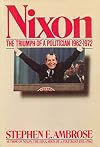
Stephen E. Ambrose's biography of one of the most complex and puzzling US presidents at the apogee of his career, rebounding from defeat to an innovative, high-risk presidency, already sowing the seeds of his ruin. Starting with Nixon's drive to the presidency, volume two of Ambrose's major biography of America's 37th president chronicles Nixon's campaigns, his ultimate victory in 1962 as well as his first term as President, and culminates with the Nixon's reelection on November 7, 1972. show more Nixon was a complex man graced with superb intellect, creative, knowledgeable about world activities and peerless in his talent for foreign affairs. Yet he could also be manipulative, quick to anger, driven by unseen ambitions, cynical about domestic politics, and sensitive to criticism. Culled from his private papers, speeches, hand-written notes, audio recordings of conversations in the Nixon White House and much more, Ambrose's account offers insight into the thought patterns and attitudes of the man whose Presidency was marked by the debacles of Watergate and Vietnam, yet who also began the process of nuclear disarmament and opened up crucial diplomatic relations with China. This is a brilliant and detailed second part to Ambrose's Nixon trilogy. show lessTags
Recommendations



















Member Reviews
Ambrose's "Nixon Volume ll" is an excellent history of US politics 1962-72, and a very insightful bio of Richard Nixon, and as a study of how the White House worked during his first term. I have not read the other two volumes but do plan to read the third at some point in the future. I was old enough during those years to have many vivid memories of the times, but as Ambrose comments many Americans recollection of events is sometimes short-lived and distorted. I might add that in addition to refreshing our memories on a lot of the details, he does an excellent job of analyzing and assessing impacts.
The book was written in 1989, so the author has the benefit of having available for his research thousands of documents, hand-written show more notes, tapes, and memoirs written by the principals, including Nixon, Haldeman, Ehrlichman, and Dean. Many documents were still not available at that time; many others, but not all, were subsequently released in 2012. Midway in the book, Ambrose admits that even after all the research he still felt that he didn't know Nixon, didn't have a real understanding of him. This is not a failure on Ambrose's part, rather it is further revelation of Nixon's character. Here was a man, with virtually no friends, mistrustful of everyone, hateful toward many. Yet Ambrose clearly respects Nixon for his many accomplishments as President, for his unique ability to foresee the eventual dynamic shifts in World politics, and for his intellectual abilities. Ambrose is neither a Nixon hater, nor lover, though interestingly he does admit to being in a group (along with his wife) that heckled Nixon during a famous Kansas State University speech in the 60's.
The book is very well written; it is very readable, and enjoyable to read. For example, Ambrose cites a number of one on one meetings between Nixon and Haldeman that are very revealing and sometimes quite shocking. The book does not bog down with a lot of stodgy footnoting, rather there are many interesting anecdotes that give insight into how the White House was run from '68 to '72. Pat Buchanan and other aides prepared daily a 50+ page summary of news stories from around the globe, a document Nixon eagerly awaited each morning. In the margin, Nixon would then scribble marching orders to his top aides, e.g., a note to H (Haldeman) to get big Democrat contributors investigated (by the IRS). Sometimes the orders would be followed out, other times they would be recognized as blowing off steam and disregarded.
There are many revelations in the book that came as a surprise, others bought back memories, many of them sad ones. Items like the high percentage of our troops in Viet Nam hooked on heroin, Secretary of State Rogers learning of the first Nixon trip to China by reading of it in the morning newspaper, how Nixon pitted people in the WH against each other, why the Plumbers were first created, all of the other secret domestic deals that had to be protected by the Watergate coverup, Pat Nixon's reaction to no women nominated for Supreme Court appointments, the high level secret negotiations with the Soviets, Chinese, Vietnamese. While much of the book deals with Viet Nam, Watergate (June 17, 1972) arises shortly before the November election. It is incredible to read of the shortsighted efforts to bury Watergate pre-election, and "deal with it later".
An excellent read, highly recommended. show less
The book was written in 1989, so the author has the benefit of having available for his research thousands of documents, hand-written show more notes, tapes, and memoirs written by the principals, including Nixon, Haldeman, Ehrlichman, and Dean. Many documents were still not available at that time; many others, but not all, were subsequently released in 2012. Midway in the book, Ambrose admits that even after all the research he still felt that he didn't know Nixon, didn't have a real understanding of him. This is not a failure on Ambrose's part, rather it is further revelation of Nixon's character. Here was a man, with virtually no friends, mistrustful of everyone, hateful toward many. Yet Ambrose clearly respects Nixon for his many accomplishments as President, for his unique ability to foresee the eventual dynamic shifts in World politics, and for his intellectual abilities. Ambrose is neither a Nixon hater, nor lover, though interestingly he does admit to being in a group (along with his wife) that heckled Nixon during a famous Kansas State University speech in the 60's.
The book is very well written; it is very readable, and enjoyable to read. For example, Ambrose cites a number of one on one meetings between Nixon and Haldeman that are very revealing and sometimes quite shocking. The book does not bog down with a lot of stodgy footnoting, rather there are many interesting anecdotes that give insight into how the White House was run from '68 to '72. Pat Buchanan and other aides prepared daily a 50+ page summary of news stories from around the globe, a document Nixon eagerly awaited each morning. In the margin, Nixon would then scribble marching orders to his top aides, e.g., a note to H (Haldeman) to get big Democrat contributors investigated (by the IRS). Sometimes the orders would be followed out, other times they would be recognized as blowing off steam and disregarded.
There are many revelations in the book that came as a surprise, others bought back memories, many of them sad ones. Items like the high percentage of our troops in Viet Nam hooked on heroin, Secretary of State Rogers learning of the first Nixon trip to China by reading of it in the morning newspaper, how Nixon pitted people in the WH against each other, why the Plumbers were first created, all of the other secret domestic deals that had to be protected by the Watergate coverup, Pat Nixon's reaction to no women nominated for Supreme Court appointments, the high level secret negotiations with the Soviets, Chinese, Vietnamese. While much of the book deals with Viet Nam, Watergate (June 17, 1972) arises shortly before the November election. It is incredible to read of the shortsighted efforts to bury Watergate pre-election, and "deal with it later".
An excellent read, highly recommended. show less
This is the middle volume of Nixon Series. Mainly, this is the run up to the first presidential term to the election for his second term.
It is hard for me not to think of similarities to Trump. Both men as presidents were small-minded, dictatorial, retaliatory...
Nixon's 2nd term plans involved radical shrinking of the federal government.
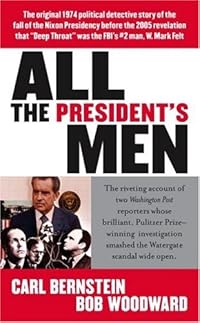
There is, of course a fair amount on the Watergate even from planning to fallout. Nixon seemed to hate and have an unhealthy fixation on https://en.wikipedia.org/wiki/Larry O'Brien. The Watergate break-in was actually the second one, to replace a faulty bug on O'Brien's phone. Was it a direct Nixon order, or just an over-enthusiastic action Nixon covered up? Also, Nixon had problems with cash from Howard Hughes who had O'Brien on retainer (which O'Brien properly reported to the IRS) and then there is cash from ITT.. Who knows why? This book overtly is not seeking to answer that. However, it does lay out the evolving case around the election. The FBI couldn't (or, is that "didn't", ghost of J. Edgar? Nixon's FBI: Hoover, Watergate, and a Bureau in Crisis) tie the cash on Liddy to the CREEP until too late to make a difference to the electorate.
Nixon made sweeping attacks on the Dems, hated the press, etc. and the concluding review feels to me like it could be of Trump with little editing.
So, I ask myself, Why does GOP return again and again to criminal, dictatorial leaders? I guess that question is one explored in The Authoritarians. show less
It is hard for me not to think of similarities to Trump. Both men as presidents were small-minded, dictatorial, retaliatory...
IT SOMETIMES SEEMED that Nixon was more concerned about and angrier with the American press than with the North Vietnamese. His fury escalated to new heights at the end of January, when new uniforms he had had Ehrlichman design for the White House police were worn in public for the first time. Inspired by the guards at Buckingham Palace and others he had seen on Nixon’s European tour a year earlier, Ehrlichman had put the White House police into white-tunicked, gold-braided,show more
pillbox-hatted ceremonial uniforms.
The press ridiculed the result. The Chicago Daily News was reminded of movie characters from The Student Prince. The Buffalo Evening News thought “even ushers at old-time movie palaces were garbed with greater restraint and better taste.” “Ruritania, D.C.,” scoffed The New York Times.
Mort Allin, in the News Summary, informed Nixon that Newsweek had used a photo from a 1925 movie, The Merry Widow, and that Life used a photo of Emperor Francis Joseph for comparison.
Nixon was defiant. He wrote on the News Summary, “H—I want our staff to take RN’s position on this regardless of their own views—remind them of K’s line—a W.H. staffer does not have independent views on W.H. matter. H—Have Klein take the offensive on the slovenly W.H. police we found.” Happily for the police, his defiance didn’t last, and soon they were back in less colorful uniforms.
His rage against the press did last. When John Gardner criticized his budget, Nixon wrote: “H & E—He is to be completely cut off from now on. This is an order.”
When Walter Cronkite was quoted by Allin in a critical remark, Nixon circled his name and scribbled furiously, “A Nothing!” He didn’t much like Cronkite’s competitor, either; at his insistence, Jeb Magruder mounted a campaign to discredit David Brinkley, including such actions as having Don Kendall of Pepsi-Cola, an old Nixon friend and client, complain to the NBC corporate heads about Brinkley.
Hugh Sidey was another target. “H—I’m inclined to think Sidey is under orders,” Nixon wrote on one report. “No Contact with him for 30 days will shake him—order this to all hands.”12 When Sidey mentioned in a column Nixon’s lavish private homes and his wealthy friends, Nixon commented, “Freeze him completely for 60 days.”13 He also instructed Magruder to “initiate some letters to the editor comparing RN with LBJ, Ike, and JFK on this score.”
The obsession with the press and PR in the Nixon White House was never ending. On February 27, after his morning conference with the President, Haldeman sent a note to the staff. He began, “There is a need for some cold, tough decisions regarding the amount of time spent being king vs. that spent as leader of the government. Perhaps we should consider a drastic shift—reducing the ‘king’ time to a bare minimum. We also have to recognize that some of the time has to be spent just in being a nice person.”
(Ten years earlier Ann Whitman, Ike’s secretary, had observed in her diary, “The Vice-President [Nixon] sometimes seems like a man who is acting like a nice man rather than being one.”)
Haldeman went on to call for some “deep thinking” about the presentation of the President, “recognizing always that it actually gets down to what is the best television.”
Nixon loved television, especially when he could use it to speak directly to the people from the majesty of the Oval Office, with all three networks carrying his speech on prime time (after the networks caught on and began dividing up the chore, with two showing their regular programs, Nixon’s ratings sank, and he cut back drastically on his TV time).
Nixon's 2nd term plans involved radical shrinking of the federal government.
Nixon also brought Caspar Weinberger and John Ehrlichman in on his plans. On September 20, at Camp David, he subjected them to a two-hour monologue on how things were going to change after he got his mandate. He wanted Weinberger to prepare a radically austere budget for fiscal 1973. He wanted Ehrlichman to get cracking on the reorganization, not only of departments (Nixon wanted to reduce the Cabinet to eight departments; there would be four new ones, Economic Affairs, Human Resources, Natural Resources, and Community Development, plus four traditional ones, State, Defense, Justice, and Treasury) but by finding new people to replace the current officeholders.
NIXON’S ANTICIPATED MANDATE not only strengthened his tough-guy and mean-streak attitude toward McGovern and the Democrats, and toward his own Cabinet and the federal bureaucracy,...
There is, of course a fair amount on the Watergate even from planning to fallout. Nixon seemed to hate and have an unhealthy fixation on https://en.wikipedia.org/wiki/Larry O'Brien. The Watergate break-in was actually the second one, to replace a faulty bug on O'Brien's phone. Was it a direct Nixon order, or just an over-enthusiastic action Nixon covered up? Also, Nixon had problems with cash from Howard Hughes who had O'Brien on retainer (which O'Brien properly reported to the IRS) and then there is cash from ITT.. Who knows why? This book overtly is not seeking to answer that. However, it does lay out the evolving case around the election. The FBI couldn't (or, is that "didn't", ghost of J. Edgar? Nixon's FBI: Hoover, Watergate, and a Bureau in Crisis) tie the cash on Liddy to the CREEP until too late to make a difference to the electorate.
Nixon made sweeping attacks on the Dems, hated the press, etc. and the concluding review feels to me like it could be of Trump with little editing.
...whereas Eisenhower downplayed the importance of the press, Nixon exaggerated it; whereas Ike wooed the press, Nixon went to war with it.
NIXON’S HATREDS extended far beyond the reporters. He was constantly railing at “they,” threatening to “get them.”
One day late in the first term, Nixon was sitting around with Kissinger, Haldeman, Ehrlichman, and Colson. They were discussing some of Nixon’s enemies (in this case, antiwar Democratic senators). Nixon said, “One day we will get them—we’ll get them on the ground where we want them. And we’ll stick our heels in, step on them hard and twist—right. Chuck, right?”
...
As President, Nixon had struck back at his perceived enemies by going outside the law. He had used illegal wiretaps and other forms of electronic surveillance to spy on government employees and newspaper reporters. The Justice Department, at his urging, had undertaken a widespread program of bugging and infiltrating radical groups (which was declared illegal in June 1972). Nixon created, set the tone for, and gave the objectives to the Plumbers, an unauthorized, unknown intelligence-gathering and covert-operation unit operating from within the White House. It was in an atmosphere established and encouraged by Nixon that agents of the President of the United States made forcible illegal entries into Dr. Fielding’s office in Los Angeles, and Larry O’Brien’s office at the Watergate in Washington, in the first instance to try to steal material that would incriminate or embarrass Daniel Ellsberg, in the second instance to leave a bug that would allow Nixon’s people to listen to O’Brien’s phone conversations.
So, I ask myself, Why does GOP return again and again to criminal, dictatorial leaders? I guess that question is one explored in The Authoritarians. show less
The second volume of the series continues where the last one left off, in terms of both chronology and quality. The drawback this time around is the coverage of Vietnam which was a bit of a slog to get through (which is probably how Nixon felt)
2765 Nixon: Volume Two The Triumph of a Politician 1962-1972, by Stephen A. Ambrose (read 13 Jul 1995) This volume shows Nixon was a deeply flawed man and could have been very dangerous. It says something for our governmental system that we could survive him as President. This volume covers very familiar territory, but is very well put together. I think Ambrose's view is right, and this no doubt is due to his being personally opposed at the time to much of what Nixon did--especially, I suppose, in Vietnam.
Ratings
Members
- Recently Added By
Lists

Books in the Bibliography of The Cold War by John Lewis Gaddis
192 works; 1 member
Author Information

71+ Works 43,714 Members
Historian Stephen E. Ambrose grew up in Wisconsin and attended the University of Wisconsin and the University of Louisiana. Ambrose is considered to be one of the foremost historical scholars of recent times and has been a professor for over three decades. He is also the founder and president of the National D-Day Museum in New Orleans. His works show more include D-Day: June 6, 1944: The Climactic Battle of World War II, Citizen Soldiers: The U. S. Army from Normandy Beaches to the Bulge to the Surrender of Germany, June 7, 1944-May 7, 1945, Band of Brothers: E Company, 506th Regiment, 101st Airborne from Normandy to Hitler's Eagle's Nest and Undaunted Courage: Meriwether Lewis, Thomas Jefferson and the Opening of the American West. Abrose served historical consultant on the motion picture Saving Private Ryan. (Bowker Author Biography) show less
Series

Common Knowledge
- Canonical title
- Nixon: The Triumph of a Politician 1962-1972
- Alternate titles
- Nixon, Vol. 2: The Triumph of a Politician, 1962 - 1972
- Original publication date
- 1989
- People/Characters
- Richard M. Nixon
Classifications
- Genres
- Nonfiction, Biography & Memoir, History, General Nonfiction
- DDC/MDS
- 973.924092 — History & geography History of North America United States 1901- Cold War, Vietnam War, Digital Age (1953-2001) Richard Nixon (1969-1974) Watergate Scandal, U.S. withdrawal from Vietnam Biography
- LCC
- E856 .A72 — History of the United States United States Later twentieth century, 1961-2000 Nixon's administrations, 1969-August 9, 1974
- BISAC
Statistics
- Members
- 232
- Popularity
- 139,850
- Reviews
- 4
- Rating
- (4.15)
- Languages
- English
- Media
- Paper, Audiobook, Ebook
- ISBNs
- 8
- ASINs
- 5