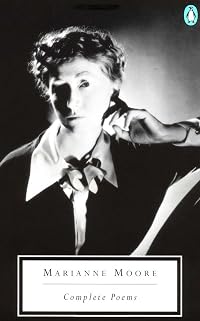
Complete Poems
by Marianne Moore
On This Page
Description
"Teems with sharp observation, profound moral insight, high satiric wit, and all manner of aesthetic delight." -The New York Times Book Review A Penguin Classic This definitive edition brings together all the works that Pulitzer Prize-winning Marianne Moore wished to preserve, covering more than sixty years of writing, and incorporating the final revisions she made to the texts. The poems demonstrate Moore's wide range of interests, moving from witty images of animals, sporting events, and show more social institutions, to thoughtful meditations on human nature. In entertaining informative notes, Moore reveals the inspiration for complete poems and individual lines within them. For more than seventy years, Penguin has been the leading publisher of classic literature in the English-speaking world. With more than 1,700 titles, Penguin Classics represents a global bookshelf of the best works throughout history and across genres and disciplines. Readers trust the series to provide authoritative texts enhanced by introductions and notes by distinguished scholars and contemporary authors, as well as up-to-date translations by award-winning translators. show lessTags
Recommendations











Member Reviews
Marianne Moore has a complex bibliography, as she revised some poems over the years; as result, the various "Complete Poems," especially that of 1967 (and its later republications), are not as complete as one would wish, because it is essentially impossible to pin down a specific version of a revised poem as "the definitive version". "The Poems of Marianne Moore," and, "Becoming Marianne Moore," are the best beginnings.
None of that detracts from the fact that she is delightful, with that genuine, infectious childlike sensibility essential to the "wide-eyedness" of the artist.
Have a dictionary nearby ("pangolin," as defined in Merriam-Webster: "any of several Asiatic and African edentate mammals . . . having the body covered with large show more imbricated horny scales"), and you'll have fun. show less
None of that detracts from the fact that she is delightful, with that genuine, infectious childlike sensibility essential to the "wide-eyedness" of the artist.
Have a dictionary nearby ("pangolin," as defined in Merriam-Webster: "any of several Asiatic and African edentate mammals . . . having the body covered with large show more imbricated horny scales"), and you'll have fun. show less
I have read many of the most famous classic poems and poetry of some of the greatest poets. I like to give poets the benefit of the doubt and read the entire book even if I don't like it. I tried this with Moore's book but I just couldn't finish it. Most of the poems start out with meaning and flow but tend to end up as ramblings making no sense at all. Moore posses a fluent vocabulary but most of the time it appears she is just using words for their beauty but not making any sense in relation to the poem. I understand in poetry there is not right or wrong but I just didn't really get it.
A friend, years ago, introduced us. I have been enraptured ever since. Even though I no longer pretend to write poetry, our love affair continutes.
Marianne Moore, you are very smart and bright and small. You can tell that about you and about you being with your mother and visiting just about everywhere there are brightnesses and so you are stretching and honeing and hawing, you call forth with a smirk the little things, forte and da, and all of it is so very smart and bright in the smart light.
An interesting poet. Good concepts in poetry.
La brevissima poesia di Marianne Moore: "La poesia. Neanche a me piace. A leggerla, però, con totale disprezzo, vi si scopre, dopo tutto, uno spazio per l'autentico" offre un'interessante riflessione sulla natura e il valore della poesia stessa.
Disprezzo e autenticità. Moore inizia con una dichiarazione provocatoria: la poesia non le piace. Questo disprezzo iniziale può sembrare un rifiuto della forma poetica tradizionale, suggerendo che essa possa apparire superflua o distante dalla realtà quotidiana. Tuttavia, l'affermazione successiva introduce un elemento di sorpresa: nonostante il disprezzo, c'è la possibilità di scoprire "uno spazio per l'autentico". Qui, Moore sembra suggerire che anche attraverso il disprezzo e la critica show more si possa accedere a una verità profonda e autentica.
La ricerca di significato. Questo contrasto tra disprezzo e autenticità riflette una tensione comune nella poesia moderna, dove gli autori cercano di affrontare la complessità dell'esperienza umana. Moore invita il lettore a esplorare la poesia non solo come un insieme di parole artistiche, ma come un mezzo per accedere a esperienze genuine e significative.
Contestualizzazione. Marianne Moore è nota per il suo approccio meticoloso e riflessivo alla poesia, spesso caratterizzata da una fusione di osservazione e introspezione. La sua opera si distingue per l'attenzione ai dettagli e per un linguaggio preciso che riesce a catturare la complessità della vita. Questo breve verso riassume perfettamente il suo spirito critico nei confronti della poesia stessa e la sua capacità di trovare bellezza e verità anche nei luoghi meno attesi.
La poesia di Moore invita a una riflessione profonda sul valore della poesia in sé. Anche se può sembrare distante o poco attraente, essa possiede il potere di rivelare spazi autentici che altrimenti potrebbero rimanere nascosti. La sua opera continua a stimolare lettori e critici a interrogarsi su cosa significhi davvero "poesia" in un mondo in continua evoluzione. show less
Disprezzo e autenticità. Moore inizia con una dichiarazione provocatoria: la poesia non le piace. Questo disprezzo iniziale può sembrare un rifiuto della forma poetica tradizionale, suggerendo che essa possa apparire superflua o distante dalla realtà quotidiana. Tuttavia, l'affermazione successiva introduce un elemento di sorpresa: nonostante il disprezzo, c'è la possibilità di scoprire "uno spazio per l'autentico". Qui, Moore sembra suggerire che anche attraverso il disprezzo e la critica show more si possa accedere a una verità profonda e autentica.
La ricerca di significato. Questo contrasto tra disprezzo e autenticità riflette una tensione comune nella poesia moderna, dove gli autori cercano di affrontare la complessità dell'esperienza umana. Moore invita il lettore a esplorare la poesia non solo come un insieme di parole artistiche, ma come un mezzo per accedere a esperienze genuine e significative.
Contestualizzazione. Marianne Moore è nota per il suo approccio meticoloso e riflessivo alla poesia, spesso caratterizzata da una fusione di osservazione e introspezione. La sua opera si distingue per l'attenzione ai dettagli e per un linguaggio preciso che riesce a catturare la complessità della vita. Questo breve verso riassume perfettamente il suo spirito critico nei confronti della poesia stessa e la sua capacità di trovare bellezza e verità anche nei luoghi meno attesi.
La poesia di Moore invita a una riflessione profonda sul valore della poesia in sé. Anche se può sembrare distante o poco attraente, essa possiede il potere di rivelare spazi autentici che altrimenti potrebbero rimanere nascosti. La sua opera continua a stimolare lettori e critici a interrogarsi su cosa significhi davvero "poesia" in un mondo in continua evoluzione. show less
Nov 15, 2024Italian
Ratings
Members
- Recently Added By
Lists

Harold Bloom - The Western Canon: D. The Chaotic Age
833 works; 24 members

Tom's Bookstore
346 works; 2 members
Author Information

85+ Works 2,849 Members
Born in St. Louis, the "first lady of American poetry," Marianne Moore, graduated from Bryn Mawr College in 1909. In 1918 she moved to New York City with her mother, remaining there for the rest of her life. She became a well-known character in her Brooklyn Heights neighborhood, easily recognizable in a large black hat and rather eccentric style. show more In 1921 a few of her friends pirated her work and published it under the title Poems. On her seventy-fifth birthday, November 15, 1962, she was honored by the National Institute of Arts and Letters, and in a special interview for the N.Y. Times, she spoke of her feelings concerning the treatment of poetry: "I'm very doubtful about scholasticizing poetry," she said. "I feel very strongly that poetry should not be an assignment but a joy." Five years later she said: "I wonder that I can bear myself to be in a world where they don't outlaw war." In 1967 Moore received both the MacDowell Medal and a Gold Medal. Mayor John Lindsay of New York City hailed her as "truly the poet laureate of New York City." The famed Rosenbach Museum in Philadelphia has a collection devoted to her work and a detailed replica of a room in her Brooklyn home. Moore brought to her work a prodigious knowledge and passionate interest in many diverse fields, including the arts, natural history, and public affairs. Her use of the images and language of these fields in her poetry enabled her to offset traditional poetic tones with the cadences of prose rhetoric and everyday speech. This talent, coupled with her precision and intricate metrics, make her one of the leading modernist poets. (Bowker Author Biography) show less
Awards and Honors
Distinctions
Notable Lists
Common Knowledge
- Original publication date
- 1967
- Epigraph
- Omissions are not accidents.
M.M. - Dedication
- To Louise Crane
To Mary Warner Moore (1862-1947) [prior to Collected Poems] - Blurbers
- Eliot, T. S.
Classifications
Statistics
- Members
- 994
- Popularity
- 26,472
- Reviews
- 6
- Rating
- (3.80)
- Languages
- English, French
- Media
- Paper, Ebook
- ISBNs
- 10
- ASINs
- 7