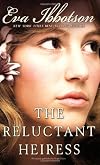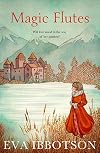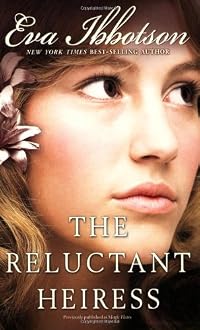
Magic Flutes
by Eva Ibbotson
On This Page
Description
In 1920s Austria, no one in the Viennese opera company knows that their wardrobe mistress Tessa is really a princess. But when the dashing self-made millionaire Guy Farne arrives at the opera, Tessa realizes that there may be more to life--and love--than just music.Tags
Recommendations





Member Reviews
What a delectable, frothy confection of a book! A farce, a romance, a mockery of princess books and just stuffed to the gills with hilarious, peculiar characters making their way. When incredibly wealthy Guy Farne buys the magnificent and mouldering castle of Pfaffenstein in order to woo the woman of his dreams, little does anyone realize that the tiny, opera-obsessed Princess of Pfaffenstein will end up winning the day against great beauty and the best laid plans of every aristocratic aunt.
This book is virtually identical to Ibbotson's The Morning Gift in many ways, but I didn’t care. I always say, when you have a good story, stick with it! It was still enjoyable to me in the way all modern fairy tales are. Nevertheless, having just read The Morning Gift before this one, there were no surprises for me, except for the occasional change in syntax:
The Morning Gift: “What I’m going to do now, is kiss you.”
The Reluctant Heiress: “’I’m going to kiss you, you see,’ he explained.”
Yes, these books are seriously alike, but it’s a timeless tale. Guy meets girl. There is instant but bewildering attraction, because the guy and girl are each convinced he or she is in love with someone else. The Someone Elses turn show more out to be not who they seemed to be. And, well, I won’t spoil the timeless, inevitable ending, in case you haven’t figured it out, but those quotes above should give you a hint.
In this version of Ibbotson’s upside-down Cinderella plot, we are once again in pre-World War II Vienna, where we meet Tessa, a princess in disguise working as a gofer for an opera company. She is indispensable and indefatigable. She rescues babies and puppies and mice and everyone loves her. She even cuts off her own glorious hair when a suitable wig cannot be found for a production.
Enter Guy Farne, irrepressible, indomitable, honorable, and convinced he is in love with a vapid beauty named Nerine who rejected him once before because he wasn’t rich enough. He set out to win her by becoming as rich as he possibly could, even purchasing the magnificent but too-expensive-to-maintain castle of Pfaffenstein, now owned by two old women and their grand-niece, the Princess. “The Princess” of course is none other than Tessa, who everyone thinks should marry a very dumb faded nobleman she doesn’t love.
Guy meets Tessa at the opera, not knowing she is the Princess of Pfaffenstein. The usual false impressions, miscommunications, and misunderstandings ensue common to the playing out of this tale, until at last, all the parties concerned are with exactly who they are meant to be, according, some would say, to the stars.
Discussion: I love the male protagonist, Guy – Ibbotson is great with her males. Guy is an appealing mix of not-too-handsome but definitely attractive, talented, decisive, chivalrous, kind, but with a temper when his pride is hurt and prone to bitter self-condemnation over his own follies. That is, the men are good, but not so good as to be boring.
The female heroines are pretty much the same: a combination of perfection with a ditsy vulnerability, small and thin, long blonde hair, and a snub nose, beloved by everyone. Although one can’t help but root for the heroine in Ibbotson’s books, to me she is generally the least interesting of the characters. (While the ditsy vulnerability reinforces her “innocence” and serves to draw the “strong yet tender” male hero to her, such a protagonist can be very irritating to the reader.) Ibbotson is especially good, however, with her auxiliary cast, the members of which are drawn with precision and affection.
I do wish I could find out what it is with Ibbotson and the valorization of small, thin, blonde, and snub nose. She had said in an interview that she wrote for women, so she couldn’t really be pandering to a perceived predilection by men, could she? Is this possibly how she wanted to look because she suffered discrimination (from anti-Semites) if she didn’t? Is she perhaps just trying to fit her heroine within the traditional parameters of the fairy tale? Or, Heaven forfend, is she reflecting what she learned to be beautiful in the racist, pre-World War II buildup in the Germanic countries?
The author’s vitriolic commentary about the upper classes – particularly about those who gain their status by heredity rather than by working for it - is especially marked in this book. While amusing, I think she is more effective in her later books when she applies some nuance and subtlety to the matter.
Evaluation: I liked A Countess Below Stairs and The Morning Gift more than this one, but this is not to say I didn’t enjoy reading it. Like her other books, this one is full of love for Austria and music, and portrays nicely a slice of society in the time between the world wars. And of course it is a charming fairy tale-like love story.
Rating: 3.5/5 show less
The Morning Gift: “What I’m going to do now, is kiss you.”
The Reluctant Heiress: “’I’m going to kiss you, you see,’ he explained.”
Yes, these books are seriously alike, but it’s a timeless tale. Guy meets girl. There is instant but bewildering attraction, because the guy and girl are each convinced he or she is in love with someone else. The Someone Elses turn show more out to be not who they seemed to be. And, well, I won’t spoil the timeless, inevitable ending, in case you haven’t figured it out, but those quotes above should give you a hint.
In this version of Ibbotson’s upside-down Cinderella plot, we are once again in pre-World War II Vienna, where we meet Tessa, a princess in disguise working as a gofer for an opera company. She is indispensable and indefatigable. She rescues babies and puppies and mice and everyone loves her. She even cuts off her own glorious hair when a suitable wig cannot be found for a production.
Enter Guy Farne, irrepressible, indomitable, honorable, and convinced he is in love with a vapid beauty named Nerine who rejected him once before because he wasn’t rich enough. He set out to win her by becoming as rich as he possibly could, even purchasing the magnificent but too-expensive-to-maintain castle of Pfaffenstein, now owned by two old women and their grand-niece, the Princess. “The Princess” of course is none other than Tessa, who everyone thinks should marry a very dumb faded nobleman she doesn’t love.
Guy meets Tessa at the opera, not knowing she is the Princess of Pfaffenstein. The usual false impressions, miscommunications, and misunderstandings ensue common to the playing out of this tale, until at last, all the parties concerned are with exactly who they are meant to be, according, some would say, to the stars.
Discussion: I love the male protagonist, Guy – Ibbotson is great with her males. Guy is an appealing mix of not-too-handsome but definitely attractive, talented, decisive, chivalrous, kind, but with a temper when his pride is hurt and prone to bitter self-condemnation over his own follies. That is, the men are good, but not so good as to be boring.
The female heroines are pretty much the same: a combination of perfection with a ditsy vulnerability, small and thin, long blonde hair, and a snub nose, beloved by everyone. Although one can’t help but root for the heroine in Ibbotson’s books, to me she is generally the least interesting of the characters. (While the ditsy vulnerability reinforces her “innocence” and serves to draw the “strong yet tender” male hero to her, such a protagonist can be very irritating to the reader.) Ibbotson is especially good, however, with her auxiliary cast, the members of which are drawn with precision and affection.
I do wish I could find out what it is with Ibbotson and the valorization of small, thin, blonde, and snub nose. She had said in an interview that she wrote for women, so she couldn’t really be pandering to a perceived predilection by men, could she? Is this possibly how she wanted to look because she suffered discrimination (from anti-Semites) if she didn’t? Is she perhaps just trying to fit her heroine within the traditional parameters of the fairy tale? Or, Heaven forfend, is she reflecting what she learned to be beautiful in the racist, pre-World War II buildup in the Germanic countries?
The author’s vitriolic commentary about the upper classes – particularly about those who gain their status by heredity rather than by working for it - is especially marked in this book. While amusing, I think she is more effective in her later books when she applies some nuance and subtlety to the matter.
Evaluation: I liked A Countess Below Stairs and The Morning Gift more than this one, but this is not to say I didn’t enjoy reading it. Like her other books, this one is full of love for Austria and music, and portrays nicely a slice of society in the time between the world wars. And of course it is a charming fairy tale-like love story.
Rating: 3.5/5 show less
I really liked the Prologue and the last two chapters but everything in between dra-a-a-a-gged. Disappointing, because I expected to like it all—a light romance set in Austria in 1922, with a castle. My copy was marketed as YA, but the characters are adults, and it just doesn't feel like YA. I like the author's children's books, which are full of fun and fantasy, but this one seems to take itself too seriously for the little substance it has. The hero's foster mother is a wonderful character, though.
I love Eva Ibbotson’s books. She writes these sweet, passionate love stories that always leave me with a smile and a sigh of satisfaction. She uses every cliché in the book, but it doesn’t even matter because she writes so well and the stories are so charming. I also really like the settings she evokes: she writes about Austria (her native country) with such love that she makes you love it too. And she always ties music into her plots – in this novel, the opera company and its productions are crucial to the story. Anyway, I know I’m gushing, but all I can say is that someday I’ll be giving Ibbotson’s books to my daughters along with Little Women and Anne of Green Gables.
I love Eva Ibbotson, I really do, but it does seem like she recycles the same storyline. Her writing really sparks my imagination and that a huge compliment to her style and descriptions. However, in this book, I pictured Tessa (not my favorite name choice) as an early teenager rather than a 20-year-old woman and that did not enhance my feelings of the book, for obvious reasons.
Other things I enjoyed
Imagining Pfafferstein and the grounds
Ditto the sets and music from the opera
All the music references
The idea of a "wild strawberry place"
Things I enjoyed, eh, not so much
Guy Farne as a name--this just reminded me of Guy Fawkes
How it did not seem the Herr Witzler was actually trying to be frugal
How Guy did not seem to have any conversations show more with Nerine early on in their engagement so as to learn how vapid she was
Though I understand Ibbotson is Austrian and I love how she really brings the world to life--I could do without so many references to unique Austrian and/or German food dishes and street names. It really cuts into the narrative when read in English. But that is just me being a jerk:-) show less
Other things I enjoyed
Imagining Pfafferstein and the grounds
Ditto the sets and music from the opera
All the music references
The idea of a "wild strawberry place"
Things I enjoyed, eh, not so much
Guy Farne as a name--this just reminded me of Guy Fawkes
How it did not seem the Herr Witzler was actually trying to be frugal
How Guy did not seem to have any conversations show more with Nerine early on in their engagement so as to learn how vapid she was
Though I understand Ibbotson is Austrian and I love how she really brings the world to life--I could do without so many references to unique Austrian and/or German food dishes and street names. It really cuts into the narrative when read in English. But that is just me being a jerk:-) show less
Tessa has been raised to be a princess in the grand Austrian style but after losing her parents and most of the family fortune, she finds herself joyously happy to be working (for free) for the International Opera Company as a under-wardrobe mistress. Embracing her new life, Tessa feels only slight pains of regret when her aged aunts inform her of the proposed purchase of her family estate, the castle Pfaffenstein, by the millionaire Guy Farne for his fiance. Only this fiance is more in love with titles and money than Guy, but since she's so dang beautiful, he kind of missed that little detail. Tessa (of course) is awed by handsome Guy who helps her out of a few tight spots but it's not until she unknowingly returns to Pfaffenstein with show more her opera company that she discovers how connected she is to Guy.The best part of any Eva Ibbotson novel is her introduction of the principle characters. Each has a richly developed history with personality traits (sometimes quirks) and anecdotal references to their youth. Guy's story is one of those standout characters to me - Ms. Ibbotson's descriptions of Guy morphing from a foundling who would fight against perceived injustice into a successful man had me rooting for him early on. And just like Martha Hodge, his foster mother, I too was enchanted with his changing eye color - green for unsettled and sad and brilliant blue for joy. Here's one fantastic description of Guy during the first time he meets Mrs. Hodge. "Guy was led in, glowering, and stood before her. At the time of this encounter he was six and a half years old. Entirely without hope or expectation, he looked at Mrs. Hodge. Small for his age, with the extraordinary air of compactness that characterized him, his chin lifted to receive the information that he was not acceptable, he waited. His knees, scrubbed to a godly cleanliness, shone scarred and raw; his naturally springy hair had been slicked down with several applications of Vaseline and water and stuck relentlessly to his scalp. Mrs. Hodge looked at him and felt frail and tired and more mortal than usual. Force emanated from this strange-looking boy as visibly as beams from a lighthouse. It was impossible; she would never be able to cope with him. The boy waited. His eyes, strangely and slantingly set above high cheekbones, were a curious deep green which sent Mrs. Hodge in search of images that were beyond her: of malachite, of the opaque and clouded waters of the Nile. Silence fell. Only the sudden descent of his left sock as the garter snapped revealed the tension that the child was concealing. It was entirely without volition that the words Mrs. Hodge now uttered issued from her mouth. "All right," she said, "I'll have 'im. I'll give it a try."Pretty dang heartwarming huh? Underneath all that emotion is some beautiful language too: "opaque and clouded waters of the Nile"... pretty dang descriptive.Even though I enjoy her stories, I sometimes wish Ms. Ibbotson's character's could experience love without all the heartbreak. But one of her true talents lie in being able to express the hopeless pain stemming from unrealized love. Tessa is a model of heartbreak when she discovers has no chance with Guy, so maybe you gotta stick with what you do well - but things do work out for her characters in the end. It just usually takes a long time and plenty of shuffling of partners.I've come to expect at least one nasty fiance and one surprise or disastrous wedding in each of her books. On the flip side, I also expect plenty of prose on the subject of music, dance or literature and heroines who are almost always super-humanly sweet. Even with these conventions, I still loved Guy and Tessa's story. Although I wish I could have seen them together more often, their shared passion for music and equality helped to create a pretty solid relationship for me. Tessa could have had a little more backbone occasionally, but since I had just read a couple hundred pages about how intimidating Guy can be, I can understand her reticence to speak up for herself at times. Other than that, it was a fabulous stroll through the musical paradise of Vienna. show less
Loved loved LOVED this one! Much better than "A Song for Summer". I'm worried about reading more Ibbotson books because they just CAN'T be better than this one.
I fell in love with ALL of the characters--well, except for the wretchedly vain Nerine--but especially poor frazzled Witzler and his Rhinemaiden, dear and humble Martha Hodge, and the dashing Mr.Rochester/Captain von Trapp-like Guy Farne.
All the characters were wonderful and memorable! I laughed and got misty-eyed all the way through! The plot was formulaic and you certainly knew how it was going to end chapter 5 onward, but it was still a delight!
I especially LOVED the Austrian and Habsburg history tidbits, ALL of the scenes in the opera house, (especially Klasky with his show more Beethoven relic), and most of all the story of Guy's adoption by and devotion to Martha Hodge. So sweet!
All in all, one of the most intelligent and darling love stories I've read in a long while. I'm probably going to have to buy this little treasure! show less
I fell in love with ALL of the characters--well, except for the wretchedly vain Nerine--but especially poor frazzled Witzler and his Rhinemaiden, dear and humble Martha Hodge, and the dashing Mr.Rochester/Captain von Trapp-like Guy Farne.
All the characters were wonderful and memorable! I laughed and got misty-eyed all the way through! The plot was formulaic and you certainly knew how it was going to end chapter 5 onward, but it was still a delight!
I especially LOVED the Austrian and Habsburg history tidbits, ALL of the scenes in the opera house, (especially Klasky with his show more Beethoven relic), and most of all the story of Guy's adoption by and devotion to Martha Hodge. So sweet!
All in all, one of the most intelligent and darling love stories I've read in a long while. I'm probably going to have to buy this little treasure! show less
Members
- Recently Added By
Lists

Books Read in 2013
1,629 works; 51 members

Favorite Literary Love Stories
182 works; 100 members

Houses and Buildings as Characters in Fiction
182 works; 29 members

Princess Tales
130 works; 4 members
Author Information

39+ Works 22,347 Members
Eva Ibbotson was born in Vienna, Austria, on January 21, 1925. She graduated from Bedford College, London with a degree in physiology in 1945 and the University of Durham with a degree in education in 1965. Her first book, The Great Ghost Rescue, was published in 1975. She primarily wrote children's book and romance novels for adults and young show more adults. Her other works include The Secret of Platform 13, The Star of Kazan, Which Witch?, Island of the Aunts, Dial-a-Ghost, The Ogre of Oglefort, A Company of Swans, and A Song For Summer. She won the Nestlé Smarties Book Prize for Journey to the River Sea. She died on October 20, 2010 at the age of 85. (Bowker Author Biography) show less
Some Editions
Awards and Honors
Awards
Work Relationships
Is abridged in
Common Knowledge
- Canonical title
- Magic Flutes
- Alternate titles
- The Reluctant Heiress
- Original publication date
- 1982
- People/Characters
- Tessa von Pfaffenstein; Guy Farne; Nerine Hurlingham; Prince Maximilian of Spittau (Maxi); Jacob Witzler; Martha Hodge
- Important places
- Vienna, Austria
- Epigraph
- "What do they celebrate, the magic flutes of love? Why, tears and laughter" After Praxilla (4th Century BC)
- Dedication
- To Aaron and Johanna
- First words
- They were both born under the sign of Gemini and for those who believe in the stars as arbiters of fate, this must have seemed the link that bound them.
- Last words
- (Click to show. Warning: May contain spoilers.)"In that case..." said Guy.
Classifications
Statistics
- Members
- 793
- Popularity
- 34,833
- Reviews
- 27
- Rating
- (3.92)
- Languages
- 5 — English, French, German, Spanish, Swedish
- Media
- Paper, Audiobook, Ebook
- ISBNs
- 30
- ASINs
- 6