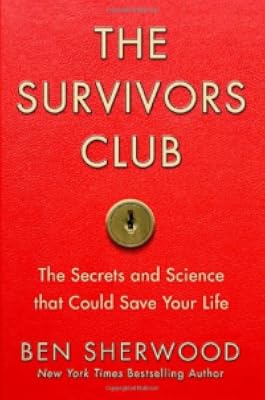
The Survivors Club: The Secrets and Science that Could Save Your Life
by Ben Sherwood
On This Page
Description
From award-winning journalist Sherwood comes a fascinating exploration of survival that can help prepare you for life's inevitable struggles, from cancer and crime to car accidents and airplane crashes.Tags
Recommendations
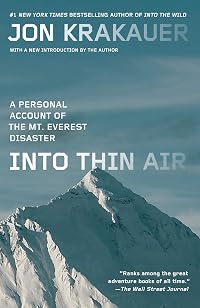

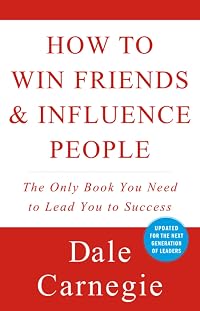
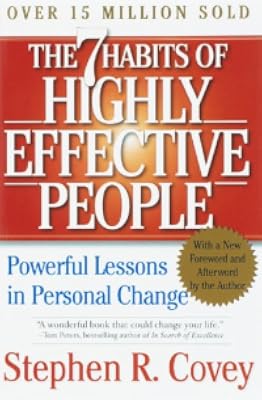
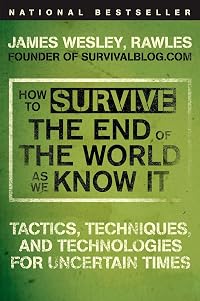














Member Recommendations
Member Reviews
Since I live on an island accessed by ferry I was particularly interested to read up on how to survive a ferry accident in Ben Sherwood's Survivor's Club. Although I am still dubious as to my chances should that moment come, Sherwood's book has definitely upped my odds of survival. This entertaining book shows us through various survival anecdotes how our attitudes and mindsets can help us almost as much as our native know how and ability. Instead of insisting to ourselves that nothing will ever happen to us, Sherwood illustrates that having a positive yet realistic attitude is the key ingredient to survival, and indeed success, not only in disasterous circumstances, but in our daily lives. Time after time his survivors describe show more themselves, after having edured absolutely harrowing experiences, as 'lucky'. In reality, Sherwood posits that bringing a continuous openess to one's surroundings as well as a determination to solve the problem of survival and a positive, but realistic, attitude, is the luck that we all must have in our time of crisis. show less
 This review was written for LibraryThing Early Reviewers.
In some ways this book is like the proverbial train wreck; you just can't stop reading because the stories are just so compelling. Admit it, we are all fascinated by stories of survival so why NOT learn from the people who have survived horrible accidents or terrifying imprisonments. The book shows how certain people react differently in crisis situations and the author goes on to show studies of the survivors. Of why they survived. I was drawn to this book because I was faced with a life threatening medical condition. Nothing nearly as bad as the subjects in the book but any time a doctor looks you in the face and says you should be dead it rather scrambles your though processes.
The book is written in a very compelling manner. It was show more hard to put down and I found the personal stories the most interesting. You can take a Survivor Profile to find out what type of survivor personality you have. Turns out I am a "realist" which really didn't surprise me. I enjoyed reading the book and my husband is going to read the book next. show less
The book is written in a very compelling manner. It was show more hard to put down and I found the personal stories the most interesting. You can take a Survivor Profile to find out what type of survivor personality you have. Turns out I am a "realist" which really didn't surprise me. I enjoyed reading the book and my husband is going to read the book next. show less
"The Survivors Club" takes you on a wild rollercoaster ride from one harrowing story to the next, featuring people who survived adversity against incredible odds. After each nail-biting escapade, the author summarizes the “secrets of survival” just exemplified. He aims to capture “the wisdom of people who improbably survived the abyss” and share it with his readers.
The tour of almost fatal episodes includes being ejected from an airplane going 750 miles per hour, jumping off the Golden Gate Bridge, getting attacked by a mountain lion, getting pierced in the heart by a knitting needle, beating cancer, and even surviving the Holocaust.
In each of these instances, Sherwood also brings to light relevant studies that have been show more conducted on similar situations, showing what factors might predispose one to thrive. He maintains we can all increase our own chances of surviving crises by following these rules.
A major section of his book focuses on the power of faith; many survivors claim it was a higher power that enabled their rescues. Sherwood handles this in a way bound not to offend anyone. Studies acknowledge the strength that faith imparts, and Sherwood maintains that it doesn’t really matter if it’s “true” or not; the point is that the belief itself facilitates surviving behaviors, like calmness, the ability to focus, the determination to fight for life, and the capacity to feel optimistic and hopeful.
Listening to this book was a bit like sitting around a campfire, and everyone is telling scary survival stories in the dark. With each tale, you’re pushed to the edge of your seat in awe, but then it comes out okay. You can snuggle down with your blanket and hot chocolate and feel good again (at least until the next story).
I listened to the unabridged audiobook from Hachette Publishers, read by the author himself. I can’t imagine anyone else reading the book with such enthusiasm and passion. I highly recommend this book. show less
The tour of almost fatal episodes includes being ejected from an airplane going 750 miles per hour, jumping off the Golden Gate Bridge, getting attacked by a mountain lion, getting pierced in the heart by a knitting needle, beating cancer, and even surviving the Holocaust.
In each of these instances, Sherwood also brings to light relevant studies that have been show more conducted on similar situations, showing what factors might predispose one to thrive. He maintains we can all increase our own chances of surviving crises by following these rules.
A major section of his book focuses on the power of faith; many survivors claim it was a higher power that enabled their rescues. Sherwood handles this in a way bound not to offend anyone. Studies acknowledge the strength that faith imparts, and Sherwood maintains that it doesn’t really matter if it’s “true” or not; the point is that the belief itself facilitates surviving behaviors, like calmness, the ability to focus, the determination to fight for life, and the capacity to feel optimistic and hopeful.
Listening to this book was a bit like sitting around a campfire, and everyone is telling scary survival stories in the dark. With each tale, you’re pushed to the edge of your seat in awe, but then it comes out okay. You can snuggle down with your blanket and hot chocolate and feel good again (at least until the next story).
I listened to the unabridged audiobook from Hachette Publishers, read by the author himself. I can’t imagine anyone else reading the book with such enthusiasm and passion. I highly recommend this book. show less
Who lives and who dies in a crisis? Do you have what it takes to be one of the passengers who walks out of the jungle after a plane crash or who keeps their cool and remembers how to work a compass when you get lost in the woods? And if you don't (or can't) can you learn? There are lots of books on survival tips and I have read more than a few of them. The Survivor's Club by Ben Sherwood takes familiar territory and still turns it into a very interesting read.
Sherwood has done his research. I loved the descriptions of US Marine Corps Survival School that he attended. Surviving the SWIMMER (Shallow Water Initial Memory Mechanical Exit Release trainer) and the SWET (hallow Water Egress Trainer) - basically, big dunking machines designed show more to teach pilots how to get out of their helicopters during unscheduled water landings. I would love to try out the FAA's workshop on surviving plane crashes. He talked with people who collect body odor ("What Does Fear Smell Like?"), doctors who study the science of luck ("Why Good Things Always Happen to the Same People"), even a researcher who thinks that people with initials that spell negative things ("Are Your Initials Killing You?). The author's initials are BS -- that must have been fun on the playground. I don't know that I have a lot of faith in all of that science (my initials? really?), but I have no doubt that there are a lot of things that impact your chances for survival. The Survivor's Club covers luck, faith, attitude, adversity and the will to live.
There's even an opportunity to learn more about your own survival skills. Log in to the www.survivorprofiler.com and take the Survivor IQ test. The test breaks down profiles into several broad categories. (I'm a Thinker, not a Fighter or a Believer.) Of course, no one ever really knows how they will react in a crisis; Sherwood talks about his own experiences and how he measured up. But it always helps to be prepared. If you've thought ahead of time about what might happen and how you should react, you've got a better chance of making the right decision when it's crunch time. And since you will (hopefully) never experience jumping off the Golden Gate Bridge, why not read about it in the safety of your living room? show less
Sherwood has done his research. I loved the descriptions of US Marine Corps Survival School that he attended. Surviving the SWIMMER (Shallow Water Initial Memory Mechanical Exit Release trainer) and the SWET (hallow Water Egress Trainer) - basically, big dunking machines designed show more to teach pilots how to get out of their helicopters during unscheduled water landings. I would love to try out the FAA's workshop on surviving plane crashes. He talked with people who collect body odor ("What Does Fear Smell Like?"), doctors who study the science of luck ("Why Good Things Always Happen to the Same People"), even a researcher who thinks that people with initials that spell negative things ("Are Your Initials Killing You?). The author's initials are BS -- that must have been fun on the playground. I don't know that I have a lot of faith in all of that science (my initials? really?), but I have no doubt that there are a lot of things that impact your chances for survival. The Survivor's Club covers luck, faith, attitude, adversity and the will to live.
There's even an opportunity to learn more about your own survival skills. Log in to the www.survivorprofiler.com and take the Survivor IQ test. The test breaks down profiles into several broad categories. (I'm a Thinker, not a Fighter or a Believer.) Of course, no one ever really knows how they will react in a crisis; Sherwood talks about his own experiences and how he measured up. But it always helps to be prepared. If you've thought ahead of time about what might happen and how you should react, you've got a better chance of making the right decision when it's crunch time. And since you will (hopefully) never experience jumping off the Golden Gate Bridge, why not read about it in the safety of your living room? show less
This review was written for LibraryThing Early Reviewers.Book Overview
The subtitle of the book, "The Secrets and Science that Could Save Your Life," pretty much sums up what this book is about—learning about what it takes to survive and determining what type of survivor you might be.
The first part of the book is devoted to exploring different survival scenarios and examining why ordinary people ended up surviving in extraordinary circumstances. As Sherwood relays these stories—ranging from plane crash survivors to Holocaust survivors to a bicyclist who lived after getting crushed by a twenty-one-ton truck—he calls in various scientists, researchers and medical experts to weigh in on what it was that allowed these people to survive and why so many others perish in similar circumstances show more (a hint: they freeze up). Some of the key findings that Sherwood discovered are:
* Taking action quickly plays a large part in determining whether you will live or die in a survival situation.
* Awareness of your surroundings affects your chances of survival.
* Faith in a higher power can make a difference in whether you live or die.
* Luck isn't really luck; it is a mindset.
* Fear can be helpful if you use it correctly.
* The will to live makes a tremendous difference in whether you will survive or not.
* Sometimes circumstances make all the difference; but your mental attitude can play a factor too.
* Resiliency in the face of repeated adversity is a factor in increasing your survival odds.
* The ability to adapt increases your chances of survival.
The second part of the book is devoted to helping readers discover their survivor personality, which can be determined via an online survey called the Survivor Profiler. The survey takes about 15 minutes and will tell you what type of survivor personality you have and your strongest and weakest traits. When I took the quiz, I ended up being a Thinker, with my strongest survival traits being adaptability, hope and flow. It was interesting to read about the different types of survivor personalities and how different character traits can make the difference in whether someone will survive or not.
The book includes two appendices, an extensive list of notes about where the author obtained his information, and an index.
My Thoughts
This book is both terrifying and comforting at the same time.
The book is terrifying because you realize just how many ways there are to die that you have probably never thought about. One such story is that of Ellin Klor, who ended up in her survival situation by walking up some stairs to go to a knitting group. That's right ... just walking up some stairs! As she was walking up the stairs, she tripped and fell in such a way that a knitting needle pierced her heart. It was, as they say, a "one in a million shot." Luckily for Ellin, trauma surgeons were able to put her back together. Yet her survival story didn't end there. As a result of the knitting needle incident, doctors detected breast cancer thanks to the CT scans that were taken during her hospital stay. Thanks to early detection (which wouldn't have happened if the knitting needle hadn't punctured her heart), the doctors were able to remove the cancer before it spread. So, in a very real way, the knitting needle ended up saving Ellin's life!
The book is comforting because you read, over and over again, about ordinary people who end up surviving what experts thought was unsurvivable. And it is from their stories that Sherwood begins to draw out the personality traits and lessons we can all use to increase our own chances of survival. One of the things I learned is that awareness of your surroundings can make or break you in a time of crisis. After reading this book, I flew on a cross-country plane trip. It was like an entirely new experience for me. Instead of reading or dozing through the safety talk, I listened to it. I reviewed the safety card with my Little One, and we both practiced our crash position. We located the closest exits, checked for our flotation devices and identified the locations of the life rafts. Although we didn't need to use this information (and the chapter points out repeatedly how safe flying really is, statistically speaking), I did feel like we were more prepared in case something had happened during the flight.
You cannot read this book without wondering what your own reaction would be in a survival situation. Would you be the person who freezes up and ends up dying when you didn't have to? Or would you be the person who quickly realizes what is happening and takes action to save your own life? As Sherwood discovers, so much of what makes the difference between life or death is contained in your mental attitude—your will to live, your faith in a higher power, your awareness of your surroundings. I've always thought I would end up panicking in an emergency situation, but when I think back on my life, I realize that might not be true.
The only "life or death" situation I've experienced was when I went whitewater canoeing for the first time at age 12. On the last rapid of the day (which was the fastest yet), we had to navigate our canoe through a series of rapids avoiding rocks throughout. At the end, we had to shoot off a small waterfall (about 3 to 4 foot high) and end up in the river below. The guide reviewed our safety procedures with us before we went in the event that we capsized—follow the flow of the river, do not struggle, climb onto a rock, and don't panic.
The guide took me and my mother down together. The whole ride down was a blur until the end when we shot off the waterfall and capsized. I remember that I didn't panic—I let myself bob to the surface and faced downstream. I saw a huge rock so I climbed on top of it. Meanwhile, my mother was floating downstream screaming for me. The guide saw me perched on the rock and told me to stay there and that he would come back down and get me. Well, the guide tried about four or five times to get to me but each time was a failure—mostly because to get to the rock I was on, you would have to bring the canoe to a dead-stop after rocketing off the waterfall. Eventually, everyone realized it couldn't be done so they told me to climb back in the river and float down to my parents.
I remember when I was in the water after we capsized that I didn't panic once. I kept repeating to myself what the guide had said and did everything he had told me to do. They said that I was up and out of the water and onto that rock very quickly. It was only AFTER I was safe that I started feeling afraid. At the actual moment of crisis, I was calm and came through for myself.
Thankfully, I've not been tested in quite this way again, but I hope that this calmness I experienced in the past is still a part of my survivor response!
Here are some other "fun" tips to help you survive that I learned in the book.
* If you are going to fall from a great height, it is best to be drunk. (You'll be more relaxed.)
* If you are prone to having heart attacks, you would do well to hang out in Las Vegas casinos, where the survival rate for cardiac arrests is more than 50% (much higher than in hospitals).
* If you want to get reluctant churchgoers to attend church, tell them that people who attend church regularly live longer than those who don't.
* Righties live longer than lefties. (I didn't care for this stat as I am left-handed myself. However, I hope my stubbornness and will to live shall overcome this little "handicap.")
* If you get lost in the woods, just stay where you are.
* There is a bristlecone pine tree in California that is 4,650 years old. OK ... that won't help you survive, but that is kind of neat to know, isn't it?
And, if you ever needed an excuse to NOT wear pantyhose on an airplane, Sherwood provides the data you need: in case of a fire, they will melt onto your skin! For that matter, let's just not wear pantyhose EVER!
My Final Recommendation
If you like reading about amazing survival stories, this book is like catnip! It contains numerous survival stories that are fascinating. The added bonus is the practical information that Sherwood provides so that we can all learn from the lessons of these survivors. When I first received the book, I was mostly interested in the survival stories. In the end, I think I ended up learning quite a bit more, and it gave me food for thought on how my mental attitude can literally affect whether I'll live or die. I think most people will find this book interesting and useful. And, who knows, what you learn might someday help save your life! show less
The subtitle of the book, "The Secrets and Science that Could Save Your Life," pretty much sums up what this book is about—learning about what it takes to survive and determining what type of survivor you might be.
The first part of the book is devoted to exploring different survival scenarios and examining why ordinary people ended up surviving in extraordinary circumstances. As Sherwood relays these stories—ranging from plane crash survivors to Holocaust survivors to a bicyclist who lived after getting crushed by a twenty-one-ton truck—he calls in various scientists, researchers and medical experts to weigh in on what it was that allowed these people to survive and why so many others perish in similar circumstances show more (a hint: they freeze up). Some of the key findings that Sherwood discovered are:
* Taking action quickly plays a large part in determining whether you will live or die in a survival situation.
* Awareness of your surroundings affects your chances of survival.
* Faith in a higher power can make a difference in whether you live or die.
* Luck isn't really luck; it is a mindset.
* Fear can be helpful if you use it correctly.
* The will to live makes a tremendous difference in whether you will survive or not.
* Sometimes circumstances make all the difference; but your mental attitude can play a factor too.
* Resiliency in the face of repeated adversity is a factor in increasing your survival odds.
* The ability to adapt increases your chances of survival.
The second part of the book is devoted to helping readers discover their survivor personality, which can be determined via an online survey called the Survivor Profiler. The survey takes about 15 minutes and will tell you what type of survivor personality you have and your strongest and weakest traits. When I took the quiz, I ended up being a Thinker, with my strongest survival traits being adaptability, hope and flow. It was interesting to read about the different types of survivor personalities and how different character traits can make the difference in whether someone will survive or not.
The book includes two appendices, an extensive list of notes about where the author obtained his information, and an index.
My Thoughts
This book is both terrifying and comforting at the same time.
The book is terrifying because you realize just how many ways there are to die that you have probably never thought about. One such story is that of Ellin Klor, who ended up in her survival situation by walking up some stairs to go to a knitting group. That's right ... just walking up some stairs! As she was walking up the stairs, she tripped and fell in such a way that a knitting needle pierced her heart. It was, as they say, a "one in a million shot." Luckily for Ellin, trauma surgeons were able to put her back together. Yet her survival story didn't end there. As a result of the knitting needle incident, doctors detected breast cancer thanks to the CT scans that were taken during her hospital stay. Thanks to early detection (which wouldn't have happened if the knitting needle hadn't punctured her heart), the doctors were able to remove the cancer before it spread. So, in a very real way, the knitting needle ended up saving Ellin's life!
The book is comforting because you read, over and over again, about ordinary people who end up surviving what experts thought was unsurvivable. And it is from their stories that Sherwood begins to draw out the personality traits and lessons we can all use to increase our own chances of survival. One of the things I learned is that awareness of your surroundings can make or break you in a time of crisis. After reading this book, I flew on a cross-country plane trip. It was like an entirely new experience for me. Instead of reading or dozing through the safety talk, I listened to it. I reviewed the safety card with my Little One, and we both practiced our crash position. We located the closest exits, checked for our flotation devices and identified the locations of the life rafts. Although we didn't need to use this information (and the chapter points out repeatedly how safe flying really is, statistically speaking), I did feel like we were more prepared in case something had happened during the flight.
You cannot read this book without wondering what your own reaction would be in a survival situation. Would you be the person who freezes up and ends up dying when you didn't have to? Or would you be the person who quickly realizes what is happening and takes action to save your own life? As Sherwood discovers, so much of what makes the difference between life or death is contained in your mental attitude—your will to live, your faith in a higher power, your awareness of your surroundings. I've always thought I would end up panicking in an emergency situation, but when I think back on my life, I realize that might not be true.
The only "life or death" situation I've experienced was when I went whitewater canoeing for the first time at age 12. On the last rapid of the day (which was the fastest yet), we had to navigate our canoe through a series of rapids avoiding rocks throughout. At the end, we had to shoot off a small waterfall (about 3 to 4 foot high) and end up in the river below. The guide reviewed our safety procedures with us before we went in the event that we capsized—follow the flow of the river, do not struggle, climb onto a rock, and don't panic.
The guide took me and my mother down together. The whole ride down was a blur until the end when we shot off the waterfall and capsized. I remember that I didn't panic—I let myself bob to the surface and faced downstream. I saw a huge rock so I climbed on top of it. Meanwhile, my mother was floating downstream screaming for me. The guide saw me perched on the rock and told me to stay there and that he would come back down and get me. Well, the guide tried about four or five times to get to me but each time was a failure—mostly because to get to the rock I was on, you would have to bring the canoe to a dead-stop after rocketing off the waterfall. Eventually, everyone realized it couldn't be done so they told me to climb back in the river and float down to my parents.
I remember when I was in the water after we capsized that I didn't panic once. I kept repeating to myself what the guide had said and did everything he had told me to do. They said that I was up and out of the water and onto that rock very quickly. It was only AFTER I was safe that I started feeling afraid. At the actual moment of crisis, I was calm and came through for myself.
Thankfully, I've not been tested in quite this way again, but I hope that this calmness I experienced in the past is still a part of my survivor response!
Here are some other "fun" tips to help you survive that I learned in the book.
* If you are going to fall from a great height, it is best to be drunk. (You'll be more relaxed.)
* If you are prone to having heart attacks, you would do well to hang out in Las Vegas casinos, where the survival rate for cardiac arrests is more than 50% (much higher than in hospitals).
* If you want to get reluctant churchgoers to attend church, tell them that people who attend church regularly live longer than those who don't.
* Righties live longer than lefties. (I didn't care for this stat as I am left-handed myself. However, I hope my stubbornness and will to live shall overcome this little "handicap.")
* If you get lost in the woods, just stay where you are.
* There is a bristlecone pine tree in California that is 4,650 years old. OK ... that won't help you survive, but that is kind of neat to know, isn't it?
And, if you ever needed an excuse to NOT wear pantyhose on an airplane, Sherwood provides the data you need: in case of a fire, they will melt onto your skin! For that matter, let's just not wear pantyhose EVER!
My Final Recommendation
If you like reading about amazing survival stories, this book is like catnip! It contains numerous survival stories that are fascinating. The added bonus is the practical information that Sherwood provides so that we can all learn from the lessons of these survivors. When I first received the book, I was mostly interested in the survival stories. In the end, I think I ended up learning quite a bit more, and it gave me food for thought on how my mental attitude can literally affect whether I'll live or die. I think most people will find this book interesting and useful. And, who knows, what you learn might someday help save your life! show less
This review was written for LibraryThing Early Reviewers.The first half or so of this book is especially brilliant, with an almost perfect blend of real-life survival experiences and scientific data. It is engrossing, fascinating, and very educational, while also being rather inspiring. Unfortunately, the book loses a lot of steam in the last section of the book. It doesn't grip you so much, the information isn't all quite so fascinating or useful, and then the final part is about the online survivor profile, so it doesn't exactly end on a high note. Basically, it goes from extremely interesting to just moderately so. Thus, I split the difference. Five stars for the first half, and three for the last half. A four star book in total. Still, even if you decide to stop reading halfway into it, show more I'd definitely say you should at least give this one a shot. show less
We all face difficult situations, but some people are resilient and some are not. Who is able to come out of tragedy or overcome a circumstance and survive? Survivors. Ben Sherwood describes survivors as those making the best of their remaining days no matter if it is 50 years after the situation or 3 days. They are overcomers, people who move on, walk forward with head held high. Sherwood interviews people who have overcome all different types of struggles, and obstacles and whom he considers to be survivors. At the end of the book the reader has the opportunity to see if he/she is a survivor and what are the strengths that she/he relies on to make it through tough times.
I LOVED this book. There is so much about The Survivors Club that show more appealed to me. It resolves mystery, gives explanations of ways the mind works, and brings psychology to the forefront of the study. I have always (well since Highschool) been interested why people survive when others don't. Some people go through hard times over and over and they aren't any worse for the ware, then other people seem to hit a slight speed bump and their whole world goes out the window. What is the difference between the two? How can someone survive the holocaust and then another person cannot cope with the death of a pet? The Survivors Club argues that it depends on resiliency, and if you are a survivor and good at coping or if you aren't. The most effective survivors reach deep within themselves and find the strength to live through it, whatever the 'it' may be.
I was captivated by each section and chapter of this book, I listened to it on audiobook (thanks to hatchette audio) and found myself looking forward to the next time I would have a chance to listen to the next chapter. At the end there is a survivor IQ test which is available for the reader to take online, I took it and it was an incredible portrayal of who I am. I had my husband look at it and he agreed that it was very accurate. If you reach the end and take the test and the results come back that you are not a survivor, there are things that you can do to learn how to start becoming one.
This wasn't my typical book, I am a fiction fanatic...but this was really worth my time. I think I may even have to grab a hard copy so that I can underline and re-read it- It is worth it for sure! show less
I LOVED this book. There is so much about The Survivors Club that show more appealed to me. It resolves mystery, gives explanations of ways the mind works, and brings psychology to the forefront of the study. I have always (well since Highschool) been interested why people survive when others don't. Some people go through hard times over and over and they aren't any worse for the ware, then other people seem to hit a slight speed bump and their whole world goes out the window. What is the difference between the two? How can someone survive the holocaust and then another person cannot cope with the death of a pet? The Survivors Club argues that it depends on resiliency, and if you are a survivor and good at coping or if you aren't. The most effective survivors reach deep within themselves and find the strength to live through it, whatever the 'it' may be.
I was captivated by each section and chapter of this book, I listened to it on audiobook (thanks to hatchette audio) and found myself looking forward to the next time I would have a chance to listen to the next chapter. At the end there is a survivor IQ test which is available for the reader to take online, I took it and it was an incredible portrayal of who I am. I had my husband look at it and he agreed that it was very accurate. If you reach the end and take the test and the results come back that you are not a survivor, there are things that you can do to learn how to start becoming one.
This wasn't my typical book, I am a fiction fanatic...but this was really worth my time. I think I may even have to grab a hard copy so that I can underline and re-read it- It is worth it for sure! show less
Members
- Recently Added By
Lists

Accidents, Disasters, and Tragedies
175 works; 7 members
Author Information

5+ Works 3,095 Members
Ben Sherwood is a senior producer for "NBC Nightly News." He has written numerous articles as an investigative journalist. This is his first book written under his own name. He lives in New York City, where he is at work on his next novel. (Publisher Provided)
Awards and Honors
Common Knowledge
- Original title
- The Survivors Club: The Secrets and Science That Could Save Your Life
- Original publication date
- 2009-01
- People/Characters
- Ben Sherwood; Ellin Klor; David Spain; Susan Brundage; Nando Parrado; Paul Barney (show all 56); James Griffith; John Leach; Christian Hart; Gordon Giesbrecht; Jerry Schemmel; Arnold Barnett; Cynthia Corbett; David Koch; Vesna Vulovic; Richard Snyder; Katherine Decker Johnson; Ricky Bunch; Steve Herrera; Gary McCane; Kevin Hines; Brian Udell; Ken Kamler; Anne Hjelle; Stan Praimnath; Harold G. Koenig; Lin Barnett; Casmiro Roca; Michael Persinger; Edith Eva Eger; Elie Wiesel; William Helmreich; Rachel Yehuda; Richard Wiseman; Samantha Dunn; Tim Sears; Joe LeDoux; Denise Chen; Adair Rowland; Antonio Hansell; Andy Warburton; Trisha Meili; Steven Greer; Samuel Gruber; Mary Ward; Alice Stewart Trillin; David Phillips; James Vaupel; Cindi Broaddus; Ian Craig; Jeff Zucker; Dennis Charney; Nicholas Christenfeld; Lawrence Calhoun; Cassi Moore; Courtney McCashland
- Dedication
- To William Richard Sherwood
- First words
- First they tell you not to panic and then they try to drown you.
- Blurbers
- Oz, Mehmet; Brokaw, Tom; de Becker, Gavin; Johnson, Tim; Beck, Martha
Classifications
- Genres
- Nonfiction, General Nonfiction, Science & Nature
- DDC/MDS
- 613.69 — Applied science & technology Medicine & health Personal health and Fitness Personal safety and special topics of health Hygiene of Travel and Exploration
- LCC
- GF86 .S538 — Geography, Anthropology and Recreation Human ecology. Anthropogeography Human ecology. Anthropogeography
- BISAC
Statistics
- Members
- 717
- Popularity
- 39,760
- Reviews
- 50
- Rating
- (3.77)
- Languages
- Dutch, English, German, Portuguese
- Media
- Paper, Audiobook, Ebook
- ISBNs
- 18
- ASINs
- 8