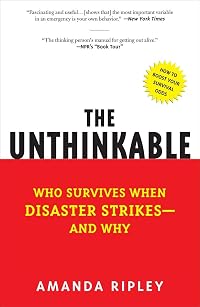
The Unthinkable: Who Survives When Disaster Strikes - and Why
by Amanda Ripley
On This Page
Description
Nine out of ten Americans live in places at significant risk of earthquakes, hurricanes, tornadoes, terrorism, or other disasters. Tomorrow, some of us will have to make split-second choices to save ourselves and our families. How will we react? What will it feel like? Will we be heroes or victims? Will our upbringing, our gender, our personality--anything we've ever learned, thought, or dreamed of--ultimately matter? Journalist Amanda Ripley set out to discover what lies beyond fear and show more speculation, retracing the human response to some of history's epic disasters. She comes back with wisdom about the surprising humanity of crowds, the elegance of the brain's fear circuits, and the stunning inadequacy of many of our evolutionary responses. Most unexpectedly, she discovers the brain's ability to do much, much better, with just a little help.--From publisher description. show lessTags
Recommendations




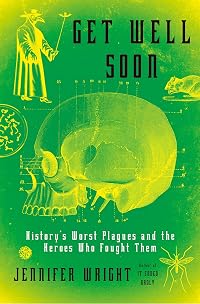
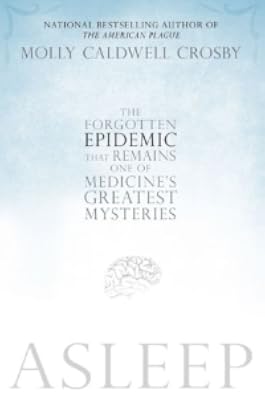
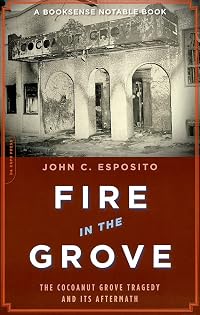

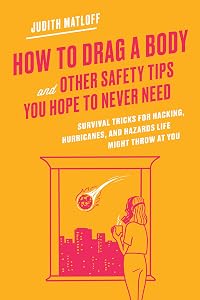
Member Recommendations
Member Reviews
Fascinating! Got me thinking how I'd react in an emergency. Freeze? Not a chance! Panic? No way! Risk my life to help others? Hmm... depends. Do everything I can to get the hell out? YES! I'm a survivor. But the truth is, you don't really know till you're faced with it. This book gave me a lot to think about. And the real-life stories were riveting.
Sometimes the heroes are those you'd least expect. Like in that documentary about the cruise ship that went down. When the first responders arrived, they questioned the main rescuer (and this is paraphrasing): "What's your rank, sir?" "Uh... rank?" "Yes. Officer, or what?" "Um... er... I'm the guitar player in the band." Love it!
Sometimes the heroes are those you'd least expect. Like in that documentary about the cruise ship that went down. When the first responders arrived, they questioned the main rescuer (and this is paraphrasing): "What's your rank, sir?" "Uh... rank?" "Yes. Officer, or what?" "Um... er... I'm the guitar player in the band." Love it!
This book is *fascinating*. Exploring how and why we do what we do when disaster strikes, from terrorist bombings to hurricanes to car crashes, The Unthinkable was so interesting! We worry about unlikely worst case scenarios (plane crashes) while failing to prepare for the everyday possibilities that cause harm far more often (house fires, heart disease). The author talks about how what we do in an emergency is often illogical and unhelpful and how to be prepared for the unexpected. There are definitely some practical tips and experiences to learn from here, but reading about our "disaster personality" is just as compelling.
Never read nonfiction? This book might be the one that changes your mind. Difficult to put down, this book combines case studies (aka true stories) with fascinating new research on disasters and human behavior. Drawing from airplane crashes, stampedes, sinkings, fires, and more, Ripley takes us through the human reaction processes we all experience, explaining them and showing ways we can cope and improve our chances in the event of a disaster.
Elia Zedeno, survivor of both the 1993 and 9/11 Twin Tower attacks, recounts her evacuations, telling the unbelievable story of the tremendous lurch when the first plane hit, descending 73 floors, fighting a temporary loss of vision, and suffocating mouthfuls of ash and dust.
Some of the most show more surprising new information comes from the blood work done on Special Forces. These individuals have drastically different chemical results—but the question remains: did their experiences change their blood chemistry or did their blood chemistry change their experiences? Only more studies will tell us, if we really want to know.
The hero of this book is Rick Rescorla, security head for Morgan Stanley Dean Witter, the largest tenant of the Twin Towers. A former marine who had lived through the 1993 Trade Center bombing, Rescorla trained all the employees relentlessly in unscheduled emergency evacuation drills, even the high level bankers and executives. On the day, Rescorla successfully evacuated all but 13 employees—including himself and four other security officers. His body has never been found. Read about him, remember, and prepare.
If you don’t have time to read the entire book, at least skim it and learn what you can expect from yourself and others, learn what you can do to improve your chances in any situation. This is one book I am really glad I read. show less
Elia Zedeno, survivor of both the 1993 and 9/11 Twin Tower attacks, recounts her evacuations, telling the unbelievable story of the tremendous lurch when the first plane hit, descending 73 floors, fighting a temporary loss of vision, and suffocating mouthfuls of ash and dust.
Some of the most show more surprising new information comes from the blood work done on Special Forces. These individuals have drastically different chemical results—but the question remains: did their experiences change their blood chemistry or did their blood chemistry change their experiences? Only more studies will tell us, if we really want to know.
The hero of this book is Rick Rescorla, security head for Morgan Stanley Dean Witter, the largest tenant of the Twin Towers. A former marine who had lived through the 1993 Trade Center bombing, Rescorla trained all the employees relentlessly in unscheduled emergency evacuation drills, even the high level bankers and executives. On the day, Rescorla successfully evacuated all but 13 employees—including himself and four other security officers. His body has never been found. Read about him, remember, and prepare.
If you don’t have time to read the entire book, at least skim it and learn what you can expect from yourself and others, learn what you can do to improve your chances in any situation. This is one book I am really glad I read. show less
This is a good book to read if you like historical nonfiction, but not if you are looking for practical how-to information. Here are some takeaways but most were not new to me.
1. GET OUT! In the vast majority of the disasters the author recounts, those who survived didn't freeze, didn't take time to gather their belongings and didn't listen to authorities telling them to stay put. They immediately GOT OUT--whether it be a sinking ship, a fire or a terrorist attack.
2. Everyone reading this is a first responder--whether you have training or not. We are the ones who will have to make decisions in the moments before the professionals arrive. In major disasters like tsunamis or hurricanes, the professionals may not arrive for several show more days.
3. Don't be courteous in a disaster. People tend to be unusually courteous and gallant in disasters, letting others go first. This can waste valuable time. Again, just get out.
4. Drills are extremely important and shouldn't be taken lightly. You don't want to have to do too much thinking in an emergency. Practicing over and over again will help you get out quickly.
5. When you stay in a hotel, always take the stairs after checking in so you know where they are. Don't use an elevator in an emergency.
6. On a plane, pay attention to the safety instructions and read the card in the seatback in front of you. Professional disaster experts do this EVERY time they fly. They know every plane model is different.
I couldn't find the accompanying web site promised by the author, just a few blog posts. I also didn't like the author's "anecdote within an anecdote" method of writing. Made it very hard to get practical tips. On the positive side, I commend the author for the hands-on research she did (extreme driving school,flight simulation, etc.). This might be a good read for people who like nonfiction thrillers like "Into Thin Air" by Jon Krakauer. show less
1. GET OUT! In the vast majority of the disasters the author recounts, those who survived didn't freeze, didn't take time to gather their belongings and didn't listen to authorities telling them to stay put. They immediately GOT OUT--whether it be a sinking ship, a fire or a terrorist attack.
2. Everyone reading this is a first responder--whether you have training or not. We are the ones who will have to make decisions in the moments before the professionals arrive. In major disasters like tsunamis or hurricanes, the professionals may not arrive for several show more days.
3. Don't be courteous in a disaster. People tend to be unusually courteous and gallant in disasters, letting others go first. This can waste valuable time. Again, just get out.
4. Drills are extremely important and shouldn't be taken lightly. You don't want to have to do too much thinking in an emergency. Practicing over and over again will help you get out quickly.
5. When you stay in a hotel, always take the stairs after checking in so you know where they are. Don't use an elevator in an emergency.
6. On a plane, pay attention to the safety instructions and read the card in the seatback in front of you. Professional disaster experts do this EVERY time they fly. They know every plane model is different.
I couldn't find the accompanying web site promised by the author, just a few blog posts. I also didn't like the author's "anecdote within an anecdote" method of writing. Made it very hard to get practical tips. On the positive side, I commend the author for the hands-on research she did (extreme driving school,flight simulation, etc.). This might be a good read for people who like nonfiction thrillers like "Into Thin Air" by Jon Krakauer. show less
When the boat begins to sink or the floor begins to shake, does anything beyond random luck decide who lives and who doesn’t? Ripley tells the human story and the data story to engage the reader and help them be ready. Genetics and pre-conditioning certainly play a role, but there are also personal planning and formal training steps we can all take to be more prepared. The positive outcomes including improving our odds as well as making us less stressed before and especially after the moment of truth.
This was definitely an interesting read. The author interviewed numerous survivors of various disasters (school shootings, fires, plane crashes, boats sinking, the WTC bombing and 9/11, etc) in an effort to determine how people react to tragedies and how those reactions can help people survive.
The author states that each of us cycle through a survival arc: first is denial ("this can't be happening!") to deliberation ("I don't know what to do; what should I do?") to the decisive moment ("I am doing this."). Along the way, people do things that are puzzling (survivors often try to gather things to take with them, even when they should be fleeing for their lives) to troubling (punching people, taking someone's life jacket from them, etc) show more to difficult to understand (freezing in place even though you know you should be moving), and the author tries to explain these as maladaptive uses of evolutionary behaviour (freezing, for example, can help you against certain predators, but doesn't help you when you're in a burning building).
Altogether, I found this book to be an extremely interesting look at human behaviour in tragedies. Overwhelmingly, people seem to be polite and courteous, even if it puts them in danger. There isn't a lot when it comes to practical advice on survival (the author argues that much of our survival instinct is at least partially hardwired), but the author does recommend preparing for disasters you are likely to encounter in your area and drilling yourself frequently on what you would do in such a situation. People who had a plan in place seemed to fare much better than those who did not. show less
The author states that each of us cycle through a survival arc: first is denial ("this can't be happening!") to deliberation ("I don't know what to do; what should I do?") to the decisive moment ("I am doing this."). Along the way, people do things that are puzzling (survivors often try to gather things to take with them, even when they should be fleeing for their lives) to troubling (punching people, taking someone's life jacket from them, etc) show more to difficult to understand (freezing in place even though you know you should be moving), and the author tries to explain these as maladaptive uses of evolutionary behaviour (freezing, for example, can help you against certain predators, but doesn't help you when you're in a burning building).
Altogether, I found this book to be an extremely interesting look at human behaviour in tragedies. Overwhelmingly, people seem to be polite and courteous, even if it puts them in danger. There isn't a lot when it comes to practical advice on survival (the author argues that much of our survival instinct is at least partially hardwired), but the author does recommend preparing for disasters you are likely to encounter in your area and drilling yourself frequently on what you would do in such a situation. People who had a plan in place seemed to fare much better than those who did not. show less
An extremely interesting read that delves into the human psyche. If you have ever wondered how you may react in a life or death situation, this book covers your possible responses. It gives an in depth study into scenarios with true to life accounts from people who have survived situations that seemed impossible detailing their responses and emotions as situations unfolded. Well researched and put together, this book is easy to read and informative.
We are all just a little morbidly fascinated by horrific events and this book reveals perhaps the psychological workings of that and why we do what we do as a species under stress from an evolutionary and biological perspective. A wonderful read, hard to put down.
We are all just a little morbidly fascinated by horrific events and this book reveals perhaps the psychological workings of that and why we do what we do as a species under stress from an evolutionary and biological perspective. A wonderful read, hard to put down.
Members
- Recently Added By
Lists

Non-Fiction Worth Reading
1,015 works; 261 members
Talk Discussions
Past Discussions
NonFic, emergency preparedness, busboy saves Calif diner guests in Name that Book (November 2012)
Author Information

11 Works 2,155 Members
Amanda Ripley received a B.A. in government from Cornell University in 1996. She is a journalist whose stories on human behavior and public policy have appeared in Time, The Atlantic, and Slate and helped Time win two National Magazine Awards. She is the author of The Unthinkable: Who Survives When Disaster Strikes - and Why, which was turned into show more a PBS documentary, and The Smartest Kids in the World - and How They Got That Way. She is currently an Emerson Fellow at the New America Foundation. (Bowker Author Biography) show less
Common Knowledge
- Original publication date
- 2008
- Important places
- Halifax, Nova Scotia, Canada; Louisiana, USA; New Orleans, Louisiana, USA; Manhattan, New York, New York, USA; New York, USA; New York, New York, USA (show all 8); Nova Scotia, Canada; World Trade Center, New York, New York, USA
- Important events
- Halifax Explosion (1917-12-06); September 11 Attacks (2001-09-11); Hurricane Katrina (2005)
- Dedication
- To John
- First words
- On the morning of December 6, 1917, a bright, windless day, a French freighter called the Mont Blanc began to slowly pull out of the Halifax harbor in Nova Scotia.
- Last words
- (Click to show. Warning: May contain spoilers.)So as you drive to work tomorrow, on top of long buried sewer pipes or across fault lines strained by the weight of our ambition, as you walk home tonight under low-flying airplanes and over frozen rivers, take a minute—just a minute—to contemplate your disaster personality. You've made each other's acquaintance, after all this time, by finishing this book. Now that you have, you should keep in touch. You might need each other one day.
- Blurbers
- de Becker, Gavin; Isaacson, Walter; Sapolsky, Robert M.; Taleb, Nassim Nicholas; Stanton, Doug; Parrado, Nando
Classifications
- Genres
- Nonfiction, Sociology, General Nonfiction, Science & Nature
- DDC/MDS
- 155.935 — Philosophy & psychology Psychology Differential and developmental psychology Environmental psychology Influences of Traumatic Experiences and Bereavement Disasters and Catastrophic Traumas
- LCC
- BF698.35 .R47 .R57 — Philosophy, Psychology and Religion Psychology Psychology
- BISAC
Statistics
- Members
- 903
- Popularity
- 29,788
- Reviews
- 33
- Rating
- (4.01)
- Languages
- English, German, Portuguese, Swedish
- Media
- Paper, Audiobook, Ebook
- ISBNs
- 14
- ASINs
- 5