On This Page
Description
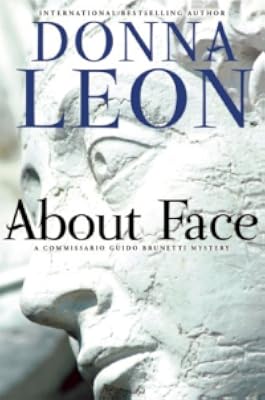
A socialite asks Guido Brunetti to investigate a murder that happened in the underworld surrounding southern Italy's garbage dumping grounds.Tags
Recommendations






































Member Recommendations

Member Reviews
Donna Leon's Commissario Brunetti series, set in Venice is one of my favorites. In this one, Brunetti must deal with corruption in the Carabinieri, his parents-in-law, a once gorgeous model with a seriously deformed face who quotes Cicero at dinner parties, toxic waste, garbage, and of course a murder. These stories never fail to delight me...and David Colacci's narration of the audio edition highlights his masterful ability to inflect just enough Italian into the English. A truly enjoyable 'read.'
Brunetti is such urbane, moral, good company and Leon such a good writer, it seems impossible to go too wrong here in #18 of the series. Brunetti is drawn into an investigation of the so-called Ecomafia, which is transporting and dumping toxic waste--in China and from China probably to Tibet. This thread dovetails with one involving the wife of a corrupt businessman. Brunetti is, of course, one good man up against a leviathan of corruption who must find his way to a conclusion he finds right. Some critics have complained this one's a little shrill on the use/abuse of women aspect, and I sort of agree. Not a first choice to introduce someone to the series.
Anyone who follows my reviews will know that I am a fan of Donna Leon and love her characters. Emphasis on character. If you want action you will be bored. On the other hand if you enjoy character development with occasional lapses into discussion of Cicero and Ovid, not to mention Henry James, and biting commentary on the state of Italian government and the corruption of Italian society, you cannot help but love Leon’s books.
My biggest complaint with this audiobook is the reader, David Colacci. The earlier titles were all read by Anna Fields/Kate Fields who, I thought, did a magnificent job. Perhaps I just resent Colacci’s taking over for her following her 2006 tragic early death in a flash flood that overwhelmed her Seattle show more basement studio. She had been one of my favorite readers. Now, I like David Colacci, but when you have grown used to a particular voice who has become like an old friend, the adjustment can be jarring and perhaps that explains why I didn’t seem to like About Face as much as some of the earlier books. A stupid reason, I know, but, there it is. Since I fully intend to listen/read the several remaining books in the series (I see there is another due to be released soon - The Jewels of Paradise) I’m just going to have to adjust.
All of her books that I have read reveal the underbelly of Italian (Venetian especially) society and Guido must usually walk a tightrope over the incompetent and corruption that surrounds him and the city I will always hear her voice as Commissario Brunetti.
There is a wonderful scene in the beginning of About Face where Paolo and Brunetti have been invited over to the Count’s (I’ll assume you have read other Leon titles so no explanations will be needed of the characters,) and Guido is faced with an evening he hates: small talk. But to his surprise, the beautiful woman across the table has read Virgil and Cicero and Brunetti indulges his love of books. On the way home, Paola accuses him of being too attentive to the woman: Paola stopped and looked him in the eye. Instead of answering, she asked, coolly, 'And what, pray tell, was that all about?' 'I beg your pardon,' Brunetti answered, stalling. 'You beg my pardon because you don't understand my question, or you beg my pardon because you spent the evening talking to Franca Marinello and ignoring everyone else?' The vehemence of her question surprised Brunetti into bleating out, 'But she reads Cicero.' 'Cicero?' asked an equally astonished Paola. 'On Government, and the letters, and the accusation against Verres. Even the poetry,' he said. Suddenly struck by the cold, Brunetti took her arm and started up the bridge, but her steps lagged and slowed him to a halt at the top. Paola moved back to get perspective on his face, but kept hold of his hand. 'You realize, I hope, that you are married to the only woman in this city who would find that an entirely satisfactory explanation?'
I was struck by one metaphor and comment. Brunetti is musing about how the Mafia has become so interwoven in Italian society with support of the Allies after WW II who were totally paranoid about the Italian Communists. (This had me rushing to the web, but it appears to have a factual basis although I remain skeptical.) Brunetti then likens the Mafia to the poisonous cane toad, a noxious little creature that can't be killed by stabbing or other means and only crows have become their natural enemy by flipping them over and pecking out the entrails. Lovely image but, Brunetti surmises, the only way to eliminate the Mafia.
That scene encapsulates the Leon series and why they are so wonderful.
Ref: http://www.bunker8.pwp.blueyonder.co.uk/orgcrim/mafiacor.htm show less
My biggest complaint with this audiobook is the reader, David Colacci. The earlier titles were all read by Anna Fields/Kate Fields who, I thought, did a magnificent job. Perhaps I just resent Colacci’s taking over for her following her 2006 tragic early death in a flash flood that overwhelmed her Seattle show more basement studio. She had been one of my favorite readers. Now, I like David Colacci, but when you have grown used to a particular voice who has become like an old friend, the adjustment can be jarring and perhaps that explains why I didn’t seem to like About Face as much as some of the earlier books. A stupid reason, I know, but, there it is. Since I fully intend to listen/read the several remaining books in the series (I see there is another due to be released soon - The Jewels of Paradise) I’m just going to have to adjust.
All of her books that I have read reveal the underbelly of Italian (Venetian especially) society and Guido must usually walk a tightrope over the incompetent and corruption that surrounds him and the city I will always hear her voice as Commissario Brunetti.
There is a wonderful scene in the beginning of About Face where Paolo and Brunetti have been invited over to the Count’s (I’ll assume you have read other Leon titles so no explanations will be needed of the characters,) and Guido is faced with an evening he hates: small talk. But to his surprise, the beautiful woman across the table has read Virgil and Cicero and Brunetti indulges his love of books. On the way home, Paola accuses him of being too attentive to the woman: Paola stopped and looked him in the eye. Instead of answering, she asked, coolly, 'And what, pray tell, was that all about?' 'I beg your pardon,' Brunetti answered, stalling. 'You beg my pardon because you don't understand my question, or you beg my pardon because you spent the evening talking to Franca Marinello and ignoring everyone else?' The vehemence of her question surprised Brunetti into bleating out, 'But she reads Cicero.' 'Cicero?' asked an equally astonished Paola. 'On Government, and the letters, and the accusation against Verres. Even the poetry,' he said. Suddenly struck by the cold, Brunetti took her arm and started up the bridge, but her steps lagged and slowed him to a halt at the top. Paola moved back to get perspective on his face, but kept hold of his hand. 'You realize, I hope, that you are married to the only woman in this city who would find that an entirely satisfactory explanation?'
I was struck by one metaphor and comment. Brunetti is musing about how the Mafia has become so interwoven in Italian society with support of the Allies after WW II who were totally paranoid about the Italian Communists. (This had me rushing to the web, but it appears to have a factual basis although I remain skeptical.) Brunetti then likens the Mafia to the poisonous cane toad, a noxious little creature that can't be killed by stabbing or other means and only crows have become their natural enemy by flipping them over and pecking out the entrails. Lovely image but, Brunetti surmises, the only way to eliminate the Mafia.
That scene encapsulates the Leon series and why they are so wonderful.
Ref: http://www.bunker8.pwp.blueyonder.co.uk/orgcrim/mafiacor.htm show less
Ever since the debacle of Through A Glass Darkly, I’ve opened a new Donna Leon/Commisario Brunetti book with trepidation. The next two, Suffer The Little Children and The Girl of His Dreams, were pleasant surprises; while not the strongest (it’s hard to live up to Aqua Alta), they were very good and promised a return to Leon’s old form.
Unfortunately, this latest in the series is mediocre at best. It’s mostly filler; at least half of the book is irrelevant to the story. Instead, what we get is not so much a plot (which is lackluster) but details of Brunetti’s everyday life up to and including how he folds his newspaper to put it in his pocket. It’s as if Brunetti himself is the focus of the book rather than any plot.
And this show more really doesn’t work, big time. There are several passages that simply describe Bruntetti getting from one place to another. One concerns his walk through the snow. The prose is labored, as Leon tries to invoke a kind of mood in Bruntetti that simply doesn’t ring true. Another scene has Bruneti on a vaporetto, traveling the Grand Canal to the Questura. In previous books, Leon has managed to endow such scenes with a scintillating brilliance that conveys Brunetti’s--and Leon’s--love for the city. In this book, it’s a recital of what Brunetti sees as the vaporetto makes its way to San Lorenzo. It’s as if Leon is well aware that now there’s a book out of Brunetti’s Venice, complete with 10 “tours” and photographs of different places that have appeared in the books. So now we have a pathetic, lifeless list that seems to say: note these places and read about them in the Brunetti tourist guide.
I won’t even bother about the plot, which involves a favorite theme of hers, environmental contamination through corruption and involvement of the Mafia (as we’re cognoscenti, we now learn to call it the Camorra). It’s a lackluster plot; there’s a nice action scene towards the end, but the denouement, which is an extended explanation, is weak and without conviction.
And to top it all off, the palazzo of Paula’s parents, the Count and Countess Falier, has been moved from Dorsoduro, where it’s been since the earliest books, below the Accademia bridge, to the district of San Marco! It’s marked on the map of Venice inside the covers, and is just more evidence of disinterest and indifferent editing, as far as I’m concerned.
I’m not sure what’s going on, but I’m beginning to think Leon is written out in this series. About Face feels like a tired book in which Leon had very little invested; it seems more like a chore she had to do--more like an essay on What I Did On My Summer Vacation than any real commitment to the story.
There’s a thread on LibraryThing, Mystery Writers Who Have Lost It. In my opinion, Leon has become a candidate for the list.
Because the series used to be so superior, I’d started buying her books in hardback. That ends with this sad installment; from now on, I’ll wait until the paperback edition comes out and buy it used.
Not as bad as Through A Glass Darkly but avoid. show less
Unfortunately, this latest in the series is mediocre at best. It’s mostly filler; at least half of the book is irrelevant to the story. Instead, what we get is not so much a plot (which is lackluster) but details of Brunetti’s everyday life up to and including how he folds his newspaper to put it in his pocket. It’s as if Brunetti himself is the focus of the book rather than any plot.
And this show more really doesn’t work, big time. There are several passages that simply describe Bruntetti getting from one place to another. One concerns his walk through the snow. The prose is labored, as Leon tries to invoke a kind of mood in Bruntetti that simply doesn’t ring true. Another scene has Bruneti on a vaporetto, traveling the Grand Canal to the Questura. In previous books, Leon has managed to endow such scenes with a scintillating brilliance that conveys Brunetti’s--and Leon’s--love for the city. In this book, it’s a recital of what Brunetti sees as the vaporetto makes its way to San Lorenzo. It’s as if Leon is well aware that now there’s a book out of Brunetti’s Venice, complete with 10 “tours” and photographs of different places that have appeared in the books. So now we have a pathetic, lifeless list that seems to say: note these places and read about them in the Brunetti tourist guide.
I won’t even bother about the plot, which involves a favorite theme of hers, environmental contamination through corruption and involvement of the Mafia (as we’re cognoscenti, we now learn to call it the Camorra). It’s a lackluster plot; there’s a nice action scene towards the end, but the denouement, which is an extended explanation, is weak and without conviction.
And to top it all off, the palazzo of Paula’s parents, the Count and Countess Falier, has been moved from Dorsoduro, where it’s been since the earliest books, below the Accademia bridge, to the district of San Marco! It’s marked on the map of Venice inside the covers, and is just more evidence of disinterest and indifferent editing, as far as I’m concerned.
I’m not sure what’s going on, but I’m beginning to think Leon is written out in this series. About Face feels like a tired book in which Leon had very little invested; it seems more like a chore she had to do--more like an essay on What I Did On My Summer Vacation than any real commitment to the story.
There’s a thread on LibraryThing, Mystery Writers Who Have Lost It. In my opinion, Leon has become a candidate for the list.
Because the series used to be so superior, I’d started buying her books in hardback. That ends with this sad installment; from now on, I’ll wait until the paperback edition comes out and buy it used.
Not as bad as Through A Glass Darkly but avoid. show less
Commissario Brunetti doesn’t know what to think when a carabiniere asks for his assistance in an investigation of a truck driver’s murder. The carabiniere seems to be holding back information. Given the territorial rivalry between Venice’s questura and the carabinieri, could this be a setup? On the home front, in an unusual turn of circumstances, Brunetti’s father-in-law asks for his assistance in a background check of a potential business partner. Usually it’s Brunetti asking his father-in-law for information related to a murder case.
Once again Leon strikes a satisfying balance between Brunetti’s professional life and his home life. This book includes some wonderful scenes with Brunetti and his father-in-law, as well as show more scenes with Brunetti and his wife Paola. The character development across the series is paying off now. Readers would do well to start at the beginning and read the series in order. show less
Once again Leon strikes a satisfying balance between Brunetti’s professional life and his home life. This book includes some wonderful scenes with Brunetti and his father-in-law, as well as show more scenes with Brunetti and his wife Paola. The character development across the series is paying off now. Readers would do well to start at the beginning and read the series in order. show less
One of the best Commissario Brunetti mystery novels to date! Leon's latest Venice mystery holds plot twists a plenty. At one point, and regular readers of the series will know this is fairly rare, Brunetti even draws his gun. Many of the previous novels have emphasized his happy homelife. While that's still a factor here, this latest chapter is decidedly more work oriented, as Brunetti stuggles with a mystery that grows increasingly puzzling - and deadly - each day. There's a keen air of danger to this book that sets it apart from most of the previous Brunetti novels. And the reveal at the end, imho, leaves one with that slight twisty gut feeling that the best suspense novels deliver. (even if, as some might argue, the reasons for show more events falling as they do seem slightly suspect...)
Bravo! show less
Bravo! show less
One of the better Leons I've read, and very welcome. Of course, it's the usual battle between the corrupt government and the honest policeman, with some very interesting additions of Comorra activity the crisis of garbage, both toxic and putrefying, in Italy. The sense that Brunetti is getting even more disheartened is palpable.
Members
- Recently Added By
Lists

Donna Leon
23 works; 5 members

Stories set in Venice The City Of Canals
14 works; 2 members

Italian Murder Mysteries
21 works; 2 members

Books Read in 2020
4,379 works; 124 members
Author Information

65+ Works 46,163 Members
Donna Leon was born on September 29, 1942 in Montclair, New Jersey. She taught English literature in England, Switzerland, Iran, China, Italy and Saudi Arabia. She is the author of a Commissario Guido Brunetti Mystery series. Friends in High Places, a novel from the series, won the Crime Writers Association Macallan Silver Dagger for Fiction in show more 2000. German Television has produced 16 Commissario Brunetti mysteries for broadcast. She was a crime reviewer for the Sunday Times. She has written the libretto for a comic opera and has set up her own opera company, Il Complesso Barocco. Her titles Jewels of Pardise, The Golden Egg, By Its Cover, Falling in Love and The Waters of Eternal Youth made The New York Times Bestseller List. (Bowker Author Biography) show less
Some Editions
Series

Belongs to Publisher Series
detebe (24098)
Work Relationships
Has the adaptation
Common Knowledge
- Canonical title
- About Face
- Original title
- About Face
- Original publication date
- 2009
- People/Characters
- Guido Brunetti; Lorenzo Vianello; Signorina Elettra; Count Orazio Falier; Paola Brunetti
- Important places
- Venice, Veneto, Italy
- Epigraph
- Che ti par di quell'aspetto? What do you think of that face? Cosi fan tutte - Mozart
- Dedication
- For Petra Reski-Lando and Lino Lando
- First words
- He noticed the woman on their way to dinner.
- Last words
- (Click to show. Warning: May contain spoilers.)'No, nothing else,' Brunetti said and replaced the phone.
- Blurbers*
- von Schwarzkopf, Margarete
- Original language*
- Amerikanisch
*Some information comes from Common Knowledge in other languages. Click "Edit" for more information.
Classifications
Statistics
- Members
- 1,349
- Popularity
- 17,725
- Reviews
- 45
- Rating
- (3.54)
- Languages
- 10 — Catalan, Dutch, English, Finnish, French, German, Polish, Russian, Spanish, Swedish
- Media
- Paper, Audiobook, Ebook
- ISBNs
- 58
- UPCs
- 1
- ASINs
- 21