On This Page
Description
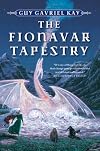
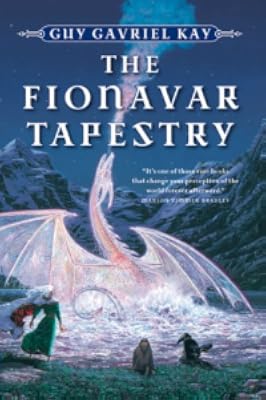
Summer Tree is ripe with the same mystical elements and epic proportions as Tolkien's watermark. The Wandering Fire, the second installment in the Finovar Tapestry trilogy, takes things to the next level, bringing together warriors, wizards, spirits and other alternative beings to further the tale of five young adventurers on a quest through the mystical land. Everything comes together perfectly for The Darkest Road, the series' absorbing finale.Tags
Recommendations
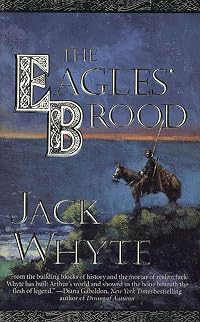
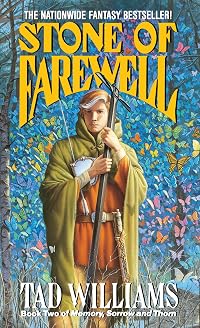
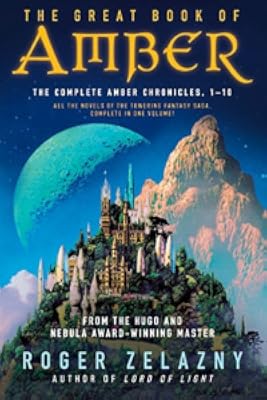
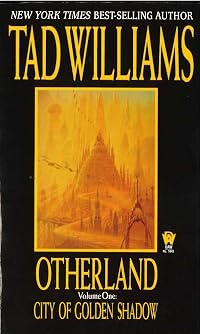


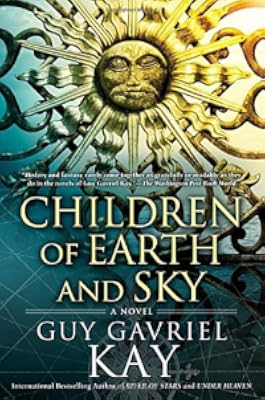


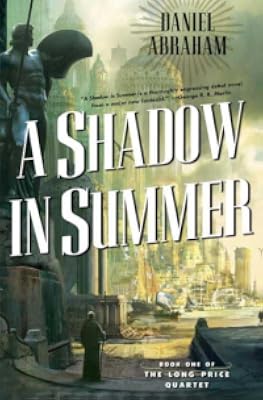
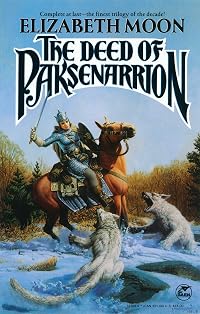
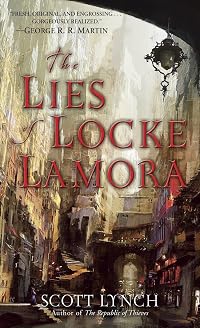
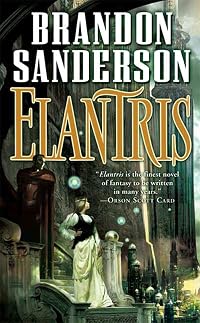

Member Recommendations
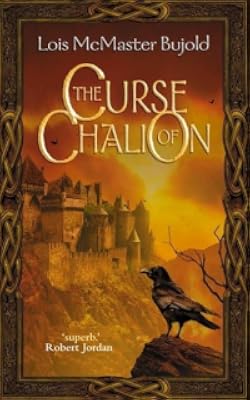
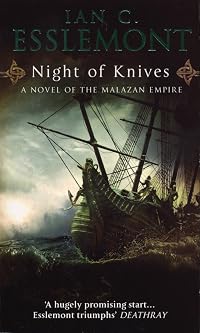
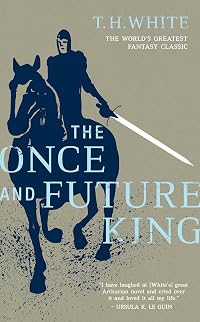
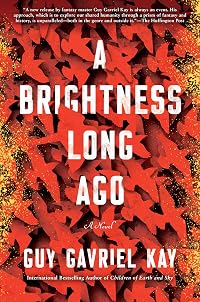
Cecrow Works as something of a coda for Fionavar.
Member Reviews
I read this and really liked it in my early twenties. I'm rereading it now, and am far less impressed.
Look, I love GG Kay. He's a lovely person, a fellow Canadian; he's doing something different and unique with his historical fantasy novels; I own and have read most of his books. But this trilogy is not good work.
1) The continually overwrought language. OK, I get it. High fantasy. It's got to be high-falutin', and yes, it was his first book. He's sounding like Tolkein. But it grates on me. Particularly in the dialogue--particularly when it's the modern-day Toronto characters speaking--it does not sound at all natural.
2) Constantly telling the readers how to feel. We don't need the author or the characters to tell us how sad something show more is! It's sad! We get it! Imagine watching Romeo and Juliet, and at the end of the show one of the characters comes on stage with a massive monologue about all of the layered complexities of sorrow and how exactly much their heart was breaking and how this compared with all of the other sorrows and heartbreaks throughout the play. Jebus. Cut it out. If it's really sad, we will figure it out on our own; if we're reading it and we're not sad, then the solution is not to have a character plunk themselves down and start telling us about exactly how terribly sad it all is.
3) The freaking misogyny. Come on. Fionavar is supposed to be "first of all the worlds," and the one on which all others were patterned. And here, even here, women are second-class citizens. Oh yes, I do see his subtle attempts to make meaningful female characters. I even appreciate them. Definitely a step up from Tolkein in that regard. But consider that every female character in these books has a choice to make between power and love--and one that the male characters do not need to make. Consider that Ysanne and Jaelle both needed to be kicked out of their sisterhood for the crime of loving a man. Consider that the sisterhood, the powerful female priestesses, worship blood, for crying out loud, and draw their power from the earth. Consider that they were deposed by the superior and intellectual mages drawing on "sky-lore." You might as well just label the Mormae as "scary man-hating feminists."
But the misogyny bothers me less for being present, than for being present in a world that is supposed to be the basis of all other worlds. Great. So sexism, then, isn't an error, or an injustice, it's structural.
4) Too many deus-ex-machinas. We can't have Jennifer's rape-baby born on Earth, eh? Having a child mature to adulthood in less than one year would be awfully disconcerting and possibly require a long hospital stay and a lot of genetic tests. He needs to be born in Fionavar; and besides, how else is he supposed to confront his terrible choice? So better have Galadan corner Paul and Jennifer in a museum in Toronto when she's 7 months pregnant, for apparently no other reason than to force Paul to momentarily figure out how to get them to Fionavar, just so she can go into preterm labour and leave her baby with a local woman before heading back to Toronto. Gods and goddesses aren't supposed to interfere--except that they do, whenever the main characters are in a real scrape, with some dialogue about the price they will be forced to pay for helping, and no indication of what that price may be. (sigh)
It all adds up to some decent literary comfort food, but nothing I can really lose myself in anymore. show less
Look, I love GG Kay. He's a lovely person, a fellow Canadian; he's doing something different and unique with his historical fantasy novels; I own and have read most of his books. But this trilogy is not good work.
1) The continually overwrought language. OK, I get it. High fantasy. It's got to be high-falutin', and yes, it was his first book. He's sounding like Tolkein. But it grates on me. Particularly in the dialogue--particularly when it's the modern-day Toronto characters speaking--it does not sound at all natural.
2) Constantly telling the readers how to feel. We don't need the author or the characters to tell us how sad something show more is! It's sad! We get it! Imagine watching Romeo and Juliet, and at the end of the show one of the characters comes on stage with a massive monologue about all of the layered complexities of sorrow and how exactly much their heart was breaking and how this compared with all of the other sorrows and heartbreaks throughout the play. Jebus. Cut it out. If it's really sad, we will figure it out on our own; if we're reading it and we're not sad, then the solution is not to have a character plunk themselves down and start telling us about exactly how terribly sad it all is.
3) The freaking misogyny. Come on. Fionavar is supposed to be "first of all the worlds," and the one on which all others were patterned. And here, even here, women are second-class citizens. Oh yes, I do see his subtle attempts to make meaningful female characters. I even appreciate them. Definitely a step up from Tolkein in that regard. But consider that every female character in these books has a choice to make between power and love--and one that the male characters do not need to make. Consider that Ysanne and Jaelle both needed to be kicked out of their sisterhood for the crime of loving a man. Consider that the sisterhood, the powerful female priestesses, worship blood, for crying out loud, and draw their power from the earth. Consider that they were deposed by the superior and intellectual mages drawing on "sky-lore." You might as well just label the Mormae as "scary man-hating feminists."
But the misogyny bothers me less for being present, than for being present in a world that is supposed to be the basis of all other worlds. Great. So sexism, then, isn't an error, or an injustice, it's structural.
4) Too many deus-ex-machinas. We can't have Jennifer's rape-baby born on Earth, eh? Having a child mature to adulthood in less than one year would be awfully disconcerting and possibly require a long hospital stay and a lot of genetic tests. He needs to be born in Fionavar; and besides, how else is he supposed to confront his terrible choice? So better have Galadan corner Paul and Jennifer in a museum in Toronto when she's 7 months pregnant, for apparently no other reason than to force Paul to momentarily figure out how to get them to Fionavar, just so she can go into preterm labour and leave her baby with a local woman before heading back to Toronto. Gods and goddesses aren't supposed to interfere--except that they do, whenever the main characters are in a real scrape, with some dialogue about the price they will be forced to pay for helping, and no indication of what that price may be. (sigh)
It all adds up to some decent literary comfort food, but nothing I can really lose myself in anymore. show less
Guy G. Kay is one of my favorite authors. However, I thought the Fionavar Tapestry verged on unoriginal and dull. How many fantasy books have I read where a group of intelligent, resourceful modern-day young people get sucked into a medieval-esque fantasy world? Well... it's a lot. And I didn't think Kay's contribution to the oeuvre was particularly exceptional. But - don't let that turn you off the rest of his books, which are gorgeously written, strikingly original, subtle and bold.
Guy Gavriel Kay has taken the best and most beloved elements of the genre and woven them seamlessly into a beautiful masterpiece. All of us who enjoy reading at one time or another wish we could be a part of the stories read; Kay makes the impossible seem possible!
This is an omnibus volume covering GK's first literary efforts. A fantasy set in a sort of Fantasy role-playing context, I found it enjoyable and recommend it to others.
protagonisti poco simpatici, storia tipicamente fantasy (YA dell '84)
per una recensione più "particolareggiata" leggere @Krell
https://www.goodreads.com/review/show/4520782525
(merita!!)
per una recensione più "particolareggiata" leggere @Krell
https://www.goodreads.com/review/show/4520782525
(merita!!)
I almost forgot about this!
Members
- Recently Added By
Lists

Favourite High Fantasy Books
113 works; 23 members

Gateway Book: Fantasy
19 works; 34 members

Female Protagonist
1,056 works; 57 members

David Pringle's Modern Fantasy: The 100 Best Novels
100 works; 5 members

Favourite Books
1,820 works; 311 members
Best SciFi and Fantasy Classics
53 works; 6 members

Books That Made Me Cry
199 works; 105 members
LibraryThingers' 1001 Books You Must Read Before You Die
442 works; 30 members

The Best of Canadian Literature
235 works; 33 members

Allie's Favourite 150 Books
145 works; 3 members

My favourite books
96 works; 3 members
Ten Books That Have Stayed With Me
160 works; 30 members

Five star books
1,767 works; 110 members
Books We Love to Reread
695 works; 298 members

Canadian Jurist-Novelists
316 works; 1 member
Author Information

35+ Works 38,854 Members
Guy Gavriel Kay was born on November 7, 1954 in Weyburn, Saskatchewan, Canada. He became interested in fantasy fiction while working as an assistant to Christopher Tolkien. He assisted him with the editing of J. R. R. Tolkien's The Silmarillion. After receiving a law degree from the University of Toronto, he became principal writer and associate show more producer for the CBC radio series, The Scales of Justice. He also wrote several episodes when the series moved to television. He has written social and political commentary for several publications including the National Post, The Globe and Mail, and The Guardian. His first fantasy novels were The Summer Tree, The Wandering Fire, and The Darkest Road, which make up the Fionavar Tapestry Trilogy. His other works include A Song for Arbonne, The Lions of Al-Rassan, Beyond This Dark House, The Last Light of the Sun, and Under Heaven. He has received numerous awards including and the Aurora Award for Tigana and The Wandering Fire, the 2008 World Fantasy Award for Best Novel for Ysabel, and the International Goliardos Award for his work in the fantasy field. (Bowker Author Biography) show less
Awards and Honors
Awards
Distinctions
Notable Lists
Series

Work Relationships
Common Knowledge
- Canonical title
- The Fionavar Tapestry
- Original title
- The Fionavar Tapestry
Classifications
Statistics
- Members
- 693
- Popularity
- 41,429
- Reviews
- 7
- Rating
- (4.22)
- Languages
- 7 — Danish, English, French, Italian, Polish, Spanish, Swedish
- Media
- Paper, Ebook
- ISBNs
- 9
- ASINs
- 5