On This Page
Description
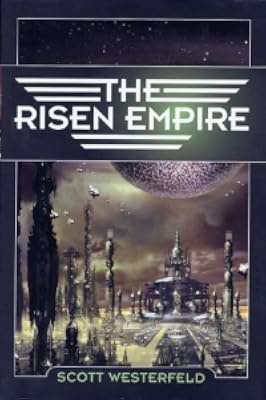
From Scott Westerfeld, the acclaimed author of the Leviathan trilogy and the Uglies series comes a sweeping space opera, The Risen Empire, book one of the Succession duology. The undead Emperor has ruled his mighty interstellar empire of eighty human worlds for sixteen hundred years. Because he can grant a form of eternal life, creating an elite known as the Risen, his power has been absolute. He and his sister, the Child Empress, who is eternally a little girl, are worshiped as living gods. show more No one can touch them. Not until the Rix, machine-augmented humans who worship very different gods: AI compound minds of planetary extent. The Rix are cool, relentless fanatics, and their only goal is to propagate such AIs throughout the galaxy. They seek to end, by any means necessary, the Emperor's prolonged tyranny of one and supplant it with an eternal cybernetic dynasty of their own. They begin by taking the Child Empress hostage. Captain Laurent Zai of the Imperial Frigate Lynx is tasked with her rescue. Separated by light-years, bound by an unlikely love, Zai and pacifist senator Nara Oxham must each in their own way, face the challenge of the Rix, and they each will hold the fate of the empire in their hands. The Risen Empire is the first great space opera of the twenty-first century. At the Publisher's request, this title is being sold without Digital Rights Management Software (DRM) applied. show lessTags
Recommendations


Member Reviews
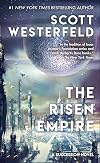
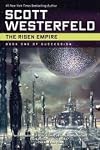
I purchased this book to see how well publishers can target audiences through book art. I said: "This looks like the kind of book I'm supposed to like" and... I did! It starts out with fast-paced military sci-fi, then adds flashbacks to flesh out characters and build the Space Opera side of things. Combining these two genres will turn off readers who want just one or the other of them, but I personally liked the mix, mostly because I found the two central characters appealing, and their romance-through-shared-vulnerability even _more_ appealing. If you can get behind the author's genre-mixing choices, you'll enjoy this very well-executed book.
Summary: In the Risen Empire, immortality is a matter of course for the wealthy and powerful. Sixteen hundred years ago, the Emperor invented a form of life-after-death, and has since ruled the eighty worlds of his empire, along with a caste of similarly immortal nobles and military elites. However, the borders of his empire are threatened by the Rix cult, a group of fanatics who worship compound minds: AI developed from the computing power of entire planets. When the Rix take the sister of the Emperor hostage, in order to plant a compound mind on her planet, the situation becomes critical. Laurent Zai, the captain of a small Imperial frigate, is tasked with rescuing the hostages - a mission which, if he fails, will result in an Error show more of Blood and his own ritual suicide. Back on the Emperor's homeworld, Senator Nara Oxham must do her best to keep the situation from escalating into full-blown war. But neither of them can know the secret plans of the Rix - nor the secret that Emperor will risk anything to protect.
Review: Although I generally prefer fantasy when it comes to my speculative fiction, I'm not opposed to sci-fi. Far from it, in fact: Ray Bradbury was (is) one of my favorite authors, and don't even get me started on how much I love Battlestar Galactica. However, taking a critical eye to the situation, the sci-fi I love all has one thing in common: it's less about the science and more about the fiction. Humans are more interesting than technology, characters over plot, again and again.
And Westerfeld's book does have some very interesting human moments; there are several scenes that were genuinely and unexpectedly moving. Unfortunately, his characters tend to get swamped out by an overwhelming preponderance of technobabble. It's imaginative, consistent, and plausible technobabble, but there's only so much talk of AI and nanomachines and synesthetic viewscreens that I can deal with in one sitting. It's a shame, too, because Westerfeld clearly knows his stuff, and has shown in other books that he knows how to balance technology and character: I really enjoyed the Uglies series, and Peeps is one of the best blendings of science and story that I've ever read. I find it interesting, though, that in a story whose main theme seems to be the interplay of technology and humanity - how much machine can you put into a human before they stop being human, how much humanity do you have to give a machine before it stops being a machine - that the human element loses out to the technology in the storytelling. 3 out of 5 stars.
Recommendation: I'll be reading the sequel, The Killing of Worlds, since The Risen Empire ends without resolving anything and with a MAJOR cliffhanger. (Apparently this is one of those cases where the series was written as a single book but split into two by the publisher.) Still, I think this book would be best for those who enjoy technological/military sci-fi; those of us who prefer the focus on the characters might want to look elsewhere - or else be good at skimming through the tech talk. show less
Review: Although I generally prefer fantasy when it comes to my speculative fiction, I'm not opposed to sci-fi. Far from it, in fact: Ray Bradbury was (is) one of my favorite authors, and don't even get me started on how much I love Battlestar Galactica. However, taking a critical eye to the situation, the sci-fi I love all has one thing in common: it's less about the science and more about the fiction. Humans are more interesting than technology, characters over plot, again and again.
And Westerfeld's book does have some very interesting human moments; there are several scenes that were genuinely and unexpectedly moving. Unfortunately, his characters tend to get swamped out by an overwhelming preponderance of technobabble. It's imaginative, consistent, and plausible technobabble, but there's only so much talk of AI and nanomachines and synesthetic viewscreens that I can deal with in one sitting. It's a shame, too, because Westerfeld clearly knows his stuff, and has shown in other books that he knows how to balance technology and character: I really enjoyed the Uglies series, and Peeps is one of the best blendings of science and story that I've ever read. I find it interesting, though, that in a story whose main theme seems to be the interplay of technology and humanity - how much machine can you put into a human before they stop being human, how much humanity do you have to give a machine before it stops being a machine - that the human element loses out to the technology in the storytelling. 3 out of 5 stars.
Recommendation: I'll be reading the sequel, The Killing of Worlds, since The Risen Empire ends without resolving anything and with a MAJOR cliffhanger. (Apparently this is one of those cases where the series was written as a single book but split into two by the publisher.) Still, I think this book would be best for those who enjoy technological/military sci-fi; those of us who prefer the focus on the characters might want to look elsewhere - or else be good at skimming through the tech talk. show less
Woah. The first book of this series begins with a dizzyingly exciting space battle that sucks you right into the action. It's only a few pages in that the reader realizes the ships are the size of a hangnail, piloted by remote. The Child Empress is being held hostage, and the ships are on a recon mission for the Imperial space ship in orbit round the planet, waiting to rescue her. The first book is very exciting, and while the technology Westerfeld introduces is wholly original, it still makes a great deal of sense. Westerfeld reads a bit like Nancy Kress; he's really good at combining innovative yet realistic science with multi-faceted, interesting characters and believable societies. I was particularly impressed with the multitude of show more perspectives he brought to the story without ever losing his focus. show less
OMG are you fucking serious? Nothing happens in this book. NOTHING.
Okay, fine, technically, someone, who I THINK is meant to be the hero, decides not to commit ritual suicide. That's the big thing. There are, like, seventeen different Big Important Secrets raised, and none of them are resolved (the Risen Emperor's Secret, literally, that's what it's called, springs to mind).
It's a really bad sign when I am most interested in the inner life of a semi-sentient house. This doesn't QUITE fall into the category of "Man Builds Stuff And Gets Lots of Pussy" (TM David) but that is only because Westerfeld is visibly (legibly?) bored by stupid squishy humans and their lack of plastic and metal parts.
Why this book got all the accolades it did, I show more do not understand. show less
Okay, fine, technically, someone, who I THINK is meant to be the hero, decides not to commit ritual suicide. That's the big thing. There are, like, seventeen different Big Important Secrets raised, and none of them are resolved (the Risen Emperor's Secret, literally, that's what it's called, springs to mind).
It's a really bad sign when I am most interested in the inner life of a semi-sentient house. This doesn't QUITE fall into the category of "Man Builds Stuff And Gets Lots of Pussy" (TM David) but that is only because Westerfeld is visibly (legibly?) bored by stupid squishy humans and their lack of plastic and metal parts.
Why this book got all the accolades it did, I show more do not understand. show less
On one hand, Westerfield has given us a setting with a lot of interesting elements with which to play: symbionts that confer immortality, remotely-piloted drones the size of dust motes, and entire civilizations dedicated to the propagation of AI minds.
On the other hand, the book is a giant teaser leading to a cliffhanger: nothing is explained, nothing is resolved. Basically, he's given us 304 pages of introduction. We don't even know what all the people who have fought and died (and are about to start a galactic war) are struggling over…it's just "The Secret."
It pissed me off.
On the other hand, the book is a giant teaser leading to a cliffhanger: nothing is explained, nothing is resolved. Basically, he's given us 304 pages of introduction. We don't even know what all the people who have fought and died (and are about to start a galactic war) are struggling over…it's just "The Secret."
It pissed me off.
The premise: The Risen Emperor has ruled his empire of 80 human worlds for nearly sixteen hundred years. He's found a way to conquer death--which requires dying FIRST in order to live forever--and even bestows that privilege on a select few. The first to received that privilege, once upon a time ago, was his sister, now known as the Child Empress, and now, the Child Empress's life is at stake: humanity's worst enemy, the Rix, have taken her hostage in order to waken the compound mind--the mind of a planet. The Emperor will do anything to keep that from happening, but there's a secret he'll protect even more than his very own sister, no matter how many lives it costs.
My Rating
Wish I'd Borrowed It: it's just not for me. I can see how some show more masculine readers might love this book to pieces, as it's certainly brain-candy in terms of world-building and details. But I've heard from other reviews that of Westerfeld's adult SF, it's not the strongest, so I'll wait to pass judgment on whether or not his YA is superior. However, I'm in the YA camp for now. I won't be reading the sequel (or the continuation) of this book, nor any that might possibly come in the future, a future that isn't soon coming, if you take a look at Westerfeld's faq. Can't blame the guy. I look forward to reading more of his YA, and will give his adult SF another shot should I happen upon a different title at a later date. As far as recommendations, I suspect masculine fans of space opera will probably eat this up, provided their primary love in SF is world-building and details rather than meaty plots or characterization. Not that the characterization is BAD in this book, there's just too many characters to follow, some you only get a chapter on, and frankly, the pages could've been better used, IMHO.
One note of warning: if you're reading this and are liking/loving it enough to want the sequel: get it ASAP. The Risen Empire ends on a major cliff-hanger due to the fact Tor split the manuscript into two books. So yeah, have your sequel on hand if you're liking it. :)
The full review, which does contain spoilers (well, more nit-picks than spoilers, maybe), may be found in my journal. As always, comments and discussion are most welcome.
REVIEW: Scott Westerfeld's THE RISEN EMPIRE
Happy Reading! :) show less
My Rating
Wish I'd Borrowed It: it's just not for me. I can see how some show more masculine readers might love this book to pieces, as it's certainly brain-candy in terms of world-building and details. But I've heard from other reviews that of Westerfeld's adult SF, it's not the strongest, so I'll wait to pass judgment on whether or not his YA is superior. However, I'm in the YA camp for now. I won't be reading the sequel (or the continuation) of this book, nor any that might possibly come in the future, a future that isn't soon coming, if you take a look at Westerfeld's faq. Can't blame the guy. I look forward to reading more of his YA, and will give his adult SF another shot should I happen upon a different title at a later date. As far as recommendations, I suspect masculine fans of space opera will probably eat this up, provided their primary love in SF is world-building and details rather than meaty plots or characterization. Not that the characterization is BAD in this book, there's just too many characters to follow, some you only get a chapter on, and frankly, the pages could've been better used, IMHO.
One note of warning: if you're reading this and are liking/loving it enough to want the sequel: get it ASAP. The Risen Empire ends on a major cliff-hanger due to the fact Tor split the manuscript into two books. So yeah, have your sequel on hand if you're liking it. :)
The full review, which does contain spoilers (well, more nit-picks than spoilers, maybe), may be found in my journal. As always, comments and discussion are most welcome.
REVIEW: Scott Westerfeld's THE RISEN EMPIRE
Happy Reading! :) show less
I enjoyed the story - the character development was interesting as well as the technical aspects. A fascinating concept was that the navy flew "microships" that were only a millimeter or two in size (resembled a dust mote) that were able to perform intelligence missions or even attacks.
The one disappointing aspect of the story is that nothing is resolved. The story is obviously continued in the sequel and I felt a bit "cheated" without a conclusion.
This book is suitable for human interstellar empire and social sf. It could also work for military SF although not as well.
The one disappointing aspect of the story is that nothing is resolved. The story is obviously continued in the sequel and I felt a bit "cheated" without a conclusion.
This book is suitable for human interstellar empire and social sf. It could also work for military SF although not as well.
Members
- Recently Added By
Lists

Best Science Fiction Novels
816 works; 426 members
Author Information

68+ Works 76,797 Members
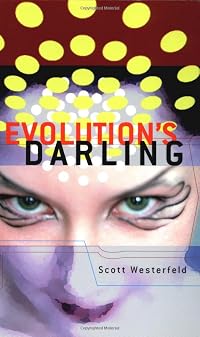
Scott Westerfeld was born in Dallas, Texas on May 5, 1963. He received a degree in philosophy from Vassar College in 1985. Before becoming a full time writer, he held several jobs including factory worker, software designer, editor, and substitute teacher. His works for young adults include the Uglies series, the Midnighters series, and The Last show more Days. He is the co-author of the Zeroes series written with Margo Lanagan and Deborah Biancotti. He also writes science fiction novels for adults. He has won numerous awards including a Special Citation for the 2000 Philip K. Dick Award for Evolution's Darling, a Victorian Premier's Award for So Yesterday, and an Aurealis Award for The Secret Hour. (Bowker Author Biography) show less
Awards and Honors
Distinctions
Notable Lists
Series

Work Relationships
Is contained in
Common Knowledge
- Canonical title
- The Risen Empire
- Original publication date
- 2003-03
- People/Characters
- Captain Laurent Zai; Senator-Elect Nara Oxham; Risen Emperor; Risen Child Empress Anastasia Vista Khaman; Rix Commando H_rd; Second-Class Militia Worker Rana Harter (show all 13); Executive Officer Katherie Hobbes; Dr. Mann Vecher; Master Pilot Jocim Marx; Marine Corporal Mirame Lao; Admiral Fenton Pry; Private Bassiritz; Initiate Barris
- Epigraph
- There is no greater tactical disadvantage than the presence of precious noncombatants. Civilians, historical treasures, hostages: treat them as already lost.
---Anonymous 167 - Dedication
- TO SLK
for years of summer - First words
- The five small craft passed from shadow, emerging with the suddenness of coins thrown into sunlight.
- Last words
- (Click to show. Warning: May contain spoilers.)The Lynx moved toward battle.
- Blurbers
- Anderson, Kevin J.; Daniel, Tony; Greenwood, Ed; Levinson, Paul; McCarthy, Wil; Resnick, Mike (show all 7); Wright, John C.
- Disambiguation notice
- The UK (Orbit, ISBN 1841493724) edition called "The Risen Empire" includes both books published in the US as "The Risen Empire" and "The Killing of Worlds" - so be sure to keep that edition with the omnibus, and the others se... (show all)parate.
Classifications
Statistics
- Members
- 789
- Popularity
- 35,507
- Reviews
- 23
- Rating
- (3.75)
- Languages
- English, French, Spanish
- Media
- Paper, Ebook
- ISBNs
- 11
- ASINs
- 5