On This Page
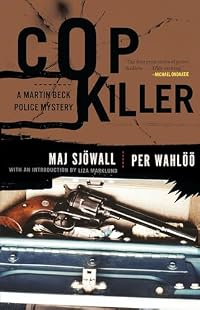
Description
In the penultimate installment of this masterful crime-fiction series, Martin Beck, now head of the National Murder Squad, is called in to a sleepy part of the countryside to investigate a woman's disappearance. What Beck doesn't know is that the woman has already been murdered, her body dumped in a swamp. At the same time, a midnight shoot-out between three cops and two teenage boys ends with one policeman dead.As Beck and his partner, Lennart Kollberg, investigate both cases, they show more encounter two figures from their earlier cases. Folke Bengtsson, the convicted killer from the first novel of the series (Roseanna), has been recently released. Since that murder shared many characteristics with Beck's present case, Beck comes under pressure to arrest Bengtsson. But Beck has begun to doubt that Bengtsson was guilty of any murder at all.
. show less
Tags
Recommendations
























Member Reviews
Although this ninth is only the penultimate volume of Maj Sjöwall’s and Per Wahlöö’s consistently excellent series of police procedurals, it feels like a summing up of what has gone before, of things coming to a head and to an end. The most obvious cause of that is probably that Cop Killer harkens back to the first two novels by bringing back the murderers featured in them (which is why it is a good to not read Cop Killer before Roseanna and The Man Who Went Up In Smoke, unless you really don’t mind spoilers). Maybe somewhat less obvious, but definitely more important is the way this novel marks the culmination of the authors’ ongoing critique of the course Swedish society has taken since the late 60’s.
Nobody who read the show more any of the previous volumes will be surprised that Sjöwall and Wahlöö take a very dim view of that course, and in Cop Killer there is a pervading sense that things have deteriorated to a state were they are becoming unendurable. Martin Beck spends most of the time in a small provincial town in Southern Sweden, and while that seems like an almost idyllic place compared to Stockholm or even Malmö, it does not remain untouched from the general corruption. More, there is a distinct of siege mentality, with the few good people withdrawing from society, moving to the fringes or into privacy where they try to withstand the tide of greed and stupidity sweeping over the country – I even felt reminded of the zombie apocalypse at times if only for the unrelenting fatalism with which the characters in this novel seem to accept the unavoidable victory of the power-hungry and incompetent. Everyone seems to be resigned to the fact that the country is going to the dogs and that their small acts of defiance (finding the actual killer of a woman in spite of pressure from one’s superiors, arresting a small-time criminal before the full weight of a militarized police force comes crushes on him) will be ultimately futile as the police is taken over by ruthless thugs in the lower and even more ruthless careerists in the upper ranks.
As can probably be guessed from the above, Cop Killer is a very dark and indeed bitter novel. Even so, it is also an occasionally very funny one, as Sjöwall and Wahlöö continue to give their satiric urge free rein, this time not just aiming at police bureaucracy and incompetence but also at the press and their greed for headlines. It is grim and biting humour but still serves as at least a bit of comic relief in what is otherwise a very bleak novel, that barely manages to become outright depressing by granting the protagonists that we have been following over nine volumes now at least some level of private happiness (although it has to be added that compared to earlier volumes their private lives is not given much space here). Just one novel to go now, and it will be interesting to see where Sjöwall and Wahlöö will take the final volume of the series from here. show less
Nobody who read the show more any of the previous volumes will be surprised that Sjöwall and Wahlöö take a very dim view of that course, and in Cop Killer there is a pervading sense that things have deteriorated to a state were they are becoming unendurable. Martin Beck spends most of the time in a small provincial town in Southern Sweden, and while that seems like an almost idyllic place compared to Stockholm or even Malmö, it does not remain untouched from the general corruption. More, there is a distinct of siege mentality, with the few good people withdrawing from society, moving to the fringes or into privacy where they try to withstand the tide of greed and stupidity sweeping over the country – I even felt reminded of the zombie apocalypse at times if only for the unrelenting fatalism with which the characters in this novel seem to accept the unavoidable victory of the power-hungry and incompetent. Everyone seems to be resigned to the fact that the country is going to the dogs and that their small acts of defiance (finding the actual killer of a woman in spite of pressure from one’s superiors, arresting a small-time criminal before the full weight of a militarized police force comes crushes on him) will be ultimately futile as the police is taken over by ruthless thugs in the lower and even more ruthless careerists in the upper ranks.
As can probably be guessed from the above, Cop Killer is a very dark and indeed bitter novel. Even so, it is also an occasionally very funny one, as Sjöwall and Wahlöö continue to give their satiric urge free rein, this time not just aiming at police bureaucracy and incompetence but also at the press and their greed for headlines. It is grim and biting humour but still serves as at least a bit of comic relief in what is otherwise a very bleak novel, that barely manages to become outright depressing by granting the protagonists that we have been following over nine volumes now at least some level of private happiness (although it has to be added that compared to earlier volumes their private lives is not given much space here). Just one novel to go now, and it will be interesting to see where Sjöwall and Wahlöö will take the final volume of the series from here. show less
The 9th in Maj Sjöwall and Per Wahlöö's series of police procedural novels featuring Stockholm homicide detective Martin Beck is faster paced than some of the previous entries, which is not to diminish those prior books in any way. This one revolves around the disappearance of a woman in southern Sweden, the likelihood that the killer is a man Beck knows from a previous case (depicted in the first Beck novel, ROSEANNA), and Beck's increasing realization that there's more going on than the open-shut case everyone thinks this is. Beck is a great character, in part because he has no flamboyance, no colorful stereotypical detective-novel traits. He's a guy who slogs through his job and does his best and worries about whether it actually show more is his best. The Beck novels are thorough and cynical and very involving, filled with not only intricate, well-plotted mysteries but pungent social criticism. I'm sorry there are so few of them. This one was very good. show less
Possible triggers: the first chapter reads at first like a sex murder, but there is no actual rape. (I did have to skim the first chapter very quickly, though, because it was still upsetting to read about.)
This ninth installment in the Martin Beck series tracks two cases: the disappearance and murder of a woman in her late 30s, and a shootout in which one cop dies and one criminal is on the run. Most of the book focuses on the disappearance of the woman, particularly when it is revealed that her next-door-neighbour had been previously convicted of a sex murder; the press and indeed the higher-ups in the Swedish police are clamouring for his head. Martin Beck is less convinced of the man’s guilt in this case, however.
The major police show more characters have had a chance to grow and develop. Martin Beck is a bit less grumpy for once in his life (although he did react most grumpily to the papers calling him “Sweden’s Maigret”), and Kollberg is considering leaving the police force because he’s disillusioned and burned out. If he leaves, that will cause a great deal of change for Martin Beck. This book calls back a fair bit to other installments in the series: I spotted references to Roseanna, The Locked Room, The Laughing Policeman, The Fire Engine That Disappeared, and Murder at the Savoy.
One theme I found amusing was how Martin Beck and his colleagues would simply work around their annoying boss, Malm, trying to tone down his excesses (seriously, the guy wanted to send a helicopter squad and riot police out to catch a single criminal?). Or calling him to say they had found the criminal, but not calling until they had a head start on catching him ahead of the riot police, etc., so that they could defuse the situation before it could even explode.
There is a fair bit of social commentary in these books, perhaps not the most elegantly woven in, but crime fiction can be a good way to highlight problems in society, especially when those problems relate to police brutality. There is also a strikingly relevant sidebar on the conditions of the healthcare system in Sweden. I would be interested to know if any of these things have changed since the 70s.
One thing that I *do* hope would change is the occasional yucky 70s attitudes from various male cops and one of the murder suspects. But actually this installment is not bad at all in that department; some of them have really obnoxious males in them.
I’d recommend this if you’ve been following the series, but you may want to at least read Roseanna first. show less
This ninth installment in the Martin Beck series tracks two cases: the disappearance and murder of a woman in her late 30s, and a shootout in which one cop dies and one criminal is on the run. Most of the book focuses on the disappearance of the woman, particularly when it is revealed that her next-door-neighbour had been previously convicted of a sex murder; the press and indeed the higher-ups in the Swedish police are clamouring for his head. Martin Beck is less convinced of the man’s guilt in this case, however.
The major police show more characters have had a chance to grow and develop. Martin Beck is a bit less grumpy for once in his life (although he did react most grumpily to the papers calling him “Sweden’s Maigret”), and Kollberg is considering leaving the police force because he’s disillusioned and burned out. If he leaves, that will cause a great deal of change for Martin Beck. This book calls back a fair bit to other installments in the series: I spotted references to Roseanna, The Locked Room, The Laughing Policeman, The Fire Engine That Disappeared, and Murder at the Savoy.
One theme I found amusing was how Martin Beck and his colleagues would simply work around their annoying boss, Malm, trying to tone down his excesses (seriously, the guy wanted to send a helicopter squad and riot police out to catch a single criminal?). Or calling him to say they had found the criminal, but not calling until they had a head start on catching him ahead of the riot police, etc., so that they could defuse the situation before it could even explode.
There is a fair bit of social commentary in these books, perhaps not the most elegantly woven in, but crime fiction can be a good way to highlight problems in society, especially when those problems relate to police brutality. There is also a strikingly relevant sidebar on the conditions of the healthcare system in Sweden. I would be interested to know if any of these things have changed since the 70s.
One thing that I *do* hope would change is the occasional yucky 70s attitudes from various male cops and one of the murder suspects. But actually this installment is not bad at all in that department; some of them have really obnoxious males in them.
I’d recommend this if you’ve been following the series, but you may want to at least read Roseanna first. show less
Who is the cop killer?
Cop Killer, the ninth volume in The Story of A Crime series, starts with an investigation that takes police detective Martin Beck out of Stockholm to a small town on Sweden's southernmost coast. There he befriends the head of the local police department, a bachelor who lives above the police station. Over the days and then weeks he spends investigating the disappearence of a local woman, Beck comes to see that the detectives who choose to live and work far removed from Stockholm are probably better than the detectives in the city. Not what he expected to find at all.
Midway through the search for the missing woman a pair of small time hoods, stopped for a traffic violation, open fire on three police officers. One show more police officer dies several days later, due to a wasp sting incurred when he fell in a nearby ditch trying to avoid the gun fire. The other officers survive the shooting. One of the hoods is killed.
Afterwards, the media circus that had been following Beck's case, moves on to the search for the cop killer, the higher brass in the national police force having made sure the story of the wasp sting did not get out to the press. The Sweden's press follows the bungled search for a petty criminal who never fired a gun in his life, while the reader follows the story of Beck's professional police work as he continues to search for the woman's killer.
At this point in the series, Sjowall and Wahloo are openly dealing with political and social issues in their books. They take care to keep the events of the story uppermost in the reader's mind, but they are willing to pause the twin searches for a page or two when needed to complete their critique of Swedish society. The story itself now serves the project, too. The press who hound an innocent man accused of the woman's murder, for example, an "innocent" man was recently released from prison in spite of murdering the girl in the first book Roseanna. Sjowall and Wahloo are thus able to critique a justice system that let a killer walk free after serving only a few years in prison while simulaneously attacking a press corp and a police force that rushes to judgement without any evidence, even that of a corpse.
The National Police Force has borne the brunt of Sjowall and Wahloo's critique. With its incompetant, politically appointed upper brass who has militaized the police force giving him a small army to arrest a petty thief and the cops who confronted speeding drivers guns drawn in the first place, I'm starting to wonder what the crime is in The Story of a Crime. Why isn't it The Story of Crime? Why "A" crime? The crime seems to be the nature of the Swedish police force once it was nationalized. The real criminal in Sjowall and Wahloo's series appears to be the Swedish government charged with protecting its citizens and enforcing the law. The government commits a crime on its police force who then become part of the crime committed on the people of Sweden.
This is not a comforting thought in America circa 2011.
Towards the end of the novel, Beck complains to a compatriot that the helicopters and heavy weaponry the police for now owns will have to be used to justify their purchase, even though they are not needed to arrest a single, unarmed, frightened young man. Sjowall and Wahloo drive this point home when the failed show of force is followed by a pair of old-time professional police officers who simply find and arrest the young man.
Meantime, some 40 years after Cop Killer was published, the Department of Homeland Security is sending tanks like the one pictured here to police departments across the United States at a time when violent crime rates are at record lows throughout the country.
It's this intermixing of classic police procedural and social critique that helped make The Story of a Crime the trendsetting success the books became. It's also what makes them unsettling reading today. show less
Cop Killer, the ninth volume in The Story of A Crime series, starts with an investigation that takes police detective Martin Beck out of Stockholm to a small town on Sweden's southernmost coast. There he befriends the head of the local police department, a bachelor who lives above the police station. Over the days and then weeks he spends investigating the disappearence of a local woman, Beck comes to see that the detectives who choose to live and work far removed from Stockholm are probably better than the detectives in the city. Not what he expected to find at all.
Midway through the search for the missing woman a pair of small time hoods, stopped for a traffic violation, open fire on three police officers. One show more police officer dies several days later, due to a wasp sting incurred when he fell in a nearby ditch trying to avoid the gun fire. The other officers survive the shooting. One of the hoods is killed.
Afterwards, the media circus that had been following Beck's case, moves on to the search for the cop killer, the higher brass in the national police force having made sure the story of the wasp sting did not get out to the press. The Sweden's press follows the bungled search for a petty criminal who never fired a gun in his life, while the reader follows the story of Beck's professional police work as he continues to search for the woman's killer.
At this point in the series, Sjowall and Wahloo are openly dealing with political and social issues in their books. They take care to keep the events of the story uppermost in the reader's mind, but they are willing to pause the twin searches for a page or two when needed to complete their critique of Swedish society. The story itself now serves the project, too. The press who hound an innocent man accused of the woman's murder, for example, an "innocent" man was recently released from prison in spite of murdering the girl in the first book Roseanna. Sjowall and Wahloo are thus able to critique a justice system that let a killer walk free after serving only a few years in prison while simulaneously attacking a press corp and a police force that rushes to judgement without any evidence, even that of a corpse.
The National Police Force has borne the brunt of Sjowall and Wahloo's critique. With its incompetant, politically appointed upper brass who has militaized the police force giving him a small army to arrest a petty thief and the cops who confronted speeding drivers guns drawn in the first place, I'm starting to wonder what the crime is in The Story of a Crime. Why isn't it The Story of Crime? Why "A" crime? The crime seems to be the nature of the Swedish police force once it was nationalized. The real criminal in Sjowall and Wahloo's series appears to be the Swedish government charged with protecting its citizens and enforcing the law. The government commits a crime on its police force who then become part of the crime committed on the people of Sweden.
This is not a comforting thought in America circa 2011.
Towards the end of the novel, Beck complains to a compatriot that the helicopters and heavy weaponry the police for now owns will have to be used to justify their purchase, even though they are not needed to arrest a single, unarmed, frightened young man. Sjowall and Wahloo drive this point home when the failed show of force is followed by a pair of old-time professional police officers who simply find and arrest the young man.
Meantime, some 40 years after Cop Killer was published, the Department of Homeland Security is sending tanks like the one pictured here to police departments across the United States at a time when violent crime rates are at record lows throughout the country.
It's this intermixing of classic police procedural and social critique that helped make The Story of a Crime the trendsetting success the books became. It's also what makes them unsettling reading today. show less
Cop Killer (1974) (Martin Beck #8) by Maj Sjowall & Per Wahloo. Like the first seven books in the Martin Beck series, this too is great. A woman disappears in a small Swedish town. This is an almost daily happening somewhere in the world and nothing to be too alarmed about. People walk away from their lives for thousands of different reasons, while a small percentage are taken from their routine life against their wishes. This woman might have been abducted by her neighbor, Folke Bengtsson. He was once convicted of murdering an American tourist. That murder was detailed in the first book of this series, Roseanna.
With his return in this crime novel, the powers that be decide to send Martin Beck and Lennart Kollberg from of the National show more Police Squad to assist in the investigation. The woman is missing and signs point to Folke as possibly having given her a ride back from town to her house. A house that is down the road a bit yet the next house along from Folke’s.
While the investigation drags along slowly, a second event, seemingly unrelated occurs. Three policemen, during a traffic stop, are shot at by one of the two young men in the stopped car. One young man escapes, the other is killed. One of the police is killed by the unexpected and surprising “Cop Killer” of the title. A nationwide alert is put out for the car the second man drove off in, but he soon ditches it and steals another, then heads off for Stockholm.
As in each of the previous books, seemingly random events lead to the actual criminal. Beck and Kohlberg talk to a lot of people, eat many meals, and wait for the puzzle to break. The woman’s body is discovered by hikers almost at the end of the book. Folke is arrested though neither of the detectives is convinced he is guilty. There is the usual interference from higher authorities that called for his arrest, quietly wanting the case ended without further ado.
But this book is not meant to be only a police story. This decade of novels written over a decade is a cry from the authors calling out injustice in Swedish society of that time. The books are about the overwhelming injustice felt at all but the highest levels of society. Look to the streets of any country today and you can see what they were writing about almost 60 years ago.
The more things change, the more they stay the same.
While these books are now relics from a former age, you might be surprised at just how alive they are and relevant to the world of today. And they are among the first of the “police procedural” novels out there, framing the structure for what was to come. Read these as fun, as a journey to the past, as a harbinger for today and tomorrow, but just read them. And I suggest you start with Roseanna and go straight through the series. You won’t be disappointed. show less
With his return in this crime novel, the powers that be decide to send Martin Beck and Lennart Kollberg from of the National show more Police Squad to assist in the investigation. The woman is missing and signs point to Folke as possibly having given her a ride back from town to her house. A house that is down the road a bit yet the next house along from Folke’s.
While the investigation drags along slowly, a second event, seemingly unrelated occurs. Three policemen, during a traffic stop, are shot at by one of the two young men in the stopped car. One young man escapes, the other is killed. One of the police is killed by the unexpected and surprising “Cop Killer” of the title. A nationwide alert is put out for the car the second man drove off in, but he soon ditches it and steals another, then heads off for Stockholm.
As in each of the previous books, seemingly random events lead to the actual criminal. Beck and Kohlberg talk to a lot of people, eat many meals, and wait for the puzzle to break. The woman’s body is discovered by hikers almost at the end of the book. Folke is arrested though neither of the detectives is convinced he is guilty. There is the usual interference from higher authorities that called for his arrest, quietly wanting the case ended without further ado.
But this book is not meant to be only a police story. This decade of novels written over a decade is a cry from the authors calling out injustice in Swedish society of that time. The books are about the overwhelming injustice felt at all but the highest levels of society. Look to the streets of any country today and you can see what they were writing about almost 60 years ago.
The more things change, the more they stay the same.
While these books are now relics from a former age, you might be surprised at just how alive they are and relevant to the world of today. And they are among the first of the “police procedural” novels out there, framing the structure for what was to come. Read these as fun, as a journey to the past, as a harbinger for today and tomorrow, but just read them. And I suggest you start with Roseanna and go straight through the series. You won’t be disappointed. show less
I was a bit taken aback when the book seemed to leave the main mystery about two-thirds of the way through to tackle the case of the 'cop killer' but the two cases do connect up in the end. The name is a bit misleading as the 'cop killer' case is clearly the secondary mystery; however, it does illustrate the authors' point about the police & government bureaucracy perfectly.
This 1973 Swedish book and what the authors are trying to say about relations between police & citizens struck me as strikingly relevant to 2016 U.S. In the police, in this book (and I assume in today's forces), the individual policemen vary from the lazy & incompetent to the honest & hard-working, from the bullies who revel in the power that the badge gives them to show more the naive foolhardiness of some rookies to the tired experienced men. What is scary to Kollberg and Beck (and to me!) is the organizational mindset of a bureaucracy which views aggressive confrontation as the natural and best response to any situation, with bigger and more weapons as an improvement. And encouraging this mindset is the journalism which is uninterested in waiting for "the truth" as long as a good headline can be found.
Into this scenario enters the 'cop killer' --a teenaged boy who was present when another boy shoots at a couple of patrolmen after one of them begins to threaten him. The cop who dies does so as a result of a bee sting he gets when he is hiding from all the commotion in a ditch! But that doesn't factor into the police chief's decision to start a country-wide man hunt for the "Cop Killer" complete with attack dogs, tear gas and assault weapons... This sort of over-reaction is part of what leads to dead black kids in America. show less
This 1973 Swedish book and what the authors are trying to say about relations between police & citizens struck me as strikingly relevant to 2016 U.S. In the police, in this book (and I assume in today's forces), the individual policemen vary from the lazy & incompetent to the honest & hard-working, from the bullies who revel in the power that the badge gives them to show more the naive foolhardiness of some rookies to the tired experienced men. What is scary to Kollberg and Beck (and to me!) is the organizational mindset of a bureaucracy which views aggressive confrontation as the natural and best response to any situation, with bigger and more weapons as an improvement. And encouraging this mindset is the journalism which is uninterested in waiting for "the truth" as long as a good headline can be found.
Into this scenario enters the 'cop killer' --
Published in 1974, this is a good look at Swedish police procedures as well as social issues of the era. Dark and brutal, Sjöwall and Wahl paint a bleak picture of society in the seventies. The banter between characters give this serious story a belying slapstick flavour, in an unnerving contradiction to the crimes.
Members
- Recently Added By
Lists

Scandinavian Crime Fiction
224 works; 37 members

Reading List - Scandinavian Fiction
134 works; 3 members

Books Read in 2016
4,666 works; 199 members

Books Read in 2022
5,164 works; 113 members

Thriller Authors to read
59 works; 1 member
Author Information

67+ Works 14,621 Members
Writer and journalist Maj Sjöwall was born in Sweden in 1935. She was a reporter and art director at several newspapers and magazines. From 1959 to 1961, she was an editor with the publishing house Wahlström and Widstrad. She met Per Wahlöö in 1961 and they married the following year. Together they wrote all ten novels in the Martin Beck show more Police Mystery series from 1965 to 1975. In 1971, The Laughing Policeman (a translation of Den Skrattande Polisen) won an Edgar Award for Best Novel. (Bowker Author Biography) show less

Writer and journalist Per Wahlöö was born in Sweden on August 5, 1926. He graduated from the University of Lund in 1946 and found work covering criminal and social issues for numerous newspapers and magazines. He also wrote a number of television and radio plays and was managing editor for several magazines. His first book, Himmelsgeten, was show more published in 1956 and numerous novels followed. He also wrote all ten novels in the Martin Beck Police Mystery series with his wife Maj Sjöwall. In 1971, The Laughing Policeman (a translation of Den Skrattande Polisen) won an Edgar Award for Best Novel. He died from cancer on June 22, 1975. (Bowker Author Biography) show less
Some Editions
Series

Belongs to Publisher Series
Den svarte serie (78)
Work Relationships
Is contained in
Has the adaptation
Is abridged in
Common Knowledge
- Canonical title
- Cop Killer
- Original title
- Polismördaren
- Original publication date
- 1974; 1975 (English translation) (English translation)
- People/Characters
- Martin Beck; Sten Lennart Kollberg; Stig Malm; Rhea Nielsen; Per Månsson; Gunvald Larsson (show all 23); Einar Rönn; Benny Skacke; Oskar Hjelm; Karl Kristiansson; Folke Bengtsson; Herrgott Allwright; Sigbrit Mård-Jönsson; Bertil Mård; Gustav Borglund; Emil Elofsson; David Hector; Kenneth Kvastmo; Clark Evert Sundström; Ronnie Casparsson; Lindberg aka 'The Breadman'; Åke Gunnarsson; Christer Paulson
- Important places
- Stockholm, Sweden; Malmö, Sweden; Trelleborg, Sweden; Anderslöv, Sweden; Domme, Sweden; Ljunghusen, Sweden (show all 7); Vellinge, Sweden
- First words
- She reached the bus stop well ahead of the bus, which would not be along for half an hour yet.
- Last words
- (Click to show. Warning: May contain spoilers.)He had someone waiting at home for him.
- Original language
- Swedish
Classifications
- Genres
- Fiction and Literature, Mystery
- DDC/MDS
- 839.73 — Literature & rhetoric German & related literatures Other Germanic literatures Swedish literature Swedish fiction
- LCC
- PT9876.29 .J63 .P6313 — Language and Literature German, Dutch and Scandinavian literatures Swedish literature Individual authors or works 1961-2000
- BISAC
Statistics
- Members
- 1,075
- Popularity
- 23,720
- Reviews
- 27
- Rating
- (3.77)
- Languages
- 14 — Czech, Danish, Dutch, English, Finnish, French, German, Italian, Norwegian (Bokmål), Norwegian, Polish, Russian, Spanish, Swedish
- Media
- Paper, Audiobook, Ebook
- ISBNs
- 80
- ASINs
- 18