On This Page
Description
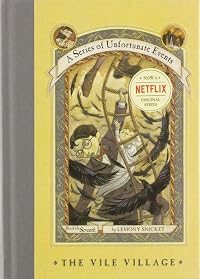
Under a new government program based on the saying "It takes a village to raise a child," the Baudelaire orphans are adopted by an entire town, with disastrous results.Tags
Recommendations







Member Reviews
“In this large and fierce world of ours, there are many, many unpleasant places to be. You can be in a river swarming with angry electric eels, or in a supermarket filled with vicious long-distance runners. You can be in a hotel that has no room service, or you can be lost in a forest that is slowly filling up with water. You can be in a hornet's nest or in an abandoned airport or in the office of a pediatric surgeon, but one of the most unpleasant things that can happen is to find yourself in a quandary. Which is where the Baudelaire orphans found themselves that night. Finding yourself in a quandary means that everything seems confusing and dangerous and you don't know what in the world to do about it, and it is one of the worst show more unpleasantries you can encounter.”
The Baudelaire orphans do indeed find themselves in a quandry in V.F.D. -- the village that they choose to raise them, as their final attempt at finding an appropriate guardian. As you can guess, it doesn't go well. There's a kind handyman with whom they live and work, but the rest of the village is full of idiots (and not the harmless, bumbling kind -- the kind that make up ridiculous rules and then ruthlessly punish those who don't follow them). And, of course, Count Olaf is lurking nearby along with his terrible girlfriend, Esme Squalor, who we met in the last book. Inevitably, things will not go well, but there's so much cleverness along the way.
“It is true, of course, that there is no way of knowing for sure whether or not you can trust someone, for the simple reason that circumstances change all of the time. You might know someone for several years, for instance, and trust him completely as your friend, but circumstances could change and he could become very hungry, and before you knew it you could be boiling in a soup pot, because there is no way of knowing for sure.”
“Although 'jumping to conclusions' is an expression, rather than an activity, it is as dangerous as jumping off a cliff, jumping in front of a moving train, and jumping for joy. If you jump off a cliff, you have a very good chance of experiencing a painful landing unless there is something below you to cushion your fall, such as a body of water or an immense pile of tissue paper, If you jump in front of moving train, you have a very good chance of experiencing a painful voyage unless you are wearing some sort of train-proof suit. And if you jump for joy, you have a very good chance of experiencing a painful bump on the head, unless you make sure you are standing someplace with very high ceilings, which joyous people rarely do. Clearly, the solution to anything involving jumping is either to make sure you are jumping to a safe place, or not jumping at all.
But it is hard not to jump at all when you are jumping to conclusions, and it is impossible to make sure that you are jumping to a safe place, because all 'jumping to conclusions' means is that you are believing something is true even though you don't actually know whether it is or not.”
“A huge cloud of dust is not a beautiful thing to look at. Very few painters have done portraits of huge clouds of dust or included them in their landscapes or still lifes. Film directors rarely choose huge clouds of dust to play the lead roles in romantic comedies, and as far as my research has shown, a huge cloud of dust has never placed higher than twenty-fifth in a beauty pageant. Nevertheless, as the Baudelaire orphans stumbled around the cell, dropped each half of the battering ram and listening to the sound of crows flying in circles outside, they stared at the huge cloud of dust as if it were a thing of great beauty.” show less
The Baudelaire orphans do indeed find themselves in a quandry in V.F.D. -- the village that they choose to raise them, as their final attempt at finding an appropriate guardian. As you can guess, it doesn't go well. There's a kind handyman with whom they live and work, but the rest of the village is full of idiots (and not the harmless, bumbling kind -- the kind that make up ridiculous rules and then ruthlessly punish those who don't follow them). And, of course, Count Olaf is lurking nearby along with his terrible girlfriend, Esme Squalor, who we met in the last book. Inevitably, things will not go well, but there's so much cleverness along the way.
“It is true, of course, that there is no way of knowing for sure whether or not you can trust someone, for the simple reason that circumstances change all of the time. You might know someone for several years, for instance, and trust him completely as your friend, but circumstances could change and he could become very hungry, and before you knew it you could be boiling in a soup pot, because there is no way of knowing for sure.”
“Although 'jumping to conclusions' is an expression, rather than an activity, it is as dangerous as jumping off a cliff, jumping in front of a moving train, and jumping for joy. If you jump off a cliff, you have a very good chance of experiencing a painful landing unless there is something below you to cushion your fall, such as a body of water or an immense pile of tissue paper, If you jump in front of moving train, you have a very good chance of experiencing a painful voyage unless you are wearing some sort of train-proof suit. And if you jump for joy, you have a very good chance of experiencing a painful bump on the head, unless you make sure you are standing someplace with very high ceilings, which joyous people rarely do. Clearly, the solution to anything involving jumping is either to make sure you are jumping to a safe place, or not jumping at all.
But it is hard not to jump at all when you are jumping to conclusions, and it is impossible to make sure that you are jumping to a safe place, because all 'jumping to conclusions' means is that you are believing something is true even though you don't actually know whether it is or not.”
“A huge cloud of dust is not a beautiful thing to look at. Very few painters have done portraits of huge clouds of dust or included them in their landscapes or still lifes. Film directors rarely choose huge clouds of dust to play the lead roles in romantic comedies, and as far as my research has shown, a huge cloud of dust has never placed higher than twenty-fifth in a beauty pageant. Nevertheless, as the Baudelaire orphans stumbled around the cell, dropped each half of the battering ram and listening to the sound of crows flying in circles outside, they stared at the huge cloud of dust as if it were a thing of great beauty.” show less
Things are beginning to come together in the Seventh book of the "Series of Unfortunate Events". The Baudelaires are now in a town dedicated to and covered with crows. Through the crows, the children are delivered coded messages from the Quagmire triplets. The messages come in rhymes and the children spend much of their time (when not dealing with all the rules imposed on them by the townspeople) trying to decipher the 'poem'.
And here is where the book tickled the literature teacher in me. The children go about systematically thinking about the meaning of each line of the poem, about each word and each word's various meanings and interpretations. What a lovely way to introduce children to literary analysis. Not that the 'poem' is very show more deep, but it is a fine example of multi-layered readings that a child can easily grasp.
When they finally figure out the poem, they are able to rescue the Quagmire triplets, but as can be expected, the Baudelaire children do not escape with them. We learn, however, that Lemony Snicket is intimately related to what has been happening to the Baudelaire children, when his brother (?) Jacques Snicket makes a short and gruesome appearance in the book. Curiouser and curiouser. show less
And here is where the book tickled the literature teacher in me. The children go about systematically thinking about the meaning of each line of the poem, about each word and each word's various meanings and interpretations. What a lovely way to introduce children to literary analysis. Not that the 'poem' is very show more deep, but it is a fine example of multi-layered readings that a child can easily grasp.
When they finally figure out the poem, they are able to rescue the Quagmire triplets, but as can be expected, the Baudelaire children do not escape with them. We learn, however, that Lemony Snicket is intimately related to what has been happening to the Baudelaire children, when his brother (?) Jacques Snicket makes a short and gruesome appearance in the book. Curiouser and curiouser. show less
Lemony Snicketi sarja seitsmes raamat “Kurjuse küla” ei üllata – ja seda heas mõttes. Kes on kas või ühegi neist lugudest läbi lugenud, see teab aimata, et üüratuid jubedusi, äraarvamata suurt kurjust ja ebaõiglust kogevad kolm õnnetut Baudelaire´i orbu ka selles raamatus.
Seekord usaldatakse Baudelaire´id kasuvanemata programmi “On vaja tervet küla, et üks laps üles kasvatada” hoolde, kuna ükski nende arvukatest sugulastest ei soovi krahv Olafi kartuses neid enda hoolde võtta. (Krahv Olaf nimelt üritab lastele järjekindlalt otsa peale teha, et saada kätte nende hiigelsuur pärandus.) Programm tähendab, et neid hakkab kasvatama terve küla nimega V.T.K (kes on eelmisi osi lugenud, võivad juba värisema show more hakata!). Pärapõrgusse kohale jõudes selgub, et küla (mille elanikud on pehmelt öeldes kummalised) on üleni kaetud varestega ja kõik elavad seal sadade väga rangete reeglite järgi. Õnneks antakse orvud heasüdamliku kojamehe Hectori hoole alla, kes külavanemaid küll nii paaniliselt kardab, et ei julge nende kuuldes suudki lahti teha, aga ometi oma kodus salja reegleid rikub. Violet, Klaus ja Sunny Baudelaire, kes on selleks ajaks juba üle elanud nii mõndagi – ja keda ootavad ees veel kohutavad üleelamised (näiteks mõrvasüüdistus, vangistus ja põletamine tuleriidal) – ei heida aga meelt ja hakkavad kohe lootusrikkalt ja rahulikult väljapääsu otsima.
Kes pole veel lugenud ühtegi sarja raamatutest, sellel ei tasu ära ehmatada: toimuv on tõesti jube ja ääretult ebaõiglane, kuid kirja pandud säherduse muheda huumori ja punapõskselt praktilise ellusuhtumisega, et ööune pärast pole vaja muretseda. show less
Seekord usaldatakse Baudelaire´id kasuvanemata programmi “On vaja tervet küla, et üks laps üles kasvatada” hoolde, kuna ükski nende arvukatest sugulastest ei soovi krahv Olafi kartuses neid enda hoolde võtta. (Krahv Olaf nimelt üritab lastele järjekindlalt otsa peale teha, et saada kätte nende hiigelsuur pärandus.) Programm tähendab, et neid hakkab kasvatama terve küla nimega V.T.K (kes on eelmisi osi lugenud, võivad juba värisema show more hakata!). Pärapõrgusse kohale jõudes selgub, et küla (mille elanikud on pehmelt öeldes kummalised) on üleni kaetud varestega ja kõik elavad seal sadade väga rangete reeglite järgi. Õnneks antakse orvud heasüdamliku kojamehe Hectori hoole alla, kes külavanemaid küll nii paaniliselt kardab, et ei julge nende kuuldes suudki lahti teha, aga ometi oma kodus salja reegleid rikub. Violet, Klaus ja Sunny Baudelaire, kes on selleks ajaks juba üle elanud nii mõndagi – ja keda ootavad ees veel kohutavad üleelamised (näiteks mõrvasüüdistus, vangistus ja põletamine tuleriidal) – ei heida aga meelt ja hakkavad kohe lootusrikkalt ja rahulikult väljapääsu otsima.
Kes pole veel lugenud ühtegi sarja raamatutest, sellel ei tasu ära ehmatada: toimuv on tõesti jube ja ääretult ebaõiglane, kuid kirja pandud säherduse muheda huumori ja punapõskselt praktilise ellusuhtumisega, et ööune pärast pole vaja muretseda. show less
The trials and tribulations of the Baudelaire orphans continue in this volume, which sees the three children sent off to a village to be raised communally by the villagers. As one has come to expect from the previous books, Count Olaf and his minions are not far behind and the orphans soon find themselves embroiled in a predicament that only gets worse. I don't want to spoil the ending, but I will say, I wondered why the Baudelaire children hadn't taken that option earlier. Fun, quick reading and I look forward to continuing the series.
DON'T TELL ME HOW TO LIVE MY LIFE.
The VFD village with the VFD crows beckons the Baudelaire children. Does it hold the answers they seek? Will they find the Quagmire Triplets? Who is leaving cryptic clues under the Nevermore Tree? Has Count Olaf finally been captured? If that's not Count Olaf then who is it? You don't need me to go telling you at this stage that the chances of the answers to some or any or all of these questions leading to good times and happiness all round are a bit slim. Some of them do get answered, though, and some of the answers lead to more questions. We only have ourselves to blame, you know. It isn't as if he doesn't keep telling us how it's going to work out. Badly.
The VFD village with the VFD crows beckons the Baudelaire children. Does it hold the answers they seek? Will they find the Quagmire Triplets? Who is leaving cryptic clues under the Nevermore Tree? Has Count Olaf finally been captured? If that's not Count Olaf then who is it? You don't need me to go telling you at this stage that the chances of the answers to some or any or all of these questions leading to good times and happiness all round are a bit slim. Some of them do get answered, though, and some of the answers lead to more questions. We only have ourselves to blame, you know. It isn't as if he doesn't keep telling us how it's going to work out. Badly.
I've been reading this series as bedtime stories with Milly, although I did have to go back and read a few myself that she had raced through, unable to wait for me to read them to her at the pace of one chapter a night. They are genuinely brilliant books, funny and dark, mysterious and absurd.
Now the orphans have to go and live in a village where the whole village will look after them. It does not go well. Also Jaques Snicket pops up as a character, suggesting the authors world is colliding further with that of the books.
Now the orphans have to go and live in a village where the whole village will look after them. It does not go well. Also Jaques Snicket pops up as a character, suggesting the authors world is colliding further with that of the books.
Once again, right off the bat, Snicket asks you to go read someone else's book. He says, "And if you insist on reading this book instead of something more cheerful, you will most certainly find yourself moaning in despair instead of wriggling in delight, so if you have any sense at all you will put this book down and pick up another one" (p 6). With an introduction like that, how could you not keep reading Snicket's book? Very clever. By now you know the format: Snicket is still offering meanings for words and phrases. The three orphaned Bauldelaire children are looking for a place to call home. Violet is a teenager and still very much interested in inventions. Klaus is on the cusp of turning thirteen and still loves reading. Sunny is show more still an infant with four teeth who still can’t speak in full sentences, but she loves to bite things. They have escaped (again) from Count Olaf and his band of wicked accomplices. Banker and Bauldelaire family friend, Mr. Poe, is still in charge of sending the Baudelaire orphans to their next town of tragedy. This time it's V.F.D. ("Village of Fowl Devotees"), a mysterious town covered in crows. The problem is, no one in the town wants to be responsible for the children. As the name suggests, the community is devoted to their murder of crows. At a Council of the Elders, a timid and loner handyman who is too skittish to speak up at Council meetings, is order to become the children's guardian. All day long they must do chores for the community and always be respectful of the crows, crows, and more crows. By day, thousands of them hang around in town but by night they roost in the Nevermore tree on the outskirts of town, conveniently right by the handyman's house.
As an aside, I skipped from Book 3 to 7. By not reading books 4-6 I missed out on Violet working at the Lucky Smells Lumbermill, Klaus being enrolled at Prufrock Preparatory School, and all three children living with a couple named Jerome and Esme Squalor. At the end of book 6 Duncan and Isadora, two of three triplets are kidnapped. In Vile Village it is up to Klaus, Violet, and Sunny to rescue them.
Additionally, what is pretty amazing about the series of unfortunate events the Baudelaire orphans experienced thus far is that they all happened in less than a year’s time. The fire that killed their parents, the escape from Count Olaf’s house, the escape from Uncle Monty’s house, the escape from Aunt Josephine’s cliff side mansion, the time in the Finite Forest, or at 667 Dark Avenue. Books 1-7 take place in less than 365 days. show less
As an aside, I skipped from Book 3 to 7. By not reading books 4-6 I missed out on Violet working at the Lucky Smells Lumbermill, Klaus being enrolled at Prufrock Preparatory School, and all three children living with a couple named Jerome and Esme Squalor. At the end of book 6 Duncan and Isadora, two of three triplets are kidnapped. In Vile Village it is up to Klaus, Violet, and Sunny to rescue them.
Additionally, what is pretty amazing about the series of unfortunate events the Baudelaire orphans experienced thus far is that they all happened in less than a year’s time. The fire that killed their parents, the escape from Count Olaf’s house, the escape from Uncle Monty’s house, the escape from Aunt Josephine’s cliff side mansion, the time in the Finite Forest, or at 667 Dark Avenue. Books 1-7 take place in less than 365 days. show less
Members
- Recently Added By
Lists

NPRs Ultimate Backseat Bookshelf: 100 Must-Reads for kids 9-14
222 works; 30 members
1001 Children's Books You Must Read Before You Grow Up
774 works; 101 members

My Wishlist - YA
57 works; 2 members

al.vick-wishlist-YA
127 works; 3 members

Watched the Movie, Probably Won't Read the Book
185 works; 34 members

Books Read in 2020
4,379 works; 124 members

Books Read in 2009
464 works; 11 members

SYES Library Wishlist
1,080 works; 4 members

Books Read in 2007
326 works; 8 members
Author Information

154+ Works 210,521 Members
Lemony Snicket is the pen name of Daniel Handler, who was born on February 28, 1970. As Lemony Snicket, he is the author of and appears as a character in the children's book series A Series of Unfortunate Events. He has also written or contributed to other works using this pen name including Baby in the Manger, The Lump of Coal, The Composer Is show more Dead, and Where Did You See Her Last?. Under his real name, Handler is the author of several books for adults including The Basic Eight, Watch Your Mouth, and Adverbs. (Bowker Author Biography) show less
Some Editions
Awards and Honors
Series

Work Relationships
Is contained in
Has the adaptation
Common Knowledge
- Canonical title
- The Vile Village
- Original title
- The Vile Village
- Original publication date
- 2001-04-24
- People/Characters
- Violet Baudelaire; Klaus Baudelaire; Sunny Baudelaire; Mr. Poe; Hector [in A Series of Unfortunate Events]; Count Olaf (show all 16); Duncan Quagmire; Isadora Quagmire; Detective Dupin; Officer Luciana; Jacques Snicket; Esmé Squalor; Fagin (mentioned); Ogden Nash (mentioned); Mr. Lesko; Mrs. Morrow
- Important places
- V.F.D.; Village of Fowl Devotees; Nevermore Tree; Ophelia; Hinterlands; 667 Dark Avenue (mentioned)
- Related movies
- A Series of Unfortunate Events (2017 | IMDb)
- Dedication
- For Beatrice -- When we were together I felt breathless. Now, you are.
- First words
- No matter who you are, no matter where you live, and no matter how many people are chasing you, what you don't read is often as important as what you do read.
- Quotations
- The children looked at one another again, a little less hopefully this time. The quoting of an aphorism, like the angry barking of a dog or the smell of overcooked broccoli, rarely indicates that something helpful is about to... (show all) happen. An aphorism is merely a small group of words arranged in a certain order because they sound good that way, but oftentimes people tend to say them as if they were saying something very mysterious and wise.
"'Murder' is the word for a group of crows, like a flock of geese or a herd of cows or a convention of orthodontists."
Entertaining a notion, like entertaining a baby cousin or entertaining a pack of hyenas, is a dangerous thing to refuse to do. If you refuse to entertain a baby cousin, the baby cousin may get bored and entertain itself by wa... (show all)ndering off and falling down a well. If you refuse to entertain a pack of hyenas, they may become restless and entertain themselves by devouring you. But if you refuse to entertain a notion - which is just a fancy way of saying that you refuse to think about a certain idea - you have to be much braver than someone who is merely facing some bloodthirsty animals, or some parents who are upset to find their little darling at the bottom of a well, because nobody knows what an idea will do when it goes off to entertain itself, particularly if the idea comes from a sinister villain. - Last words
- (Click to show. Warning: May contain spoilers.)Violet, Klaus, and Sunny looked at one another and took a deep breath, gathering up all their courage to face all the bolts from the blue that they guessed - and, I'm sorry to say, guessed correctly - lay ahead of them, and then the self-sustaining Baudelaire orphans took their first steps away from town and towards the last few rays of the setting sun.
- Original language
- English
Classifications
- Genres
- Fiction and Literature, Kids, Tween, Children's Books
- DDC/MDS
- 813.6 — Literature & rhetoric American literature in English American fiction in English 2000-
- LCC
- PZ7 .S6795 .V — Language and Literature Fiction and juvenile belles lettres Fiction and juvenile belles lettres Juvenile belles lettres
- BISAC
Statistics
- Members
- 11,799
- Popularity
- 755
- Reviews
- 89
- Rating
- (3.79)
- Languages
- 19 — Czech, Danish, Dutch, English, Estonian, Finnish, French, German, Greek, Italian, Japanese, Norwegian (Bokmål), Polish, Russian, Spanish, Swedish, Thai, Turkish, Portuguese (Brazil)
- Media
- Paper, Audiobook, Ebook
- ISBNs
- 68
- ASINs
- 21