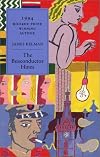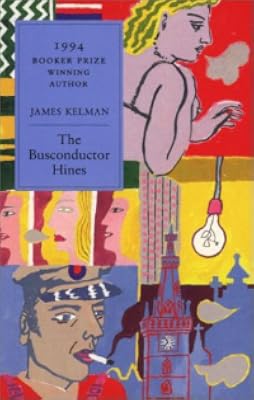
The Busconductor Hines
by James Kelman
On This Page
Description
Living in a no-bedroomed tenement flat, coping with the cold and boredom of busconducting and the bloody-mindedness of Head Office, knowing that emigrating to Australia is only an impossible dream, Robert Hines finds life to be ¿a very perplexing kettle of coconuts¿. The compensations are a wife and child, and a gloriously anarchic imagination. The Busconductor Hines is a brilliantly executed, uncompromising slice of the Glasgow scene, a portrait of working-class life which is unheroic but show more humane. show lessTags
Recommendations


































Member Reviews
A surprisingly funny account of life near the bottom of the heap in Glasgow. Written in the eighties, but probably drawing more on Kelman's experience in the seventies for its description of working life in a bus garage.
As everyone says, it's Kelman's language that makes (or, depending on your point of view, breaks) the book: it's a wonderfully lively, bouncy, even lyrical, torrent of words that cleverly captures the flavour of the way working-class people in Glasgow speak without slavishly following the rules of any existing dialect. It's a similar technique to the one Anthony Burgess uses in A clockwork orange, giving Kelman the freedom to indulge in literary flights of fancy when he needs to, whilst avoiding confronting the reader show more with more strange words than he needs to produce the required degree of alienation. As Burgess demonstrated, the danger is that you get carried away with your own cleverness: Kelman's a bit more restrained, but he does occasionally go over the top, notably with the succession of wilder and wilder images he uses for the bus crews' green uniforms, ending up like pastiche Flann O'Brian.
The story definitely takes second place to the language here, but for what it's worth it's an account of the paradoxical situation Hines finds himself in: to save his job and his marriage and get a decent place to live, Hines knows he needs to advance in life. He's an intelligent man, and is perfectly capable of acting in prudent and reliable ways if he wants to, but he understands that this would be a betrayal of an important part of his life, so he simply can't do it, any more than he can greet (i.e. weep) in public. He needs to stay at a level in life where he has so little that he's free to be irresponsible and jeopardise everything he has. show less
As everyone says, it's Kelman's language that makes (or, depending on your point of view, breaks) the book: it's a wonderfully lively, bouncy, even lyrical, torrent of words that cleverly captures the flavour of the way working-class people in Glasgow speak without slavishly following the rules of any existing dialect. It's a similar technique to the one Anthony Burgess uses in A clockwork orange, giving Kelman the freedom to indulge in literary flights of fancy when he needs to, whilst avoiding confronting the reader show more with more strange words than he needs to produce the required degree of alienation. As Burgess demonstrated, the danger is that you get carried away with your own cleverness: Kelman's a bit more restrained, but he does occasionally go over the top, notably with the succession of wilder and wilder images he uses for the bus crews' green uniforms, ending up like pastiche Flann O'Brian.
The story definitely takes second place to the language here, but for what it's worth it's an account of the paradoxical situation Hines finds himself in: to save his job and his marriage and get a decent place to live, Hines knows he needs to advance in life. He's an intelligent man, and is perfectly capable of acting in prudent and reliable ways if he wants to, but he understands that this would be a betrayal of an important part of his life, so he simply can't do it, any more than he can greet (i.e. weep) in public. He needs to stay at a level in life where he has so little that he's free to be irresponsible and jeopardise everything he has. show less
Glasgow is a gritty city. There's grit everywhere, like dirty urban sand. Where the hell does it come from? A sound bet is that the abrasive climate of biting wind, driving rain, hail, snow, sleet and the other character forming elements of Scottish weather is eroding the sandstone, granite and, that particular feature of cities, dirty concrete, the same way that the sea grinds down cliffs, seashells and pebbles to make a beach.
Cities have their own brand of dirt. Out in the countryside mud is the dirt of choice. And cow dung, and of course the inescapable plastic bag stuck in a hedge, but mostly mud. In cities, dirt comes in the form of a patina, layered on top of buildings that were, in a fit of optimism, built out of light-coloured show more stone. This allows for that particular urban effect of the building being streaked with dirt as the result of rain falling through the layers of pollution stacked up above the city sky like soggy strata before finally hitting the buildings as mostly water, but containing a proportion of whatever pollution is popular that day, and trace elements of pigeon.
Years ago, this pollution was generated by the soot from a million dirty coal fires, which Glaswegians huddled round for warmth during Scottish winters (duration: September to May). In modern times, the coal fire has been replaced by the three bar electric fire. It is important that only two bars of this are ever lit, not because of issues of economy but because of that peculiar Scottish belief that you should never feel too cosy or comfortable. This progress means the pollution from domestic heating has been moved out of the city and is all produced, in truly modern style, by one huge coal fired power plant, with a bloody big chimney belching pollution into the sky, situated in what used to be a pretty Glen.
The architecture is specially designed to collect dirt. The bold Victorian monuments to civic pride in the city centre ideal for collecting pigeon shit, the tenements that Glaswegians inhabit are a graveyard for litter, the grit blown by the breezes or gales of the windy elements of the elements into the tenements, piling up in wee drifts in the stairwells, stairwells painted the unhealthy pinks and green of the municipal pallet that consists of colours never found in private homes or healthy bodies. Municipal green is also the colour of the uniform that the bus conductor, Hines, finds so demeaning, ill fitting and uncomfortable, but which he chooses to wear all the time.
Hines, bus conductor, husband and father (and trying heartbreaking hard to be a good and loving husband and a dependable and doting father, though trying less hard to be a good bus conductor), is not healthy. The source of his physical ills are to be found in his tin of tobacco, from which he incessantly rolls his own fags. Essentially the man is forever smoking one enormous, never-ending cigarette but, out of deference to the laws of physics he has chosen to do this in tens of thousands of instalments of home-rolled ciggies.
The source of his psychological ills are a lack of motivation (ironic for somebody working in transport) and a nagging feeling that he's somehow letting his wife and child down.
Hines is anonymous and unnoticed by the travelling population, but he recognises that he is at the centre of, and star of, his own desperate existence, with the power to redeem or damn himself. Hines is a good example of somebody who knows exactly what's required to improve their lives and the lives of this he loves, but who either won't or can't make the effort for reasons that are sometimes a mystery even to him. He's a frustrating character but a principled one, trying in his own way to be honest and maintain some sort of dignity in what can be challenging circumstances (busses). He is flawed, fallible and acutely human.
This is a cross-section of a man’s life, mundane, desperate and even on one occasion amusing – never has the preparation of that traditional Scottish dish of mince and onions been so lovingly described. show less
Cities have their own brand of dirt. Out in the countryside mud is the dirt of choice. And cow dung, and of course the inescapable plastic bag stuck in a hedge, but mostly mud. In cities, dirt comes in the form of a patina, layered on top of buildings that were, in a fit of optimism, built out of light-coloured show more stone. This allows for that particular urban effect of the building being streaked with dirt as the result of rain falling through the layers of pollution stacked up above the city sky like soggy strata before finally hitting the buildings as mostly water, but containing a proportion of whatever pollution is popular that day, and trace elements of pigeon.
Years ago, this pollution was generated by the soot from a million dirty coal fires, which Glaswegians huddled round for warmth during Scottish winters (duration: September to May). In modern times, the coal fire has been replaced by the three bar electric fire. It is important that only two bars of this are ever lit, not because of issues of economy but because of that peculiar Scottish belief that you should never feel too cosy or comfortable. This progress means the pollution from domestic heating has been moved out of the city and is all produced, in truly modern style, by one huge coal fired power plant, with a bloody big chimney belching pollution into the sky, situated in what used to be a pretty Glen.
The architecture is specially designed to collect dirt. The bold Victorian monuments to civic pride in the city centre ideal for collecting pigeon shit, the tenements that Glaswegians inhabit are a graveyard for litter, the grit blown by the breezes or gales of the windy elements of the elements into the tenements, piling up in wee drifts in the stairwells, stairwells painted the unhealthy pinks and green of the municipal pallet that consists of colours never found in private homes or healthy bodies. Municipal green is also the colour of the uniform that the bus conductor, Hines, finds so demeaning, ill fitting and uncomfortable, but which he chooses to wear all the time.
Hines, bus conductor, husband and father (and trying heartbreaking hard to be a good and loving husband and a dependable and doting father, though trying less hard to be a good bus conductor), is not healthy. The source of his physical ills are to be found in his tin of tobacco, from which he incessantly rolls his own fags. Essentially the man is forever smoking one enormous, never-ending cigarette but, out of deference to the laws of physics he has chosen to do this in tens of thousands of instalments of home-rolled ciggies.
The source of his psychological ills are a lack of motivation (ironic for somebody working in transport) and a nagging feeling that he's somehow letting his wife and child down.
Hines is anonymous and unnoticed by the travelling population, but he recognises that he is at the centre of, and star of, his own desperate existence, with the power to redeem or damn himself. Hines is a good example of somebody who knows exactly what's required to improve their lives and the lives of this he loves, but who either won't or can't make the effort for reasons that are sometimes a mystery even to him. He's a frustrating character but a principled one, trying in his own way to be honest and maintain some sort of dignity in what can be challenging circumstances (busses). He is flawed, fallible and acutely human.
This is a cross-section of a man’s life, mundane, desperate and even on one occasion amusing – never has the preparation of that traditional Scottish dish of mince and onions been so lovingly described. show less
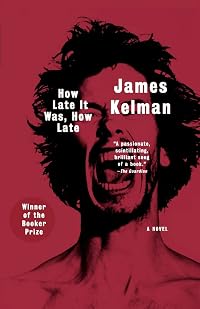
James Kelman is the only Brit shortlisted for the Man Booker International Prize 2009. His novel A Disaffection which I reviewed here previously was shortlisted for the Booker Prize and won the James Tait Black Memorial Prize for Fiction in 1989. His novel How late it was, how late won the Booker Prize for Fiction in 1994. With the possible exception of J G Ballard he is probably the finest Brit writer of English active today.
There are no heroes in Kelman. There are no massive plot arcs, no tricksy twists, no gratuitous redemptions. Kelman specialises in real life - and brilliant clear prose. His ear is acute for ordinary Scottish Glasgow dialect and he records it in such a way that it rings from the page. His eye for the telling show more trivial vignette is piercing and he puts these snatches of dialogue and fragments of life together in such a skilled way that you slow down your reading pace to savour them. I am always sad to finish a Kelman work be it a short story or a a novel - The Bus Conductor Hines is no exception.
Rab Hines is a bus conductor. He is not a great bus conductor - his record is poor. He hates the job.Rab Hines is a husband and father. He is neither a great husband nor a wonderful father. Rab is just like you and me - pretty ordinary. Rab gets by. He does his best. He makes the most of what he has - even the no-bedroomed tenement flat under threat of imminent demolition that he and his family inhabit uncomfortably.
Quite simply put James Kelman does what few novelists these days can do - he describes the ordinary and makes it true. He chooses and uses his language to convince you of the humanity in all of us. Long may he continue so to do. show less
There are no heroes in Kelman. There are no massive plot arcs, no tricksy twists, no gratuitous redemptions. Kelman specialises in real life - and brilliant clear prose. His ear is acute for ordinary Scottish Glasgow dialect and he records it in such a way that it rings from the page. His eye for the telling show more trivial vignette is piercing and he puts these snatches of dialogue and fragments of life together in such a skilled way that you slow down your reading pace to savour them. I am always sad to finish a Kelman work be it a short story or a a novel - The Bus Conductor Hines is no exception.
Rab Hines is a bus conductor. He is not a great bus conductor - his record is poor. He hates the job.Rab Hines is a husband and father. He is neither a great husband nor a wonderful father. Rab is just like you and me - pretty ordinary. Rab gets by. He does his best. He makes the most of what he has - even the no-bedroomed tenement flat under threat of imminent demolition that he and his family inhabit uncomfortably.
Quite simply put James Kelman does what few novelists these days can do - he describes the ordinary and makes it true. He chooses and uses his language to convince you of the humanity in all of us. Long may he continue so to do. show less
Deliberately heavy in the use of profanities and Glaswegian dialect Mr Kelman wanted to write a book reflecting his own life experience and those in similar circumstances. He succeeded. The mundane life of Busconductor Hines, his wife and young child. Living in sub standard tenement housing i a job he doesn't like, probably capable of better things but he just can't bring himself to be bothered. Worried about his wife leaving him - but he needn't. She doesn't.
Bleak, bitter and wonderfully humane. 1980's Glasgow sounds lovely.
I am really enjoying this book,despite the fact that the story is unravelling very slowly and leaves some unanswered questions. Unil now I find the main charcter deeply likeable and would give him a good hug and a cuppa most of the times.
Het droeve verhaal van busconducteur Hines, gevangen in een dead-end job, vrezend voor zijn huwelijk, dromend van een betere toekomst, evenwel zonder een weg naar die betere toekomst te zien. Kelmans kenmerkende stijl is ook hier allesoverheersend - heel wat interne monoloog, veel Schots idioom, humor, vloekwoorden, maatschappijkritiek, ... - maar misschien wat minder gebalanceerd dan in zijn latere romans. Dromen, gesprekken, fantasieën, herinneringen, observaties, ... het loopt bij momenten net iets te veel in elkaar over om het nog te volgen. Maar net zo goed staan een aantal pagina's verder de tranen in je ogen bij Hines' besef dat het allemaal bedroevend weinig zin heeft.
May 8, 2018Dutch
Members
- Recently Added By
Lists

1001 Books You Must Read Before You Die
1,448 works; 1,133 members

Best Workplace Fiction
47 works; 18 members

Best public-transport fiction
72 works; 17 members

Best of Scottish Literature
35 works; 6 members

stories at work
43 works; 7 members

1,001 BYMRBYD Concensus
723 works; 27 members
Author Information

40+ Works 3,808 Members
Awards and Honors
Common Knowledge
- Original publication date
- 1984
- People/Characters
- Rab Hines
- Important places
- Glasgow, Scotland, UK
Classifications
Statistics
- Members
- 247
- Popularity
- 131,593
- Reviews
- 7
- Rating
- (3.58)
- Languages
- English, French, German
- Media
- Paper, Ebook
- ISBNs
- 7
- ASINs
- 2