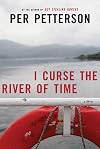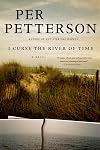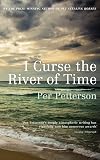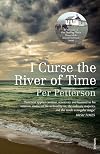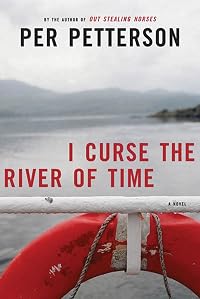
I Curse the River of Time
by Per Petterson
On This Page
Description
Anticipating a divorce against a backdrop of the fall of communism, Arvid Jansen is further dismayed by his mother's diagnosis with cancer, a situation that prompts his emotionally charged quest for understanding and balance.Tags
Recommendations































Member Recommendations

Member Reviews
I wavered on this book for a bit. On the one hand the tone is decidedly minimalist, but the minimalism there on display is gorgeous, crossing the line into the poetic many times. And on the other hand there's relatively little to the story, much alluded too obliquely, if at all. To some, maybe, this would be a source of frustration. And I must admit that I was left wanting, desirous of just a little more. But out of genuine affection, even love, for the story and its characters and its setting.
Unlike the minimalism of someone like, say, Hemingway, the minimalism here is a softer variety of stoic, more emotionally frustrated and filled to the brim, just waiting to explosively burst under the surface.
And it never does, and that's show more beautiful. Why? Because it feels genuine, it feels real. Petterson is a master at delineating the cracks and fissures endemic to every familial relationship, and makes no attempt to 'save' his characters or give them the big emotional catharsis that so many Western audiences would be starving for in this kind of story.
That was where the wavering in my assessment of this story ceased. I realized I had been looking at the proceedings with a decidedly Western cultural mindset that just didn't jive with what was going on. And said cultural mindset, the artifice of it at least, is a fallacy. Western families go through the same emotional and almost literal wars that our friends in Europe do, but maybe we're just less inclined to write stories describing that kind of thing. I can speak from experience as regards this, where people just want 'to be entertained' and for their books (and movies, and songs, etc) to be 'simple' and predictably warm and cookie cutter.
Well, that, for lack of a better term, is bullshit. If you want pat simplistic pap to indulge in, it's there. But it's inferior, sorry. It's nowhere near as intellectually or emotionally nourishing and, in all honesty, nowhere near as relevant or important.
That is my roundabout way of saying: read this book. It's not transcendent, though in spots it troubles those waters. Gorgeously described and painfully human, this book will wend its way into your soul with the force of a gentle hammer or tidal wave, waking you from gentle dreams to the necessary harshness of life. show less
Unlike the minimalism of someone like, say, Hemingway, the minimalism here is a softer variety of stoic, more emotionally frustrated and filled to the brim, just waiting to explosively burst under the surface.
And it never does, and that's show more beautiful. Why? Because it feels genuine, it feels real. Petterson is a master at delineating the cracks and fissures endemic to every familial relationship, and makes no attempt to 'save' his characters or give them the big emotional catharsis that so many Western audiences would be starving for in this kind of story.
That was where the wavering in my assessment of this story ceased. I realized I had been looking at the proceedings with a decidedly Western cultural mindset that just didn't jive with what was going on. And said cultural mindset, the artifice of it at least, is a fallacy. Western families go through the same emotional and almost literal wars that our friends in Europe do, but maybe we're just less inclined to write stories describing that kind of thing. I can speak from experience as regards this, where people just want 'to be entertained' and for their books (and movies, and songs, etc) to be 'simple' and predictably warm and cookie cutter.
Well, that, for lack of a better term, is bullshit. If you want pat simplistic pap to indulge in, it's there. But it's inferior, sorry. It's nowhere near as intellectually or emotionally nourishing and, in all honesty, nowhere near as relevant or important.
That is my roundabout way of saying: read this book. It's not transcendent, though in spots it troubles those waters. Gorgeously described and painfully human, this book will wend its way into your soul with the force of a gentle hammer or tidal wave, waking you from gentle dreams to the necessary harshness of life. show less
Like his earlier novel, Out Stealing Horses, this too is a novel as book of memories. In I Curse the River of Time the story is narrated by Arvid Jansen who is faced with the end of his marriage and a mother with cancer both set against the background of the fall of the wall in Berlin. The action of the story moves back and forth between Norway and Denmark as Arvid relates the events of his life which roll forward with the impetus of a river. The river motif appears several times, but seldom is the metaphor made as explicit as when Arvid, while reading a book by Jan Myrdal, comments about the prose:
"There was a wide open sky over Jan Myrdal's sentences. The world unfolded in all its majesty, back in time, forward in time, history was show more one long river and we were all borne along by that river." (p 65)
Just as this is true of the history of the world as Arvid sees it, it is also true of Arvid's personal history. However, Arvid's river does not seem that long, and I would not have minded a bit more of his personal story as this short book seemed to end all to soon. It is a story that moves backward and forward with the current story interrupted, oh so gently, by retrospective moments -- a before and after that Arvid was crossing much like a river. (p 92)
The most interesting aspect of the novel for me was the literary life of Arvid and his mother. They were both great readers, constantly reading some book, usually a substantial one. And how do I know this? Because Arvid is always reminding the reader what book he is reading and, when he is visiting his mother, what she is reading. The authors range from European greats like Hugo, Grass and Remarque to authors from Britain and America like Maugham, Hemingway, and Faulkner. Commenting on Faulkner's Absalom, Absalom his mother said to Arvid, "It's hard going that book," to which Arvid replied, "I agree, but it's a fine book all the same." (p 93) Petterson's narrative, while beautiful, is never hard going.
Arvid's brother had died several years before the story began; he noted that he was so different than his brother while they were growing up together that:
"it did not even occur to me to try and emulate him. Instead I read books. Many books, and I guess to him it looked so intriguing and intense, the way I lost myself in those books, that sometimes he tried to copy me, and that made me happy." (p 39)
Ultimately Arvid's story is one he describes as, "where the action was bound to a time that was long gone, and yet here I came walking, right there and then, adrift in time and space." (p 35) Like Petterson's earlier novel it is the story of a life pieced together from moments of action and surprise, meditation and love, but unlike the earlier novel the personal history is entwined with the impact of an external event -- the fall of the Berlin Wall. In the end, all the reading, the changing personal relationships, especially with his mother, and the vicissitudes of time itself combine to make this an thoughtful and emotional read show less
"There was a wide open sky over Jan Myrdal's sentences. The world unfolded in all its majesty, back in time, forward in time, history was show more one long river and we were all borne along by that river." (p 65)
Just as this is true of the history of the world as Arvid sees it, it is also true of Arvid's personal history. However, Arvid's river does not seem that long, and I would not have minded a bit more of his personal story as this short book seemed to end all to soon. It is a story that moves backward and forward with the current story interrupted, oh so gently, by retrospective moments -- a before and after that Arvid was crossing much like a river. (p 92)
The most interesting aspect of the novel for me was the literary life of Arvid and his mother. They were both great readers, constantly reading some book, usually a substantial one. And how do I know this? Because Arvid is always reminding the reader what book he is reading and, when he is visiting his mother, what she is reading. The authors range from European greats like Hugo, Grass and Remarque to authors from Britain and America like Maugham, Hemingway, and Faulkner. Commenting on Faulkner's Absalom, Absalom his mother said to Arvid, "It's hard going that book," to which Arvid replied, "I agree, but it's a fine book all the same." (p 93) Petterson's narrative, while beautiful, is never hard going.
Arvid's brother had died several years before the story began; he noted that he was so different than his brother while they were growing up together that:
"it did not even occur to me to try and emulate him. Instead I read books. Many books, and I guess to him it looked so intriguing and intense, the way I lost myself in those books, that sometimes he tried to copy me, and that made me happy." (p 39)
Ultimately Arvid's story is one he describes as, "where the action was bound to a time that was long gone, and yet here I came walking, right there and then, adrift in time and space." (p 35) Like Petterson's earlier novel it is the story of a life pieced together from moments of action and surprise, meditation and love, but unlike the earlier novel the personal history is entwined with the impact of an external event -- the fall of the Berlin Wall. In the end, all the reading, the changing personal relationships, especially with his mother, and the vicissitudes of time itself combine to make this an thoughtful and emotional read show less
I Curse the River of Time is Per Petterson’s newest title, and it feels different from his previous novels. For one thing, there is a different feel to the words, almost a jagged and sharp edge to the prose. While Out Stealing Horses was almost dreamlike in its beauty and simplicity, this has more of an abrupt edge to it. That became apparent to me in reading portions of it aloud (a cranky baby was resisting sleep) and the words felt chunky and awkward, the sentences long and meandering. Given the subject matter, the complicated relationship of a son with his mother, I think this simply underlines just how talented a writer Petterson is. The style fits the story.
The novel begins with the illness of Arvid Jansen’s mother, and her show more quick journey away from home to absorb her news. Arvid quickly follows. The telling is interspersed with flashbacks of Arvid’s life, from incidents in childhood to more recent times with his impending divorce. His mother is portrayed as a distant but loving individual, with a strong personality and an aloofness towards Arvid that is never formally explained. It is very much centered on Arvid and his inner feelings as he perceives her, rather than her personal motivations.
Much of what makes this novel fascinating is by what isn’t said: several significant events happen (a family death, her illness itself) that are not explored at all. Rather Petterson focuses on how those events affect Arvid and his mother. If he were to have explained every detail of those events a reader would likely be struck more by the tragedy and its details rather than by what Petterson is getting at, the more subtle change in relationships. It’s really very clever to read it that way. It’s almost as if those very dramatic events are secondary to who these people really are.
As a child, Arvid didn’t fit in with his family, despite his parent’s assurances of how much he was ‘wanted’ by them, and valued. On a dismal occasion when a stranger took him to be an outsider from his family,
“But what I found out that summer…was that I could swallow whatever hit me and let it sink as if nothing had happened. So I pretended to play a game that meant nothing to me now, I made all the right movements, and then it looked as if what I was doing had a purpose, but it did not.”
There are allusions made to what might cause him to feel this way, and Petterson lets us wonder. As in life, he seems to want to tell us, there are no easy answers. I have some personal suspicions why this may be, but I don't want to spoil the mystery for anyone else (and I could easily be wrong).
Arvid’s life is more complicated than most, especially in his relationships with women. Three significant relationships are explored, and all of them seem to have him positioned still in the childish role of needing affirmation. In considering his divorce, he thinks
“…there is just you and me, we said to each other, just you and me, we said. But something had happened, nothing hung together any more, all things had spaces, had distances between them, like satellites, attracted to and pushed away at the same instant, and it would take immense willpower to cross those spaces, those distances, much more than I had available, much more than I had the courage to use.”
One of Arvid’s great desires is to be a good Communist, to help the ‘proletariat’ and his usage of that word rather than the more common ‘working class’ used by his Communist friends, infers he deems his calling in a more elevated sense than a true Communist might normally feel. While his parents had been in the working class themselves, his choosing it rather than pursuing college is his means to be different from them. A confusing choice for a man completely confused about who he is.
His feelings towards his mother are obsessive. He thinks of her often yet tries to appear distant and wants her to know he's separate:
“There was a before and after now, a border which I had crossed, or a river perhaps, like the Rio Grande, and suddenly I was in Mexico where things were different and a little frightening, and the crossing had left its mark on my face, which my mother would instantly see and realize that we were standing on opposite sides of the river, and the fact that I left her would hurt her, and she would no longer like me and not want me.”
Yet despite the chasm he imagines, he actually still seeks her out, chasing her even, not wanting to miss a moment of her attention and hoping for any kind of approval.
What I found especially signifcant was that while Arvid actively seeks his mother's blessing, he shows little concern for the rest of his family, to the point that his brothers and father remain on the periphery of his life (and this story).
The story is complex and requires a careful reading. Speeding through this one will offer no satisfaction, this one to relish and unravel. One thing that jumped out at me, and it had to be intentional, was that the character of Arvid Jansen is the same name as the main character in In the Wake by Petterson, where Arvid loses most of his family in a ferry accident (a horror suffered by Petterson himself). If that is indeed the case, then this book would serve as a prequel to In the Wake, and thus his story continues. This is the fourth of the Petterson books I have read and own, and he continues to be one of my favorite authors. show less
The novel begins with the illness of Arvid Jansen’s mother, and her show more quick journey away from home to absorb her news. Arvid quickly follows. The telling is interspersed with flashbacks of Arvid’s life, from incidents in childhood to more recent times with his impending divorce. His mother is portrayed as a distant but loving individual, with a strong personality and an aloofness towards Arvid that is never formally explained. It is very much centered on Arvid and his inner feelings as he perceives her, rather than her personal motivations.
Much of what makes this novel fascinating is by what isn’t said: several significant events happen (a family death, her illness itself) that are not explored at all. Rather Petterson focuses on how those events affect Arvid and his mother. If he were to have explained every detail of those events a reader would likely be struck more by the tragedy and its details rather than by what Petterson is getting at, the more subtle change in relationships. It’s really very clever to read it that way. It’s almost as if those very dramatic events are secondary to who these people really are.
As a child, Arvid didn’t fit in with his family, despite his parent’s assurances of how much he was ‘wanted’ by them, and valued. On a dismal occasion when a stranger took him to be an outsider from his family,
“But what I found out that summer…was that I could swallow whatever hit me and let it sink as if nothing had happened. So I pretended to play a game that meant nothing to me now, I made all the right movements, and then it looked as if what I was doing had a purpose, but it did not.”
There are allusions made to what might cause him to feel this way, and Petterson lets us wonder. As in life, he seems to want to tell us, there are no easy answers. I have some personal suspicions why this may be, but I don't want to spoil the mystery for anyone else (and I could easily be wrong).
Arvid’s life is more complicated than most, especially in his relationships with women. Three significant relationships are explored, and all of them seem to have him positioned still in the childish role of needing affirmation. In considering his divorce, he thinks
“…there is just you and me, we said to each other, just you and me, we said. But something had happened, nothing hung together any more, all things had spaces, had distances between them, like satellites, attracted to and pushed away at the same instant, and it would take immense willpower to cross those spaces, those distances, much more than I had available, much more than I had the courage to use.”
One of Arvid’s great desires is to be a good Communist, to help the ‘proletariat’ and his usage of that word rather than the more common ‘working class’ used by his Communist friends, infers he deems his calling in a more elevated sense than a true Communist might normally feel. While his parents had been in the working class themselves, his choosing it rather than pursuing college is his means to be different from them. A confusing choice for a man completely confused about who he is.
His feelings towards his mother are obsessive. He thinks of her often yet tries to appear distant and wants her to know he's separate:
“There was a before and after now, a border which I had crossed, or a river perhaps, like the Rio Grande, and suddenly I was in Mexico where things were different and a little frightening, and the crossing had left its mark on my face, which my mother would instantly see and realize that we were standing on opposite sides of the river, and the fact that I left her would hurt her, and she would no longer like me and not want me.”
Yet despite the chasm he imagines, he actually still seeks her out, chasing her even, not wanting to miss a moment of her attention and hoping for any kind of approval.
What I found especially signifcant was that while Arvid actively seeks his mother's blessing, he shows little concern for the rest of his family, to the point that his brothers and father remain on the periphery of his life (and this story).
The story is complex and requires a careful reading. Speeding through this one will offer no satisfaction, this one to relish and unravel. One thing that jumped out at me, and it had to be intentional, was that the character of Arvid Jansen is the same name as the main character in In the Wake by Petterson, where Arvid loses most of his family in a ferry accident (a horror suffered by Petterson himself). If that is indeed the case, then this book would serve as a prequel to In the Wake, and thus his story continues. This is the fourth of the Petterson books I have read and own, and he continues to be one of my favorite authors. show less
Over the past couple of years I've read a fair amount of Scandinavian fiction and this book reinforces the suspicion that I've begun to gather. These people are a little odd. This a very lyrical book and at times very beautiful. It concerns a mother dying of cancer and her 37 year old son going through a divorce. They travel back from Sweden to her home in Norway where they reflect back on their lives. Nobody in this book is particularly sympathetic and theirs is a life not overly filled with accomplishment. The man reflect back on his time as a Maoist, which the affection for Maoism among Swedes is confusing to me. A good but puzzling read.
Avrid Jansen is thirty-seven years old and has spent nearly twenty years searching for the truth through Communism. But now the year is 1989 and Communism is unraveling. Avrid is faced with a crisis of identity when his marriage fails and he learns that his mother has cancer, and everything he has believed in seems to be crumbling. When Avrid discovers his mother has left Norway to return to Denmark where she was born and raised, he boards a ferry to join her at their summer house.
Per Petterson’s novel I Curse The River of Time is the story of a man and his mother – two people who have drifted apart and are now brought back together. The story is non linear and told almost entirely from Avrid’s limited point of view. Avrid show more remembers moments from his childhood and the early days of his marriage. Gradually, the fault lines in his relationships and his insecurities are revealed. The reader discovers that Avrid has rejected his parents’ wish that he be educated and leave behind his working class roots. Instead, in alignment with his Communist leanings, Avrid chooses to leave college and go to work in the factory where his father once toiled.
[...] I wanted to be part of the working class, which, for Christ’s sake I already was, and always had been. The whole point, for them, was that I should stop being working class so they could all be proud of me, because I had been allowed to go farther. - from I Curse the River of Time, page 145 -
There is much in the novel that remains ambiguous and unnamed. Avrid’s mother seems to have a history which is largely secret, or at least Avrid remains ignorant of it. Because of this, the novel takes on a drifting, dreamlike atmosphere which I found bleak. Avrid fumbles and struggles with his identity as son, husband and Maoist. At times he seems to lack any insight into who he is and who he wishes to be, and he sees his life as something which he has little control over.
I have never really been able to see enormous changes coming until the last minute, never see how one trend conceals another, as Mao used to say, how the one flowing right below the surface can move in a whole different direction than the one you thought everyone had agreed on, and if you did not pay attention when everything was shifting, you would be left behind alone. – from I Curse the River of Time, page 67 -
Petterson’s prose is spare and reflective, and he provides little hope in a novel about loss, isolation, regret, and confused identity. The landscape of a wintry Norway and Denmark are a perfect backdrop to the story. In fact, the descriptions of scene were some of my favorites in the book.
I Curse the River of Time revisits some of the themes from Petterson’s award winning book Out Stealing Horses – those of identity, a boy’s ambivalence with a parent, grief and loss – but it is a much bleaker book. I can’t say I enjoyed the novel as it is a sad meditation on aging, marriage and the child/parent relationship, but I did respect the writing which allows the reader to fully realize the character development.
Readers who enjoy literary fiction in translation and who have appreciated Petterson’s previous work might want to give this one a try. show less
Per Petterson’s novel I Curse The River of Time is the story of a man and his mother – two people who have drifted apart and are now brought back together. The story is non linear and told almost entirely from Avrid’s limited point of view. Avrid show more remembers moments from his childhood and the early days of his marriage. Gradually, the fault lines in his relationships and his insecurities are revealed. The reader discovers that Avrid has rejected his parents’ wish that he be educated and leave behind his working class roots. Instead, in alignment with his Communist leanings, Avrid chooses to leave college and go to work in the factory where his father once toiled.
[...] I wanted to be part of the working class, which, for Christ’s sake I already was, and always had been. The whole point, for them, was that I should stop being working class so they could all be proud of me, because I had been allowed to go farther. - from I Curse the River of Time, page 145 -
There is much in the novel that remains ambiguous and unnamed. Avrid’s mother seems to have a history which is largely secret, or at least Avrid remains ignorant of it. Because of this, the novel takes on a drifting, dreamlike atmosphere which I found bleak. Avrid fumbles and struggles with his identity as son, husband and Maoist. At times he seems to lack any insight into who he is and who he wishes to be, and he sees his life as something which he has little control over.
I have never really been able to see enormous changes coming until the last minute, never see how one trend conceals another, as Mao used to say, how the one flowing right below the surface can move in a whole different direction than the one you thought everyone had agreed on, and if you did not pay attention when everything was shifting, you would be left behind alone. – from I Curse the River of Time, page 67 -
Petterson’s prose is spare and reflective, and he provides little hope in a novel about loss, isolation, regret, and confused identity. The landscape of a wintry Norway and Denmark are a perfect backdrop to the story. In fact, the descriptions of scene were some of my favorites in the book.
I Curse the River of Time revisits some of the themes from Petterson’s award winning book Out Stealing Horses – those of identity, a boy’s ambivalence with a parent, grief and loss – but it is a much bleaker book. I can’t say I enjoyed the novel as it is a sad meditation on aging, marriage and the child/parent relationship, but I did respect the writing which allows the reader to fully realize the character development.
Readers who enjoy literary fiction in translation and who have appreciated Petterson’s previous work might want to give this one a try. show less
Moody, with a beautiful style. Wanders around Scandinavia and back and forth in time as the narrator's mind jumps forward and backward on a final visit to his dying mother. He seems to be looking for comfort from her, as he is going through a divorce, forgetting that her problem is in fact larger than his. A wonderful, subtle character study of these two people, vividly created. Sad, moving and evocative.
Arvid is about to get a divorce so he decides the time's right to go see his mother--who's just been diagnosed with cancer. They haven't been close in years, ever since he told her that he dropped out of college to work at a factory. (Arvid's a Communist and is all, `Yay! Working class! Factories!' and his mom, who works in a factory already is beyond upset that her son's throwing away his future to prove a point.)
This book jumps back and forth in time, and so it was hard for me to keep up. I think part of the problem is that I'm in summer reading mode (thrillers! chick lit! paranormal YA!) and this is definitely a winter book.
This is definitely well written and interesting and if you're in the mood for something heavy, I think you'd show more like this. But ultimately, it didn't grab me at all. show less
This book jumps back and forth in time, and so it was hard for me to keep up. I think part of the problem is that I'm in summer reading mode (thrillers! chick lit! paranormal YA!) and this is definitely a winter book.
This is definitely well written and interesting and if you're in the mood for something heavy, I think you'd show more like this. But ultimately, it didn't grab me at all. show less
Members
- Recently Added By
Published Reviews
ThingScore 89
Petterson håller sig, liksom sina karaktärer, på artigt avstånd och lämnar lite för mycket osagt. Jag får känslan av att den verkliga huvudpersonen här är Arvids mor, men eftersom Arvid inte känner henne får vi aldrig heller göra det
added by andejons
Lågmäld i tonen förmår den ändå måla fram en nästan gastkramande bild av en människa som kämpar med sina oförlösta drömmar och sina föreställningar om livet och världen som inte alls blivit vad han hade tänkt sig.
added by andejons
Det är ordknappheten som gäller. Utan att för den skull vare sig naturimpressionerna eller alla de många spröda stämningarna behöver träda tillbaka i denna vemodsfyllda berättelse.
added by andejons
Lists

Top Five Books of 2014
1,064 works; 397 members

Powell's Indiespensable
79 works; 6 members

Llibres que he llegit el 2010
35 works; 1 member
Author Information

19+ Works 7,582 Members
Per Petterson was born in Norway on July 18, 1952. He is a trained librarian and before becoming a full-time writer, he worked as a bookstore clerk, translator and literary critic. His first work, Aske i munnen, sand i skoa (Ash in His Mouth, Sand in His Shoe), a volume of short stories, was published in 1987. His other works include These are show more Ekkoland (1989), Det er greit for meg (1992), and To Siberia (1996). He has won numerous awards including the prestigious Norwegian literary prize Brageprisen for In the Wake (2000) and the Independent Foreign Fiction Prize in the UK, the Norwegian Booksellers' Prize, and the Norwegian Critics' Award for best novel for Out Stealing Horses (2003). (Bowker Author Biography) show less
Some Editions
Awards and Honors
Awards
Distinctions
Series
Belongs to Publisher Series
Common Knowledge
- Canonical title
- I Curse the River of Time
- Original title
- Jeg forbanner tidens elv
- Original publication date
- 2008
- People/Characters
- Arvid Jansen
- Important places
- Oslo, Norway
- Dedication
- To Steen
- First words
- All this happened quite a few years ago.
- Quotations*
- No el estar muerto, eso no era capaz de concebirlo, eso era ser nada y por tanto inconcebible para mi, no había nada que temer en realidad, pero lo de morirse, eso si era capaz de concebirlo, ese preciso instante en el que s... (show all)eguro que sabes que justamente ahora ha llegado el momento que siempre has temido, cuando de pronto comprendes que todas la posibilidades de ser quien realmente hubieras querido ser han pasado para siempre, y que quien fuiste es aquel a quien recordarán los demás.
- Last words*
- (Click to show. Warning: May contain spoilers.)Ne olivat kovia ja viilsivät kieltäni, joten otin lisää korsia, melkein kourallisen, työnsin ne suuhuni ja pureskelin niitä perusteellisesti samalla kuin istuin siinä odottamassa että äitini nousisi ja tulisi.
- Blurbers
- Ford, Richard; Tan, Amy
- Original language
- Norwegian
*Some information comes from Common Knowledge in other languages. Click "Edit" for more information.
Classifications
- Genres
- Fiction and Literature, General Fiction
- DDC/MDS
- 839.82374 — Literature & rhetoric German & related literatures Other Germanic literatures Danish and Norwegian literatures Norwegian literature Norwegian Bokmål fiction 1900–2000 Late 20th century 1945–2000
- LCC
- PT8951.26 .E88 .J4413 — Language and Literature German, Dutch and Scandinavian literatures Norwegian literature Individual authors or works 1961-2000
- BISAC
Statistics
- Members
- 861
- Popularity
- 31,594
- Reviews
- 46
- Rating
- (3.45)
- Languages
- 15 — Catalan, Danish, Dutch, English, Estonian, Finnish, French, German, Norwegian (Bokmål), Norwegian, Polish, Portuguese, Spanish, Swedish, Turkish
- Media
- Paper, Audiobook, Ebook
- ISBNs
- 48
- ASINs
- 12