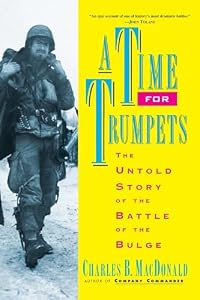
A Time for Trumpets: The Untold Story of the Battle of the Bulge
by Charles B. MacDonald
On This Page
Description
December 16,1944, the vanguard of three Grerman armies totaling 500,000 men suddenly attacked out of the mists and snows of the rugged Ardennes region of Belgium and Luxembourg in what was the last desperate gamble of Adolf Hitler to reverse the impending defeat of Nazi Germany. In the most abysmal failure of battlefield intelligence in the history of the U.S. Army, the Germans achieved total surprise. Six hundred thousand Americans fought in what came to be knownas the Battle of the show more Bulge--the most decisive battle on the Western Front during World War II and the greatest ever fought by the U.S. Army. show lessTags
Recommendations















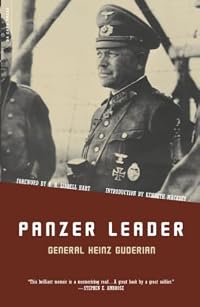

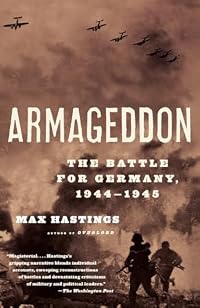
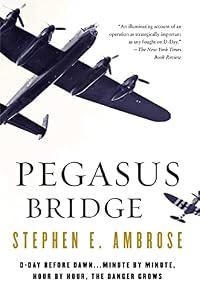
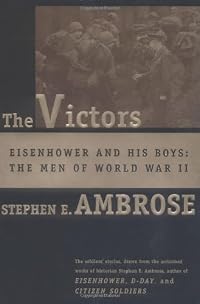


Member Recommendations
by anonymous user
by anonymous user

by anonymous user
Member Reviews
This book suffers from being overly comprehensive, every time a unit moves its listed in the writing. It reads a lot like combat has been described, long periods of boredom followed by a few seconds of extreme adrenaline. The moments when the author uses the first hand accounts of the men on the ground are seemingly crushed under the paragraphs of 'Company K moved here, Brigade Y moved here'. The German side is included in some parts but the focus is heavily on the Allies side of things. The writing style shows its age, the author doesnt have the ability to weave the ground and strategic views like Beevor, Ambrose, or Atkinson.
One of the best, and most readable accounts of any battle that you will ever read. MacDonald is eminently qualified to write this book, after a lifetime spent as a US Army historian and a lifetime lived in the few days following December 15 1944. This account of the Battle of the Bulge is extremely detailed, almost-private-snuffy-shot-six-bullets-and-ducked-back-in-his-foxhole-kind-of-detailed. Broken down into four intial zones along the Siegfrieid line then, following two or three of the German spearheads as the German army advanced, then Bastogne and the collapse of the offensive, MacDonald keeps up the blow by blow account of both the American forces and the German's as well. Leaves one wishing that MacDonald had been in all battles show more and would write about them as well. show less
4457. A Time for Trumpets The Untold Story of the Battle of the Bulge, by Charles B. MacDonald (read 9 Jul 2008) One cannot but help getting caught up in the account of the fearsome battle which Hitler started on Dec 16, 1944, and this account tells of it in almost overwhelming detail. I thought the book should have had an index or table of contents as to the maps--which I did not think were as helpful as they should have been. Different aspects of the battle are told chronologically, and this results in some jumping forward and backward. One also tends to lose sight of the forest what with all the description of the trees--one suspects the book is designed to include as many individual names as possible, but the minute detail may be show more offputting for some. But the book does a good job telling what the battle was like, and anyone, even if not a wargamer (which I am not), will find much to admire in this book. My diary as a 16-year-old boy in Iowa on Dec 17, 1944 at 10:10 PM C.W.T..said "Germans launched an offensive"--seems I knew about the battle almost as soon as the generals, who seemed slow to realize how serious it was. show less
This book suffers from being overly comprehensive, every time a unit moves its listed in the writing. It reads a lot like combat has been described, long periods of boredom followed by a few seconds of extreme adrenaline. The moments when the author uses the first hand accounts of the men on the ground are seemingly crushed under the paragraphs of 'Company K moved here, Brigade Y moved here'. The German side is included in some parts but the focus is heavily on the Allies side of things. The writing style shows its age, the author doesnt have the ability to weave the ground and strategic views like Beevor, Ambrose, or Atkinson.
The Author fought in the Battle of the Bulge as a 22-year old rifle
company commander. His initial account led to his subsequent career as a civilian historian with the US Army. This book is his blow by blow description of the Battle researched and written after his retirement 40 years later. [624]
Concludes that Hitler's personal decision to concentrate forces
to counter-attack in the West only delayed the Allies by a few weeks
and assured the swift success of the Red Army on the Eastern Front, probably speeding the collapse of Germany. [618]
The 600,000 Americans and 55,000 British suffered approximately
82,400 killed, wounded or captured. The Germans, employing nearly
500,000, lost at least 100,000.
"The German soldier in the Ardennes show more amazed his adversary. Short
of transport, short of gasoline, short of artillery...his nation on the
brink of defeat, he nevertheless fought with such courage and
determination...Whatever his motivation, he performed with heroism and sacrifice, marred only by the excesses of a few, primarily by the SS." [618]
This book attempts to refute the concerns that long persist that
American troops repeatedly fled in disarray when attacked by German units even smaller in size. "Except for a few individuals, the front-line American soldier stood his ground. Surprised, stunned, unbelieving, incredulous...".
This is a somewhat anecdotal and well-documented attempt to give the lie to the Hitler's theory which assumes that racially-heterogenous units would not fight. MacDonald tells the soldier's story "to the sound of trumpets" -- from the American POV.
With stirring exceptions, this research almost unconsciously documents the superiority of the Wehrmacht even as it was eventually over-run.
The Epilogue recounts the details of the unjust "trials" of some of the 500 members of Kampfgruppe Peiper who were rounded up for war crime prosecutions connected with the Malmedy massacre. Senator Joe McCarthy first came to "prominence", I mean the word ironically, in challenging the Germans' right to fair trials. show less
company commander. His initial account led to his subsequent career as a civilian historian with the US Army. This book is his blow by blow description of the Battle researched and written after his retirement 40 years later. [624]
Concludes that Hitler's personal decision to concentrate forces
to counter-attack in the West only delayed the Allies by a few weeks
and assured the swift success of the Red Army on the Eastern Front, probably speeding the collapse of Germany. [618]
The 600,000 Americans and 55,000 British suffered approximately
82,400 killed, wounded or captured. The Germans, employing nearly
500,000, lost at least 100,000.
"The German soldier in the Ardennes show more amazed his adversary. Short
of transport, short of gasoline, short of artillery...his nation on the
brink of defeat, he nevertheless fought with such courage and
determination...Whatever his motivation, he performed with heroism and sacrifice, marred only by the excesses of a few, primarily by the SS." [618]
This book attempts to refute the concerns that long persist that
American troops repeatedly fled in disarray when attacked by German units even smaller in size. "Except for a few individuals, the front-line American soldier stood his ground. Surprised, stunned, unbelieving, incredulous...".
This is a somewhat anecdotal and well-documented attempt to give the lie to the Hitler's theory which assumes that racially-heterogenous units would not fight. MacDonald tells the soldier's story "to the sound of trumpets" -- from the American POV.
With stirring exceptions, this research almost unconsciously documents the superiority of the Wehrmacht even as it was eventually over-run.
The Epilogue recounts the details of the unjust "trials" of some of the 500 members of Kampfgruppe Peiper who were rounded up for war crime prosecutions connected with the Malmedy massacre. Senator Joe McCarthy first came to "prominence", I mean the word ironically, in challenging the Germans' right to fair trials. show less
Classic telling of the Battle of the Bulge story.
Members
- Recently Added By
Author Information

17 Works 1,847 Members
Charles B. MacDonald was deputy chief historian of the Army Center of Military History.
Some Editions
Common Knowledge
- Original publication date
- 1984
- Important places
- Ardennes, Belgium; Belgium
- Important events
- World War II (1939 | 1945); Battle of the Bulge (1944-12-16 | 1945-01-25)
- Related movies
- The Battle of the Bulge (2005 | IMDb)
- Original language
- English
Classifications
Statistics
- Members
- 596
- Popularity
- 48,855
- Reviews
- 7
- Rating
- (3.83)
- Languages
- English, French
- Media
- Paper, Audiobook, Ebook
- ISBNs
- 12
- ASINs
- 15