
Dick Winters (1918–2011)
Author of Beyond Band of Brothers
About the Author
Works by Dick Winters
Tagged
Common Knowledge
- Other names
- Winters, Dick
Winters, Richard D. - Birthdate
- 1918-01-21
- Date of death
- 2011-01-02
- Gender
- male
- Education
- Franklin and Marshall College
- Occupations
- salesman
army officer - Organizations
- United States Army
- Awards and honors
- Distinguished Service Cross
Bronze Star
Purple Heart
Presidential Unit Citation
American Defense Service Medal
European-African-Middle Eastern Campaign Medal (show all 12)
World War II Victory Medal
Army of Occupation Medal
National Defense Service Medal
Combat Infantryman Badge
Parachutist Badge
Medal of the City of Eindhoven - Relationships
- Malarkey, Don (subordinate)
Webster, David Kenyon (subordinate)
Compton, Lt. Lynn (subordinate)
Guarnere, William (subordinate) - Nationality
- USA
- Birthplace
- New Holland, Pennsylvania, USA
- Places of residence
- Ephrata, Pennsylvania, USA
Hershey, Pennsylvania, USA - Place of death
- Hershey, Pennsylvania, USA
- Associated Place (for map)
- Pennsylvania, USA
Members
Reviews
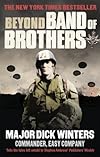
Beyond Band of Brothers was written after the success of the TV mini-series, and is very much geared towards those already familiar with the activities of 101st Airborne, Easy Company. Though the book's narrative is not as engaging as Stephen Ambrose's original Band of Brothers, Major Dick Winters provides a clear-headed first-hand perspective and some welcome real-world wisdom. The author's remarkable personality is the book's greatest assest, and one of its most valuable sections comes at show more the end when Major Winters outlines his rules for leadership. Recommended. show less
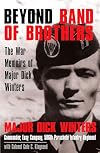
I am willing to grant, I guess, that Winters was a remarkable leader, but in this ghost-written autobiography he comes across as a sanctimonious prig. He gets leave in Paris then complains that he learns too much about the construction of the Eiffel Tower because it doesn't help him as an infantry officer. He refuses to drink or get laid or do all the things everyone else was doing because he didn;t want to disrespect his unit, his army, his family, his country, etc., etc. blah blah, show more blah.
Comparisons to Audio Murphy's autobiography will be inevitable. Ironically I think Murphy's is the more introspective and more humble. Winters, clearly a talented company commander and great leader, talks too much about how humble he was (as was noted by another reviewer.) Winters just isn't as good a writer as Murphy, either. That being said, as a companion book to the HBO series, it's almost a must for the real-life perspective on the events. Winters, without the HBO series, would have been lost to the dustbin of history. And that's a shame. I suspect there were lots of other very talented men who served by doing their jobs and getting wounded or killed in the process, who never received the recognition. So I like to think of this book as a memoir for all the troops.
I was a little puzzled by the lack of explanation about Winters' promotion to executive officer of the Battalion following the Ardennes. If he was such a great company commander, why would the powers that be kick him upstairs to where he had no command authority at all and whose job seemed to consist mostly of paperwork and presiding over courts martials of looters -- this was apparently a severe problem.
The biggest problem with this book, is its lack of broad perspective. It's really quite myopic. It's so clearly everything from the view of E Company, it's almost as if the rest of the world didn't exist. Now perhaps that's not fair because I suppose that's a reflection of the world as seen by a company commander during battle. I don't know, never having been one. It has been said that only if there are great challenges and crises, can presidents become truly great. I suspect that might be true of many war heroes as well. Without the crisis, they might have just been ordinary folks like the rest of us.
It's perhaps ironic but I kept getting the sense that had Sobel, the hated company commander during training, not made their collective lives so miserable in his attempts to wash individuals out, that perhaps they might not have become such a cohesive unit before and later in combat.
For perhaps another perspective: [b:Biggest Brother The Life Of Major Dick Winters, The Man Who Led The Band of Brothers|157793|Biggest Brother The Life of Major Dick Winters, the Man Who Led the Band of Brothers|Larry Alexander|http://photo.goodreads.com/books/1328010200s/157793.jpg|1274221] show less
Comparisons to Audio Murphy's autobiography will be inevitable. Ironically I think Murphy's is the more introspective and more humble. Winters, clearly a talented company commander and great leader, talks too much about how humble he was (as was noted by another reviewer.) Winters just isn't as good a writer as Murphy, either. That being said, as a companion book to the HBO series, it's almost a must for the real-life perspective on the events. Winters, without the HBO series, would have been lost to the dustbin of history. And that's a shame. I suspect there were lots of other very talented men who served by doing their jobs and getting wounded or killed in the process, who never received the recognition. So I like to think of this book as a memoir for all the troops.
I was a little puzzled by the lack of explanation about Winters' promotion to executive officer of the Battalion following the Ardennes. If he was such a great company commander, why would the powers that be kick him upstairs to where he had no command authority at all and whose job seemed to consist mostly of paperwork and presiding over courts martials of looters -- this was apparently a severe problem.
The biggest problem with this book, is its lack of broad perspective. It's really quite myopic. It's so clearly everything from the view of E Company, it's almost as if the rest of the world didn't exist. Now perhaps that's not fair because I suppose that's a reflection of the world as seen by a company commander during battle. I don't know, never having been one. It has been said that only if there are great challenges and crises, can presidents become truly great. I suspect that might be true of many war heroes as well. Without the crisis, they might have just been ordinary folks like the rest of us.
It's perhaps ironic but I kept getting the sense that had Sobel, the hated company commander during training, not made their collective lives so miserable in his attempts to wash individuals out, that perhaps they might not have become such a cohesive unit before and later in combat.
For perhaps another perspective: [b:Biggest Brother The Life Of Major Dick Winters, The Man Who Led The Band of Brothers|157793|Biggest Brother The Life of Major Dick Winters, the Man Who Led the Band of Brothers|Larry Alexander|http://photo.goodreads.com/books/1328010200s/157793.jpg|1274221] show less
Probably not a book for female readers but a worthwhile read nonetheless. Winters'painstaking final life-mission to name and describe his infantry comrades who jumped into Normandy on D-Day and beyond is a reflective account. This isn't an exciting account. It isn't even a historical account as Winters says he gave all that information to Stephen Ambrose for his book Band of Brothers. Winters gives credit to Ambrose popularizing the efforts of the Allied Airborne during the Normandy show more Invasion. Winters divides the book into four sections: bootcamp/training, D-Day and Holland combat jumps, Battle of the Bulge, occupation force and final reflections.
Winters seems mostly to be be reminiscing but with an intent to show his own feelings when was a young man leading his troops. He lists a few names of people he didn't admire (Sobel) and one person who was rumored to have committed court marshal crimes for fratricide. I found this level of honesty convincing and realistic. Winters does try to ad leadership points since he was apparently asked to give public talks on the subject. One of the things is to lead by example, not pronouncement, and more importantly, to think seriously beforehand about any important decision such as risking the lives of people under your direction. Winters includes a few passages from letters written by people who had seen the TV series or read the Band of Brothers book. Winters seemed animated to do the book not for personal aggrandizement but to collect the personal stories of some of the men he knew personally before they all passed away. Winters himself died in 2011. Winters did not consider himself an overly religious man, but he did believe in God and came to be more appreciate of faith when living in England when he billeted with an Anglican family who provided him with a sense of cultural stability with their own faith practices.
The book title of course comes from Shakespeare's Henry V, before the battle of Agincourt. Winters quotes that speech at the beginning of the book. Any unit from any war or conflict may use the "Band of Brothers" tag but it was first popularized by Ambrose for the 506, 101st Airborne. show less
Winters seems mostly to be be reminiscing but with an intent to show his own feelings when was a young man leading his troops. He lists a few names of people he didn't admire (Sobel) and one person who was rumored to have committed court marshal crimes for fratricide. I found this level of honesty convincing and realistic. Winters does try to ad leadership points since he was apparently asked to give public talks on the subject. One of the things is to lead by example, not pronouncement, and more importantly, to think seriously beforehand about any important decision such as risking the lives of people under your direction. Winters includes a few passages from letters written by people who had seen the TV series or read the Band of Brothers book. Winters seemed animated to do the book not for personal aggrandizement but to collect the personal stories of some of the men he knew personally before they all passed away. Winters himself died in 2011. Winters did not consider himself an overly religious man, but he did believe in God and came to be more appreciate of faith when living in England when he billeted with an Anglican family who provided him with a sense of cultural stability with their own faith practices.
The book title of course comes from Shakespeare's Henry V, before the battle of Agincourt. Winters quotes that speech at the beginning of the book. Any unit from any war or conflict may use the "Band of Brothers" tag but it was first popularized by Ambrose for the 506, 101st Airborne. show less
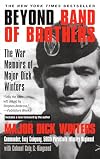
I have nothing but admiration for the soldiers around the world who put their lives on the line in the name of their government's orders. It's their job, what they get paid for, and theirs is perhaps the most dangerous of all occupations. To this, I'd add that WWII veterans receive my special respect because of the nature of the time in which they fought. America was a different country then, with different ways of doing things, and a different sense of what the word "patriotism" meant. They show more say that it was the last "good war", if any could be attributed that way. And we're losing these men fast. Dick Winters, one of the most famous and most capable commanders of possibly the most famous combat unit in WWII, is perhaps the most exemplary of these men. As the leader of Easy Company, 506th PIR, 101st Airborne, he led an amazing group of men through an amazing time, and the unit's accolades have been dutifully expressed in a variety of sources: Stephen Ambrose's book, Band of Brothers, HBO's mini-series of the same name, and a number of memoirs from men who actually fought in the unit. These sources go some way in telling the story of these soldiers, the war, and their sacrifice. The telling needed to be done, because we should all know what happened during those unimaginably important years.
Perhaps because I've been such a proponent of this idea, or maybe just because I'm such a passionate student of military history, or maybe even due to the fact that I've heard the story of Easy Company so many times, I found myself noticeably bored with the telling of the tale from the man who was in charge of that band of brothers. Yes, this is the fourth time I've been recounted the story from that angle of the war. Yes, Winters was an amazing leader, one of the last surviving members of the unit, and, for all purposes, the most astute archivist of Easy Company's social history. He deserves to be able to tell his story again, as he was there for all of it and is still sharp and thoughtful. But Winters and his contributing writer, Col. Cole Kingseed, are extremely poor at recounting it in a way that would remove the need for HBO's series or Ambrose's sober tone. What we get is a rambling, non-inspiring tour de force through Easy Company's time in the States, in the ETO, and beyond, all the while being continuously pushed and pulled between Winters' vacillations of humility and utter self-capability.
It's not that I have any problems with this absolutely prodigal combat leader telling his story in print. I just have a hard time getting past his pedestrian journalism. Even considering that this is a war memoir, I could not stop telling myself that it might have been better served with a series of extensive audio or video interviews. Of particular note and annoyance throughout the book is Winters' phantom modesty. For a man coming out of the woodwork in 1992 (via Ambrose's unit history) to be so humble and focused on the heroism of the men under his command was an inspiration and a lesson to us all about leadership. In desiring to convey a sense of that leadership in his book, however, Winters may have been instructed poorly by his publishers. We are indeed celebrating his life and his accomplishments, but to spend entire paragraphs describing how Winters, himself, was just doing his job, alternating between paragraphs of Winters telling us in detail about all the accolades showered upon him by the men under his command, his superior officers, and his legions of fans, feels a little disingenuous - or, at the least, conflicted. And if it happened once, it would be forgivable. But this formula is repeated over and over throughout the book, back and forth, from "just getting the job done" to telling us again and again how humble he really is. In effect, it felt very much like Winters did not really want to write the things he did about himself. Which leads me to ask why he did.
Beyond Band of Brothers is simply a case of one man telling his own story in his own words, when other renditions of his own words would have and have already sufficed. This account should not have been an auto-biography, but then again, there are already so many biographies out there about Dick Winters and the inconceivable trials over which he and his men triumphed. Don't let this review stop you from lauding this amazing commander, because his should be celebrated. Just be sure that he has contributed to the historical timeline and to our modern awareness of WWII in much better ways than this book conveys. show less
Perhaps because I've been such a proponent of this idea, or maybe just because I'm such a passionate student of military history, or maybe even due to the fact that I've heard the story of Easy Company so many times, I found myself noticeably bored with the telling of the tale from the man who was in charge of that band of brothers. Yes, this is the fourth time I've been recounted the story from that angle of the war. Yes, Winters was an amazing leader, one of the last surviving members of the unit, and, for all purposes, the most astute archivist of Easy Company's social history. He deserves to be able to tell his story again, as he was there for all of it and is still sharp and thoughtful. But Winters and his contributing writer, Col. Cole Kingseed, are extremely poor at recounting it in a way that would remove the need for HBO's series or Ambrose's sober tone. What we get is a rambling, non-inspiring tour de force through Easy Company's time in the States, in the ETO, and beyond, all the while being continuously pushed and pulled between Winters' vacillations of humility and utter self-capability.
It's not that I have any problems with this absolutely prodigal combat leader telling his story in print. I just have a hard time getting past his pedestrian journalism. Even considering that this is a war memoir, I could not stop telling myself that it might have been better served with a series of extensive audio or video interviews. Of particular note and annoyance throughout the book is Winters' phantom modesty. For a man coming out of the woodwork in 1992 (via Ambrose's unit history) to be so humble and focused on the heroism of the men under his command was an inspiration and a lesson to us all about leadership. In desiring to convey a sense of that leadership in his book, however, Winters may have been instructed poorly by his publishers. We are indeed celebrating his life and his accomplishments, but to spend entire paragraphs describing how Winters, himself, was just doing his job, alternating between paragraphs of Winters telling us in detail about all the accolades showered upon him by the men under his command, his superior officers, and his legions of fans, feels a little disingenuous - or, at the least, conflicted. And if it happened once, it would be forgivable. But this formula is repeated over and over throughout the book, back and forth, from "just getting the job done" to telling us again and again how humble he really is. In effect, it felt very much like Winters did not really want to write the things he did about himself. Which leads me to ask why he did.
Beyond Band of Brothers is simply a case of one man telling his own story in his own words, when other renditions of his own words would have and have already sufficed. This account should not have been an auto-biography, but then again, there are already so many biographies out there about Dick Winters and the inconceivable trials over which he and his men triumphed. Don't let this review stop you from lauding this amazing commander, because his should be celebrated. Just be sure that he has contributed to the historical timeline and to our modern awareness of WWII in much better ways than this book conveys. show less
Awards

You May Also Like


Associated Authors
Statistics
- Works
- 3
- Members
- 1,335
- Popularity
- #19,285
- Rating
- 4.0
- Reviews
- 24
- ISBNs
- 22
- Languages
- 2