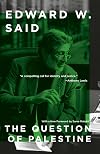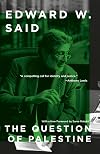
The Question of Palestine
by Edward W. Said
On This Page
Description
This original and deeply provocative book was the first to make Palestine the subject of a serious debate--one that remains as critical as ever. With the rigorous scholarship he brought to his influential Orientalism and an exile's passion (he is Palestinian by birth), Edward W. Said traces the fatal collision between two peoples in the Middle East and its repercussions in the lives of both the occupier and the occupied--as well as in the conscience of the West. He has updated this landmark show more work to portray the changed status of Palestine and its people in light of such developments as the Israeli invasion of Lebanon, the intifada, the Gulf War, and the ongoing MIddle East peace initiative. For anyone interested in this region and its future, The Question of Palestine remains the most useful and authoritative account available. show lessTags
Recommendations





Member Reviews
Thirty years old, but not out of date. Possibly the only work in English of what it's like to be on the receiving end of colonial invasion. Pretty much brilliant - only a few flaws (well I thought the bit about George Eliot was a digression). Should be compulsory reading.
I was first encouraged to read Said twelve years ago by a lecturer while doing a component of a history course on Islam at University. His works remain relevant and not outdated. I have been sympathetic to the plight of the Palestinian people for some time and this is a fine English work with which to communicate their struggle to a wider audience, particularly in the Western world, such as the USA. Said argues conclusively the raw deal that Palestinians have received since the creation of the state of Israel and how many of their diaspora continue to claim their nationality despite the dispossession of their homes that occurred after the creation of Israel. In addition he argues coherently that there needs to be a much greater balance show more in the reporting of the Palestinian-Israeli conflict in the USA particularly from the Palestinian perspective. show less
This is good background information from a Palestinian-American scholar. Unfortunately, despite being updated in 1992, it is hopelessly outdated. As it is not a history, it focuses on a small period in time, the second half of the 1970's, without going into a lot of what happened before, or giving sufficient cause-and-effect information. This is strictly how one person felt about being a Palestinian in the 1970's. Unfortunately, by quoting novels and editing quotes by inserting italics, parenthetical comments or comments in brackets. he reduces the scholarly quality of the book a bit.
This is a long essay, and of a polemical nature. Nonetheless, there is a considerable amount of information to be mulled over. After a short survey of the Zionist movement and the province of the Ottoman Empire's province, Mr. Said discusses at length the difficulties that the Palestinian people have faced in their struggle to obtain a hearing in the west, and more especially in Washington. Sadly, the history of the area since the publication demonstrates how little impact the book was able to generate.
Ratings
Members
- Recently Added By
Published Reviews
ThingScore 100
In this polemical essay, Edward Said, a Columbia professor and member of the Palestinian National Council, presents the Palestinian case to the American public--a follow-up to his general attack on the field of Middle East studies in Orientalism (1979). Charging inadequate coverage and media recognition as well as misrepresentation, Said--at times eloquent and erudite, at times propagandistic show more and convoluted--stresses the lack of direct communication between the Palestinians and the West. Palestinians like himself, he believes, should remind the world that the Palestinians will not simply disappear and that their situation as a dispossessed people must be faced equally with the Jewish holocaust. As Zionism and Israeli occupation of the West Bank since 1967 have attempted to negate a Palestinian identity by ignoring or stultifying it, so, he writes, has the PLO resuscitated the ""idea"" of Palestine and created an infrastructure capable of unifying and educating Palestinians within and outside Israel. Expounding on the negative impact of Zionism (Western imperialism) on Arabs in Israel as opposed to its benefits for Jews, Said traces the origins of the Palestinian nationalist movement to the encounter with Zionism in the 1880s; dwells on the critical year 1948 when many left what became the state of Israel; emphasizes post-1967 events and the rise of an effective PLO which he claims represents all Palestinians; and ends with his vision of the future -- notwithstanding Camp David and the Arab-Israeli treaty -- a secular democratic state. (Its implications for Israeli sovereignty are not discussed.) By using and recommending only partisan documentation, however, and neglecting to provide evidence for a number of controversial interpretations (Palestinian ""ejection from Israel; ""unauthorized"" Arab terrorism), Said limits the usefulness of his tract as a scholarly work; but the position had not heretofore been articulated at this elevated level. show less
added by thegeneral
Lists

Decolonize Palestine's Reading List
126 works; 3 members

2024-2025 Ezra Klein Guest Recommendations
213 works; 6 members

Palestine / Israel
17 works; 1 member
Author Information

105+ Works 16,786 Members
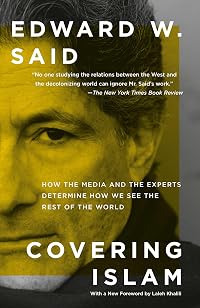
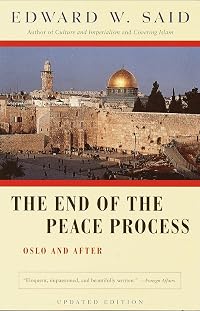
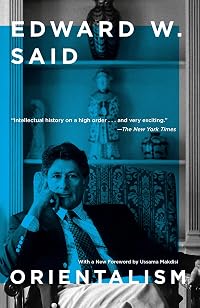
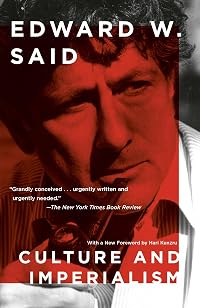
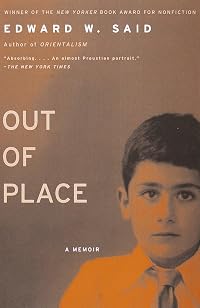
Born in Jerusalem and educated at Victoria College in Cairo and at Princeton and Harvard universities, Edward Said has taught at Columbia University since 1963 and has been a visiting professor at Harvard and Johns Hopkins University. He has had an unusual dual career as a professor of comparative literature, a recognized expert on the novelist show more and short story writer Joseph Conrad, (see Vol. 1) and as one of the most significant contemporary writers on the Middle East, especially the Palestinian question and the plight of Palestinians living in the occupied territories. Although he is not a trained historian, his Orientalism (1978) is one of the most stimulating critical evaluations of traditional Western writing on Middle Eastern history, societies, and literature. In the controversial Covering Islam (1981), he examined how the Western media have biased Western perspectives on the Middle East. A Palestinian by birth, Said has sought to show how Palestinian history differs from the rest of Arabic history because of the encounter with Jewish settlers and to present to Western readers a more broadly representative Palestinian position than they usually obtain from Western sources. Said is presently Old Dominion Foundation Professor in the Humanities at Columbia, editor of Arab Studies Quarterly, and chair of the board of trustees of the Institute of Arab Studies. He is a member of the Palestinian National Council as well as the Council on Foreign Relations in New York. (Bowker Author Biography) Edward W. Said is University Professor of English & Comparative Literature at Columbia University. He is the author of nineteen books, including "Orientalism" (which was nominated for a National Book Critics Circle Award), "Culture & Imperialism", "The End of the Peace Process", & "Out of Place", a memoir. He lives in New York City. (Bowker Author Biography) show less
Awards and Honors
Notable Lists
Common Knowledge
- Original publication date
- 1979
- Important places
- Palestine
- Important events
- Deir Yassin Massacre; 1948 Palestinian Exodus; Kafr Qasim Massacre; Lebanon War (1982); First Palestinian Intifada
- Dedication
- In memoriam
Farid Haddad
Rashid Hassan - Blurbers
- Lewis, Anthony
Classifications
- Genres
- Nonfiction, General Nonfiction, History
- DDC/MDS
- 327.56940174927 — Society, government, & culture Political science International Relations: Spies Asia Middle East The Levant Israel/Palestine
- LCC
- DS119.7 .S333 — History of Europe, Asia, Africa and Oceania Asia History of Asia Israel (Palestine). The Jews
- BISAC
Statistics
- Members
- 739
- Popularity
- 38,184
- Reviews
- 5
- Rating
- (3.84)
- Languages
- 5 — English, German, Italian, Portuguese, Spanish
- Media
- Paper, Ebook
- ISBNs
- 20
- ASINs
- 4