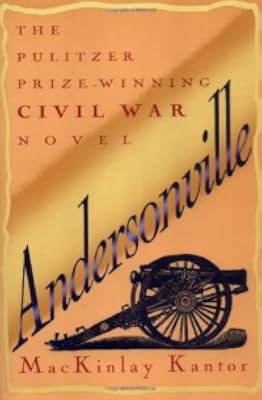
Andersonville
by MacKinlay Kantor
On This Page
Description
""The greatest of our Civil War novels" (New York Times) reissued for a new generation As the United States prepares to commemorate the Civil War's 150th anniversary, Plume reissues the Pulitzer Prize-winning novel widely regarded as the most powerful ever written about our nation's bloodiest conflict. MacKinlay Kantor's Andersonville tells the story of the notorious Confederate Prisoner of War camp, where fifty thousand Union soldiers were held captive and fourteen thousand died under show more inhumane conditions. This new edition will be widely read and talked about by Civil War buffs and readers of gripping historical fiction"-- show lessTags
Recommendations















Member Reviews
Oh my. This is brutal, brutal, brutal. I don't think I have ever read anything so horrifying as this story of the Andersonville prison in Georgia which contained some thirty thousand desperate souls during the last year of the Civil War. This was unapologeticaly heinous, yet written exquisitely, brilliantly . . I really can't put into words how hauntingly affecting this novel is.
Kantor weaves in the lives of many of the Union soldiers, many mere boys -- we are immersed in their pre-War lives, loves, vocations, and how they came to be in the stockade -- their stories permeate the narrative, making their fate all the more tragic. We also come to know Ira Claffey, the neighboring beneficient plantation owner -- his dignity and humanity in show more the face of his staggering continued losses -- this gives the novel its core of hope and somehow manages to lift the reader's heart above the morass that was Andersonville.
This novel is a masterpiece - well worth it's Pulitzer. It is not for the faint of heart, it is quite long, and there are countless side stories - but it has been one of the finest reading experieces I have ever had. An amazing amalgamation of horror and beauty. . . show less
Kantor weaves in the lives of many of the Union soldiers, many mere boys -- we are immersed in their pre-War lives, loves, vocations, and how they came to be in the stockade -- their stories permeate the narrative, making their fate all the more tragic. We also come to know Ira Claffey, the neighboring beneficient plantation owner -- his dignity and humanity in show more the face of his staggering continued losses -- this gives the novel its core of hope and somehow manages to lift the reader's heart above the morass that was Andersonville.
This novel is a masterpiece - well worth it's Pulitzer. It is not for the faint of heart, it is quite long, and there are countless side stories - but it has been one of the finest reading experieces I have ever had. An amazing amalgamation of horror and beauty. . . show less
I prophesy with all the terrible ardor I can muster: this will be a stench in the nostrils of history.
Perhaps the biggest disgrace in the entire history of the Civil War is the story of Andersonville. I wonder how MacKinlay Kantor bore to do the research and spend the time required with this material in order to tell this story. It is 766 pages of misery, sorrow, and shame.
What is somewhat amazing to me is that he was able to deal even-handedly with the civilian Southerners, who were also caught in this tragedy. There could have been an overwhelming temptation to paint everyone with the same brush, which, of course, would have been unfair but understandable in light of the egregiousness of this trespass against humanity.
Kantor said he show more began this project with his own experience in World War II in mind. He was among those who freed the camp at Buchenwald, and struggled with what to think of the German citizens who surrounded the camp and its horrors. He certainly did a marvelous job of separating the citizens, flawed though they certainly were, from the officers and guards at Andersonville. I felt it was clear that he believed the atrocities of Andersonville overshadowed any other aspect of leadership in the Southern ranks.
What matters a chivalrous Lee if we have a Winder? What matters the sacrifice of a Hood, if we have a Captain Wirz? What matters the competence of a Johnston or the spiritual strength of a sickly Stephens, if we have at home only the incompetence of venal surgeons, incompetence of a Seddon, frailty and futility of a sickly Seddon.
He has presented us with some very memorable and complex characters in Ira Claffey, Lucy Claffey and Harry Elkins. There is a growth of understanding in these people that one would surely hope to see in any human being bearing even the remotest witness to such a place. Ira, who has lost his three sons to the war and has sufficient reason to hate Northerners, comes full circle and performs several acts of kindness and bravery as he embraces again the idea that we are all humanity, regardless of our origins. And, he finds somewhere in the midst of all this loss and carnage a kind of hope.
But if he put mind and heart into the soil where his sons had gone, and where the human wastage of Andersonville had gone, and where that enormous blood-curdling fraction of America’s young males had gone, North and South--eventually the stalks might rise, toughen; beards would dry out, husks turn to parchment; and those hands who’d made his crop might reach in memory to carry him in salute to the crop, the fields, the earth itself.
Lucy, his daughter, and Harry Elkins, a young surgeon, who struggles with the conditions of the camp and the total lack of concern or decency from the officers, also struggle with how to keep a spark of love alive in the face of so much sorrow and hatred.
“I don’t believe he’s right. Do you? Shouldn’t love be bigger than--? And embrace more than just--? I mean, whether there were a stockade and a hospital or not? Or even a war. Seems like there’ve always been wars going on, one place or another. And boys dying in them. But people still managed to love one another.”
But, this is not primarily a Southern tale, this is to a greater extent a Northern one. Interspersed with the events that are the lives of the families Claffey and Tebbs, Kantor tells us, in detail, the lives of the true victims of this sinkhole, and he paints for us no happy endings, because those were almost unknown in Andersonville. The lives of Eben Dolliver, Edward Blamey, Nathan Dreyfoos, Eric Torrioson are imprinted on me forever, along with the disgusting likes of Willie Collins, who is among those who are hanged by the prisoners themselves for the crimes they commit against their fellows.
The carnage, the suffering, was so extreme, I had to stop often and just take refuge from the camp myself. I kept hoping for someone to escape, someone to prevail, then for someone to just survive, but over and over again, Kantor told me this is fiction that is history and I will not change the outcome for any of these men. I wept when Eric, who tried to escape by pretending to be dead and lying among the rotted bodies in the death house, a feat that was only possible because the living and the dead were almost indistinguishable, became one of their number.
I was elated to read the story of Nazareth Stricker, who is saved by a rebel soldier, Coral Tebbs, in the most unlikely but believable turn of events in the book. But, this elation was tempered by the knowledge of how many, some 14,000 men, had not been so lucky.
The cruelty of General John Winder and Captain Henry Wirz, if even remotely as chronicled, merits them a special place in hell. I feel sure Dante would place them in the seventh circle of hell and we would find them submerged in the boiling blood of human beings, right up to their eyebrows, for all eternity.
I have tried to review this book on its own merits. It is a work of fiction, but based on history. I am not sure anyone actually knows the entire truth of Andersonville. The victors write the history, and there are certainly alternative views of this one, as there are of anything part of a distant war. Noted historian Shelby Foote has said when asked about Andersonville:
“there’s no attention to Camp Chase or any of the northern camps. And that’s wrong. They were almost as bad. And less forgivable, because those prisoners in Andersonville got the rations the Confederate soldier was getting. The southern prisoners in northern camps did not get the rations northern soldiers were getting. Many of the deaths in northern camps were due to cold weather at Lake Michigan and other places where they didn’t have blankets to cover themselves with and so forth.”
Kantor clearly says that the prisoners at Andersonville did not get the same rations as Confederate soldiers, so one or the other of these men is wrong. Kantor is writing fiction, so perhaps this is a license he has taken. No such license is needed--this tragedy is sufficient without embellishment. It is also, however, immaterial whether atrocities were committed elsewhere, nothing erases what happened here. Perhaps it is the sheer numbers that overwhelm; 14,000 men died at Andersonville, 2000 men died at Camp Chase.
Nothing mitigates the horror of war. When will we ever learn?
A note beyond the scope of the book, which ends with the liberation of Andersonville: Henry Wirz was the only officer executed for war crimes in the Civil War. show less
Perhaps the biggest disgrace in the entire history of the Civil War is the story of Andersonville. I wonder how MacKinlay Kantor bore to do the research and spend the time required with this material in order to tell this story. It is 766 pages of misery, sorrow, and shame.
What is somewhat amazing to me is that he was able to deal even-handedly with the civilian Southerners, who were also caught in this tragedy. There could have been an overwhelming temptation to paint everyone with the same brush, which, of course, would have been unfair but understandable in light of the egregiousness of this trespass against humanity.
Kantor said he show more began this project with his own experience in World War II in mind. He was among those who freed the camp at Buchenwald, and struggled with what to think of the German citizens who surrounded the camp and its horrors. He certainly did a marvelous job of separating the citizens, flawed though they certainly were, from the officers and guards at Andersonville. I felt it was clear that he believed the atrocities of Andersonville overshadowed any other aspect of leadership in the Southern ranks.
What matters a chivalrous Lee if we have a Winder? What matters the sacrifice of a Hood, if we have a Captain Wirz? What matters the competence of a Johnston or the spiritual strength of a sickly Stephens, if we have at home only the incompetence of venal surgeons, incompetence of a Seddon, frailty and futility of a sickly Seddon.
He has presented us with some very memorable and complex characters in Ira Claffey, Lucy Claffey and Harry Elkins. There is a growth of understanding in these people that one would surely hope to see in any human being bearing even the remotest witness to such a place. Ira, who has lost his three sons to the war and has sufficient reason to hate Northerners, comes full circle and performs several acts of kindness and bravery as he embraces again the idea that we are all humanity, regardless of our origins. And, he finds somewhere in the midst of all this loss and carnage a kind of hope.
But if he put mind and heart into the soil where his sons had gone, and where the human wastage of Andersonville had gone, and where that enormous blood-curdling fraction of America’s young males had gone, North and South--eventually the stalks might rise, toughen; beards would dry out, husks turn to parchment; and those hands who’d made his crop might reach in memory to carry him in salute to the crop, the fields, the earth itself.
Lucy, his daughter, and Harry Elkins, a young surgeon, who struggles with the conditions of the camp and the total lack of concern or decency from the officers, also struggle with how to keep a spark of love alive in the face of so much sorrow and hatred.
“I don’t believe he’s right. Do you? Shouldn’t love be bigger than--? And embrace more than just--? I mean, whether there were a stockade and a hospital or not? Or even a war. Seems like there’ve always been wars going on, one place or another. And boys dying in them. But people still managed to love one another.”
But, this is not primarily a Southern tale, this is to a greater extent a Northern one. Interspersed with the events that are the lives of the families Claffey and Tebbs, Kantor tells us, in detail, the lives of the true victims of this sinkhole, and he paints for us no happy endings, because those were almost unknown in Andersonville. The lives of Eben Dolliver, Edward Blamey, Nathan Dreyfoos, Eric Torrioson are imprinted on me forever, along with the disgusting likes of Willie Collins, who is among those who are hanged by the prisoners themselves for the crimes they commit against their fellows.
The carnage, the suffering, was so extreme, I had to stop often and just take refuge from the camp myself. I kept hoping for someone to escape, someone to prevail, then for someone to just survive, but over and over again, Kantor told me this is fiction that is history and I will not change the outcome for any of these men. I wept when Eric, who tried to escape by pretending to be dead and lying among the rotted bodies in the death house, a feat that was only possible because the living and the dead were almost indistinguishable, became one of their number.
I was elated to read the story of Nazareth Stricker, who is saved by a rebel soldier, Coral Tebbs, in the most unlikely but believable turn of events in the book. But, this elation was tempered by the knowledge of how many, some 14,000 men, had not been so lucky.
The cruelty of General John Winder and Captain Henry Wirz, if even remotely as chronicled, merits them a special place in hell. I feel sure Dante would place them in the seventh circle of hell and we would find them submerged in the boiling blood of human beings, right up to their eyebrows, for all eternity.
I have tried to review this book on its own merits. It is a work of fiction, but based on history. I am not sure anyone actually knows the entire truth of Andersonville. The victors write the history, and there are certainly alternative views of this one, as there are of anything part of a distant war. Noted historian Shelby Foote has said when asked about Andersonville:
“there’s no attention to Camp Chase or any of the northern camps. And that’s wrong. They were almost as bad. And less forgivable, because those prisoners in Andersonville got the rations the Confederate soldier was getting. The southern prisoners in northern camps did not get the rations northern soldiers were getting. Many of the deaths in northern camps were due to cold weather at Lake Michigan and other places where they didn’t have blankets to cover themselves with and so forth.”
Kantor clearly says that the prisoners at Andersonville did not get the same rations as Confederate soldiers, so one or the other of these men is wrong. Kantor is writing fiction, so perhaps this is a license he has taken. No such license is needed--this tragedy is sufficient without embellishment. It is also, however, immaterial whether atrocities were committed elsewhere, nothing erases what happened here. Perhaps it is the sheer numbers that overwhelm; 14,000 men died at Andersonville, 2000 men died at Camp Chase.
Nothing mitigates the horror of war. When will we ever learn?
A note beyond the scope of the book, which ends with the liberation of Andersonville: Henry Wirz was the only officer executed for war crimes in the Civil War. show less
I read the Reader’s Digest condensed version of this novel before I was in high school, more than fifty years ago. Before I could understand most of the horror I was reading. Before I understood better the larger stage of the Civil War era, and its myriad causes and conditions. In the midst of violent racial unrest in the late 1960s. Since then, I studied American History extensively, both formally (my B.A.) and informally, and re-reading the full novel more than half a century after my first truncated encounter with it was an entirely different experience. I might never have stumbled upon it again had it not been for a reading challenge with the prompt: an award-winning book from the year were born. Andersonville won the Pulitzer show more Prize for Fiction the year I was born. In school, we certainly did not learn much about the Civil War prisons and the people in the surrounding areas whose lives were so displaced – you hear about the battles and the glorious victories and defeats, the drama in Washington and Richmond where politicians warred among themselves. We should teach more about Andersonville, which was more than just a prison camp, but really more of a death camp, where the smallest scratch was almost a death sentence because of the filthy conditions, inadequate shelter, scurvy, predation.
The protagonist of this book is essentially Andersonville prison, hastily constructed by the Confederacy during the Civil War on parts of several landowners’ properties in a remote Georgia area not far from the rail line that would transport the Yankee prisoners of war. We first meet the fictional Ira Claffey, whose plantation is near what becomes an open-air house of horrors – the only structure is the walls that surround the acres of a hellish landscape on which an estimated 40,000 prisoners were crammed into a space meant for no more than 10,000, with poor sanitation, inadequate food, with a large percentage dying from exposure, disease, starvation, infected wounds, and about a 25% mortality rate. The conditions, horrible as they were, seemed to be less the result of malice on the part of the Confederate officers charged with the prisoners’ incarceration, but rather incompetence and indifference on the part of the upper echelon.
The closest to a protagonist of a human variety is Ira Claffey and his daughter Lucy – his wife descended into madness after their three sons who reached adulthood died in service to the Confederacy – and how they are affected by the proximity of Andersonville, and the horrors of the miserable, unlivable conditions the prisoners are subjected to. Throughout the book, we meet some of the (fictional) inhabitants of the area, learn a little about them. And we meet some of the fictional Yankee prisoners, learn a little of their lives before their time in Andersonville, often glimpses of their childhood, during their incarceration, and if they are lucky, which is rare, after. Certain Confederate officers and doctors tried to improve conditions but were then branded as traitors by Generals who were hell-bent on keeping the conditions the most miserable possible and expending the least amount of money, particularly as the tide of war turns away; yet despite their efforts, after the war they took the fall and were convicted of crimes against humanity. I understand the Confederate military figures in the book are real people. Also, some of the POWs mentioned – Boston Corbett, Chickamauga, John Ransom, John McElroy – also existed in real life. Ira Claffey and some of the other civilian agrarian neighbors around the prison showed compassion toward the prisoners and were also accused of treasonous behavior. Kantor certainly uses the conditions at Andersonville to raise philosophical and moral questions with which various characters grapple, but never explicitly answer.
While most of the male characters are richly drawn, the female characters are largely one-dimensional and almost always object rather than subject. I ascribe that deficiency more to prevailing attitudes about women’s place during the time period during which Kantor researched and wrote this novel (from the 1930s to the 1950s) than to any actual representation of women during the Civil War era. He probably had very little in the way of research materials for women’s accounts of their experiences during the war that might have helped flesh them out. In addition, I cringed near the end where Kantor perpetuates the happy slave myth when the war ends and Ira Claffey tells his enslaved human workers that they are free, and they are so grateful and will stay loyal, etc. It seemed almost a cartoonish or Hollywood ending.
But again, Kantor wrote during a different time, and in the interim more published journals or letters or oral histories of women and enslaved people have emerged. Accordingly, subtracting from the overall five-star rating of a mid-20th century book based on 21st century sensibilities is unwarranted. Some people have complained about the length of this book – my 60th anniversary edition is 754 pages – and have said the story could have been told in fewer pages, but I disagree. The pictures he painted and the little stories he told were so vivid that I feel I visited with this place for as long as the prison stood, and that is both disconcerting and remarkable, particularly since the focus of these stories is not the pompous politicians and generals, but on how this horrendous place affected the lives of those whose lives it touched inside and outside its walls. This book will stay with me for a long time. show less
The protagonist of this book is essentially Andersonville prison, hastily constructed by the Confederacy during the Civil War on parts of several landowners’ properties in a remote Georgia area not far from the rail line that would transport the Yankee prisoners of war. We first meet the fictional Ira Claffey, whose plantation is near what becomes an open-air house of horrors – the only structure is the walls that surround the acres of a hellish landscape on which an estimated 40,000 prisoners were crammed into a space meant for no more than 10,000, with poor sanitation, inadequate food, with a large percentage dying from exposure, disease, starvation, infected wounds, and about a 25% mortality rate. The conditions, horrible as they were, seemed to be less the result of malice on the part of the Confederate officers charged with the prisoners’ incarceration, but rather incompetence and indifference on the part of the upper echelon.
The closest to a protagonist of a human variety is Ira Claffey and his daughter Lucy – his wife descended into madness after their three sons who reached adulthood died in service to the Confederacy – and how they are affected by the proximity of Andersonville, and the horrors of the miserable, unlivable conditions the prisoners are subjected to. Throughout the book, we meet some of the (fictional) inhabitants of the area, learn a little about them. And we meet some of the fictional Yankee prisoners, learn a little of their lives before their time in Andersonville, often glimpses of their childhood, during their incarceration, and if they are lucky, which is rare, after. Certain Confederate officers and doctors tried to improve conditions but were then branded as traitors by Generals who were hell-bent on keeping the conditions the most miserable possible and expending the least amount of money, particularly as the tide of war turns away; yet despite their efforts, after the war they took the fall and were convicted of crimes against humanity. I understand the Confederate military figures in the book are real people. Also, some of the POWs mentioned – Boston Corbett, Chickamauga, John Ransom, John McElroy – also existed in real life. Ira Claffey and some of the other civilian agrarian neighbors around the prison showed compassion toward the prisoners and were also accused of treasonous behavior. Kantor certainly uses the conditions at Andersonville to raise philosophical and moral questions with which various characters grapple, but never explicitly answer.
While most of the male characters are richly drawn, the female characters are largely one-dimensional and almost always object rather than subject. I ascribe that deficiency more to prevailing attitudes about women’s place during the time period during which Kantor researched and wrote this novel (from the 1930s to the 1950s) than to any actual representation of women during the Civil War era. He probably had very little in the way of research materials for women’s accounts of their experiences during the war that might have helped flesh them out. In addition, I cringed near the end where Kantor perpetuates the happy slave myth when the war ends and Ira Claffey tells his enslaved human workers that they are free, and they are so grateful and will stay loyal, etc. It seemed almost a cartoonish or Hollywood ending.
But again, Kantor wrote during a different time, and in the interim more published journals or letters or oral histories of women and enslaved people have emerged. Accordingly, subtracting from the overall five-star rating of a mid-20th century book based on 21st century sensibilities is unwarranted. Some people have complained about the length of this book – my 60th anniversary edition is 754 pages – and have said the story could have been told in fewer pages, but I disagree. The pictures he painted and the little stories he told were so vivid that I feel I visited with this place for as long as the prison stood, and that is both disconcerting and remarkable, particularly since the focus of these stories is not the pompous politicians and generals, but on how this horrendous place affected the lives of those whose lives it touched inside and outside its walls. This book will stay with me for a long time. show less
Kantor weaves his fictional account of the inmates and jailers of the Andersonville prison camp, along with the lives of families living nearby using actual prison diaries and his own impressive writing skills. This is a good read, but a difficult one; the prose is nearly as bleak as the facts it aims to portray, and rightly so. It's a somber subject that demands a bleak tone.
Andersonville is the 1956 Pulitzer Prize winning novel about the same named Confederate prisoner of war camp located at Anderson Georgia. The novel graphically portrays life in and around the notorious camp. The point of view of the novel is told from multiple perspectives.
Ira Claffey and his daughter Lucy are well off residents of their small community, who have the misfortune of having the prison built close to their plantation. Despite having three sons killed in various battles on behalf of the Confederacy, Ira and Lucy remain remarkably charitable towards the union prisoners and even try unsuccessfully to relieve some of their suffering. Harrell Ellkins is brought to Andersonville as a doctor for the prisoners and becomes show more increasingly horrified and despondent over the treatment of the prisoners. Several Union prisoners’ perspectives are also conveyed as they try to survive the increasingly squalid conditions of their confinement and starvation. Also given a voice is Henry Wirz, the camp commandant and General John Winder, who was in charge of all the Confederate prisoners of war. By giving voice to some many different perspectives, the author tries to paint a historically accurate picture of what life would have been like in 1864 Georgia.
The novel is well researched and very well written. Modern readers may be surprised that such topics as homosexuality, rape and abortion are touched on in the course of the book. Descriptions of the absolutely disgusting condition of the camp and the many diseases suffered by the emaciated union prisoners are strongly reminiscent of Nazi concentration camps. Readers who have studied the Civil War and that time period will surely recognize little historical references. Such as Benny Haven, who was the owner of a popular tavern located in the town of West Point and housewives, little sewing kits that soldiers were issued to help keep their uniforms repaired with while in the field. Newcomers to the topic might feel a little lost at times, but Andersonville is definitely worth the effort. show less
Ira Claffey and his daughter Lucy are well off residents of their small community, who have the misfortune of having the prison built close to their plantation. Despite having three sons killed in various battles on behalf of the Confederacy, Ira and Lucy remain remarkably charitable towards the union prisoners and even try unsuccessfully to relieve some of their suffering. Harrell Ellkins is brought to Andersonville as a doctor for the prisoners and becomes show more increasingly horrified and despondent over the treatment of the prisoners. Several Union prisoners’ perspectives are also conveyed as they try to survive the increasingly squalid conditions of their confinement and starvation. Also given a voice is Henry Wirz, the camp commandant and General John Winder, who was in charge of all the Confederate prisoners of war. By giving voice to some many different perspectives, the author tries to paint a historically accurate picture of what life would have been like in 1864 Georgia.
The novel is well researched and very well written. Modern readers may be surprised that such topics as homosexuality, rape and abortion are touched on in the course of the book. Descriptions of the absolutely disgusting condition of the camp and the many diseases suffered by the emaciated union prisoners are strongly reminiscent of Nazi concentration camps. Readers who have studied the Civil War and that time period will surely recognize little historical references. Such as Benny Haven, who was the owner of a popular tavern located in the town of West Point and housewives, little sewing kits that soldiers were issued to help keep their uniforms repaired with while in the field. Newcomers to the topic might feel a little lost at times, but Andersonville is definitely worth the effort. show less
This book was ridiculously awful.
The worst part was how, for the first 50 pages or so, I thought it was going to be fantastic. It was about a southern town (Anderson) where a prison was built during the civil war. The first chapter was about the family whose land was taken by the rebels in order to build this prison. The characters were rich, engaging and conflicted.
However, it turned out that basically every chapter is full of new people. There was a very small continuing plot line, but for the most part it was disjointed tellings of the atrocities in this prison. Incredibly graphic passages abounded, and while I did care in that "I care that any human was treated this way," kind of way, I did not care in an, "I know and care about show more this character specifically," kind of way.
Also, Kantor felt the need to not include any quotation marks in the book. Half the time I didn't even realize someone was talking until halfway through their speech. Not cool my friend. Not cool.
The author clearly did his research, and wanted to include every morsel of it, and I can see why Civil War buffs might care about this book. It was not for me though. show less
The worst part was how, for the first 50 pages or so, I thought it was going to be fantastic. It was about a southern town (Anderson) where a prison was built during the civil war. The first chapter was about the family whose land was taken by the rebels in order to build this prison. The characters were rich, engaging and conflicted.
However, it turned out that basically every chapter is full of new people. There was a very small continuing plot line, but for the most part it was disjointed tellings of the atrocities in this prison. Incredibly graphic passages abounded, and while I did care in that "I care that any human was treated this way," kind of way, I did not care in an, "I know and care about show more this character specifically," kind of way.
Also, Kantor felt the need to not include any quotation marks in the book. Half the time I didn't even realize someone was talking until halfway through their speech. Not cool my friend. Not cool.
The author clearly did his research, and wanted to include every morsel of it, and I can see why Civil War buffs might care about this book. It was not for me though. show less
#60. [Andersonville] by MacKinlay Kantor
Andersonville is the common name of show more Camp Sumter, a Confederate prisoner-of-war stockade built in a sparsely populated region of western Georgia in April 1864. As many as 45,000 northern captives were held there (45,000 at one time, many more were funneled through in the single year of its existence). By the time it was liberated by Federal troops in May 1865, about 13,000 prisoners had died there. Capt. Henry Wirz, commander of the stockade, was the only--the only--Confederate official to be tried and executed for war crimes.
[Andersonville] is MacKinlay Kantor's mammoth novel about this notorious prison. Awarded the Pulitzer Prize for fiction in 1956, the book is a detailed and horrifying depiction of the prison, seen through the eyes its neighbors, of the officers running it, the old men and young boys guarding it, and the unfortunates held there. The prison mirrors the trajectory of the Confederacy: Much of the squalor was the result of insufficient resources--food, medicines, building materials, manpower--the same shortages that plagued the entire Confederacy.
The prison itself was a simple rectangular stockade, initially enclosing about 16 1/2 acres, eventually 26 1/2 acres. Slaves were commandeered from surrounding plantations to log the pines covering the site, squaring 20-foot-long logs, and erecting them on end, side-by-side, set five feet into the ground. Outside the stockade wall, guard platforms, each accessed by a ladder, were erected. A small stream, the sole water source, traversed the yard. That was it. No housing, no latrines, no shelter from sun or rain or cold.
At first, as characters were introduced, the book struck me as formulaic. We first meet a thoughtful, sympathetic (but nevertheless pro-slavery) plantation owner and his family, decimated by the war; then an idealistic army surgeon; the villainous General Winder, a West Point deplorable, foul-mouthed, imperious, racist; the first prisoners representing a cross-section of the Federal troops, from cities, farms, small towns, of varying ethnicities, ages, backgrounds. Formulaic it may be, but Kantor did it well. A sampling of prisoners:
Willie Collins is an Irish thug from New York City--he committed his first murder at 14--who cycled in and out of jail for assault, robbery, general antisocial behavior. Released from civil prison after the war's start, none of the established gangsters wanted his services; he was bad luck.
Captured by the Rebs and imprisoned at Andersonville, Collins reverted to form: intimidation, assault, theft. He recruited a hostile gang that preyed on fellow prisoners, one of several such gangs, known as Raiders.
Nathan Dreyfuss never thought he'd end up in a place like Andersonville. "Born in Boston, he had spent most of his life abroad, travelling from country to country with his father and mother, taught by English tutors the while." In New York City, he encounters two young Union officers, gets into a fight with them and bests both, then enlists to serve in their unit. Sent into battle, the officers are killed, Dreyfoos is captured (along with a majorty of the unit's soldiers). Inside the stockade, he is recruited into the "Regulators," a prisoner police force, organized to bring the Raider gangs to justice.
Chickamauga is called that because that's where he lost both his leg and his freedom. A harelip makes him difficult to understand. Extraordinarily bad breath makes him difficult to stand (near). He's an outcast. When he exposes a tunneling project to the guards in exchange for extra food, he learns what being an outcast is really like.
Judah Hansom from "York State" considers himself a woodsman though he's inherited from his father a 600-acre farm on which he's always worked, along with several mortgages. Goaded by the heckling of a young disabled veteran--"Might get shot!"--Judah enlists. Imprisoned at Andersonville, Judah enlists a handful of fellows to tunnel out to freedom. He hates being underground, but he's driven to take on more and more of the digging.
Willie Mann was brought up in rural Missouri, the son of a doctor who was known to be "foolish on the subject of water." (though none of his eight children died in infancy). Thoroughly indoctrinated, Willie is particular about water that he'll drink. Once imprisoned, he consumes very little and at every opportunity tries to collect rainwater and funnel it directly into his mouth. Then a violent thunderstorm hits.
Eric Torrosian schemes to escape by playing dead. Prisoners tote their fellows who have died to the stockade gate, and every evening slaves load the corpses on a wagon and take them to the dead house outside to await burial. Once in the unguarded dead house, Eric can slip out and disappear into the forest surrounding the prison.
Relatively few characters survive the book. It is a long, grim story. show less
That night they were marched into the Andersonville stockade; and so they woke up staring, and they could not believe, they could not believe.
Nathan Dreyfoos said, It was too good to last.
But, Sarge, they can't mean to keep us here.
Look at the other prisoners, Allen.
But they must have made a mistake. Maybe they sent us to the wrong place. Maybe this is a punishment camp. Eh, Sarge? Oh, for God's sake, Sarge, please do ask the guards if there hain't been a mistake! A man can't live in a place like this.
A great many of them don't, said one of the blackened hairy creatures who stood watching and listening.
Andersonville is the common name of show more Camp Sumter, a Confederate prisoner-of-war stockade built in a sparsely populated region of western Georgia in April 1864. As many as 45,000 northern captives were held there (45,000 at one time, many more were funneled through in the single year of its existence). By the time it was liberated by Federal troops in May 1865, about 13,000 prisoners had died there. Capt. Henry Wirz, commander of the stockade, was the only--the only--Confederate official to be tried and executed for war crimes.
[Andersonville] is MacKinlay Kantor's mammoth novel about this notorious prison. Awarded the Pulitzer Prize for fiction in 1956, the book is a detailed and horrifying depiction of the prison, seen through the eyes its neighbors, of the officers running it, the old men and young boys guarding it, and the unfortunates held there. The prison mirrors the trajectory of the Confederacy: Much of the squalor was the result of insufficient resources--food, medicines, building materials, manpower--the same shortages that plagued the entire Confederacy.
The prison itself was a simple rectangular stockade, initially enclosing about 16 1/2 acres, eventually 26 1/2 acres. Slaves were commandeered from surrounding plantations to log the pines covering the site, squaring 20-foot-long logs, and erecting them on end, side-by-side, set five feet into the ground. Outside the stockade wall, guard platforms, each accessed by a ladder, were erected. A small stream, the sole water source, traversed the yard. That was it. No housing, no latrines, no shelter from sun or rain or cold.
At first, as characters were introduced, the book struck me as formulaic. We first meet a thoughtful, sympathetic (but nevertheless pro-slavery) plantation owner and his family, decimated by the war; then an idealistic army surgeon; the villainous General Winder, a West Point deplorable, foul-mouthed, imperious, racist; the first prisoners representing a cross-section of the Federal troops, from cities, farms, small towns, of varying ethnicities, ages, backgrounds. Formulaic it may be, but Kantor did it well. A sampling of prisoners:
Willie Collins is an Irish thug from New York City--he committed his first murder at 14--who cycled in and out of jail for assault, robbery, general antisocial behavior. Released from civil prison after the war's start, none of the established gangsters wanted his services; he was bad luck.
There was nothing for Willie to do but enlist, which he did quickly, and then deserted just as quickly, bounty money sewn in his drawers. In this way, he went from regiment to regiment. It has never occurred to him that he might be sent into combat, but that was what happened after he joined the Eighty-eighth Pennsylvania, before he'd found opportunity to take his usual French Leave.
Captured by the Rebs and imprisoned at Andersonville, Collins reverted to form: intimidation, assault, theft. He recruited a hostile gang that preyed on fellow prisoners, one of several such gangs, known as Raiders.
Nathan Dreyfuss never thought he'd end up in a place like Andersonville. "Born in Boston, he had spent most of his life abroad, travelling from country to country with his father and mother, taught by English tutors the while." In New York City, he encounters two young Union officers, gets into a fight with them and bests both, then enlists to serve in their unit. Sent into battle, the officers are killed, Dreyfoos is captured (along with a majorty of the unit's soldiers). Inside the stockade, he is recruited into the "Regulators," a prisoner police force, organized to bring the Raider gangs to justice.
Chickamauga is called that because that's where he lost both his leg and his freedom. A harelip makes him difficult to understand. Extraordinarily bad breath makes him difficult to stand (near). He's an outcast. When he exposes a tunneling project to the guards in exchange for extra food, he learns what being an outcast is really like.
Judah Hansom from "York State" considers himself a woodsman though he's inherited from his father a 600-acre farm on which he's always worked, along with several mortgages. Goaded by the heckling of a young disabled veteran--"Might get shot!"--Judah enlists. Imprisoned at Andersonville, Judah enlists a handful of fellows to tunnel out to freedom. He hates being underground, but he's driven to take on more and more of the digging.
Willie Mann was brought up in rural Missouri, the son of a doctor who was known to be "foolish on the subject of water." (though none of his eight children died in infancy). Thoroughly indoctrinated, Willie is particular about water that he'll drink. Once imprisoned, he consumes very little and at every opportunity tries to collect rainwater and funnel it directly into his mouth. Then a violent thunderstorm hits.
Eric Torrosian schemes to escape by playing dead. Prisoners tote their fellows who have died to the stockade gate, and every evening slaves load the corpses on a wagon and take them to the dead house outside to await burial. Once in the unguarded dead house, Eric can slip out and disappear into the forest surrounding the prison.
Relatively few characters survive the book. It is a long, grim story. show less
Members
- Recently Added By
Lists

The Guardian's 1000 Novels Everyone Must Read
1,005 works; 547 members

Pulitzer Prize Winners for Fiction
102 works; 54 members
National Book Award Finalists - Fiction
377 works; 12 members

Discontinued
19 works; 4 members

Publisher's Weekly Bestsellers - Part II - 1940 - 1979
355 works; 5 members

Books Set in Georgia
11 works; 4 members

Blue Pyramid 1,276 Best Books of All Time
1,248 works; 32 members

AlphaKIT: Brown
21 works; 4 members

Mustich's 1000 Books to Read Before You Die: A Life Changing List
1,001 works; 19 members
Author Information

70+ Works 3,964 Members
MacKinlay Kantor is the Pulitzer Prize-winning author of Andersonville, the novel about the horrifying Confederate prisoner-of-war camp in Georgia. Kantor is also known as a war correspondent and as the author of the novella and eventual screenplay The Best Years of Our Lives, a film that won seven Academy Awards. Kantor died in 1977 at the age of show more seventy-three. show less
Some Editions
Awards and Honors
Awards
Distinctions
Series
Belongs to Publisher Series
Signet Books (T 1388)
Work Relationships
Is contained in
Common Knowledge
- Canonical title*
- La polvere e la gloria
- Original title
- Andersonville
- Original publication date
- 1955-10-27
- People/Characters
- Ira Claffey; Veronica Claffey; Lucy Claffey; Captain W. S. Winder; Captain Boyce Charwick; Reverand Mr. Cato Dillard (show all 16); Effie Dillard; Marget Lumpkin Tebbs; Dr. Pierre Bucheton; Captain Henry Wirz; Major-General George H. Thomas; John McElroy; William Collins; Boston Corbett; John Winder; John L Ranson
- Important places
- Andersonville Prison, Macon County, Georgia, USA
- Important events
- American Civil War (1861 | 1865); 19th century
- Epigraph
- "The future historian who shall undertake to write an unbiased story of the War between the States, will be compelled to weigh in the scale of justice all its parts and features; and if the revealing crimes . . . have indeed ... (show all)been committed, the perpetrators must be held accountable. Be they of the South or of the North, they can not escape history."
R. Randolph Stevenson
Formerly surgeon in the Army of the Confederate States of America - Dedication
- To Irene
- First words
- Sometimes there was a compulsion which drew Ira Claffey from his plantation and sent him to walk the forest. It came upon him at eight o'clock on this morning of October twenty-third; he responded, he yielded, he climbed over... (show all) the snake fence at the bounday of his sweet potato field and went away among the pines. -Chapter 1
- Last words
- (Click to show. Warning: May contain spoilers.)When he had nearly reached the lane, birds rose before him like an omen.
- Original language*
- Amerikanisch
- Canonical DDC/MDS
- 813.52
- Canonical LCC
- PS3521.A47
*Some information comes from Common Knowledge in other languages. Click "Edit" for more information.
Classifications
Statistics
- Members
- 1,323
- Popularity
- 18,185
- Reviews
- 21
- Rating
- (4.07)
- Languages
- English, Italian
- Media
- Paper, Audiobook, Ebook
- ISBNs
- 24
- UPCs
- 1
- ASINs
- 43