
Caribbean
by James A. Michener
On This Page
Description
Fiction. Literature. Thriller. Historical Fiction. HTML:In this acclaimed classic novel, James A. Michener sweeps readers off to the Caribbean, bringing to life the eternal allure and tumultuous history of this glittering string of islands. From the 1310 conquest of the Arawaks by cannibals to the decline of the Mayan empire, from Columbus’s arrival to buccaneer Henry Morgan’s notorious reign, from the bloody slave revolt on Haiti to the rise of Cuba’s Fidel Castro, Caribbean packs show more seven hundred dramatic years into a tale teeming with revolution and romance, authentic characters and thunderous destinies. Through absorbing, magnificent prose, Michener captures the essence of the islands in all of their awe-inspiring scope and wonder.Praise for Caribbean
“Michener is a master.”—Boston Herald
“A grand epic . . . [James A. Michener] sympathizes with the struggles of the region’s most oppressed, and succeeds in presenting the Caribbean in its rich diversity.”—The Plain Dealer
“Remarkable and praiseworthy . . . utterly engaging.”—The Washington Post Book World
“Even American tourists familiar with some of the serene islands will find themselves enlightened. . . . In Caribbean, there appears to be a strong aura of truth behind the storytelling.”—The New York Times. show less
Tags
Recommendations







































Member Reviews
Another wonderful Michener novel which spans time from the indigenous peoples of the Caribbean to the 1980's. I read this over a span of time as the chapters do not seem as tightly bound as some of the other novels. Each chapter is set in a different island. There are big names such as Columbus, but most of the characters are those that experienced the beauty and horrors of the islands. African slaves were first brought to the islands by the British in approximately the 1500's as sugar became a major product. The sugar trade and the sugar fields were places of horror as slaves were starved, whipped, and replaced by new shiploads of peoples brought from Africa.
Much of the book involves the struggle between the Spanish who first show more discovered the islands, the British who sent many of their lesser nobility to the islands to rule, and the French. There are stories of sea battles, privacy, diplomatic encounters, and personal love stories. Race plays a major role in almost all of the chapters. The whites honestly believed the black race to be inferior, felt no pain, and were treated as such. As more and more children were born of mixed race, there developed another class of biracial people. At all times, the white race was superior, the mixed races depended on the lightness of their skin, and the blacks were at the bottom and were treated as such. This is a honest look at race relations in the islands but one that had a definite affect on the US.
One of the later chapters involves an East Indian man who showed exceptional talent and was sent to the states to study. He can stay only as long as he is a student but not wanting to return, he falls into a scam of marriage to a woman in order to stay. Very interesting look at a situation known to happen.
Loved almost every chapter of this book. Michener has such a way of taking the bones of history and adding characters who explain the history much better than "just the facts" as the facts are always complicated. show less
Much of the book involves the struggle between the Spanish who first show more discovered the islands, the British who sent many of their lesser nobility to the islands to rule, and the French. There are stories of sea battles, privacy, diplomatic encounters, and personal love stories. Race plays a major role in almost all of the chapters. The whites honestly believed the black race to be inferior, felt no pain, and were treated as such. As more and more children were born of mixed race, there developed another class of biracial people. At all times, the white race was superior, the mixed races depended on the lightness of their skin, and the blacks were at the bottom and were treated as such. This is a honest look at race relations in the islands but one that had a definite affect on the US.
One of the later chapters involves an East Indian man who showed exceptional talent and was sent to the states to study. He can stay only as long as he is a student but not wanting to return, he falls into a scam of marriage to a woman in order to stay. Very interesting look at a situation known to happen.
Loved almost every chapter of this book. Michener has such a way of taking the bones of history and adding characters who explain the history much better than "just the facts" as the facts are always complicated. show less
James Michener is my go to author when I want to learn the in depth history of an area. The Caribbean was at the top of my list because of my impending move to Panamá. This book is definitely being added to my Panamá Book List!
James has a formula that totally works for me. He starts as far back as he can, in this case with the wonderful Arawak indigenous tribe, and weaves stories out of non-fiction facts and fictional stories. Each (long) chapter is vignette covering a particular time frame, which is nice because if one is boring, it won't be long until you're reading something quite different!
I am no longer naïve about the history of the Caribbean. Wow, so incredibly tumultuous and heartbreaking for huge portions of the population. show more It will definitely help me have a deeper understanding of the mindset and opinions of local Panamanians (and other Caribbean locals)—and LOTS more empathy. show less
James has a formula that totally works for me. He starts as far back as he can, in this case with the wonderful Arawak indigenous tribe, and weaves stories out of non-fiction facts and fictional stories. Each (long) chapter is vignette covering a particular time frame, which is nice because if one is boring, it won't be long until you're reading something quite different!
I am no longer naïve about the history of the Caribbean. Wow, so incredibly tumultuous and heartbreaking for huge portions of the population. show more It will definitely help me have a deeper understanding of the mindset and opinions of local Panamanians (and other Caribbean locals)—and LOTS more empathy. show less
Kind of hit or miss with some of the tales of the Caribbean. It did not feel like we spend enough time with any of the characters to get a good enough feel for them. I did appreciate learning a bit more about the history of the nations and the linkages to piracy and then exploitative agricultural practices later on. I was less concerned about Michener’s invention of the island All Saints than some readers.
I used to live in Grenada, West Indies. I had mixed feelings about the book. It was great to have the panorama view of the West Indies complex history. But his coverage of the small islands was to create a fictional island bundled up with aspects of all of them. As the book went up to the 1990s, the omission of America’s invasion of Grenada was negligent. Nor did he look at the impact of UK’s abolition of slavery trade in 1807 and slavery itself in the British colonies in 1833 and this is something that must be of interest to historians.
My first Michener. I learned a huge amount about the Caribbean, but the characters and characterizations were dry, and I didn’t find myself caring about any of them. I only stuck with it for the history lesson.
This wasn't as captivating as my favorites by him, but it does as well at conveying the essence of the region and its roots in mercantile-era history. I especially enjoyed the tragic story in his chapter about Guadeloupe.
Very good book. I read this while living in the Caribbean. Even if I hadn't known the history of the region, it is a great novel. The book is made of chapters, each corresponding to a different ages. It starts with times before European colonizers and works its way up to present day. Each chapter has great characters and introduces you to a different culture that influenced the Caribbean (Native-Americans, Spanish, French, English, Danish, American...). Each chapter is so interesting that they could all be turned into their own full-length book. A long book but well worth the time investment.
Members
- Recently Added By
Lists

Best Historical Fiction
620 works; 258 members

Historical Fiction
889 works; 91 members

Time-Sweep Novels
28 works; 3 members
Author Information

209+ Works 49,364 Members
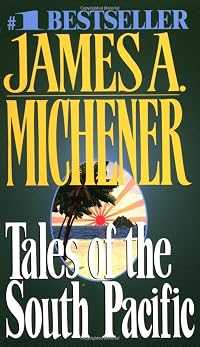
James A. Michener, 1907 - 1997 James Albert Michener was born on February 3, 1907 in Doylestown, Pa. He earned an A.B. from Swarthmore College, an A.M. from Colorado State College of Education, and an M.A. from Harvard University. He taught for many years and was an editor for Macmillan Publishing Company. His first book, "Tales of the South show more Pacific," derived from Michener's service in the Pacific in World War II, won the 1947 Pulitzer Prize for Fiction and was the basis for the Rodgers and Hammerstein Broadway musical South Pacific, which won the 1950 Pulitzer Prize for Drama. Michener completed close to 40 novels. Some other epic works include "Hawaii," "Centennial," "Space," and "Caribbean." He also wrote a significant amount of nonfiction including his autobiography "The World Is My Home." Among his many other honors, James Michener received the Presidential Medal of Freedom in 1977. He was married to Patti Koon in 1935; they divorced in 1948. He married Vange Nord in 1948 (divorced 1955) and Mari Yoriko Sabusawa in 1955 (deceased 1994). He died in 1997 in Austin, Texas. (Bowker Author Biography) show less
Awards and Honors
Distinctions
Work Relationships
Is contained in
Contains
Common Knowledge
- Canonical title
- Caribbean
- Original publication date
- 1989
- Important places
- Caribbean Region
- Dedication
- This book is dedicated to the gentle memory of Alec Waugh who told me when we were working together in Hawaii in 1959 'Someday you must write about my Caribbean.'
- First words
- The chief character in this narrative is the Caribbean Sea, one of the world's most alluring bodies of water, a rare gem among the oceans, defined by the islands that form a chain of loverly jewels to the north and east.
- Last words
- (Click to show. Warning: May contain spoilers.)This broke the spell, and she came toward him, arms held wide. But he drew back, hesitant, for there was one more thing he was bound in honor as a gentleman to do. Softly he asked: 'Therese, will you marry me?' and then, moving forward evenly, they kissed, and she whispered: 'We're children of the golden sea . . . its destiny and our are linked . . . and together, you and I shall help it find its way.'
Classifications
- Genres
- Fiction and Literature, General Fiction, Historical Fiction
- DDC/MDS
- 813.54 — Literature & rhetoric American literature in English American fiction in English 1900-1999 1945-1999
- LCC
- PS3525 .I19 .C38 — Language and Literature American literature American literature Individual authors 1900-1960
- BISAC
Statistics
- Members
- 2,052
- Popularity
- 10,154
- Reviews
- 22
- Rating
- (3.63)
- Languages
- 10 — Dutch, English, French, German, Italian, Korean, Norwegian, Portuguese, Spanish, Swedish
- Media
- Paper, Audiobook, Ebook
- ISBNs
- 33
- UPCs
- 1
- ASINs
- 16