On This Page
Description
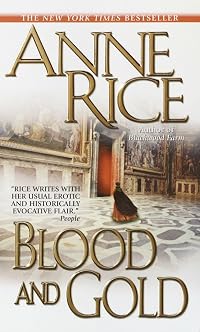
NATIONAL BESTSELLER • The Vampire Chronicles continue as the great vampire Marius returns.The golden-haired Marius, true Child of the Millennia, once mentor to The Vampire Lestat, always and forever the conscientious foe of the Evil Doer, reveals in his own intense yet inti-
mate voice the secrets of his two-thousand-year existence.
Once a proud Senator in Imperial Rome, kidnapped and made a “blood god” by the Druids, Marius becomes the embittered protector of Akasha and Enkil, Queen show more and King of the vampires, in whom the core of the supernatural race resides.
We follow him through his heartbreaking abandonment of the vampire Pandora. Through him we see the fall of pagan Rome to the Emperor Constantine and the horrific sack of the Eternal City itself at the hands of the Visigoths.
Bravely, Marius seeks a new civilization in the midst of glittering Constantinople, only to meet with the blood drinker Eudoxia. We see him ultimately returning to his beloved Italy, where after the horrors of the Black Death, he is restored by the beauty of the Renaissance. We see him become a painter living dangerously
yet happily among mortals, giving his heart to the great Botticelli, to the bewitching courtesan Bianca, and to the mysterious young apprentice Armand.
Moving from Rome to Florence, Venice, and Dresden, and to the English castle of the secret scholarly order of the Talamasca, the novel reaches its dramatic finale in our own time, deep in the jungle where Marius, having told his life story, seeks some measure of justice from the oldest vampires in the world. show less
Tags
Recommendations










Member Recommendations
Vivia by Tanith Lee
by Romerillo
Member Reviews
Thorne, his long sleep interrupted by the waking and rampaging of the Vampire Queen Akasha, is now driven to find the one who made him, the one he saw in his visions – Maharet, one of the two oldest vampires in the world
He emerges from his icy tomb to seek his own kind – and finds Marius, the Roman, Child of the Millennium, Former Keeper of Those Who Must be Kept. And avid biogorapher – who recounts his history to the Norse vampire
Thorne emerges from his centuries of sleep, trying to find answers, trying to find his creator, trying to find some explanation for what happened in the vampire world. At first it seems lucky that he runs into Marius, ancient roman vampire who knows all the answers, but as he’s taken to Marius’s home show more he realises the dreadful truth… he had fallen into the hands of The Biographer Vampires and their Endless Exposition.
Despite having known Marius for less than a few hours, this poor vampire is then subjected to Marius’s entire 2,000 year old life story (as an added bonus, he also tucks in the story of Eudoxia, a vampire he met along the way). I honestly think these books aren’t even trying to come up with a plausible explanation for why these vampires feel a need to info-dump their entire histories with the most purple of prose – just randomly dropping it on a stranger will do now. Thorne wanted to know about the events of Queen of the Damned, it would have taken exactly 10 minutes to sum up the (limited) plot of that book! No-one asked you your life story, Marius!
To be fair, though, this is one of the better interminably long, over-detailed biographies in the series because a) Marius is a relatively relevant character and b) we get a good sense of him in this book which we haven’t seen elsewhere (unlike, say, The Vampire Armand which was repetitive and added nothing new).
We get a good insight into Marius’s character as time and again he repeats the same patterns – Marius needs company. Not just vampire company (though for much of his existence he seems to need or crave a vampire companion), but human company as well especially when he was younger (relatively speaking), often throwing open his home for people to join him in parties and salons – far more so. In some ways he’s very much a product of his time and place: he’s a Roman. He’s very civilised, very social and, tellingly, pretty arrogant. Which is a wonderful repeated sense I get of Marius which is well done because I get this sense while seeing through Marius’s eyes AND without Marius himself conceding the point. But Marius is Roman, the civilised man in the world of barbarians who need to be educated. From a young age he was entrusted with the duty of keeping Akasha and Enkil safe and repeatedly drank Akasha’s blood making him much much stronger than pretty much every vampire he met. There’s a lot of fuel to that arrogance but once you see it, it puts everything else into a whole new context with Marius.
Like the vampires he always has with him – he says he likes to be a teacher, but ultimately with both vampires and humans he wants to be the AUTHORITY – teacher, mentor, patron, father-figure (and lover at same time because it’s the Vampire Chronicles) up to and including his latest companion. Everyone is subservient to him, every vampire has had to look up to him or been in a weaker position than him – and any vampire who argued with him gets a completely disproportionate response from him: Pandora, Mael, when Armand defied him (and a great deal of Marius’s distrust of Armand seems to stem as much from his unwillingness to follow exactly the path Marius laid down as anything else), any vampire he has been with. He even has a completely childish snit with and Mael because they won’t take on Zenobia – who Marius has no time or inclination for; never once considering that if he didn’t want to take on a student then maybe nor did they? In turn it raises a question about why Marius wants humans around him – is it a desire for civilised company? Or is it a need for an entourage to lord it over?
It also puts into context the semi-frequent disasters that blight Marius’s life – is it because he’s too close to humanity? Is it because his overarching obsession with Those Who Must be Kept distracts him? Or is because, as we see hinted at over and over, the arrogant Marius is too careless and too sure in his own abilities to take precautions?
Read More show less
He emerges from his icy tomb to seek his own kind – and finds Marius, the Roman, Child of the Millennium, Former Keeper of Those Who Must be Kept. And avid biogorapher – who recounts his history to the Norse vampire
Thorne emerges from his centuries of sleep, trying to find answers, trying to find his creator, trying to find some explanation for what happened in the vampire world. At first it seems lucky that he runs into Marius, ancient roman vampire who knows all the answers, but as he’s taken to Marius’s home show more he realises the dreadful truth… he had fallen into the hands of The Biographer Vampires and their Endless Exposition.
Despite having known Marius for less than a few hours, this poor vampire is then subjected to Marius’s entire 2,000 year old life story (as an added bonus, he also tucks in the story of Eudoxia, a vampire he met along the way). I honestly think these books aren’t even trying to come up with a plausible explanation for why these vampires feel a need to info-dump their entire histories with the most purple of prose – just randomly dropping it on a stranger will do now. Thorne wanted to know about the events of Queen of the Damned, it would have taken exactly 10 minutes to sum up the (limited) plot of that book! No-one asked you your life story, Marius!
To be fair, though, this is one of the better interminably long, over-detailed biographies in the series because a) Marius is a relatively relevant character and b) we get a good sense of him in this book which we haven’t seen elsewhere (unlike, say, The Vampire Armand which was repetitive and added nothing new).
We get a good insight into Marius’s character as time and again he repeats the same patterns – Marius needs company. Not just vampire company (though for much of his existence he seems to need or crave a vampire companion), but human company as well especially when he was younger (relatively speaking), often throwing open his home for people to join him in parties and salons – far more so. In some ways he’s very much a product of his time and place: he’s a Roman. He’s very civilised, very social and, tellingly, pretty arrogant. Which is a wonderful repeated sense I get of Marius which is well done because I get this sense while seeing through Marius’s eyes AND without Marius himself conceding the point. But Marius is Roman, the civilised man in the world of barbarians who need to be educated. From a young age he was entrusted with the duty of keeping Akasha and Enkil safe and repeatedly drank Akasha’s blood making him much much stronger than pretty much every vampire he met. There’s a lot of fuel to that arrogance but once you see it, it puts everything else into a whole new context with Marius.
Like the vampires he always has with him – he says he likes to be a teacher, but ultimately with both vampires and humans he wants to be the AUTHORITY – teacher, mentor, patron, father-figure (and lover at same time because it’s the Vampire Chronicles) up to and including his latest companion. Everyone is subservient to him, every vampire has had to look up to him or been in a weaker position than him – and any vampire who argued with him gets a completely disproportionate response from him: Pandora, Mael, when Armand defied him (and a great deal of Marius’s distrust of Armand seems to stem as much from his unwillingness to follow exactly the path Marius laid down as anything else), any vampire he has been with. He even has a completely childish snit with and Mael because they won’t take on Zenobia – who Marius has no time or inclination for; never once considering that if he didn’t want to take on a student then maybe nor did they? In turn it raises a question about why Marius wants humans around him – is it a desire for civilised company? Or is it a need for an entourage to lord it over?
It also puts into context the semi-frequent disasters that blight Marius’s life – is it because he’s too close to humanity? Is it because his overarching obsession with Those Who Must be Kept distracts him? Or is because, as we see hinted at over and over, the arrogant Marius is too careless and too sure in his own abilities to take precautions?
Read More show less
I………
Three and a half stars for enjoying it, but I feel like Anne abandoned plot in favor of the novel-length character sketch after book four. It feels a lot like a pantsed novel—no shade, I myself am a Pantser. The plot feels weak to me and then peters out.
Also, I quite liked Marius in The Vampire Lestat and The Vampire Armand, but this guy is prone to melodramatic snitfits. I didn’t like him as much in this one; I feel like he never gets over being a Roman Patrician who wants everyone to obey him. Also, after several novels where I felt Marius was the adult supervision of the vampire world, I felt let down by his childish arguments with the women in his life. In previous novels I had him pegged as a dom, but this guy? No way show more he should engage in SSC/RACK. In short, he didn’t feel consistent with the guy we saw in previous novels.
But somehow I still enjoyed this book. show less
Three and a half stars for enjoying it, but I feel like Anne abandoned plot in favor of the novel-length character sketch after book four. It feels a lot like a pantsed novel—no shade, I myself am a Pantser. The plot feels weak to me and then peters out.
Also, I quite liked Marius in The Vampire Lestat and The Vampire Armand, but this guy is prone to melodramatic snitfits. I didn’t like him as much in this one; I feel like he never gets over being a Roman Patrician who wants everyone to obey him. Also, after several novels where I felt Marius was the adult supervision of the vampire world, I felt let down by his childish arguments with the women in his life. In previous novels I had him pegged as a dom, but this guy? No way show more he should engage in SSC/RACK. In short, he didn’t feel consistent with the guy we saw in previous novels.
But somehow I still enjoyed this book. show less
A few years ago I got back into reading Anne Rice after having stopped with THE MUMMY a couple of decades ago. Working my way through THE VAMPIRE CHRONICLES and THE MAYFAIR WITCHES, I have finally arrived at BLOOD AND GOLD, which was written in 2000. Rice’s most enduring and popular character will always be Lestat, the young 18th Century French nobleman turned blood drinker whom she introduced in INTERVIEW WITH THE VAMPIRE. But after giving her readers a half dozen books with their favorite at the center of the action, she began expanding her literary vampire universe by putting out books telling the stories of secondary characters such as Armand, Vittorio, and Pandora. In BLOOD AND GOLD, Rice tells the story of Marius, the Roman show more aristocrat turned creature of the night, and keeper of Those Who Must Be Kept.
Or, retelling the story, as much of Marius’s saga, from his origin as a vampire in Druid worshiping ancient Britain, his becoming the keeper of Akasha and Enkil, the original vampires, his time in Venice where he meets and becomes infatuated with the boy, Amadeo, to Akasha’s awakening in modern times have been covered in other books. BLOOD AND GOLD seeks to fill in the blank spots from other narratives, and tell things from Marius’ point of view. The book is framed by one of Rice’s tried and true tropes, where one character sits with another, and tells a tale. The story begins with the awakening of Thorne, a vampire Viking (that’s a book right there) who has slumbered under the ice for many centuries. Thorne has been awakened by the events of THE QUEEN OF THE DAMNED, and goes looking for Maheret, his maker, and one of the most ancient of vampires. Thorne meets Marius instead, who then proceeds for 500 pages to tell Thorne his story. At the end, Thorne does meet his maker, and some old conflicts are resolved. But this is Marius’ book, and his story encompasses ancient Rome and its fall to Barbarians, the newly rising Constantinople, Renaissance Venice, and the city of Dresden in Saxony in the 1600s. There are side trips to medieval Paris, and the England of Henry the VIII, where we get a look at the early Talesmasca. The great part of the book covers Marius’ relationships with Pandora, a young woman he falls in love with in Roman times and whom he makes into a vampire; Amadeo (later known as Armand), a beautiful boy he falls in love with in Venice, and makes into a vampire; and Bianca, a beautiful woman of Venice, whom Marius falls in love with and makes into a vampire when he is in desperate need of aide after running afoul of other blood drinkers. The fates of these relationships and why they come to such a state is the heart of the story. Along the way there are encounters with Mael, Avicus, Eudoxia, Zenobia, and Santino, other vampires who are friends, foes, and frenemies at different times. The great artist Botticelli makes an appearance, and there is a cameo by Daniel, the young man introduced in the first chapter of INTERVIEW WITH THE VAMPIRE, now a blood drinker himself, which in a small way ties everything back to the beginning.
Compared to some other books by Rice, I found BLOOD AND GOLD to be an easy read, the author seems to have forsaken her rampant use of adjectives that plagued other books, nor was there the tendency to gush over architecture and art in the extreme. Rice’s tremendous grasp of history is on full display, including a deep knowledge of fashion. Her books always create a world that feels much lived in; she always conveys a sense of place, and makes us believe that this is how people were at this point in time. The main character of Marius is well loved by some fans, not so much by others. In the early Lestat books, he is a knowing elder, with wisdom gained by centuries upon this earth. But the Marius we see in BLOOD AND GOLD is his own worst enemy by not taking threats seriously, practicing deceit with those who care for him, and foolishly overestimating himself. He comes across as being as guilty of letting his passions rule him as much as Lestat, a sin for which he often condemned the younger vampire. Then there are Marius’ relationships with young boys, and his expressed affection for them in the section set in Renaissance Venice. This comes uncomfortably close to pedophilia for some readers even though Rice makes it clear that her vampires do not have sexual relationships in the conventional way. I understand their concerns, and it is an issue with other books by her, especially in the Mayfair witches series, but what I think Rice is doing here is creating a character with a pre Christian and pagan sensability, one that he has not forsaken despite the passage of a thousand years. As I have stated in other reviews of Rice’s books, she is most definitely not everyone’s cup of tea, and those who have a problem most certainly have given up long before they would have gotten to BLOOD AND GOLD. If you are unfamiliar with Anne Rice, this book not a suitable entry point.
The finale of BLOOD AND GOLD, where some characters not seen since the end of THE QUEEN OF THE DAMNED appear, felt like THE VAMPIRE CHRONICLES were coming full circle, maybe an ending point. But Rice has continued to write in the years since, crossing over her witches and vampires, and adding werewolves to the mix. She had also written about Jesus Christ, a result of her returning (for a time) to the Catholic Church. And it looks as if we’re finally about to get that long delayed TV series adaptation of CHRONICLES, let’s hope AMC doesn’t botch it. show less
Or, retelling the story, as much of Marius’s saga, from his origin as a vampire in Druid worshiping ancient Britain, his becoming the keeper of Akasha and Enkil, the original vampires, his time in Venice where he meets and becomes infatuated with the boy, Amadeo, to Akasha’s awakening in modern times have been covered in other books. BLOOD AND GOLD seeks to fill in the blank spots from other narratives, and tell things from Marius’ point of view. The book is framed by one of Rice’s tried and true tropes, where one character sits with another, and tells a tale. The story begins with the awakening of Thorne, a vampire Viking (that’s a book right there) who has slumbered under the ice for many centuries. Thorne has been awakened by the events of THE QUEEN OF THE DAMNED, and goes looking for Maheret, his maker, and one of the most ancient of vampires. Thorne meets Marius instead, who then proceeds for 500 pages to tell Thorne his story. At the end, Thorne does meet his maker, and some old conflicts are resolved. But this is Marius’ book, and his story encompasses ancient Rome and its fall to Barbarians, the newly rising Constantinople, Renaissance Venice, and the city of Dresden in Saxony in the 1600s. There are side trips to medieval Paris, and the England of Henry the VIII, where we get a look at the early Talesmasca. The great part of the book covers Marius’ relationships with Pandora, a young woman he falls in love with in Roman times and whom he makes into a vampire; Amadeo (later known as Armand), a beautiful boy he falls in love with in Venice, and makes into a vampire; and Bianca, a beautiful woman of Venice, whom Marius falls in love with and makes into a vampire when he is in desperate need of aide after running afoul of other blood drinkers. The fates of these relationships and why they come to such a state is the heart of the story. Along the way there are encounters with Mael, Avicus, Eudoxia, Zenobia, and Santino, other vampires who are friends, foes, and frenemies at different times. The great artist Botticelli makes an appearance, and there is a cameo by Daniel, the young man introduced in the first chapter of INTERVIEW WITH THE VAMPIRE, now a blood drinker himself, which in a small way ties everything back to the beginning.
Compared to some other books by Rice, I found BLOOD AND GOLD to be an easy read, the author seems to have forsaken her rampant use of adjectives that plagued other books, nor was there the tendency to gush over architecture and art in the extreme. Rice’s tremendous grasp of history is on full display, including a deep knowledge of fashion. Her books always create a world that feels much lived in; she always conveys a sense of place, and makes us believe that this is how people were at this point in time. The main character of Marius is well loved by some fans, not so much by others. In the early Lestat books, he is a knowing elder, with wisdom gained by centuries upon this earth. But the Marius we see in BLOOD AND GOLD is his own worst enemy by not taking threats seriously, practicing deceit with those who care for him, and foolishly overestimating himself. He comes across as being as guilty of letting his passions rule him as much as Lestat, a sin for which he often condemned the younger vampire. Then there are Marius’ relationships with young boys, and his expressed affection for them in the section set in Renaissance Venice. This comes uncomfortably close to pedophilia for some readers even though Rice makes it clear that her vampires do not have sexual relationships in the conventional way. I understand their concerns, and it is an issue with other books by her, especially in the Mayfair witches series, but what I think Rice is doing here is creating a character with a pre Christian and pagan sensability, one that he has not forsaken despite the passage of a thousand years. As I have stated in other reviews of Rice’s books, she is most definitely not everyone’s cup of tea, and those who have a problem most certainly have given up long before they would have gotten to BLOOD AND GOLD. If you are unfamiliar with Anne Rice, this book not a suitable entry point.
The finale of BLOOD AND GOLD, where some characters not seen since the end of THE QUEEN OF THE DAMNED appear, felt like THE VAMPIRE CHRONICLES were coming full circle, maybe an ending point. But Rice has continued to write in the years since, crossing over her witches and vampires, and adding werewolves to the mix. She had also written about Jesus Christ, a result of her returning (for a time) to the Catholic Church. And it looks as if we’re finally about to get that long delayed TV series adaptation of CHRONICLES, let’s hope AMC doesn’t botch it. show less
Well this was a little strange. So much detail in places where we didn’t need it and so little in the places we did. It seems that Rice really knows the story of the ancient Egyptian origins of the story, and the birth and duty of Marius, but she knows precious little of the history in which Marius passed. The Reformation – she gave it a sentence. The fall of Rome and the rise of Constantinople she gave a few paragraphs. The Renaissance got a few distracted chapters during which Marius fell under the spell of egg tempera.
And the end – rushed is too kind a word. As I read about his getting back together with Pandora and he hadn’t even gotten to Lestat yet and there was only about ¼ of an inch of pages left – I knew the end show more would be miserable. I wasn’t disappointed.
Marius comes across as a self-serving ego-maniac the whole time. Always going on about his responsibility to the Devine Parents. The children he creates all abandon him because he always has to be “on”. He envisions himself as a great teacher and cannot stand it when his pupils actually begin to learn. That’s why he and Mael don’t get along – Mael doesn’t want to learn anything that Marius knows.
But the times we don’t know about aren’t elaborated on much. What he was before he was captured by Mael. Bah. show less
And the end – rushed is too kind a word. As I read about his getting back together with Pandora and he hadn’t even gotten to Lestat yet and there was only about ¼ of an inch of pages left – I knew the end show more would be miserable. I wasn’t disappointed.
Marius comes across as a self-serving ego-maniac the whole time. Always going on about his responsibility to the Devine Parents. The children he creates all abandon him because he always has to be “on”. He envisions himself as a great teacher and cannot stand it when his pupils actually begin to learn. That’s why he and Mael don’t get along – Mael doesn’t want to learn anything that Marius knows.
But the times we don’t know about aren’t elaborated on much. What he was before he was captured by Mael. Bah. show less
I was glad to pick up the tale of Marius. After reading about him in The Vampire Lestat and Queen of the Damned, along with Pandora, I was thrilled to read the back of this book with the synopsis. Of course, I had to buy it right away. I took it home and read it with eagerness. Ms. Rice's work is solid here and the story is very good, but while many parts are interesting to read, nearly half of it was repetition, and I wished that the Twins had been featured in this book more, especially Mekare. One thing I enjoyed was the appearance of Bianca. I absolutely loved that part, I think it was my favorite.
The ending left something to be desired. Not that it was a bad one per se, but it just... felt kind of rushed to me, quickly slapped show more together. I was happy to see the Twins, but their appearance was woefully brief and Ms. Rice could have focused more on that instead of repetition of what we already knew about Marius. show less
The ending left something to be desired. Not that it was a bad one per se, but it just... felt kind of rushed to me, quickly slapped show more together. I was happy to see the Twins, but their appearance was woefully brief and Ms. Rice could have focused more on that instead of repetition of what we already knew about Marius. show less
I had felt for a while that Anne Rice's novels were declining in quality and enjoyment, but this novel was the one where I decided to stop reading anything by Rice. It's Marius' story, but the problem is that it's been told through the eyes of so many people that a lot of the stuff he has to add isn't particularly interesting. I was addicted for years to Rice's novels, but sorry, I'm now filing for divorce.
I'm kind of glad I waited more than a year to read this book after having read the first eight, plus the Mayfair Witches book all pretty much right in a row. I think I would have found the parts where Marius is retelling things that Lestat told us in The Vampire Lestat and that Armand told us in The Vampire Armand rather boring and repetitive. As it was, it was a nice reminder of things I'd forgotten, and I was able to jump right back in without re-reading, which would have been quite the undertaking. I would really recommend, if you're reading straight through, to take a hiatus before jumping into this one, because it seems others who'd done so were quite disappointed by this.
I've always really admired the wisdom and even temper of show more Marius, particularly in The Queen of the Damned and although we knew a little of him from the two previously mentioned books, it was a treat to have his story fleshed out even more and his perspective shown on things we already knew the other side of. It's unfortunate that the character of Thorne, who emerges from the ice apparently only to listen to Marius tell a 500-page story and then complete a couple of acts no other previously introduced character would have been able to. I would have liked to have known more about him; the climax of this tale might have meant more or had more feeling for me. As it was, it was a little bit of a let down. I was feeling like awarding this book three stars because of that feeling, but sitting down to write about it has induced me to add back the fourth star I was intending to give it right before I came to the end. Had the ending been more exciting or satisfying, I probably would've given 4.5 stars. As it stands, it's a good, full, tale of history and blood and a fascinating vampire with a rather lame last three chapters. I hope that's a set-up for something more interesting, but it seems the next book in this series takes an entirely different tack. I am looking forward to completing this author's vampire-related works in their entirety. show less
I've always really admired the wisdom and even temper of show more Marius, particularly in The Queen of the Damned and although we knew a little of him from the two previously mentioned books, it was a treat to have his story fleshed out even more and his perspective shown on things we already knew the other side of. It's unfortunate that the character of Thorne, who emerges from the ice apparently only to listen to Marius tell a 500-page story and then complete a couple of acts no other previously introduced character would have been able to. I would have liked to have known more about him; the climax of this tale might have meant more or had more feeling for me. As it was, it was a little bit of a let down. I was feeling like awarding this book three stars because of that feeling, but sitting down to write about it has induced me to add back the fourth star I was intending to give it right before I came to the end. Had the ending been more exciting or satisfying, I probably would've given 4.5 stars. As it stands, it's a good, full, tale of history and blood and a fascinating vampire with a rather lame last three chapters. I hope that's a set-up for something more interesting, but it seems the next book in this series takes an entirely different tack. I am looking forward to completing this author's vampire-related works in their entirety. show less
Members
- Recently Added By
Lists

Bloody Good Vampire Books
394 works; 28 members

Books Read in 2014
2,343 works; 86 members

A Rainbow of Books: Colors in the Title
570 works; 24 members

Vampire Chronicles - Anne Rice
13 works; 1 member
Author Information

132+ Works 189,697 Members
Anne Rice was born Howard Allen O'Brien on October 4, 1941 in New Orleans, Louisiana. She received a bachelor's degree in political science in 1964 and master's degree in English and creative writing in 1972 from San Francisco State University. She published her first short story in 1965 called October 4, 1948. Her first book, Interview with the show more Vampire, was published in 1976. It was made into a film starring Brad Pitt, Kirsten Dunst, and Tom Cruise in 1994. She wrote various series in the same genre including the rest of the Vampire Chronicles, the Mayfair Witches books, and The Wolf Gift Chronicles. Her novel, Feast of All Saints, became a Showtime mini-series in 2001. Her other works include Cry to Heaven, Servant of the Bones, and Violin. In 1998, Rice returned to the Catholic Church and for some time only wrote for Christ or about Christ. These works include Christ the Lord: Out of Egypt, Christ the Lord: The Road to Cana, and Called Out of Darkness. Anne Rice died on December 11, 2021 at the age of 80. (Bowker Author Biography) show less
Some Editions
Awards and Honors
Distinctions
Series

Belongs to Publisher Series
Goldmann (45999)
Work Relationships
Is contained in
Contains
Is abridged in
Common Knowledge
- Canonical title
- Blood and Gold
- Original title
- Blood & Gold
- Original publication date
- 2001
- People/Characters
- Marius de Romanus; Pandora; Bianca Solderini; (aka Andrei aka Amadeo); Mael; Akasha (show all 11); Enkil; Avicus; Eudoxia; Akabar; Arjun
- Important places
- Venice, Veneto, Italy; Rome, Italy
- Dedication
- Dedicated to my beloved husband, Stan Rice
Tilegnet min elskede mand, Stan Rice, og min elskede søster, Karen O'brien - First words
- Hans navn var Thorne. På runernes ældgamle sprog havde det været længere ... Thornevald. Men da han blev bloddrikker var hans navn blevet ændret til Thorne. Og Thorne var han stadigvæk nu, århundreder efter, da han lå... (show all) i sin hule i isen og drømte.
- Last words
- (Click to show. Warning: May contain spoilers.)"Always."
(Click to show. Warning: May contain spoilers.)"Min væverske," sagde han smilende. "Og når du væver dem," bad han, "vil du så holde mig i nærheden af dig?"
"Ja," sagde hun. "Altid".
Classifications
Statistics
- Members
- 5,513
- Popularity
- 2,423
- Reviews
- 43
- Rating
- (3.63)
- Languages
- 11 — Danish, English, French, German, Hungarian, Italian, Polish, Portuguese, Russian, Spanish, Turkish
- Media
- Paper, Audiobook, Ebook
- ISBNs
- 49
- ASINs
- 19