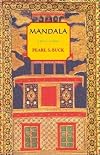
Mandala
by Pearl S. Buck
On This Page
Description
News reaches the couple [Maharana Prince Jagat and his wife, Moti] that their only son, Jai, has been killed by the Chinese in a border skirmish, an inconsolable Moti send Jagat out to bring the boy's spirit home. On the journey, the prince becomes involved with a beautiful and mysterious young American woman. Thus begins the fatal attraction between Eastern and Western ways, one bound by rigid custom, the other temptingly ripe with freethinking.Tags
Recommendations



















Member Reviews
Hmm. Pearl S Buck is one of my favorite authors, and 'The Good Earth' is one of my all-time favorite books, so when I heard of this book and that it had some Indian culture in it, I thought hey, this should be worth a try as I've enjoyed like a dozen of Ms. Buck's other works. Whee!
This one, much like the The Mother, is one of Ms. Buck's weaker works. But then, no one, no matter how good an author they are, can write a 5-star book every single time. The adultery aspect of this book was especially detracting from the book and I felt the difference between Occidental and Oriental too hyped up, like the author leaned on that to carry the storytelling.
This one, much like the The Mother, is one of Ms. Buck's weaker works. But then, no one, no matter how good an author they are, can write a 5-star book every single time. The adultery aspect of this book was especially detracting from the book and I felt the difference between Occidental and Oriental too hyped up, like the author leaned on that to carry the storytelling.
I was excited to find a Pearl S. Buck book set in India, having enjoyed many of her other books set in China and Korea. I was hoping for some insight into the Indian culture and history. Somehow, I don't feel that this book is it. It felt very much like a Westerner looking into and interpreting the culture of India. Perhaps I'm wrong. Perhaps I was put off by the long dreary "romance" aspect of the story.
Many of the characters and situations felt as though they had been recycled from other Buck stories and stuck into India. If I never hear the words antipathetic, sympathetic and staccato again, I will be happy.
Many of the characters and situations felt as though they had been recycled from other Buck stories and stuck into India. If I never hear the words antipathetic, sympathetic and staccato again, I will be happy.
Like many of Pearl S. Buck's novels, this one is mainly a character novel, showing different personalities in a common setting in a foreign land. The plot meanders a bit, showing an Indian high caste and noble family in the days shortly after their nobility is reduced. The family has to deal with reduced income and lands, while still supporting the local communities, servants, improvident relations and expensive homes. Prince Jagat, his wife, his son and daughter are shown trying to deal with complexities of the New India. The son feels pressure to show his nobility by enlisting in the army to fight the border incursions of China, and is killed. The daughter becomes attracted to an American hotelier who is hired to change a lake palace show more into a modern hotel. Regretfully, she is also engaged in an arranged marriage with another prominent Indian. The wife is a traditional Hindu, who becomes enamored with an English Catholic priest. Prince Jagat becomes attracted to an American heiress and wandering traveler whom he meets, and invites to stay at his new hotel. The story is not well developed, and the characters show uneven development in the novel. However, the difficulties India experienced in the early to mid 1960s is well expressed, as it tries to change from a British colonial possession into a modern and independent state. Pearl S. Buck knows the country well, and interprets the nation and people to those who are not familiar with India. However, this is not at the same level as her novels of China, but is a good back porch read on a lazy summer afternoon. show less
Review: Mandala by Pearl s. Buck.
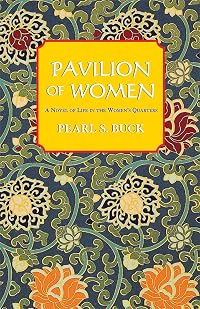
I kind of liked the Pavilion Women more but this one was good too.
It’s about cultures of the Indians and how they survive after the New India Independence Law took effect. It has its political jargon, war elements, ancestry habits, but the author creates a story of an India family’s turmoil’s.
Prince Jagat is a virile male descendant of the warrior people. He has been reduced of his tittles and most of his wealth, but he holds on to his sense of responsibility to the local people even though his government only gives him fifty percent of what he had been getting before. He is still appreciated and considered of being of high stature among his people. In order to keep helping his people he must show more embark upon finding another means of money. Across the lake from his own palace he has an unused barren palace that he plans on making a tourist hotel to bring in more money. He hires an American contractor to make this happen.
Then bad news comes to him and Moti, his wife of many years which changes they’re lives even more. (I don’t want to reveal any of the story) There is still much more to the story in the life of these people as: they have a beautiful daughter with a pre-plan marriage of their culture, an American woman who plays the piano comes into their lives, Jagat travels to the border where the war is taking place, and secret loves entwines among them.
This is where Pearl Buck explores the mysticism that invades everyday life among their culture. She uses extrasensory perception, reincarnation, and spirits in writing about events and concerns of the Maharana Prince Jagat and his family. The author’s strong presentation about the male and female’s in this culture are what makes the story a little controversial. Yet, this is really the way of their ancestry and how their men perceive women. Prince Jagat shows more of this (don’t give a care) attitude at the end of the story. He just goes back to his everyday life…like saying, Oh Well!
I liked the story because the setting was in India and the culture Pearl Buck wrote about was interesting. show less
I kind of liked the Pavilion Women more but this one was good too.
It’s about cultures of the Indians and how they survive after the New India Independence Law took effect. It has its political jargon, war elements, ancestry habits, but the author creates a story of an India family’s turmoil’s.
Prince Jagat is a virile male descendant of the warrior people. He has been reduced of his tittles and most of his wealth, but he holds on to his sense of responsibility to the local people even though his government only gives him fifty percent of what he had been getting before. He is still appreciated and considered of being of high stature among his people. In order to keep helping his people he must show more embark upon finding another means of money. Across the lake from his own palace he has an unused barren palace that he plans on making a tourist hotel to bring in more money. He hires an American contractor to make this happen.
Then bad news comes to him and Moti, his wife of many years which changes they’re lives even more. (I don’t want to reveal any of the story) There is still much more to the story in the life of these people as: they have a beautiful daughter with a pre-plan marriage of their culture, an American woman who plays the piano comes into their lives, Jagat travels to the border where the war is taking place, and secret loves entwines among them.
This is where Pearl Buck explores the mysticism that invades everyday life among their culture. She uses extrasensory perception, reincarnation, and spirits in writing about events and concerns of the Maharana Prince Jagat and his family. The author’s strong presentation about the male and female’s in this culture are what makes the story a little controversial. Yet, this is really the way of their ancestry and how their men perceive women. Prince Jagat shows more of this (don’t give a care) attitude at the end of the story. He just goes back to his everyday life…like saying, Oh Well!
I liked the story because the setting was in India and the culture Pearl Buck wrote about was interesting. show less
This was a classic Buck novel. although it was not set in her beloved China, she does a fantastic job bringing the reader into the story. It is so easy sometimes for we Americans to forget and truely cherish the ways of other countries. I liked the insightful religious ties that bind us all and separate at the same time. There were many great quotes that I will keep close to heart.
Ratings
Members
- Recently Added By
Lists

Published in 1970
58 works; 7 members

1970 Club
85 works; 2 members
Author Information

440+ Works 37,185 Members
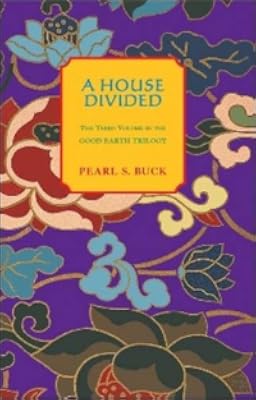
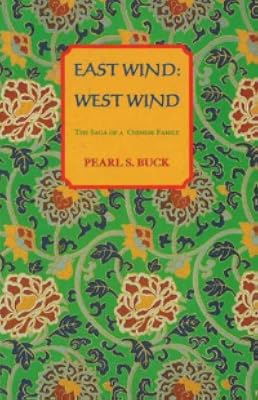
Pearl S. Buck, June 26, 1892 - March 6, 1973 Pearl Sydenstricker Buck was an American author, best know for her novels about China. Buck was born on June 26, 1892, in Hillsboro, West Virginia, but as the daughter of Presbyterian missionaries she was taken to China in infancy. She received her early education in Shanghai, but returned to the United show more States to attend college, and graduated from Randolph-Macon Woman's College in Virginia in 1914. Buck became a university teacher there and married John Lossing Buck, an agricultural economist, in 1917. Buck and her husband both taught in China, and she published magazine articles about life there. Her first novel East Wind, West Wind was published in 1930. Buck achieved international success with The Good Earth, which won the Pulitzer Prize in 1932. This story of a Chinese peasant family's struggle for survival was later made into a MGM film. Buck resigned from the Presbyterian Board of Foreign Missions after publishing an article that was critical of missionaries. She returned to the United States because of political unrest in China. Buck's novels during this period include Sons, A House Divided, and The Mother. She also wrote biographies of her father (Fighting Angel) and her mother (The Exile). She won the Nobel Prize for Literature in 1938. During her career, Buck published over 70 books: novels, nonfiction, story collections, children's books, and translations from the Chinese. She also wrote under the pseudonym John Sedges. In the United States, Buck was active in the civil rights and women's rights movements. In 1942 she founded the East and West Association to promote understanding between Asia and the West. In 1949, Buck established Welcome House, the first international interracial adoption agency. In 1964, she established the Pearl S. Buck foundation to sponsor support for Amerasian children who were not considered adoptable. Pearl Buck died in Danbury, Vermont, on March 6, 1973. (Bowker Author Biography) show less
Some Editions
Series
Belongs to Publisher Series
Zwarte Beertjes (1481)
Work Relationships
Common Knowledge
- Canonical title
- Mandala
- Original title
- Mandala
- Original publication date
- 1970
- Important places
- India
- First words
- Jagat, the Maharana of Amarpur, India, was wakened as usual on this summer morning by the flutter of pigeons outside the window of his bedroom.
- Last words
- (Click to show. Warning: May contain spoilers.)"I do not know," he said and, believing and unbelieving, he went his way.
Classifications
- Genres
- Fiction and Literature, General Fiction, Historical Fiction
- DDC/MDS
- 813.52 — Literature & rhetoric American literature in English American fiction in English 1900-1999 1900-1945
- LCC
- PZ3 .B8555 — Language and Literature Fiction and juvenile belles lettres Fiction and juvenile belles lettres Fiction in English
- BISAC
Statistics
- Members
- 559
- Popularity
- 53,060
- Reviews
- 5
- Rating
- (3.65)
- Languages
- 10 — Danish, Dutch, English, Finnish, French, German, Indonesian, Italian, Portuguese, Swedish
- Media
- Paper
- ISBNs
- 19
- ASINs
- 25