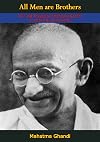
All Men Are Brothers: Life and Thoughts of Mahatma Gandhi as Told in His Own Words
by Mahatma Gandhi
On This Page
Description
Famous for his successful leadership of non-violent Nationalist resistance to British Imperial rule in India, Mohandas K. Gandhi is one of the most iconic figures of the twentieth century. All Men Are Brothers brings together some of his most important writings in a single volume. As well as Gandhi's inspiring articulation of his philosophy of non-violent resistance and his thoughts on religion and theology, the book also includes reflections on topics ranging from politics, education, show more women's rights and technology as well as meditations on his own life. Now available in the Bloomsbury Classics series, the book also includes a glossary of terms and a brief chronology of Gandhi's life. show lessTags
Recommendations

















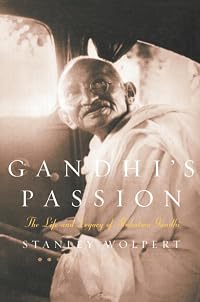


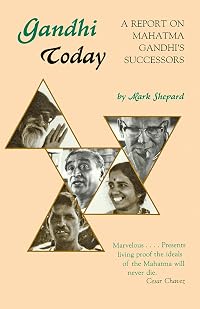


Member Reviews
Este libro es una joya. Parece que sucede siempre con los grandes hombres, y Gandhi lo fue, que todo el mundo habla de ellos y nadie les conocemos.
La selección de textos de Gandhi que forman este libro ha conseguido, por ser respuesta a problemas candentes a nuestra realidad, una vivacidad apasionante, la que da siempre la vida. Van pasando ante nuestros ojos textos frente al paro, la sexualidad, la violencia, el nacionalismo, el internacionalismo, la explotación, etc., y todos vivos, es decir, respuestas vivas frente a problemas vivos, sin politiquería ninguna, sin complejos como las posturas "progresistas" que, ante temas como la sexualidad o la fidelidad, despachan la cuestión con un anatema irracional. Gandhi dialoga y lo hace show more con firmeza, sin concesiones, quizás porque no esperaba venderse a las urnas, ni a nada ni nadie.
Su amor a la verdad, que identificaba con Dios, era el sólido pilar sobre el que afirmó su vida. Hoy, cuando se educa a jóvenes de la izquierda y la derecha en el insulto a los demás, como reflejan las pintadas de las paredes madrileñas, es un deber de salud social divulgar el pensamiento de estos hombres que dieron la vida para que eso no sucediera, pero sucede y, por eso mismo, esta edición está en la calle.
Julián Gómez del Castillo
Responsable de Ediciones "Voz de los sin Voz" show less
La selección de textos de Gandhi que forman este libro ha conseguido, por ser respuesta a problemas candentes a nuestra realidad, una vivacidad apasionante, la que da siempre la vida. Van pasando ante nuestros ojos textos frente al paro, la sexualidad, la violencia, el nacionalismo, el internacionalismo, la explotación, etc., y todos vivos, es decir, respuestas vivas frente a problemas vivos, sin politiquería ninguna, sin complejos como las posturas "progresistas" que, ante temas como la sexualidad o la fidelidad, despachan la cuestión con un anatema irracional. Gandhi dialoga y lo hace show more con firmeza, sin concesiones, quizás porque no esperaba venderse a las urnas, ni a nada ni nadie.
Su amor a la verdad, que identificaba con Dios, era el sólido pilar sobre el que afirmó su vida. Hoy, cuando se educa a jóvenes de la izquierda y la derecha en el insulto a los demás, como reflejan las pintadas de las paredes madrileñas, es un deber de salud social divulgar el pensamiento de estos hombres que dieron la vida para que eso no sucediera, pero sucede y, por eso mismo, esta edición está en la calle.
Julián Gómez del Castillo
Responsable de Ediciones "Voz de los sin Voz" show less
May 20, 2014Spanish
> « La véritable éducation consiste à tirer le meilleur de soi-même.
Quel meilleur livre peut-il exister que le livre de l'humanité ? » — Gandhi
Quel meilleur livre peut-il exister que le livre de l'humanité ? » — Gandhi
Feb 1, 2019 (Edited)French
Ratings
Members
- Recently Added By
Author Information

625+ Works 9,690 Members
Mohandas Gandhi is well known as a political activist and pacifist who played a key role in achieving India's independence from Great Britain. Although born in Porbandar, India, to parents of the Vaisya (merchant) caste, he was given a modern education and eventually studied law in London. After returning briefly to India, Gandhi went to South show more Africa in 1893, where he spent the next 20 years working to secure Indian rights. It was during this time that he experimented with and developed his basic philosophy of life. Philosophically, Gandhi is best known for his ideas of satyagraha (truth-force) and ahimsa (nonharming). Intrinsic to the idea of truth-force is the correlation between truth and being; truth is not merely a mental correspondence with reality but a mode of existence. Hence, the power of the truth is not what one argues for but what one is. He developed this idea in conjunction with the principle of nonviolence, showing in his nationalist activities that the force of truth, expressed nonviolently, can be an irresistible political weapon against intolerance, racism, and social violence. Although his basic terminology and conceptual context were Hindu, Gandhi was impressed by the universal religious emphasis on the self-transformative power of love, drawing his inspiration from Christianity, Western philosophy, and Islam as well. (Bowker Author Biography) show less
All Editions
Some Editions
Series
Belongs to Publisher Series
Common Knowledge
- Canonical title
- All Men Are Brothers: Life and Thoughts of Mahatma Gandhi as Told in His Own Words
- People/Characters
- Mohandas Gandhi (Mahatma Gandhi)
- Important places
- India
Classifications
- Genres
- Nonfiction, Biography & Memoir, Religion & Spirituality, General Nonfiction, History
- DDC/MDS
- 954.035092 — History & geography History of Asia India 1785–1947 British rule 1858–1947 Control by Crown History, geographic treatment, biography Biography
- LCC
- B133 .G4 .A3 — Philosophy, Psychology and Religion Philosophy (General) By period Ancient
- BISAC
Statistics
- Members
- 309
- Popularity
- 104,000
- Reviews
- 2
- Rating
- (4.23)
- Languages
- 5 — Danish, English, French, Japanese, Spanish
- Media
- Paper, Ebook
- ISBNs
- 24
- UPCs
- 1
- ASINs
- 15