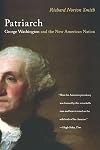
Patriarch: George Washington and the New American Nation
by Richard Norton Smith
On This Page
Description
When George Washington agreed to take on the presidency of his new nation, he inspired gratitude and adulation on a scale almost impossible to imagine today. In the years that followed, he would need every ounce of his countrymen's affection as he presided over a government threatened by internal dissension and foreign war. This is the story of Washington under political siege, a trial no less demanding than the Revolutionary War. George Washington emerges in these pages as a necessary hero. show more Indeed, it is hard to imagine the survival of the young republic without him. We watch him preside over the bitter quarrels within his brilliant Cabinet--enduring the historic feud between Jefferson and Hamilton while struggling successfully to keep the nation out of European conflict. On the personal level, this moving biography confirms Henry Knox's judgment that it was Washington's character, and not the recently signed Constitution, that held the infant Union together. In a supremely readable history, Richard Norton Smith gives us vivid descriptions of stagecoach travel, the capital's yellow fever epidemic of 1793, and life at Washington's beloved Mount Vernon. This George Washington, vastly more human than our inherited image, is a fallible man subject to vanity and disappointment, yet all the greater for his vulnerability. Patriarch tells not only what Washington did but, memorably, what he was like, and how both were essential to the birth of the American Republic. Repeatedly during his eight years as president, George Washington saved the infant republic from the factionalism and the involvement in foreign wars that threatened its existence. He skillfully moderated the feuds among his cabinet--especially those between Hamilton and Jefferson--and achieved his own political ends by seeming to be above politics. His actions and character defined the very nature of the presidency and, even more than the Constitution itself, made the new American government work. Better than any biographer before him, Richard Norton Smith gives us the "living" Washington, a working politician beset by crises, a masterly manager of men and events, anything but the time-worn marble monument.--Back cover. show lessTags
Recommendations





Member Reviews
The beginning (though a very difficult read for the first 50 pages) shows traits of his character as he started his public career as a surveyor and landowner. He decided early on that his way to fight against the tyrannies of the mother country was by making Mount Vernon self-sufficient so he eliminated tobacco from the crops produced and planted wheat and corn so that he could feed his family and slaves without having to buy English products. The book does not go into details of the era of the revolutionary war, but states his steadfast belief that it was necessary to break from the Mother Country.
His leanings toward a strong central government were defined within himself during the Revolutionary War due to the difficulties that he show more encountered trying to maintain the army. The Congress, which had originally appointed him as the Commander of the Army, was reluctant to provided financially for the soldiers with either provisions or salary.
His private life was not as he and Martha had wished, but as Martha Washington said, " I little thought, when the war was finished, that any circumstances could possibly have happened which would call the General into public life again"…. And continued " I cannot blame him for having acted according to his duties in obeying the voice of his country."
Once elected to the office of President, Washington, while setting up his administration, tried to choose those with the best credentials, not necessarily those that thought the same way he did. He struggled in trying to keep his cabinet (mainly Jefferson and Hamilton) from arguing given that Jefferson was in favor of republic attributes and Hamilton was a Federalist. Washington was constantly trying to keep the peace with England, Spain, and the Indians while maintaining good relations with France during their revolution. His determination to have the young US remain neutral to all the upheaval occurring in Europe, appears to be one of the main reasons why the tiny nation managed to survive. Washington concentrated on establishing peace and prosperity in the new nation, rather than trying to become a political power at the time. During his second term in office (one that he reluctantly took - he really felt that he was too old and wanted to retire) Washington continually ran into political issues that threatened the infant nation.
The English ambassador of the time was quoted to say about his leadership abilities "he possess the two great requisites of a statesman, the faculty of concealing his own sentiments and discovering those of other men."
Not stressed in normal historical accounts, after his retirement from the presidency, he was actually overseeing the building of the "Federal City" and when worries mounted about a possible war with France, he was charged again to be the Commander in Chief of the army. He made provisions for the recruitment of a standing army and debated with President Adams the order of precedence for his officers (Hamilton, Pinckney, and Knox).
The author stresses that though many historians see Washington as mainly a man who let others govern, he was in fact, a leader, who displayed the same strengths in governing that he used as a military commander and as a large landowner -diligence, fortitude, and determination.
What truly amazed me about this book, is the man that was revealed- I never thought of George Washington as a particularly eloquent man, but the writings that appeared changed that perspective for me. I also saw other sides of characters that I had read in history but now saw in a different light - in particular, Alexander Hamilton and Thomas Jefferson. Washington also came through as especially gifted in the area of diplomacy, as well as thoroughly insightful when taking into consideration, the people's well-being even when it was not appreciated by the general public. Often, he prevented political disasters for the fledgling country by well-timed delays and assumptions of responsibility where others would likely have placed blame. I admired this man before reading this book, now I truly respect his accomplishments. and his character.
The author states at the end " the first president remains that rarest of historical figures, of whom it can be said that in conceding his humanity, we only confirm his greatness." show less
His leanings toward a strong central government were defined within himself during the Revolutionary War due to the difficulties that he show more encountered trying to maintain the army. The Congress, which had originally appointed him as the Commander of the Army, was reluctant to provided financially for the soldiers with either provisions or salary.
His private life was not as he and Martha had wished, but as Martha Washington said, " I little thought, when the war was finished, that any circumstances could possibly have happened which would call the General into public life again"…. And continued " I cannot blame him for having acted according to his duties in obeying the voice of his country."
Once elected to the office of President, Washington, while setting up his administration, tried to choose those with the best credentials, not necessarily those that thought the same way he did. He struggled in trying to keep his cabinet (mainly Jefferson and Hamilton) from arguing given that Jefferson was in favor of republic attributes and Hamilton was a Federalist. Washington was constantly trying to keep the peace with England, Spain, and the Indians while maintaining good relations with France during their revolution. His determination to have the young US remain neutral to all the upheaval occurring in Europe, appears to be one of the main reasons why the tiny nation managed to survive. Washington concentrated on establishing peace and prosperity in the new nation, rather than trying to become a political power at the time. During his second term in office (one that he reluctantly took - he really felt that he was too old and wanted to retire) Washington continually ran into political issues that threatened the infant nation.
The English ambassador of the time was quoted to say about his leadership abilities "he possess the two great requisites of a statesman, the faculty of concealing his own sentiments and discovering those of other men."
Not stressed in normal historical accounts, after his retirement from the presidency, he was actually overseeing the building of the "Federal City" and when worries mounted about a possible war with France, he was charged again to be the Commander in Chief of the army. He made provisions for the recruitment of a standing army and debated with President Adams the order of precedence for his officers (Hamilton, Pinckney, and Knox).
The author stresses that though many historians see Washington as mainly a man who let others govern, he was in fact, a leader, who displayed the same strengths in governing that he used as a military commander and as a large landowner -diligence, fortitude, and determination.
What truly amazed me about this book, is the man that was revealed- I never thought of George Washington as a particularly eloquent man, but the writings that appeared changed that perspective for me. I also saw other sides of characters that I had read in history but now saw in a different light - in particular, Alexander Hamilton and Thomas Jefferson. Washington also came through as especially gifted in the area of diplomacy, as well as thoroughly insightful when taking into consideration, the people's well-being even when it was not appreciated by the general public. Often, he prevented political disasters for the fledgling country by well-timed delays and assumptions of responsibility where others would likely have placed blame. I admired this man before reading this book, now I truly respect his accomplishments. and his character.
The author states at the end " the first president remains that rarest of historical figures, of whom it can be said that in conceding his humanity, we only confirm his greatness." show less
Solid depiction of Washington's presidency and beyond. Talk about your team of rivals! With Jefferson and Hamilton hacking away at each other, federalists and republicans learning how to relish the delights of partisan dysfunction and Adams sourly standing in the balcony nursing his grudges, Lincoln (and Obama) ain't got nothin' on Washington.
Ratings
Members
- Recently Added By
Lists

Founding Father
104 works; 11 members

George Washington Books
12 works; 1 member
Author Information

12+ Works 909 Members
Richard Norton Smith is the director of the Robert J. Dole Institute of Politics at the University of Kansas
Common Knowledge
- Canonical title
- Patriarch: George Washington and the New American Nation
- Original publication date
- 1993
- People/Characters
- George Washington
Classifications
- Genres
- History, Nonfiction, Biography & Memoir, General Nonfiction
- DDC/MDS
- 973.4 — History & geography History of North America United States Constitutional period (1789-1809)
- LCC
- E312.29 .S65 — History of the United States United States Revolution to the Civil War, 1775/1783-1861 By period 1789-1809. Constitutional period Washington's administrations, 1789-1797
- BISAC
Statistics
- Members
- 334
- Popularity
- 95,484
- Reviews
- 3
- Rating
- (4.04)
- Languages
- English
- Media
- Paper, Audiobook
- ISBNs
- 6
- UPCs
- 2
- ASINs
- 3