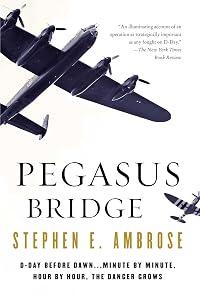
Pegasus Bridge: June 6, 1944
by Stephen E. Ambrose
On This Page
Description
"In the early morning hours of June 6, 1944, a small detachment of British airborne troops stormed the German defense forces and paved the way for the Allied invasion of Europe. Pegasus Bridge was the first engagement of D-Day, the turning point of World War II. This gripping account by acclaimed historian Stephen E. Ambrose brings to life a daring mission so crucial that, had it been unsuccessful, the entire Normandy invasion might have failed...This is a story of heroism and cowardice, show more kindness and brutality--the stuff of great history."--Container. show lessTags
Recommendations

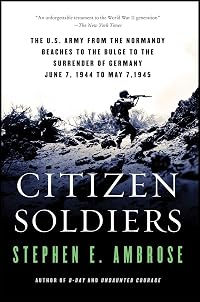
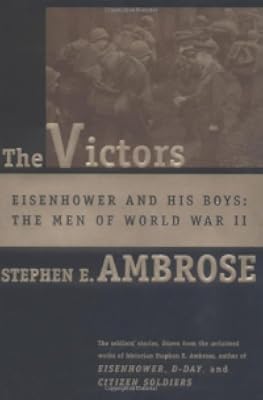
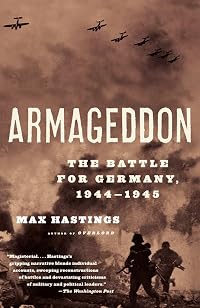
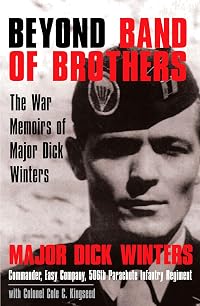






Member Recommendations
Member Reviews
I'm somewhat surprised that Stephen Ambrose was an actual historian, back before the plagiarism scandals and shoddy work that put the period on his career. This is the first of his WW2 oral histories, written fresh on the heels of 20 years of Eisenhower research and the 40th Anniversary of D-Day. The book covers the legendary assault on Pegasus bridge: the training of D company, a minute-by-minute account of the battle, and the aftermath.
The bridges over the Orne River and canal, which would later be named Pegasus and Horsa bridge in honor of the Paras, had a vital role. If the Germans held these bridges, their Panzers could attack directly into the flank of the landing, possibly defeating Overlord. If the bridges were destroyed, the show more 6th Paras would be stranded on the far side without armor or heavy weapons, and would be destroyed in force. The only option was a daring coup de main, sailing in silently on gliders to 'prang' almost on the bridge itself, to seize it by storm in seconds, and then hold it at all costs. Ambrose recovers the battle through careful oral histories, and brings all his talents as a writer to describe the terror of close range firefights, the heroism of the soldiers, the glory of tracers and tanks burning up, and the moments of hilarity--such as a German soldier who had slept through the assault being discovered in his bunker by Paras, woken, and believing that it was an elaborate prank telling them to get lost and going back to sleep.
This is an elegant and excellent little book. Best of all, while Ambrose likes, respects, and admires the Brits, he doesn't worship them like he does with American GIs. The men who defeated the Nazis were pretty amazing, but a historian can't rightfully worship his subjects. show less
The bridges over the Orne River and canal, which would later be named Pegasus and Horsa bridge in honor of the Paras, had a vital role. If the Germans held these bridges, their Panzers could attack directly into the flank of the landing, possibly defeating Overlord. If the bridges were destroyed, the show more 6th Paras would be stranded on the far side without armor or heavy weapons, and would be destroyed in force. The only option was a daring coup de main, sailing in silently on gliders to 'prang' almost on the bridge itself, to seize it by storm in seconds, and then hold it at all costs. Ambrose recovers the battle through careful oral histories, and brings all his talents as a writer to describe the terror of close range firefights, the heroism of the soldiers, the glory of tracers and tanks burning up, and the moments of hilarity--such as a German soldier who had slept through the assault being discovered in his bunker by Paras, woken, and believing that it was an elaborate prank telling them to get lost and going back to sleep.
This is an elegant and excellent little book. Best of all, while Ambrose likes, respects, and admires the Brits, he doesn't worship them like he does with American GIs. The men who defeated the Nazis were pretty amazing, but a historian can't rightfully worship his subjects. show less
Pegasus Bridge, by historian Stephen Ambrose, describes the capture of key bridges over the Caen Canal (the titular one) and the Orne River in the early morning hours of June 6, 1944. Ambrose cites the inspiration for the book in his introduction; he was leading a tour of WWII battlefields and had just finished inspecting the bridges. As he was getting back on the bus a white-haired man hobbled up and asked if any of them were British from the Sixth Airborne Division; Ambrose said “No, we’re all Americans on this bus”; the elderly man leaned on his cane and said “Oh, I’m sorry”; Ambrose replied “Don’t be sorry; we’re all rather proud to be Americans” and then, perhaps regretting being a little snarky, asked “Were show more you in the Sixth Airborne?” At that point the elderly man introduced himself as Major John Howard. Serendipity indeed.
This is a straightforward, well-written modern military history. Ambrose interviewed participants from both sides (and French civilians) and presents the results in a nicely organized fashion. There’s no excessive drama, as I’ve run across in some other WWII accounts I’ve read recently; Ambrose is a historian, not a journalist, and has no need to add anything artificial to the actual events. At the same time Ambrose states he wants to get to the heat of things in a small unit action, without any more of the large-scale level than necessary to set the scene.
If you’re not familiar with the Pegasus Bridge action, a reinforced company of the 2nd Oxfordshire and Buckinghamshire Light Infantry glider landed almost in contact with two bridges on the extreme left flank of the D-Day invasion zone. The mission was to take the bridges intact and hold them against counterattack until relieved; the idea was that holding the bridges would prevent the Germans from using them to counterattack the beachhead and also allow them to be used when the British and Canadian forces on Gold, Juno and Sword beaches eventually broke out. The Ox and Bucks recovered from fairly rough landings, stormed out of their gliders, shot up a few sentries, beat off some desultory German counterattacks (including taking out an incautious Pz IV with one of their two PIAT bombs), and waited until paratroopers from 6th Airborne (dropped nearby) and Commandos (marching overland from the beachhead, piper and Lord Lovat in front) showed up. There are the usual war stories; when the movie The Longest Day built a replica Horsa glider to recreate the attack, it was refused an airworthiness certificate and had to be broken down and shipped by sea rather than towed to Normandy; when the Commandos captured a couple of Germans who had fled their barracks in their underwear, they were handed off to higher authorities as members of a Panzoff Division; when Corporal Killean took out a sniper in a church tower with a couple of PIAT bombs, he crossed himself and said “I’m sorry to see what I have done to a wee house of God”.
In final chapters Ambrose does allow himself a little speculation. Failure to capture the bridges would not have led to a German victory, but it would have been pretty unpleasant. The 6th Airborne would have been cut off on the wrong side of a major river, and German armored units would have had a much easier time getting to the landing zone. He also contends that the airborne and airlanding troops involved in the action were kept in Normandy as line infantry way too long; their presence at Arnhem might have made a difference.
No maps; this is slightly atoned for by aerial photographs of the bridges, but in my trade paperback all the photographs are printed on uncoated stock and are thus badly washed out. The index and references seem a little sparse. Still, an easy and exciting read. show less
This is a straightforward, well-written modern military history. Ambrose interviewed participants from both sides (and French civilians) and presents the results in a nicely organized fashion. There’s no excessive drama, as I’ve run across in some other WWII accounts I’ve read recently; Ambrose is a historian, not a journalist, and has no need to add anything artificial to the actual events. At the same time Ambrose states he wants to get to the heat of things in a small unit action, without any more of the large-scale level than necessary to set the scene.
If you’re not familiar with the Pegasus Bridge action, a reinforced company of the 2nd Oxfordshire and Buckinghamshire Light Infantry glider landed almost in contact with two bridges on the extreme left flank of the D-Day invasion zone. The mission was to take the bridges intact and hold them against counterattack until relieved; the idea was that holding the bridges would prevent the Germans from using them to counterattack the beachhead and also allow them to be used when the British and Canadian forces on Gold, Juno and Sword beaches eventually broke out. The Ox and Bucks recovered from fairly rough landings, stormed out of their gliders, shot up a few sentries, beat off some desultory German counterattacks (including taking out an incautious Pz IV with one of their two PIAT bombs), and waited until paratroopers from 6th Airborne (dropped nearby) and Commandos (marching overland from the beachhead, piper and Lord Lovat in front) showed up. There are the usual war stories; when the movie The Longest Day built a replica Horsa glider to recreate the attack, it was refused an airworthiness certificate and had to be broken down and shipped by sea rather than towed to Normandy; when the Commandos captured a couple of Germans who had fled their barracks in their underwear, they were handed off to higher authorities as members of a Panzoff Division; when Corporal Killean took out a sniper in a church tower with a couple of PIAT bombs, he crossed himself and said “I’m sorry to see what I have done to a wee house of God”.
In final chapters Ambrose does allow himself a little speculation. Failure to capture the bridges would not have led to a German victory, but it would have been pretty unpleasant. The 6th Airborne would have been cut off on the wrong side of a major river, and German armored units would have had a much easier time getting to the landing zone. He also contends that the airborne and airlanding troops involved in the action were kept in Normandy as line infantry way too long; their presence at Arnhem might have made a difference.
No maps; this is slightly atoned for by aerial photographs of the bridges, but in my trade paperback all the photographs are printed on uncoated stock and are thus badly washed out. The index and references seem a little sparse. Still, an easy and exciting read. show less
Short, and very tactical, book which focuses on the British 6th Airborne Division's task of securing the D-Day inland bridges. It was well written and easy to understand. I'd suggest looking at a map before one listens to this book as it will help in understanding. The use of gliders is well explained. A very good account of Major John Howard and the men of Company D, the Ox and Bucks Light Infantry Regiment.
Very detailed account of what might be one of the decisive positions for the allied liberation of France - although it got stuck long enough elsewhere (Caen etc), so might be a bit overrated. But yes, we are talking about the first allied troops on the mainland, so this episode deserves to be told.
Stephen E. Ambrose is a master storyteller. He makes it so easy, interviewing people then write about them. Imagine the editing works, placing one story after another, in the way that the readers would better understand and imagine. Pegasus Bridge is not as special as Citizen Soldiers or Band of Brothers (BoB), but it still delivers.
The story is about a gliderborne unit of the British Ox and Bucks Light Infantry Regiment, 6th Airborne Division, commanded by Major John Howard, who captured two bridges (one rechristened Pegasus) between Bénouville and Ranville, Normany, and held them until reinforcements came. This is claimed to be the first assault by the Allies as well as the first combat engagements between the opposing parties in show more Normandy during D-Day. The troops were the first who liberated a French home (whose owners were spies working for the Resistance) and one of its platoon leaders was the first casualty from the Allies side in D-Day. Yes, Howard’s D Company indeed scored many ‘firsts’.
I have to admit that I was a bit disappointed when I read the first pages of the book. I thought I was going a read a book about paratroopers. Blame my silly infatuation on paras due to BoB. I was a bit indoctrinated as well by the impression in BoB that gliderborne troopers were not as qualified and disciplined as the paras. Well, that is not the case with Howard’s men. It surely took lots of courage to surrender your fate on a Horsa whose movement and bearing were not entirely up to your own pilot, but the bomber towing your glider. Paras are more mobile because they have their own chutes.
Along with the glider pilots, the sappers, the paras, Howard and his troopers managed to surprise the Germans who, just like what happened during the D-Day sea invasion, showed a very lousy and ineffective chain of command and communication. It sometimes frustrates me (seriously) to read their ridiculous mistakes in D-Day (thanks to the Fuhrer) whereas they had legendary field marshals like Rommel and Von Rundstedt to lead.
This feat was very influential to the outcome of D-Day, since it blocked the way of a strong panzer division, whose counterattack could destroy the advancing seaborne invaders.
The training part of the book was a bit boring unfortunately. [Ambrose used the same formula with BoB and his other book Wild Blue, i.e. giving many details about the training phase:] I’d like to read more about the action part but it only covers half of the book. I noted that Howard’s D Company was the toughest SOBs in the whole airborne division due to their fanaticism over sports and physical endeavors, but that’s about the only interesting fact I found. More detailed actions, please.
Apparently, this story appeared a bit in the movie version of The Longest Day. Hell, I dislike the movie so much I can not remember anything (but the book is super excellent, mind you). The actor who played John Howard was in fact a part of the operation, a member of the 7th Battalion of the Parachute Regiment who reinforced the British troops in the area.
Anyway, this is still recommended for military buffs, especially the ones who want some light reading or curious about events that are not (presumably) widely covered by other battle accounts. show less
The story is about a gliderborne unit of the British Ox and Bucks Light Infantry Regiment, 6th Airborne Division, commanded by Major John Howard, who captured two bridges (one rechristened Pegasus) between Bénouville and Ranville, Normany, and held them until reinforcements came. This is claimed to be the first assault by the Allies as well as the first combat engagements between the opposing parties in show more Normandy during D-Day. The troops were the first who liberated a French home (whose owners were spies working for the Resistance) and one of its platoon leaders was the first casualty from the Allies side in D-Day. Yes, Howard’s D Company indeed scored many ‘firsts’.
I have to admit that I was a bit disappointed when I read the first pages of the book. I thought I was going a read a book about paratroopers. Blame my silly infatuation on paras due to BoB. I was a bit indoctrinated as well by the impression in BoB that gliderborne troopers were not as qualified and disciplined as the paras. Well, that is not the case with Howard’s men. It surely took lots of courage to surrender your fate on a Horsa whose movement and bearing were not entirely up to your own pilot, but the bomber towing your glider. Paras are more mobile because they have their own chutes.
Along with the glider pilots, the sappers, the paras, Howard and his troopers managed to surprise the Germans who, just like what happened during the D-Day sea invasion, showed a very lousy and ineffective chain of command and communication. It sometimes frustrates me (seriously) to read their ridiculous mistakes in D-Day (thanks to the Fuhrer) whereas they had legendary field marshals like Rommel and Von Rundstedt to lead.
This feat was very influential to the outcome of D-Day, since it blocked the way of a strong panzer division, whose counterattack could destroy the advancing seaborne invaders.
The training part of the book was a bit boring unfortunately. [Ambrose used the same formula with BoB and his other book Wild Blue, i.e. giving many details about the training phase:] I’d like to read more about the action part but it only covers half of the book. I noted that Howard’s D Company was the toughest SOBs in the whole airborne division due to their fanaticism over sports and physical endeavors, but that’s about the only interesting fact I found. More detailed actions, please.
Apparently, this story appeared a bit in the movie version of The Longest Day. Hell, I dislike the movie so much I can not remember anything (but the book is super excellent, mind you). The actor who played John Howard was in fact a part of the operation, a member of the 7th Battalion of the Parachute Regiment who reinforced the British troops in the area.
Anyway, this is still recommended for military buffs, especially the ones who want some light reading or curious about events that are not (presumably) widely covered by other battle accounts. show less
Short book which focuses on the British 6th Airborne Division's task of securing the D-Day inland bridges around the city of Caen, Northern France. Not the most exciting book but it does give the reader a reason for the 50th anniversary of the D-Day Invasion which took place in 1984. The German leader of the Panzer corp in Normandy says that Rommel himself said the war was lost once the Afrika Corps was chased from Northern Africa. Hitler was insane and couldn't be counted on to war a military campaign. That conversation might have happened but we have to rely on on the German armor leader for that opinion. Brave men are given their due as the airborne troops were wasted by not being reinforced until the units were totally devastated. show more Blame is not assigned but it was the Montgomery who would return to waste more airborne troops in another fiasco later in the war.
The thing which I hadn't known previously was the order of battle which brought the invasion forces in in three phases. First, the Pathfinders paratroopers who jumped in alone to light directional fires for the tow and glider planes. Then the glider forces, and lastly the airborne troops jumping from low altitude. German indecision among the tank force allowed the airborne British to take the initative before the Panzer tanks could seal off the landing beaches from the troops assauting the beach. For military buffs only or relatives of the airborne troopers themselves. These glider forces and paratroopers are now part of military history legend as if they all survived the Longest Day of battle. That was not the case, and this book memorializes those who didn't make it back home while still marveling at the courage it took to accomplish their mission. show less
The thing which I hadn't known previously was the order of battle which brought the invasion forces in in three phases. First, the Pathfinders paratroopers who jumped in alone to light directional fires for the tow and glider planes. Then the glider forces, and lastly the airborne troops jumping from low altitude. German indecision among the tank force allowed the airborne British to take the initative before the Panzer tanks could seal off the landing beaches from the troops assauting the beach. For military buffs only or relatives of the airborne troopers themselves. These glider forces and paratroopers are now part of military history legend as if they all survived the Longest Day of battle. That was not the case, and this book memorializes those who didn't make it back home while still marveling at the courage it took to accomplish their mission. show less
Having read this book, I went to the Pegasus Bridge site in Normandy, and the Gondree Cafe (the first place to be liberated) Going round the excellent pegasus Bridge museum really brought the book to life as their were reminders of several of the men mentioned in the book. This gave it an almost personal feel as you felt you had met them. I am no historian, but I felt the book gave a very real sense of the raid with good character studies of those involved
Members
- Recently Added By
Lists

Books About World War II
102 works; 29 members

Non-Fiction Worth Reading
1,025 works; 258 members

Books Read in 2015
3,299 works; 129 members
Author Information

72+ Works 43,978 Members
Historian Stephen E. Ambrose grew up in Wisconsin and attended the University of Wisconsin and the University of Louisiana. Ambrose is considered to be one of the foremost historical scholars of recent times and has been a professor for over three decades. He is also the founder and president of the National D-Day Museum in New Orleans. His works show more include D-Day: June 6, 1944: The Climactic Battle of World War II, Citizen Soldiers: The U. S. Army from Normandy Beaches to the Bulge to the Surrender of Germany, June 7, 1944-May 7, 1945, Band of Brothers: E Company, 506th Regiment, 101st Airborne from Normandy to Hitler's Eagle's Nest and Undaunted Courage: Meriwether Lewis, Thomas Jefferson and the Opening of the American West. Abrose served historical consultant on the motion picture Saving Private Ryan. (Bowker Author Biography) show less
Common Knowledge
- Canonical title*
- De Pegasusbrug
- Original title
- Pegasus Bridge: June 6, 1944
- Alternate titles
- Pegasus Bridge: D-Day – The Daring British Airborne Raid
- Original publication date
- 1985
- People/Characters*
- John Howard; Richard Todd; Jim Wallwork; Wally Parr; Dennis Fox; Nigel Taylor (show all 18); M. Thornton; Oliver Boland; C. Hooper; E. Tappenden; Henry Hickman; Billy Gray; Joy Howard; Irene Parr; Familie Gondrée; Hans von Luck; Helmut Röhmer; Major Schmidt
- Important places
- France; Normandy, France; Sword Beach, Normandy, France; Caen, Calvados, Normandy, France; Calvados, Normandy, France
- Important events
- World War II (1939 | 1945); D-Day (1944-06-06); Operation Overlord (1944-06-06 | 1944-08-30)
- Related movies*
- The Longest Day (1962 | IMDb)
- Epigraph*
- De opzienbarendste luchtlandingsoperatie tijdens D-day
- Dedication
- For Hugh, with whom I've watched so many John Wayne movies, here is another adventure story – except that this time it is all true
- Original language
- English
*Some information comes from Common Knowledge in other languages. Click "Edit" for more information.
Classifications
- Genres
- History, Nonfiction, General Nonfiction
- DDC/MDS
- 940.5421 — History & geography History of Europe History of Europe 1918- Military history of World War II Campaigns and battles by theatre European theatre
- LCC
- D756.5 .N6 .A47 — History of Europe, Asia, Africa and Oceania History (General) World War II (1939-1945)
- BISAC
Statistics
- Members
- 1,431
- Popularity
- 16,553
- Reviews
- 24
- Rating
- (3.92)
- Languages
- 5 — Dutch, English, French, Polish, Spanish
- Media
- Paper, Audiobook, Ebook
- ISBNs
- 26
- ASINs
- 12